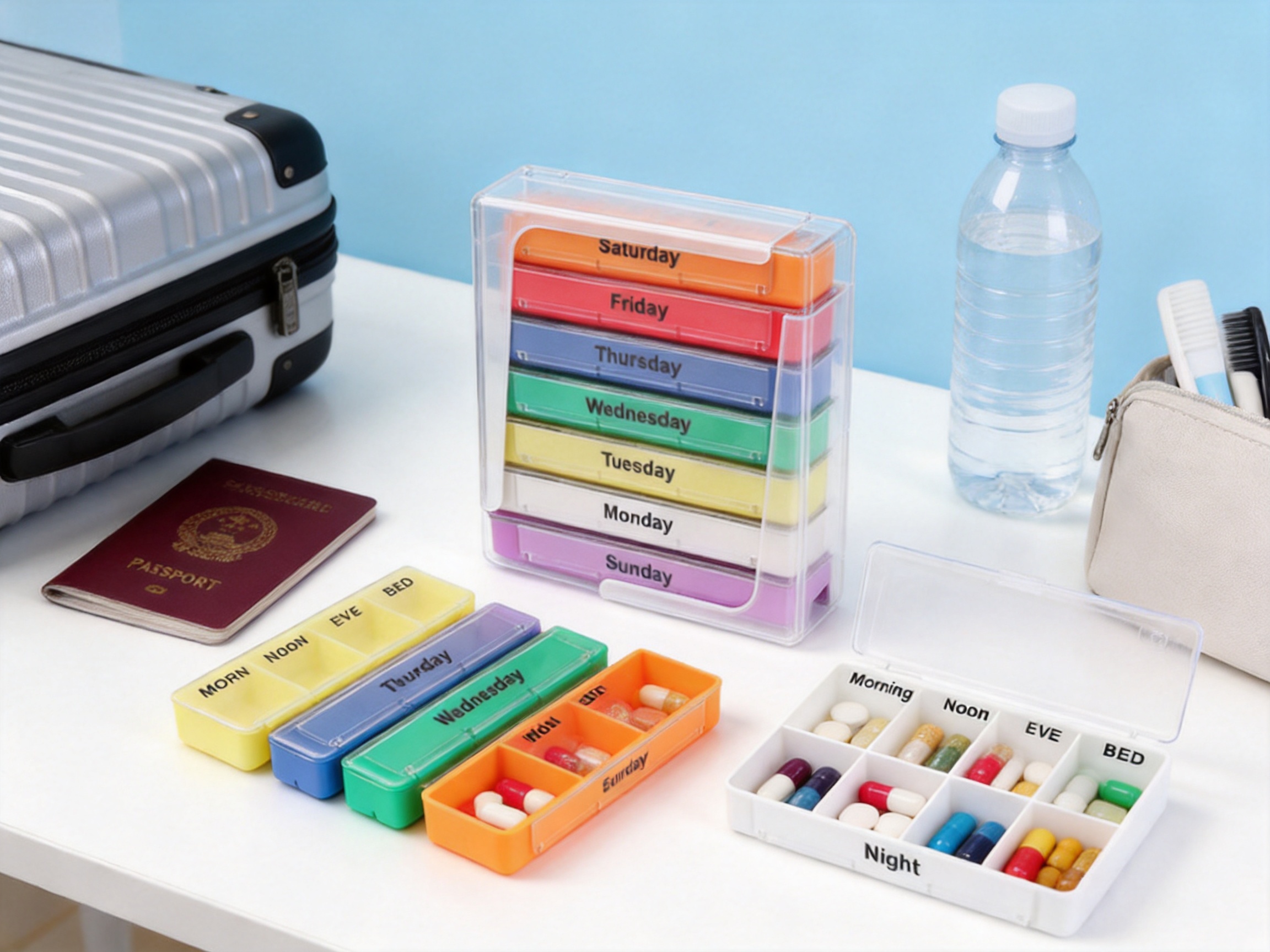
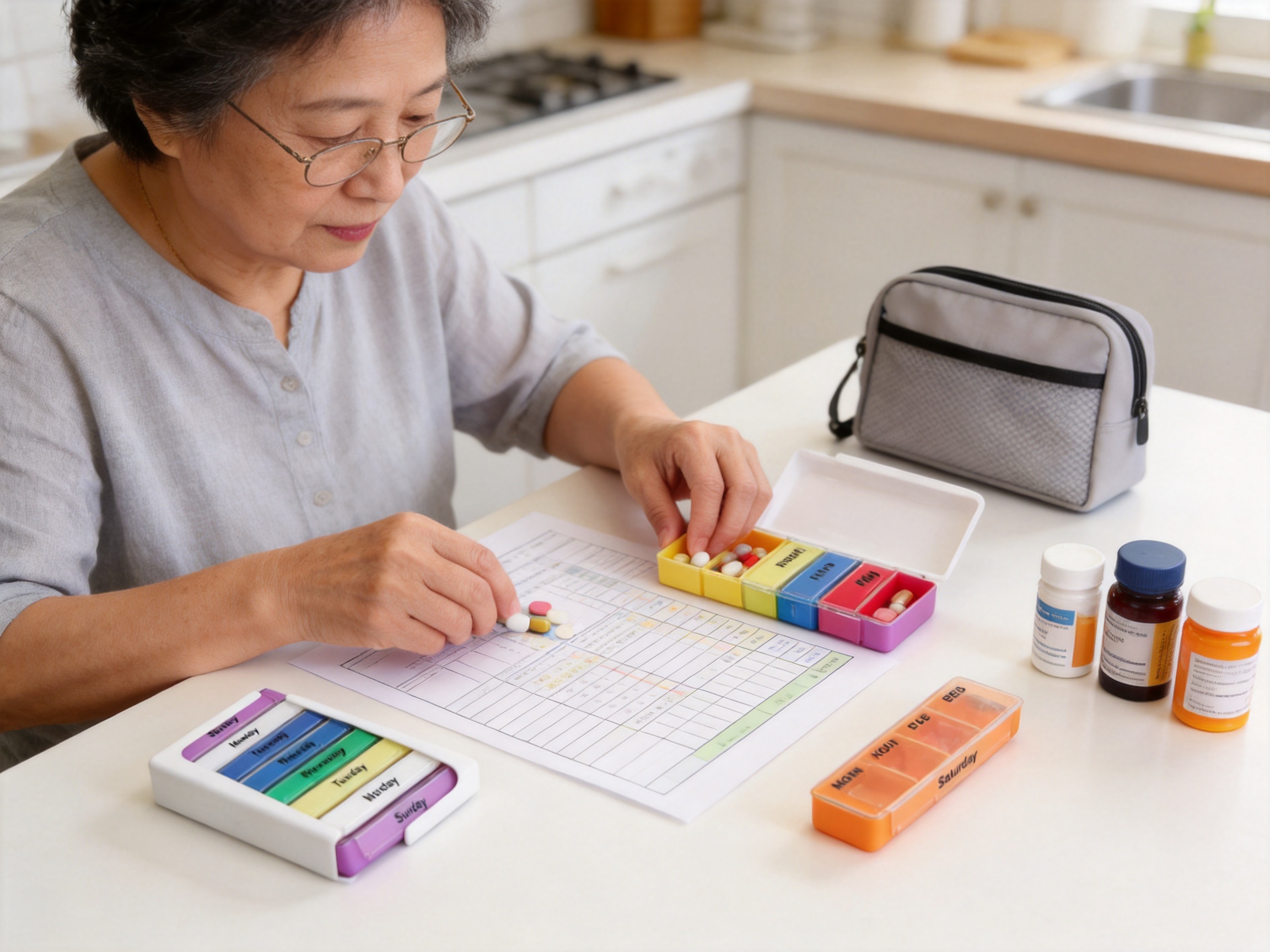
Managing medication correctly is an important part of everyday health care. For people who take several prescriptions, vitamins, supplements, or over-the-counter medicines, keeping track of what to take and when to take it can become difficult. A well-designed pill organizer can simplify this routine by placing a full week of doses in one clearly arranged system. The 7-Day 28-Compartment Plastic Pill Dispenser for Travel is designed for this purpose, offering seven removable daily trays and four clearly identified dosing compartments for each day.
With a total of 28 compartments, the dispenser supports a morning, noon, evening, and night schedule. This arrangement is especially useful for users who follow multiple daily dosing times or who want to separate different supplements throughout the day. Its transparent outer case, colorful trays, compact dimensions, and removable construction make it suitable for home use, travel, family care, assisted living environments, and retail health-care programs.
The product is identified by model DC660200 and is manufactured from ABS and PS plastic. Its approximate size is 10.5 x 12.6 x 4.3 cm, making it compact enough for luggage, handbags, bedside tables, and medicine cabinets. Available colors include yellow and rainbow combinations, with other color options available according to production requirements.
Why a Structured Weekly Pill Organizer Matters
Medication routines are often affected by busy schedules, travel, work, school, changing meal times, and the number of products a person uses each day. A bottle-based system may require users to read several labels repeatedly, open multiple containers, and remember which medicine belongs to which time of day. This can be inconvenient and may increase the possibility of missed doses or confusion.
A weekly organizer creates a visible schedule. Instead of checking numerous bottles every morning, the user can prepare or inspect a complete seven-day routine in advance. Each daily tray provides a dedicated location for that day’s medication, while its four time-of-day compartments support a more detailed schedule than a basic seven-compartment box.
The 7-Day 28-Compartment Plastic Pill Dispenser is particularly practical for users who take medicines at different times. For example, morning tablets can be placed in the morning section, midday supplements in the noon section, evening medication in the evening section, and bedtime products in the night section. This division provides a simple visual reminder and makes the daily routine easier to follow.
Weekly organization can also help family members, caregivers, and health-care assistants review whether doses have been prepared. Because the trays are removable, a single day can be taken out without carrying the entire outer case. This can be useful when a user is leaving home for a short trip, attending an appointment, or visiting family.
Product Overview
The DC660200 pill dispenser consists of an outer case and seven separate daily trays. Each tray is designed for one day of the week and is divided into four compartments. The compartments are labeled for morning, noon, evening, and night use. Together, these elements provide 28 individual storage spaces.
| Product Attribute | Specification |
|---|
| Product type | Weekly pill dispenser and medication organizer |
| Model | DC660200 |
| Number of days | 7 |
| Number of compartments | 28 |
| Daily sections | Morning, noon, evening, and night |
| Approximate size | 10.5 x 12.6 x 4.3 cm |
| Material | ABS and PS plastic |
| Color options | Yellow, rainbow, and other available options |
| Outer case | Transparent plastic construction |
| Minimum order quantity | 3,000 pieces |
| HS code | 3923100090 |
The combination of a transparent outer case and brightly colored trays gives the product a recognizable visual structure. Users can distinguish the daily trays quickly, while the outer case helps keep the organizer together during storage or transportation.
The organizer is intended for pills, capsules, vitamins, and similar solid products that fit within the available compartments. Users should always confirm that the product is suitable for their particular medication and should follow the storage instructions provided by a pharmacist or health-care professional.
Seven Removable Trays for Weekly Planning
One of the product’s most important advantages is its seven-tray design. Each tray corresponds to one weekday, allowing an entire week of medication to be arranged in advance. This is more flexible than a single-piece weekly organizer because individual daily trays can be removed and carried separately.
Removable trays support several practical routines. A user may prepare all seven trays at the beginning of the week, place them inside the outer case, and then remove one tray each morning. Alternatively, a caregiver may prepare each tray individually and provide only the required day’s doses. This can reduce the need to carry the entire organizer when only one day’s supply is needed.
The tray-based format also supports easier cleaning and refilling. When a compartment is empty, the tray can be removed from the case and handled on a table or counter. The user does not need to turn over or manipulate the entire dispenser. Separate trays can also be inspected one at a time, which may help identify whether a day has been prepared correctly.
Compared with simple weekly pill boxes that offer only one compartment per day, the four-compartment tray provides a much more detailed schedule. Compared with a large collection of individual medicine bottles, the daily trays create a consolidated and portable system. This balance between capacity and organization is one of the product’s key advantages over less structured alternatives.
Four Time-of-Day Compartments
Many basic pill organizers divide medication only by day. However, some medicines and supplements are taken more than once daily. The 28-compartment format addresses this need by dividing each day into four sections: morning, noon, evening, and night.
The printed time labels provide a direct visual reference. Users do not need to depend entirely on memory or handwritten notes to identify the intended time. A person can look at the tray and see which compartments correspond to the different parts of the day.
This arrangement is also useful for people who take different products at different times. For example, a morning prescription may be placed in the morning section, a lunchtime supplement in the noon section, an evening tablet in the evening section, and a bedtime medicine in the night section. The product does not determine the medical schedule; instead, it provides a physical structure for a schedule established by the user, pharmacist, or physician.
The four-section format may also be useful in households where a family member assists with medication preparation. The clear labels make it easier to review whether each period has been filled. In professional or retail settings, the same structure can be explained easily to customers who need a portable weekly solution.
Compact Size for Travel and Everyday Storage
The product measures approximately 10.5 x 12.6 x 4.3 cm. Its compact footprint is suitable for a travel bag, carry-on case, drawer, bedside cabinet, or bathroom storage area. A compact organizer can be more convenient than transporting multiple bottles, especially when the user needs a planned supply for several days.
Travel creates additional challenges for medication management. A traveler may move between hotels, airports, workplaces, and family homes while following the same medication schedule. A dedicated organizer keeps the planned doses together and makes the daily supply easier to access.
The lightweight plastic construction also supports portability. The dispenser can be carried without adding significant weight to a handbag or luggage. Its removable daily trays provide additional flexibility for short trips. A user may take the full organizer for a week-long journey or carry only the required tray for a shorter outing.
The product should be packed in a manner that protects it from crushing, excessive heat, moisture, and contamination. Medication should remain in accordance with the storage requirements supplied by the manufacturer, pharmacist, or health-care provider. The organizer is a practical storage aid, but it does not replace professional medication guidance or the original product information.

7 Day 28 Compartment Plastic Pill Dispenser for Travel
Color-Coded Identification and Transparent Protection
Visual organization is another important feature of the dispenser. The outer case is transparent, and the daily trays are available in vivid colors. The combination helps users identify the organizer’s contents and distinguish the trays from one another.
Color can be especially valuable for users who prefer quick visual recognition. A bright tray may be easier to identify than a plain white or entirely transparent component. When each weekday has a distinct color, the user can associate a specific color with a specific day, while the printed labels provide a second form of confirmation.
The transparent outer case allows the trays to remain visible when the organizer is closed. This can make it easier to confirm that the weekly set is complete and that the trays are positioned correctly. It also supports a clean, modern appearance suitable for personal use or retail presentation.
Color options such as yellow and rainbow designs provide flexibility for different markets and consumer preferences. For wholesale buyers, color selection may be coordinated with product lines, packaging programs, seasonal campaigns, or regional preferences, subject to order requirements and production confirmation.
ABS and PS Plastic Construction
The dispenser is made from ABS and PS plastic. These materials are widely used in consumer and health-care accessory products because they can be formed into lightweight, precise components and finished in a variety of colors.
ABS, or acrylonitrile butadiene styrene, is commonly selected for products that require a combination of rigidity, impact resistance, and attractive surface appearance. PS, or polystyrene, can be used for clear or rigid molded components. In this product, the material combination supports the outer case, daily trays, lids, and compartment structure.
The plastic construction offers several practical benefits. It is lighter than many metal alternatives, easy to handle, and suitable for compact molded designs. Smooth molded surfaces can also be easier to wipe than porous materials. The design is intended for repeated household use, provided that it is handled appropriately and maintained according to normal product-care practices.
Durability depends on correct use. The organizer should not be overloaded, exposed to unnecessary impact, or stored near excessive heat. Users should also avoid placing unsuitable liquids or unapproved substances inside the compartments. For medication storage, the user should follow professional advice regarding light, humidity, temperature, and compatibility.
Advantages Compared with Common Alternatives
Compared with Single-Compartment Weekly Boxes
A seven-compartment weekly box may be adequate for someone who takes all medication once per day. However, it may not be suitable for people who need doses at several times. The 28-compartment design provides four daily periods, making it more adaptable to complex routines.
The removable tray structure also offers more flexibility than a single molded body. A user can handle one day at a time while keeping the remaining days in the outer case.
Compared with Multi-Bottle Storage
Keeping medication in multiple bottles preserves the original labels and packaging, but it can be inconvenient for daily access and travel. A weekly dispenser consolidates a planned supply into one organized system. This can reduce clutter and make the daily routine more visible.
However, the original containers may still be needed for identification, dosage details, expiration information, and special storage instructions. The dispenser should therefore be used as an organization tool, not as a replacement for responsible medication information management.
Compared with Disposable Plastic Bags
Plastic bags do not provide fixed compartments, time labels, or a protective structure. Pills may become mixed, crushed, or difficult to identify. The 7-Day 28-Compartment Plastic Pill Dispenser provides dedicated sections and a reusable case, creating a more consistent and professional system.
Compared with Oversized Electronic Dispensers
Electronic dispensers may offer alarms, sensors, or automated release mechanisms, but they are often larger, more expensive, and dependent on batteries or electronic maintenance. The DC660200 uses a straightforward mechanical format. It does not require programming, charging, or electronic troubleshooting.
This simplicity can be advantageous for users who want a reliable visual organizer rather than a connected device. It can also support wholesalers and retailers seeking a cost-conscious product with broad consumer appeal.
Practical Loading and Use Instructions
Before loading the organizer, users should wash and dry their hands and prepare the medication schedule in a clean, well-lit area. The medication list should be checked against the instructions provided by a physician or pharmacist. Products should be identified carefully before they are removed from their original packaging.
Each tray should be matched with the correct weekday. The morning, noon, evening, and night sections should then be filled according to the established schedule. It is useful to complete one day at a time and review the tray before moving to the next day.
After filling the trays, the user should check that each lid closes correctly and that no tablet is caught along the edge. The trays can then be placed into the outer case in the correct order. A weekly review can help identify missing compartments, excess tablets, or any unexpected change in the routine.
When medication changes, the organizer should be emptied and refilled rather than simply adding new tablets on top of old ones. The user should also confirm whether a particular medicine can be removed from its original package. Some medications are sensitive to light, humidity, or air and may require special packaging.
Users should not combine different medicines in one compartment unless this is appropriate for their treatment plan and confirmed by a health-care professional. The organizer is designed to separate doses by time and day, but it does not independently verify medicine identity or dosage.
Cleaning and Maintenance
Regular cleaning helps maintain the appearance and usability of the organizer. The trays and case should be emptied before cleaning. A soft, slightly damp cloth or a mild cleaning method suitable for plastic may be used, followed by thorough drying.
Strong solvents, abrasive powders, boiling water, and harsh chemicals should be avoided unless specifically approved for the material. Excessive heat may deform plastic components or affect the fit of lids and trays. The organizer should be completely dry before medication is returned to it.
Inspecting the product periodically is also recommended. Users should check for cracks, broken hinges, loose lids, sharp edges, or compartments that no longer close securely. If the organizer is damaged or contaminated, it should be replaced or evaluated before continued use.
Manufacturing Strengths and Quality Approach
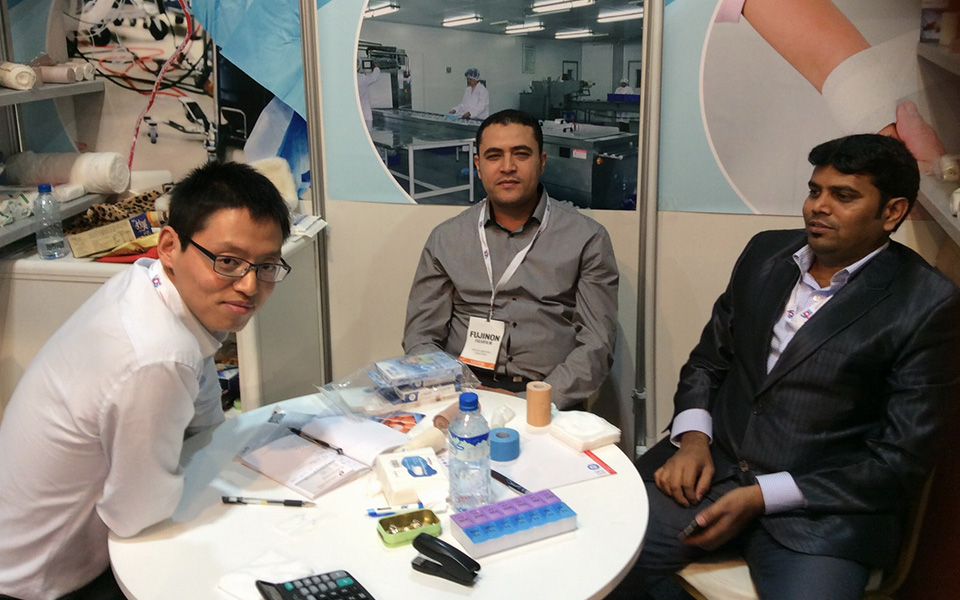
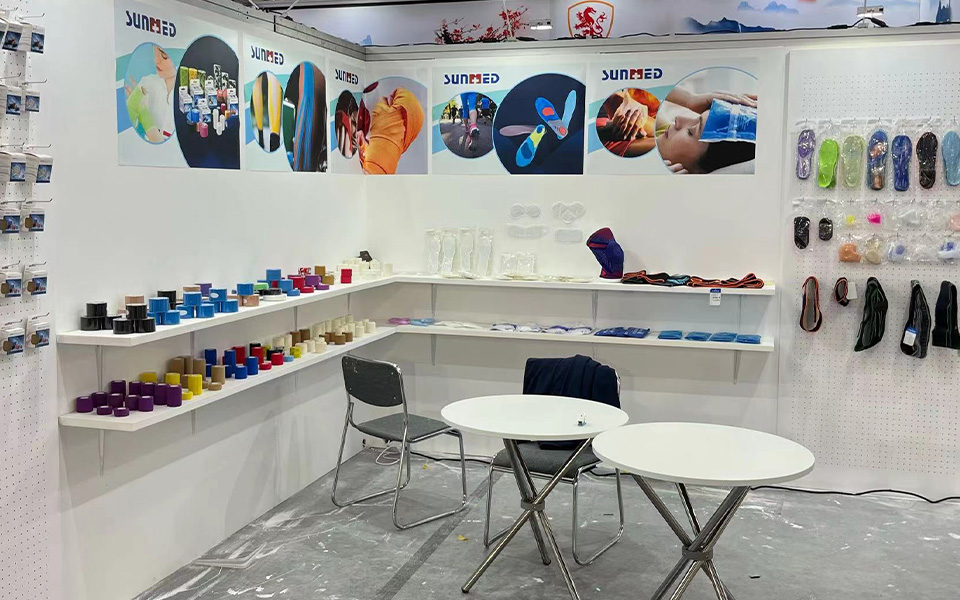
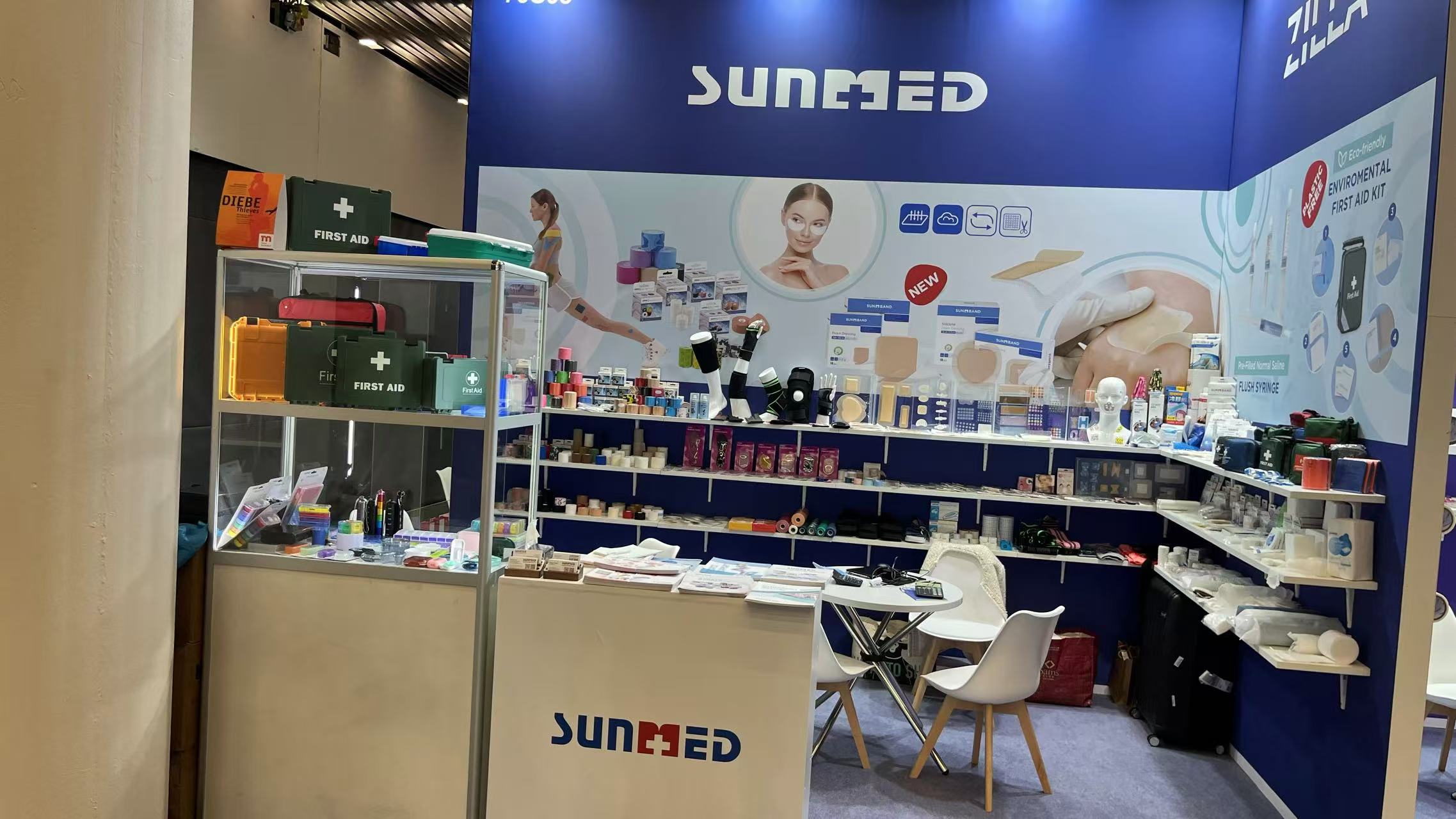
The product is supplied by Suzhou Sunmed Co., Ltd., a professional manufacturer and exporter of first-aid, medical, and health-care products. The company has approximately 30 years of experience in the medical device and medical consumables industry. Its product expertise covers first aid, wound dressing, medical gauze, bandages, medical tape, medical cotton, non-woven products, sports support products, family health-care items, pill boxes, hot and cold packs, medical instruments, syringes, catheters, and other medical consumables.
This broad product portfolio is relevant to the development and production of a pill organizer. A company experienced in medical and health-care products is familiar with the importance of practical design, consistent materials, clear product information, and dependable supply arrangements.
Sunmed operates multiple production bases in Jiangsu, Zhejiang, and Anhui Province. Multiple production locations can support production capacity, product specialization, and supply coordination. For international buyers, this wider manufacturing structure may also contribute to more stable communication regarding product planning and order fulfillment.
The company reports a professional quality-control team comprising hundreds of personnel. Its inspection procedures are designed to support compliance with ISO 13485:2016 standards, a quality-management framework associated with medical devices and related regulated products. The company also states that most of its products are CE certified and that its Suzhou factories comply with FDA requirements.
Certification and compliance status can vary by product, market, configuration, and intended use. Buyers should request current documentation for the specific product and confirm applicable regulatory responsibilities in the destination country. Nevertheless, an established quality system provides a strong foundation for consistent manufacturing and export support.
Advanced Production Considerations for Plastic Organizers
Producing a compact multi-compartment organizer requires more than simply forming a plastic container. The design must coordinate the outer case, seven trays, 28 compartments, individual lids, labels, colors, and final assembly. Dimensional consistency is important because the trays need to fit into the case while remaining removable.
Plastic processing begins with material selection and preparation. ABS and PS resins must be handled according to appropriate production specifications. Color matching is important for bright trays, while transparent components require attention to surface quality and visual clarity. Consistent material preparation helps reduce variation between production batches.
Mold design is another important consideration. The mold must reproduce narrow compartment walls, rounded edges, lid interfaces, and tray structures accurately. Proper mold maintenance supports repeatable dimensions and helps reduce cosmetic defects such as excessive flash, uneven surfaces, or inconsistent edges.
Injection molding parameters may influence the final appearance and strength of each component. Temperature, pressure, cooling, cycle time, and material flow must be controlled according to the selected resin and component geometry. A stable production process helps ensure that trays are neither excessively fragile nor difficult to remove from the outer case.
Assembly inspection is equally important. Operators or quality-control personnel may check that each tray is correctly assembled, each lid operates properly, and the daily labels correspond to the intended use. The clear case should be examined for visible defects, and the colorful trays should be reviewed for consistent finish and color.
Packaging is the final stage before shipment. Since the product is intended for travel and retail distribution, packaging should protect the organizer from dust, scratching, crushing, and unnecessary movement. Wholesale buyers may also require specific carton quantities, labeling formats, color assortments, or private-label packaging, subject to agreement with the manufacturer.
Quality Control from Raw Material to Finished Goods
A reliable quality-control program evaluates the product throughout the manufacturing process rather than only at the end. Incoming material checks can help confirm that the plastic resin and color components meet approved specifications. In-process inspections can identify molding or assembly problems before large quantities are completed.
Finished-product inspections may include visual examination, dimensional checks, tray-fit evaluation, lid operation, surface inspection, and packaging review. Because the organizer includes multiple removable parts, each part must work as part of the complete system.
Quality personnel may also review the consistency of printed or molded markings. The morning, noon, evening, and night indications must be legible and positioned appropriately. Clear labeling is not merely a design feature; it contributes to the product’s practical function.
For export customers, documentation and traceability can be important. Buyers may request product specifications, material information, inspection records, packaging details, and applicable conformity documents. A manufacturer with experience serving international markets is better positioned to support these requirements.
Wholesale and OEM Supply Potential
The listed minimum order quantity is 3,000 pieces, making the product suitable for distributors, pharmacies, medical-supply companies, supermarket chains, first-aid suppliers, family health-care retailers, and other wholesale channels.
A larger order quantity can support coordinated packaging, color planning, and market-specific product presentation. Buyers may discuss color assortments such as yellow, rainbow, or other approved options. Depending on the project, they may also explore packaging customization, labeling, instruction materials, carton configuration, and private-brand requirements.
Before placing an order, buyers should confirm the final product specification, available colors, dimensions, material composition, packaging method, production lead time, inspection arrangements, shipping terms, and applicable compliance documents. These details help ensure that the delivered goods meet the intended retail or institutional requirements.
The manufacturer’s wider experience in first aid, wound care, medical tape, sports support, family health-care products, and medical instruments may also benefit buyers who want to develop a broader health-care product range. A single experienced supplier can sometimes simplify sourcing, quality communication, and product portfolio management.
Use in Different Customer Environments
Home Health Care
At home, the organizer can help users prepare a weekly routine in one location. Its compact design supports storage near a bedside table, kitchen cabinet, or medicine storage area, provided the environment is appropriate for the medication.
Travel
Travelers can use the removable trays to carry only the required day’s supply or take the full organizer for an extended trip. The compact dimensions help conserve luggage space.
Pharmacy and Retail
Pharmacies and retail stores may offer the product to customers who need a simple weekly dosing system. The vivid colors and transparent case provide an attractive, easy-to-understand presentation.
Caregiver Support
Family caregivers may use the tray system when preparing medication schedules for another person. The four time-of-day divisions make it easier to review the planned routine, although medication preparation should always follow professional instructions.
Institutional and Promotional Programs
Health-care organizations, wellness programs, and distributors may consider the organizer for educational or adherence-support initiatives. Wholesale color and packaging options can help align the product with a particular program or product family.
Safety and Responsible Use
A pill organizer supports organization, but it does not diagnose conditions, measure doses, or confirm whether a medicine is safe for a particular person. Users should follow the advice of a physician, pharmacist, or other qualified health-care professional.
Keep medicines away from children and individuals who should not access them. The organizer should be stored in an appropriate location, and users should consider whether the product’s appearance could attract children. It is also important to maintain medicine identification information, expiration dates, and original instructions.
Some tablets and capsules should remain in original blister packs or protective containers. Medicines that are moisture-sensitive, light-sensitive, unstable outside their original package, or supplied with special storage instructions may not be suitable for transfer into a pill organizer. Professional advice should be obtained before repackaging.
The dispenser should not be shared between users without appropriate cleaning and professional consideration. If a compartment becomes cracked, contaminated, or difficult to close, the product should be replaced.
How Buyers Can Evaluate Competing Pill Organizers
When comparing weekly pill organizers, buyers should look beyond the number of compartments. A useful evaluation includes daily capacity, time-of-day labeling, tray removability, closure quality, material, portability, cleaning requirements, color availability, packaging, and supply support.
| Evaluation Point | Benefit of the DC660200 Design | Buyer Consideration |
|---|
| Weekly capacity | Seven daily trays support a complete weekly plan | Confirm whether the compartment volume suits the intended pills |
| Daily schedule | Four sections identify morning, noon, evening, and night | Useful for multi-time dosing routines |
| Portability | Compact 10.5 x 12.6 x 4.3 cm format | Confirm packaging and transport protection |
| Tray structure | Daily trays can be removed from the outer case | Check tray fit and lid operation in samples |
| Materials | ABS and PS plastic construction | Request current material information where required |
| Identification | Transparent case and colorful trays | Choose colors suitable for the target market |
| Supply capability | Manufacturer has experience in medical and health-care products | Confirm MOQ, lead time, documents, and packaging |
This comparison shows why a 28-compartment removable-tray organizer can be more versatile than a basic seven-compartment product. It combines structured scheduling with compact portability without relying on batteries, software, or complex controls.
Packaging, Presentation, and Market Positioning
Product presentation is important in retail and wholesale markets. The color combinations and transparent case make the organizer visually recognizable. Packaging can communicate the seven-day format, 28 compartments, removable trays, and travel-friendly design.
For retail customers, clear product information should explain the daily time divisions and material composition. For professional buyers, packaging should also include model identification, carton details, quantity information, and any required regulatory or handling marks.
The product can be positioned as a family health-care accessory, travel medication organizer, vitamin holder, senior-care support product, or practical daily routine aid. Its broad use cases give distributors flexibility when building product assortments.
Buyers should avoid overstating medical claims. The product is an organizer and storage accessory; it does not guarantee adherence, prevent missed doses, or replace professional care. Accurate communication helps protect consumers and supports responsible market development.
Company Experience and International Supply Support
Suzhou Sunmed Co., Ltd. exports products to more than 60 countries and regions, including markets in Europe, Southeast Asia, Africa, and Oceania. Its reported customer base includes hospitals, first-aid suppliers, supermarkets, and retail sports shops.
The company established a first-aid factory in 2008 and later expanded manufacturing capabilities for kinesiology tape, cohesive bandages, and elastic adhesive bandages in 2021. This history indicates continuing investment in product categories connected with medical care, sports support, and family health.
For international buyers, supplier experience can simplify communication about specifications, export documentation, packaging, quality expectations, and market requirements. Buyers should still complete their own supplier evaluation and verify all current certifications, test reports, and regulatory documents relevant to the destination market.
Frequently Asked Questions
How many compartments does the organizer have?
The organizer has 28 compartments in total. It includes seven daily trays, with four compartments on each tray.
What are the four daily compartments labeled for?
The compartments are intended for morning, noon, evening, and night medication schedules.
Can the daily trays be removed?
Yes. The design includes separate removable trays. A user can remove one daily tray while leaving the other trays in the outer case.
What materials are used?
The product is made from ABS and PS plastic. The exact role of each material may vary by component, and buyers requiring detailed material documentation should request the current product specification.
What is the product size?
The listed size is approximately 10.5 x 12.6 x 4.3 cm.
Is the pill dispenser suitable for travel?
Yes. Its compact and lightweight construction is designed to support travel use. Users should still follow storage requirements for the medicines placed inside it.
What colors are available?
Listed color options include yellow and rainbow designs. Other color options may be discussed with the manufacturer according to production requirements and order volume.
Can all medicines be transferred into the organizer?
No. Some medicines must remain in original packaging because they may be sensitive to light, air, humidity, or handling. Users should ask a pharmacist or health-care professional before transferring any medicine.
What is the minimum order quantity?
The listed minimum order quantity is 3,000 pieces.
Who manufactures the product?
The product is supplied by Suzhou Sunmed Co., Ltd., a manufacturer and exporter of medical, first-aid, and health-care products.
Does the product include an electronic reminder or alarm?
No. The product is a manual plastic organizer. It uses printed time labels, color differentiation, and removable trays rather than batteries or electronic controls.
How should the product be cleaned?
Empty the organizer before cleaning it. Use a suitable gentle cleaning method for plastic, avoid harsh chemicals and excessive heat, and allow every component to dry completely before returning medication.
What should wholesale buyers confirm before ordering?
Buyers should confirm the final dimensions, materials, colors, packaging, labeling, inspection requirements, order quantity, production schedule, shipping terms, and relevant compliance documents.
Conclusion
The 7-Day 28-Compartment Plastic Pill Dispenser for Travel combines weekly planning, four daily dosing periods, removable trays, bright color identification, and compact portability in one practical design. Its 28-compartment structure offers greater scheduling flexibility than basic weekly organizers, while its manual operation avoids the complexity of electronic dispensers.
The ABS and PS plastic construction supports a lightweight and durable format suitable for repeated household and travel use. The transparent outer case keeps the weekly system together, and the colorful trays help users distinguish different days. Removable daily sections add flexibility for caregivers, travelers, families, and retail customers.
For wholesalers and distributors, the product is supported by a manufacturer with long-term experience in medical consumables, first aid, wound care, sports support, and family health-care products. Multiple production bases, an established quality-control team, international export experience, and reported alignment with ISO 13485:2016 quality procedures provide a strong foundation for supply cooperation.
As with all medication accessories, the dispenser should be used responsibly. It is designed to organize medicines, vitamins, and supplements, but it does not replace professional instructions, original product information, or appropriate storage requirements. With correct use and suitable product selection, it can provide a clear, portable, and efficient way to manage a weekly medication routine.
References
1. Product specification for model DC660200, including dimensions, materials, color options, compartment configuration, and minimum order quantity.
2. International Organization for Standardization. ISO 13485:2016, Medical Devices—Quality Management Systems—Requirements for Regulatory Purposes.
3. General pharmaceutical storage guidance concerning medication identification, original packaging, temperature, humidity, light protection, and professional repackaging advice.
4. Manufacturer information concerning medical consumables, first-aid products, family health-care products, production bases, export markets, and quality-control operations.
5. General principles of plastic product manufacturing, including material selection, injection molding, dimensional control, assembly inspection, and finished-goods packaging.

 English
 Español
 русский
 Français
 Deutsch
 italiano
 By Admin