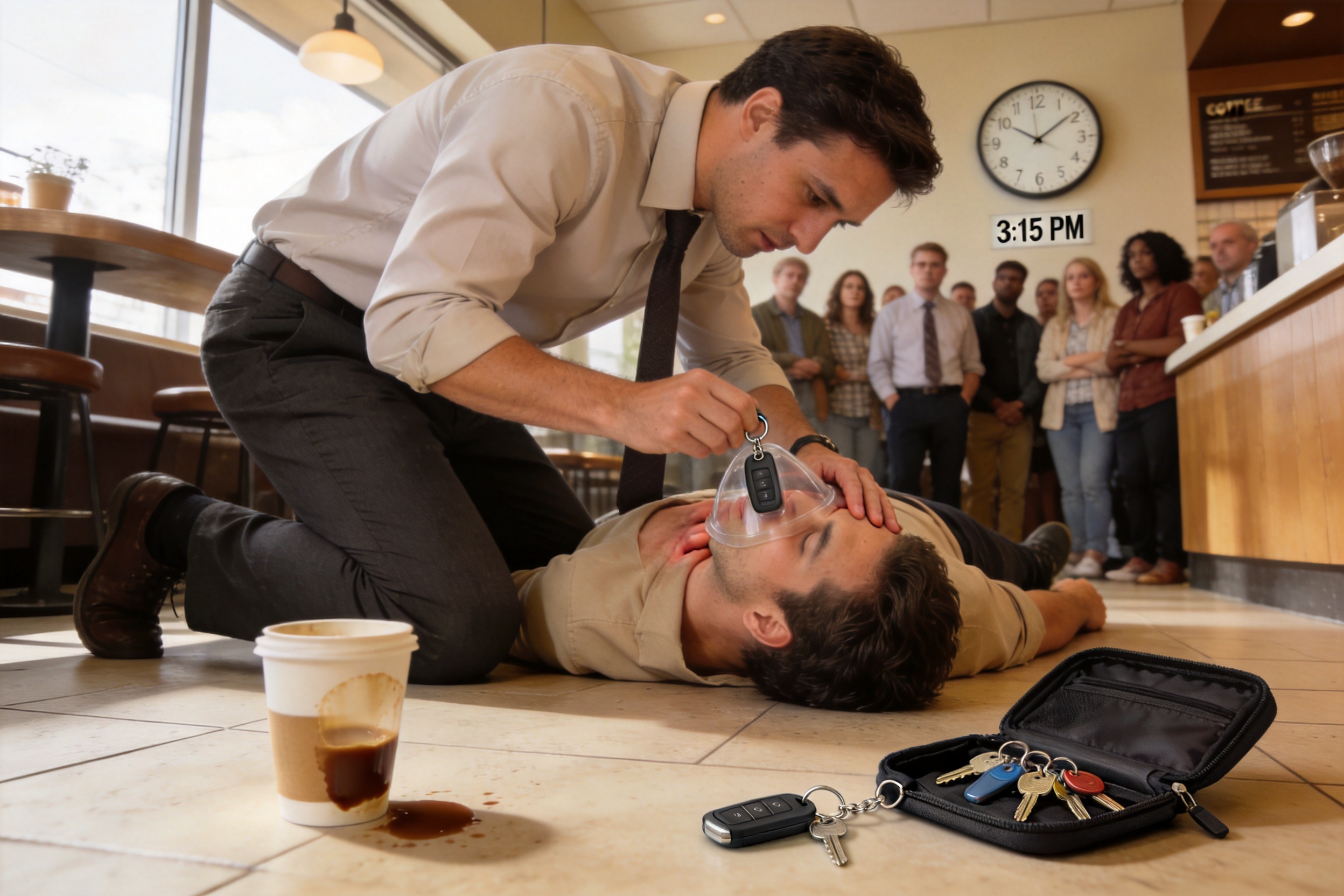
Every second counts in a cardiac emergency. According to the World Health Organization (WHO), over 17 million people die annually from cardiovascular diseases, with sudden cardiac arrest (SCA) accounting for a significant portion of these deaths. What’s more alarming? Only about 10% of SCA victims survive outside of a hospital setting—largely because bystanders either lack the confidence to perform CPR or don’t have the necessary tools to do so safely. The key pouch resuscitation kit addresses this critical gap: a compact, portable solution that turns everyday keys into a lifeline, ensuring you’re always prepared to act when seconds matter most.
Product Overview: Two Variants for Every Need
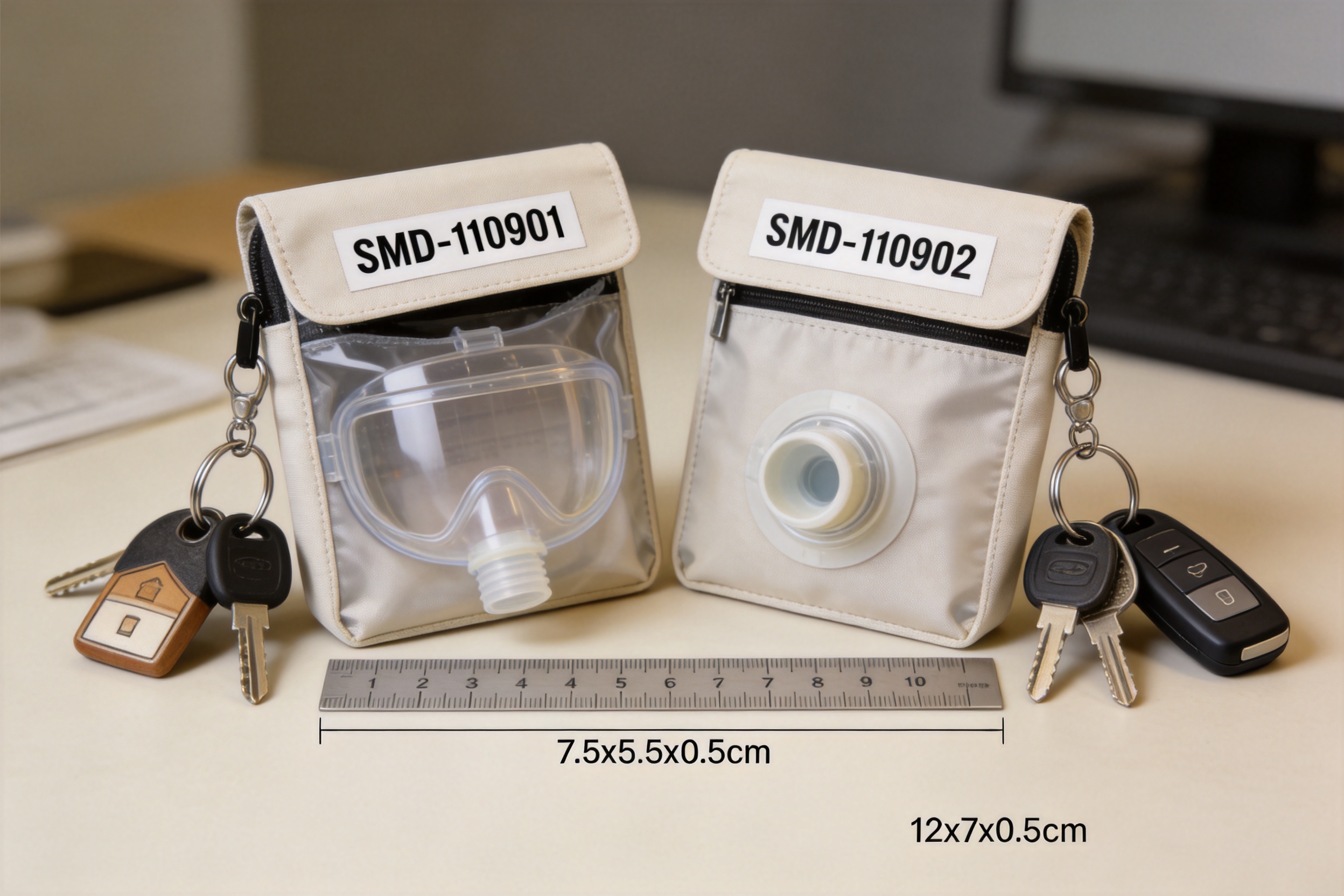
The key pouch resuscitation kit is designed to be unobtrusive yet powerful, fitting seamlessly on any keychain so it’s never left behind. Available in two models—SMD-110901 and SMD-110902—each variant caters to different user priorities, from maximum portability to enhanced safety.
| Model Code |
Product Description |
Pouch Dimensions (cm) |
Resuscitation Face Shield Type |
| SMD-110901 |
Key Pouch Resuscitation Kit |
7.5 x 5.5 x 0.5 |
1 pc without valve |
| SMD-110902 |
Key Pouch Resuscitation Kit |
12 x 7 x 0.5 |
1 pc with valve |
At just 0.5 cm thick, both pouches are slim enough to fit in a pocket or attach to a keychain without adding bulk. The SMD-110901 is the smallest option, ideal for daily commuters, office workers, or anyone who prioritizes minimalism. Its compact size means it won’t weigh down your keys or take up space in a purse. The SMD-110902, while slightly larger, offers an added layer of protection with a one-way valve in the face shield—perfect for healthcare workers, first responders, or anyone who wants extra peace of mind when performing CPR.
The core component of both kits is the resuscitation face shield: a clear, flexible plastic barrier that creates a safe seal between the rescuer’s mouth and the victim’s face. This barrier prevents direct contact with bodily fluids, reducing the risk of cross-contamination—a common concern that stops many bystanders from acting. The shield is also designed to allow full visibility of the victim’s face, so rescuers can monitor for signs of responsiveness or breathing.
Advantages Over Competitors: Setting a New Standard for Portability and Safety
While there are other resuscitation kits on the market, the key pouch resuscitation kit stands out for its unique combination of portability, versatility, and compliance with global safety standards. Here’s how it outperforms competitors:
1. Unmatched Portability: Always Within Reach
Most first aid kits—including resuscitation kits—are bulky, designed to be stored in a car, backpack, or office drawer. This means they’re often not available when an emergency strikes in a public space, like a grocery store, park, or subway. The key pouch kit solves this problem by attaching directly to keys, making it the only resuscitation tool that’s guaranteed to be with you 24/7.
Competitors often offer “keychain” kits that are either too small to fit a functional face shield or require assembly (e.g., unfolding a flimsy plastic sheet). The key pouch kit’s pre-assembled shield is ready to use in seconds: simply pull it out of the pouch, unfold it, and place it over the victim’s face. No extra steps, no fumbling—critical when every second counts.
2. Dual Variants: Cater to Every User’s Preference
Unlike most competitors, which offer only one type of resuscitation kit, the key pouch kit comes in two variants to suit different needs: the valve-free SMD-110901 for simplicity and the valve-equipped SMD-110902 for enhanced safety. This flexibility is a game-changer for users who want to choose between portability and protection.
For example, a student might prefer the SMD-110901 for its small size, while a nurse might opt for the SMD-110902 for the one-way valve, which prevents the victim’s exhaled air from reaching the rescuer. No other keychain resuscitation kit on the market offers this level of customization.
3. Durability and Hygiene: Built to Last and Stay Safe
The pouch is made from a water-resistant, tear-proof material that can withstand daily wear and tear—whether it’s being jostled in a pocket, exposed to rain, or dropped on the ground. Competitors often use thin, flimsy plastic pouches that tear easily, leaving the face shield exposed to dirt and bacteria.
Each face shield is individually sterilized and sealed in the pouch, ensuring it’s free from contaminants until it’s needed. The valve in the SMD-110902 is also sterilized, and both shields are single-use to eliminate the risk of cross-contamination between users. This level of hygiene is rare in small first aid kits, where cost-cutting often leads to unsterile components.
4. Global Compliance: Meet the Highest Safety Standards
Many small resuscitation kits skip certification to keep costs low, but the key pouch kit is manufactured in compliance with ISO 13485:2016 (the global standard for medical device quality management systems) and is CE-certified for the European market. Additionally, the production process adheres to FDA requirements, making the kit suitable for use in the United States.
Competitors often market their kits as “safe” but lack the documentation to prove it. For users who want to ensure their kit is effective and safe, the key pouch kit’s certifications are a critical differentiator. These certifications also mean the kit can be used in professional settings, like hospitals or first aid training programs.
5. OEM Customization: Tailor to Your Brand or Needs
The manufacturer offers OEM (Original Equipment Manufacturer) services, allowing businesses, hospitals, or first aid organizations to customize the kit with their logo, brand colors, or even adjust the pouch size (within limits). This is a rare feature in the small first aid kit market, where most products are sold as-is.
For example, a hospital might order kits with their logo to distribute to staff, while a outdoor gear company might add their brand to kits sold in their stores. This customization not only increases brand visibility but also ensures the kit meets the specific needs of the user group.
Advanced Manufacturing Processes: Behind the Scenes of a Lifesaving Product
The key pouch resuscitation kit’s quality is a direct result of the manufacturer’s 30 years of experience in the medical device industry and their commitment to advanced manufacturing processes. Here’s a closer look at how the kit is made:
1. State-of-the-Art Production Bases
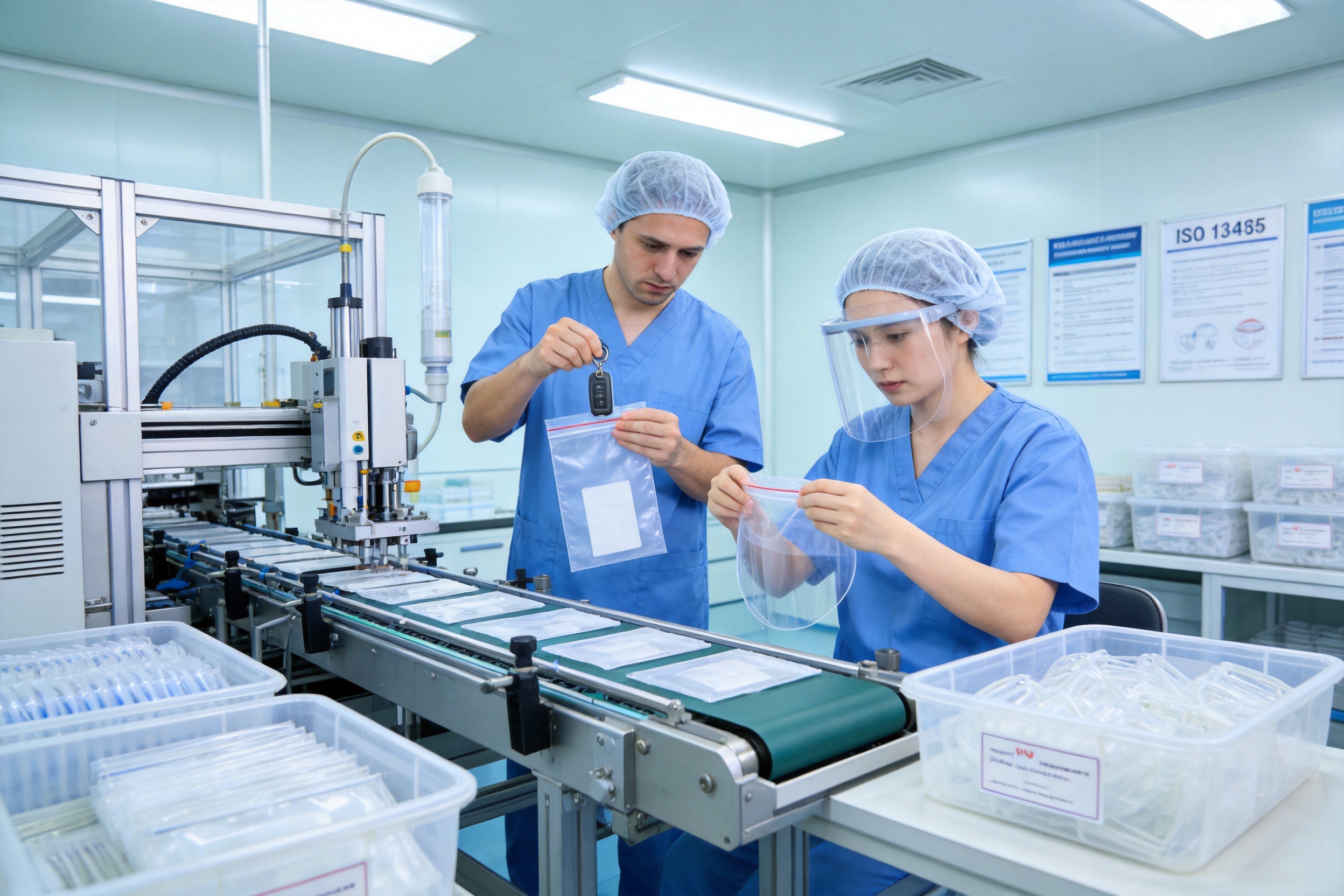
The manufacturer operates multiple production bases across Jiangsu, Zhejiang, and Anhui provinces in China, each equipped with modern machinery and clean rooms to ensure sterile production. The key pouch kit is assembled in Class 100,000 clean rooms (per ISO 14644-1 standards), which means the air is filtered to remove 99.97% of particles 0.3 microns or larger—critical for maintaining the sterility of the face shield.
Each production base follows strict protocols for component sourcing: the face shield is made from medical-grade plastic that’s FDA-approved, and the pouch is made from a durable, non-toxic material that’s free from BPA and other harmful chemicals. All components are tested for quality before they even enter the assembly line.
2. Automated Assembly for Consistency
The kit is assembled using automated machinery to ensure consistency and reduce the risk of human error. The process starts with the pouch being cut to size and printed with the model code and instructions. Next, the face shield is inserted into the pouch, and the pouch is sealed with a heat-sealing machine to ensure it’s airtight and sterile.
Automation also means the manufacturer can produce large quantities of kits without compromising quality—important for meeting the demands of global clients, from hospitals to retail stores. Each machine is calibrated daily to ensure it meets the manufacturer’s strict quality standards.
3. Rigorous Quality Control: Every Kit Is Tested
Quality control is a top priority for the manufacturer, with hundreds of QC personnel working across all production bases. Each kit undergoes a series of tests before it’s shipped:
- Sterility Test: The face shield is tested using a biological indicator to ensure it’s free from bacteria and fungi.
- Durability Test: The pouch is subjected to a tensile test to ensure it can withstand 10kg of force without tearing.
- Seal Test: The pouch is checked for air leaks using a vacuum machine—any kit with a broken seal is discarded.
- Clarity Test: The face shield is tested for transparency to ensure rescuers can see the victim’s face clearly.
These tests are repeated at every stage of production, from component sourcing to final packaging. The manufacturer also maintains detailed records of each batch, so any issues can be traced back to their source quickly.
4. Compliance with Global Regulations
The manufacturer’s commitment to compliance extends beyond certification. They regularly update their production processes to meet changes in global regulations, such as the European Union’s Medical Device Regulation (MDR) and the FDA’s 21 CFR Part 820. This means the kit is always up-to-date with the latest safety requirements, even as regulations evolve.
To ensure compliance, the manufacturer works with third-party auditors who conduct annual inspections of their production bases. These audits cover everything from component sourcing to quality control, and any non-compliance issues are addressed immediately.
Application Scenarios: Where the Kit Makes a Difference
The key pouch resuscitation kit’s portability makes it useful in a wide range of scenarios. Here are some of the most common ways it can save lives:
1. Daily Commute and Errands
Imagine you’re at a coffee shop, and the person next to you collapses suddenly. You reach for your keys, pull out the kit, and use the face shield to perform CPR until emergency services arrive. This is a scenario that happens every day, and the key pouch kit is the only tool that’s guaranteed to be with you in these moments.
Commuters, office workers, and students all benefit from having the kit on their keys—whether they’re on the subway, in the classroom, or at the grocery store. It’s a small investment that can have a huge impact.
2. Outdoor Activities
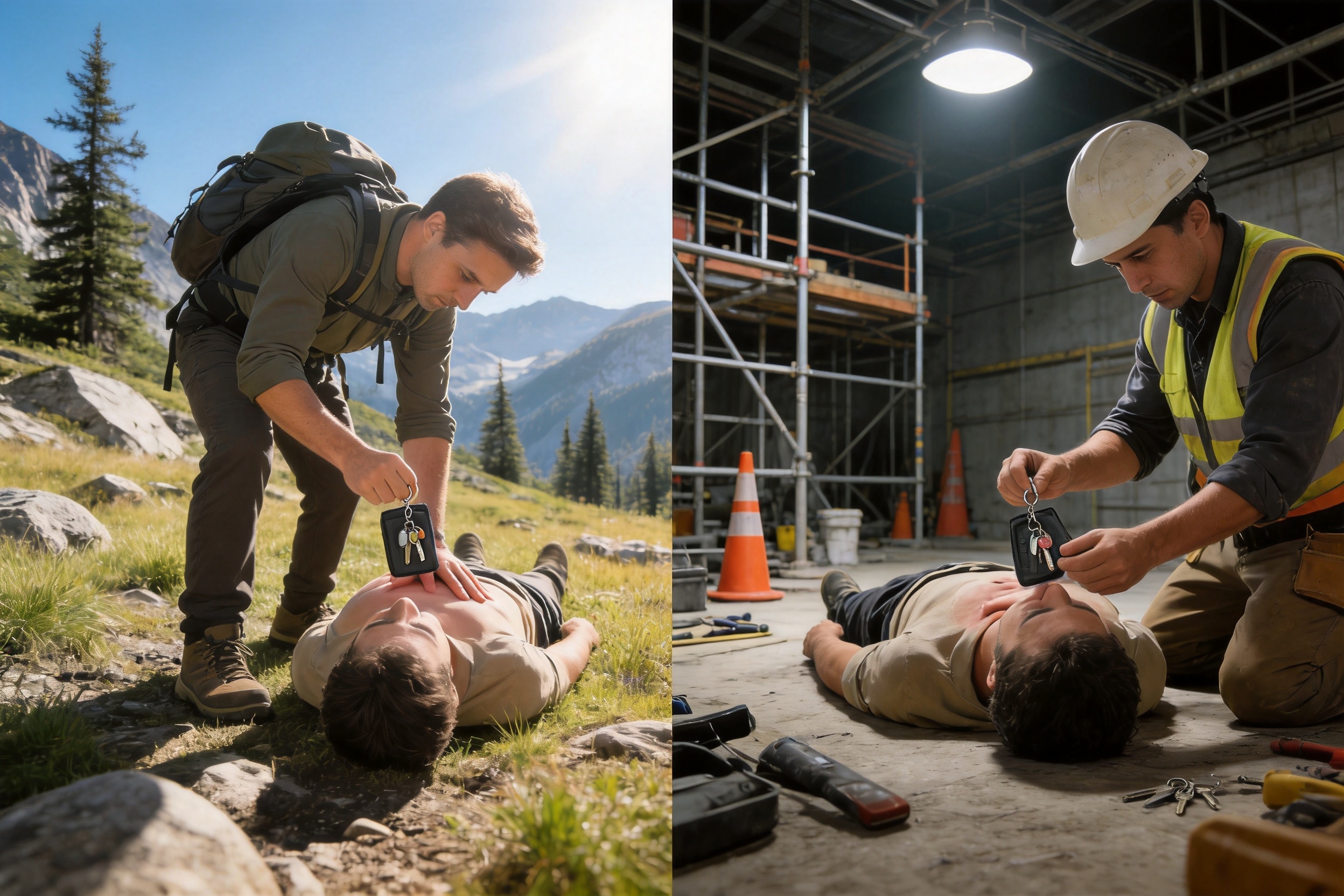
Outdoor enthusiasts—hikers, campers, cyclists, and runners—face a higher risk of accidents and cardiac emergencies, often in remote areas where emergency services are slow to arrive. The key pouch kit is lightweight and compact, so it won’t add bulk to a backpack or pocket. It’s the perfect addition to any outdoor first aid kit.
For example, a hiker in the Rockies might encounter a fellow hiker who has collapsed from hypothermia-induced cardiac arrest. The hiker uses the key pouch kit to perform CPR, keeping the victim alive until a rescue team arrives. This is a real-world scenario where the kit’s portability is a lifesaver.
3. Workplace First Aid
Many workplaces are required by law to have first aid kits on site, but these kits are often stored in a central location—too far away to be useful in an emergency. The key pouch kit can be distributed to employees as a supplementary first aid tool, ensuring that every worker has access to a resuscitation shield at their desk or in their pocket.
For example, a construction site worker might have a cardiac emergency while on the job. A coworker with the key pouch kit can act immediately, instead of waiting for someone to retrieve the central first aid kit. This can mean the difference between life and death.
4. Travel
Travelers—whether domestic or international—often find themselves in unfamiliar places where emergency services may not be as accessible or reliable. The key pouch kit is easy to pack in a suitcase or attach to a keychain, and it’s TSA-compliant (it doesn’t contain any liquids or sharp objects). It’s the perfect travel companion for anyone who wants to be prepared for emergencies.
For example, a tourist in a foreign country might witness a cardiac emergency. Even if they don’t speak the local language, they can use the key pouch kit to perform CPR, and the clear instructions on the pouch will guide them through the process.
5. First Responder Backup
First responders—paramedics, firefighters, and police officers—often carry large first aid kits, but these kits can be slow to access in high-pressure situations. The key pouch kit can be used as a backup tool, allowing first responders to act quickly before their main kit is available.
For example, a paramedic arriving at a scene might see a victim who needs immediate CPR. Instead of fumbling with their large kit, they can pull out the key pouch kit and start CPR right away. This saves valuable time and can improve the victim’s chances of survival.
Q&A: Your Most Pressing Questions Answered
Here are answers to some of the most common questions about the key pouch resuscitation kit:
Q1: What is the main difference between the SMD-110901 and SMD-110902 models?
A: The key difference is the resuscitation face shield and pouch size. The SMD-110901 features a valve-free shield and a smaller pouch (7.5x5.5x0.5cm), making it ideal for daily carry. The SMD-110902 includes a one-way valve for enhanced cross-contamination protection and a slightly larger pouch (12x7x0.5cm), perfect for users prioritizing safety.
Q2: Are the face shields sterile?
A: Yes. Each face shield is individually sterilized using ethylene oxide (EO) gas, a common method for sterilizing medical devices. The shield is sealed in the pouch to maintain sterility until it’s opened.
Q3: Can the pouch be reused?
A: The pouch is designed for durability and can be reused after cleaning (using a mild disinfectant like 70% alcohol). However, the face shield inside is single-use and should be replaced after each use to ensure safety.
Q4: How long is the shelf life of the kit?
A: The kit has a shelf life of 2-3 years, depending on storage conditions. It should be stored in a cool, dry place away from direct sunlight and extreme temperatures. The expiration date is printed on the pouch, so you can easily check when it needs to be replaced.
Q5: Is the kit suitable for pediatric use?
A: The face shield is designed to fit most adult faces, but it can be used for children in emergency situations if no pediatric-specific shield is available. For best results, ensure the shield covers the child’s mouth and nose completely.
Q6: Does the kit come with instructions?
A: Yes. The pouch includes printed instructions on how to use the face shield for CPR. The instructions are simple and easy to follow, even for someone with no prior first aid training.
Q7: Can I order the kit in bulk?
A: Yes. The manufacturer offers bulk ordering for businesses, hospitals, and first aid organizations. OEM customization is also available, allowing you to add your logo or brand to the pouch.
References
1. World Health Organization (WHO). (2023). Global Status Report on Cardiovascular Diseases. Geneva: WHO Press.
2. International Organization for Standardization (ISO). (2016). ISO 13485:2016 Medical Devices — Quality Management Systems — Requirements for Regulatory Purposes. Geneva: ISO.
3. U.S. Food and Drug Administration (FDA). (2022). Emergency Medical Devices: Resuscitation Equipment Guidelines. Silver Spring, MD: FDA.
4. European Commission. (2021). Medical Device Regulation (MDR) 2017/745. Brussels: European Commission.
5. American Heart Association (AHA). (2020). CPR & Emergency Cardiovascular Care (ECC) Guidelines Update. Dallas, TX: AHA.
6. International Society for Respiratory Care (ISRC). (2021). Best Practices for Resuscitation Face Shields. Dallas, TX: ISRC.
7. Centers for Disease Control and Prevention (CDC). (2022). Preventing Cross-Contamination in First Aid. Atlanta, GA: CDC.

 English
 Español
 русский
 Français
 Deutsch
 italiano
 By Admin