Elastic net bandage is a practical, highly adaptable wound care and dressing-retention product designed to help medical professionals, first aid suppliers, caregivers, and healthcare distributors secure wound dressings on many parts of the body without relying on traditional adhesive fixation. Its tubular, open-net structure allows the bandage to expand, conform, and hold dressings in place over fingers, wrists, hands, arms, feet, knees, legs, thighs, newborn heads, chests, abdomens, and broad chest areas. For wound care applications where comfort, fit, speed, and dressing stability are important, this elastic tubular net bandage offers a reliable alternative to tape-heavy methods and complicated wrapping techniques.

Elastic Net Bandage Tubular Wound Care To Fit Body Shape
The product presented here is a non-sterile net bandage made from elastic textile materials such as polyamide with rubber or nylon with latex, depending on the required specification. It is available in multiple sizes and widths, including small sizes suitable for fingers and larger sizes suitable for the chest and abdomen. The standard color is white, and common packaging includes 1 piece per box, with different carton quantities according to bandage size. The product is classified as a Class I medical device and is supported by quality certifications and compliance systems such as CE, ISO, and FDA-related requirements. With a shelf life of 2 years, it is suitable for procurement programs, medical supply distribution, first aid stock preparation, and routine clinical or home-care dressing support.
Product Overview
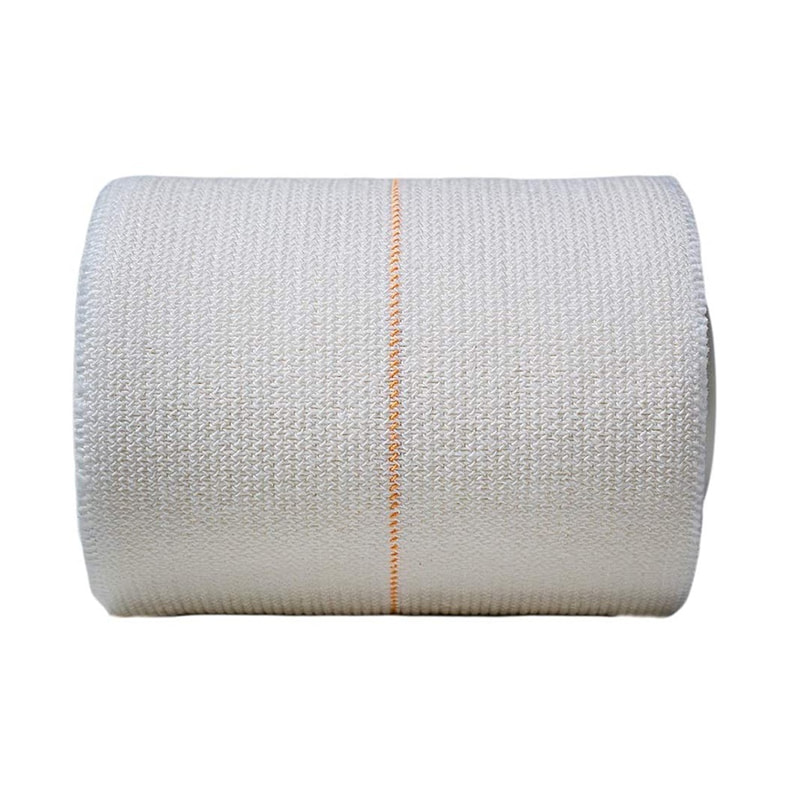
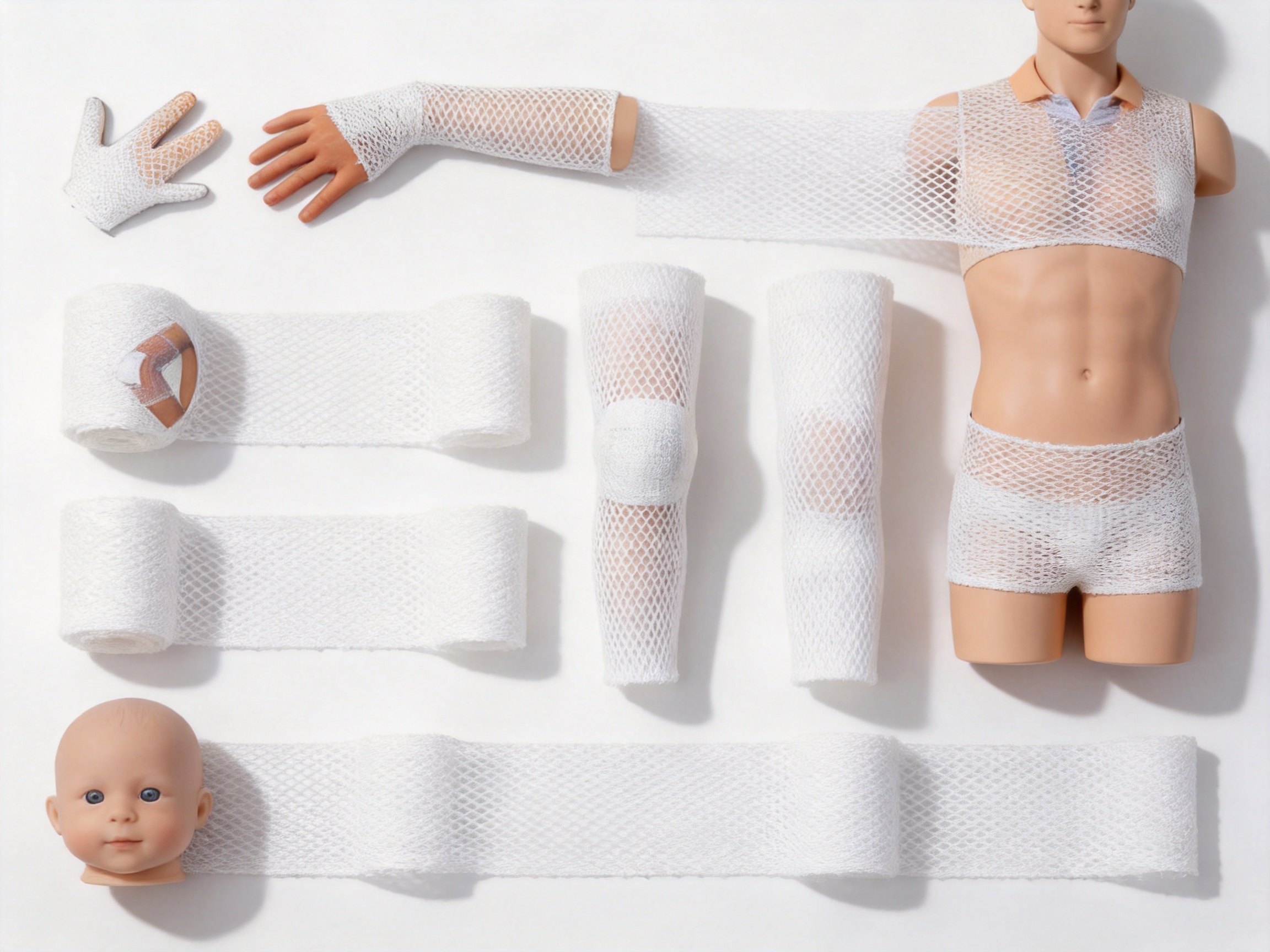
The elastic net bandage is a tubular wound dressing retention product. Unlike flat bandages, tapes, or conventional gauze wraps, it is formed as an elastic net tube that can slide over a body part and gently hold a dressing in place. This design makes it especially useful for irregular areas of the body where ordinary tape may loosen, pull on skin, or become difficult to apply neatly. The open-net structure provides flexibility and breathability, helping it fit the contours of the body while allowing air circulation around the covered area.
The product is intended for dressing retention rather than direct wound filling. In typical use, a sterile wound pad, gauze dressing, absorbent dressing, or other primary dressing is first placed over the wound or protected area. The elastic net bandage is then cut or selected to the appropriate length and applied over the dressing to keep it positioned. Because it does not require adhesive contact with the skin, it can reduce the discomfort associated with repeated tape removal, especially for patients with sensitive, fragile, or hairy skin. This makes it valuable in first aid, wound care, postoperative care, emergency dressing support, outpatient clinics, sports first aid, elderly care, and home healthcare.
Its wide size range is one of its strongest advantages. Smaller sizes can be used for fingers and hands, while larger sizes are suitable for limbs, joints, torso areas, and pediatric or newborn applications. This flexibility supports standardized purchasing because a single product family can meet many different dressing-retention needs. Medical supply distributors and institutional buyers can select a complete size series to cover a broad range of use cases without maintaining many unrelated fixation products.
Key Product Features
The elastic net bandage is designed with a balance of elasticity, softness, and secure retention. Its structure helps distribute holding force over a wider surface area, instead of concentrating pressure on narrow adhesive strips. This can improve comfort during wear and reduce the risk of dressing displacement caused by movement. The net format also allows the dressing beneath to remain visible in part, which may support routine observation without fully removing the retention layer, depending on the dressing and wound location.
The available material combinations include polyamide with rubber and nylon with latex. These materials are commonly selected for their elasticity, strength, and ability to recover shape after stretching. The product is soft and absorbent according to the specification, and it is designed to be comfortable enough for routine wound dressing support. The white color offers a clean medical appearance, making it suitable for hospitals, clinics, pharmacies, first aid suppliers, and professional medical kits.
The product is non-sterile, which is appropriate for a retention bandage that is generally used over a sterile primary dressing rather than placed directly into an open wound. The non-sterile format also helps support efficient production, packaging, and cost management for large-volume purchasing. The shelf life of 2 years supports warehousing and distribution requirements, giving buyers a practical product life cycle for inventory planning.
Its available widths include 0.6 cm, 1.7 cm, 2.2 cm, 3.8 cm, 4.4 cm, 5.2 cm, and other specifications. Product codes cover size options from very small sizes for gauze and fingers through larger sizes for broad chest applications. Roll-style specifications such as 25 m lengths are also available for institutional or distributor use, allowing the user to cut suitable sections according to the application area. This combination of boxed packaging and roll format gives buyers flexibility according to their market and customer needs.
Specification Table
| Product Type |
Elastic Net Bandage / Tubular Net Bandage |
| Common Applications |
Dressing retention for fingers, hands, arms, feet, knees, legs, thighs, head, chest, and abdomen |
| Disinfecting Type |
Non-sterile |
| Material Options |
Polyamide with rubber; nylon with latex |
| Color |
White |
| Available Width Examples |
0.6 cm, 1.7 cm, 2.2 cm, 3.8 cm, 4.4 cm, 5.2 cm, and other sizes |
| Length Options |
Cut lengths or roll formats such as 25 m, depending on specification |
| Packing |
1 piece per box; carton quantities vary by size |
| Shelf Life |
2 years |
| Instrument Classification |
Class I |
| Quality Certification |
CE, ISO, FDA-related compliance support |
Size Range and Body-Fit Applications
A major advantage of the elastic net bandage is its broad sizing system. The product family includes sizes suitable for small anatomical areas, large joints, limbs, newborn care, and torso applications. This makes it more versatile than single-width adhesive tapes or fixed-width wraps. Healthcare teams often need different fixation methods for different body parts, but an elastic net bandage series can simplify selection by offering a graded size system.
| Code |
Size |
Typical Area |
| SMD-240901 |
Size 0 |
Gauze and finger |
| SMD-240902 |
Size 0.5 |
Finger |
| SMD-240903 |
Size 1 |
Wrist and hand |
| SMD-240904 |
Size 2 |
Hand and arm |
| SMD-240905 |
Size 3 |
Arm and foot |
| SMD-240906 |
Size 4 |
Arm and knee |
| SMD-240907 |
Size 5 |
Leg and thigh |
| SMD-240908 |
Size 5.5 |
Newborn and head |
| SMD-240909 |
Size 6 |
Chest and abdomen |
| SMD-240910 |
Size 7 |
Chest and lower abdomen |
| SMD-240911 |
Size 8 |
Broad chest |
| SMD-240912 |
Size 9 |
Broad chest |
Small sizes are ideal for securing small gauze pads on fingers, where adhesive tape can be awkward and may restrict movement if wrapped too tightly. Medium sizes work well on wrists, hands, arms, feet, knees, and legs, where body movement can loosen dressings. Large sizes support dressing retention on the chest and abdomen, where the surface area is broad and body motion can challenge conventional fixation methods. For newborn and head applications, the availability of an appropriate size is particularly useful because the bandage can provide gentle retention without complicated wrapping.
Because the bandage expands and contracts, it can adapt to body shape more naturally than rigid or minimally elastic materials. The tubular format helps prevent edges from easily lifting, which is a common issue with adhesive tapes on curved or mobile body parts. When applied correctly, the product can keep dressings aligned while allowing the patient greater comfort during routine movement.
Packaging and Carton Configurations
Efficient packaging is important for distributors, hospitals, first aid kit assemblers, and wholesalers. This elastic net bandage is available in 1 piece per box configurations, with carton quantities adjusted according to product size. Smaller sizes can be packed in larger quantities per carton, while larger sizes occupy more space and therefore have lower carton quantities. A common carton size is 68 cm by 38 cm by 28 cm for multiple size options, supporting standardized logistics planning.
| Item |
Size Example |
Packing |
Carton Size |
| Net Bandage |
0.5, 0.7 cm x 25 m |
1 piece per box, 180 boxes per carton |
68 x 38 x 28 cm |
| Net Bandage |
1.0, 1.7 cm x 25 m |
1 piece per box, 120 boxes per carton |
68 x 38 x 28 cm |
| Net Bandage |
2.0, 2.0 cm x 25 m |
1 piece per box, 120 boxes per carton |
68 x 38 x 28 cm |
| Net Bandage |
3.0, 2.3 cm x 25 m |
1 piece per box, 84 boxes per carton |
68 x 38 x 28 cm |
| Net Bandage |
4.0, 3.0 cm x 25 m |
1 piece per box, 84 boxes per carton |
68 x 38 x 28 cm |
| Net Bandage |
5.0, 4.2 cm x 25 m |
1 piece per box, 56 boxes per carton |
68 x 38 x 28 cm |
| Net Bandage |
6.0, 5.8 cm x 25 m |
1 piece per box, 32 boxes per carton |
68 x 38 x 28 cm |
For purchasing teams, this packaging structure makes inventory easier to calculate. Buyers can choose small, medium, and large sizes in quantities matching market demand. Hospitals may order a complete size range, while pharmacies and first aid distributors may focus on high-turnover sizes such as finger, hand, arm, knee, and leg specifications. For OEM customers, packaging can often be adapted to private-label presentation, local language requirements, and market-specific carton planning.
Advantages Over Conventional Adhesive Tape
Traditional medical tape is widely used for securing dressings, but it is not always the best solution. Tape can pull skin during removal, lose adhesion when exposed to moisture or body movement, and perform poorly on curved, hairy, fragile, or perspiring skin. In contrast, elastic net bandage does not depend on adhesive contact. It holds dressings through gentle elastic retention around the body part. This can reduce discomfort associated with repeated tape removal and make dressing changes easier for patients and caregivers.
Another advantage is speed of application. Applying multiple strips of tape around a wound dressing can take time, especially on awkward areas such as fingers, joints, knees, or rounded limbs. A tubular net bandage can be cut to the required length and slipped over the dressing. This can support faster first aid response and more efficient dressing routines in busy clinical settings. In emergency kits, it also provides a simple dressing-retention option for users who may not have professional bandaging experience.
Elastic net bandage also allows better conformity on moving joints. When a dressing is placed near a knee, elbow, wrist, or ankle, movement can loosen tape. A tubular net structure can stretch and move with the joint more naturally, helping the dressing stay in position. This is particularly useful for sports first aid, outpatient treatment, and home care where patients continue daily activities after dressing application.
From a procurement perspective, the elastic net bandage can reduce the need for multiple tape sizes and complicated fixation accessories. One size range can support many uses, and roll formats allow customized lengths. The product is simple to store, lightweight, and easy to pack into first aid kits or medical supply shelves. Its non-sterile format also provides cost efficiency when used as a secondary retention layer over sterile primary dressings.
Advantages Over Traditional Gauze Wraps
Traditional gauze wraps are useful but can be bulky, uneven, and dependent on wrapping technique. If applied too loosely, they may slip. If applied too tightly, they may restrict circulation or cause discomfort. Elastic net bandage offers a more uniform retention method because its tubular structure distributes elastic force around the body part. It does not require multiple overlapping layers to hold a dressing, which can reduce bulk and improve patient comfort.
Gauze wraps often need clips, pins, tape, or tied ends to remain secure. These accessories can create pressure points or inconvenience. Elastic net bandage usually requires no clips or adhesive strips for basic retention. The open-net design helps it remain in place while minimizing unnecessary layers. This can be particularly beneficial for small dressings on fingers, hands, and arms, where bulky wraps may interfere with movement.
In addition, traditional wrapping requires skill to achieve consistent pressure. In home-care settings, caregivers may find it difficult to wrap a limb evenly. A tubular net bandage simplifies the process. The user selects the right size, cuts the required length if using a roll, and applies it over the dressing. This ease of use can help improve consistency across different users and reduce the likelihood of poorly secured dressings.
Comfort and Breathability
Comfort is one of the most important characteristics of any wound care accessory. A dressing-retention product may be worn for extended periods, so it should feel soft, flexible, and suitable for normal body movement. The elastic net bandage is designed to be soft and absorbent, and its open structure supports airflow. While the primary dressing protects the wound, the net bandage helps hold that dressing in place without covering the area with dense, heavy layers.
Breathability can be valuable for patient acceptance. When a bandage feels hot, tight, or bulky, patients may remove or adjust it, which can disturb the dressing beneath. The open-net design helps reduce the sensation of heaviness. It also makes the retention layer visually lighter and more flexible, which can improve comfort on sensitive areas such as hands, head, and chest.
Because the bandage contains elastic components, correct size selection remains important. A properly selected size should hold the dressing securely without creating excessive pressure. Medical professionals and caregivers should always check circulation, skin condition, and patient comfort after application, especially when using the bandage on fingers, limbs, newborns, elderly patients, or individuals with circulation concerns.

Typical Use Scenarios
The elastic net bandage is suitable for hospitals, clinics, emergency care, first aid kits, sports care, nursing facilities, home healthcare, and retail medical supply channels. In hospitals, it may be used to secure postoperative dressings, protect wound pads, or support dressing placement on limbs and torso areas. In outpatient clinics, it provides a quick retention option for minor wound care and dressing changes. In pharmacies and retail channels, it can be sold as a convenient wound care accessory for home use.
In first aid applications, elastic net bandage is valuable because it is simple to apply. A first aid responder can place a sterile gauze pad or wound dressing on the injury and then use the net bandage to secure it. This can be useful when adhesive tape is unavailable, unsuitable, or difficult to apply. For sports support and athletic first aid, the product can help hold dressings on moving areas after minor cuts, abrasions, or protective dressing needs, while allowing more natural movement than rigid fixation methods.
For pediatric and newborn care, the availability of specific sizes helps support gentle dressing retention. Traditional tape can irritate delicate skin, while gauze wraps may be bulky and difficult to stabilize. A correctly selected elastic net bandage can provide a softer and more adaptable retention option. However, professional guidance is important for newborn applications to ensure appropriate fit and safe pressure.
For elderly care, skin fragility is often a concern. Repeated tape removal can damage delicate skin, while overly tight wraps may cause pressure problems. Elastic net bandage can help reduce reliance on adhesive contact and may be easier for caregivers to apply. Its use should still be supervised according to the patient’s condition, wound type, and healthcare instructions.
How the Product Supports Better Dressing Stability
Dressing stability depends on several factors: the shape of the body part, the level of movement, the type of primary dressing, moisture exposure, and the fixation method. Elastic net bandage supports stability by creating a flexible sleeve around the body part. Instead of anchoring a dressing at only a few adhesive points, it provides surrounding support. This can help prevent the dressing from shifting or lifting at the edges.
The net structure grips the dressing gently while stretching with the body. On curved areas, this is especially important. For example, securing a dressing on a finger with tape may require multiple strips and careful alignment. A tubular net bandage can surround the finger and hold the dressing more evenly. On a knee or elbow, where bending is frequent, the elastic structure can move with the joint and reduce the chance of immediate loosening.
When used over absorbent gauze or a wound pad, the bandage helps keep the primary dressing in contact with the intended area. This can support cleaner dressing management and reduce accidental displacement during routine activity. The product should be used according to appropriate wound care practice and should not replace professional medical judgment, sterile dressings, compression therapy, or specialized wound management when those are required.
Manufacturing Strengths Behind the Product
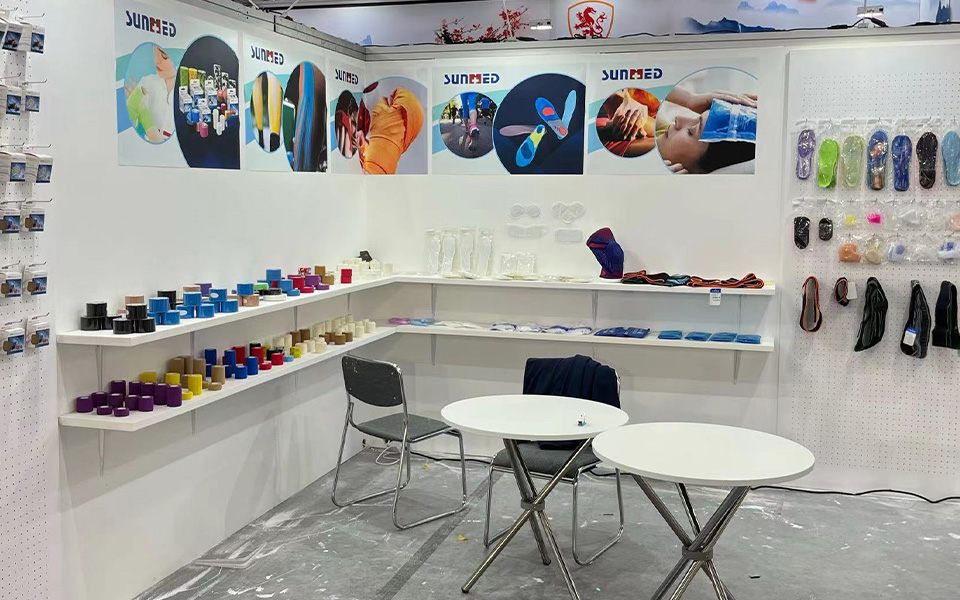
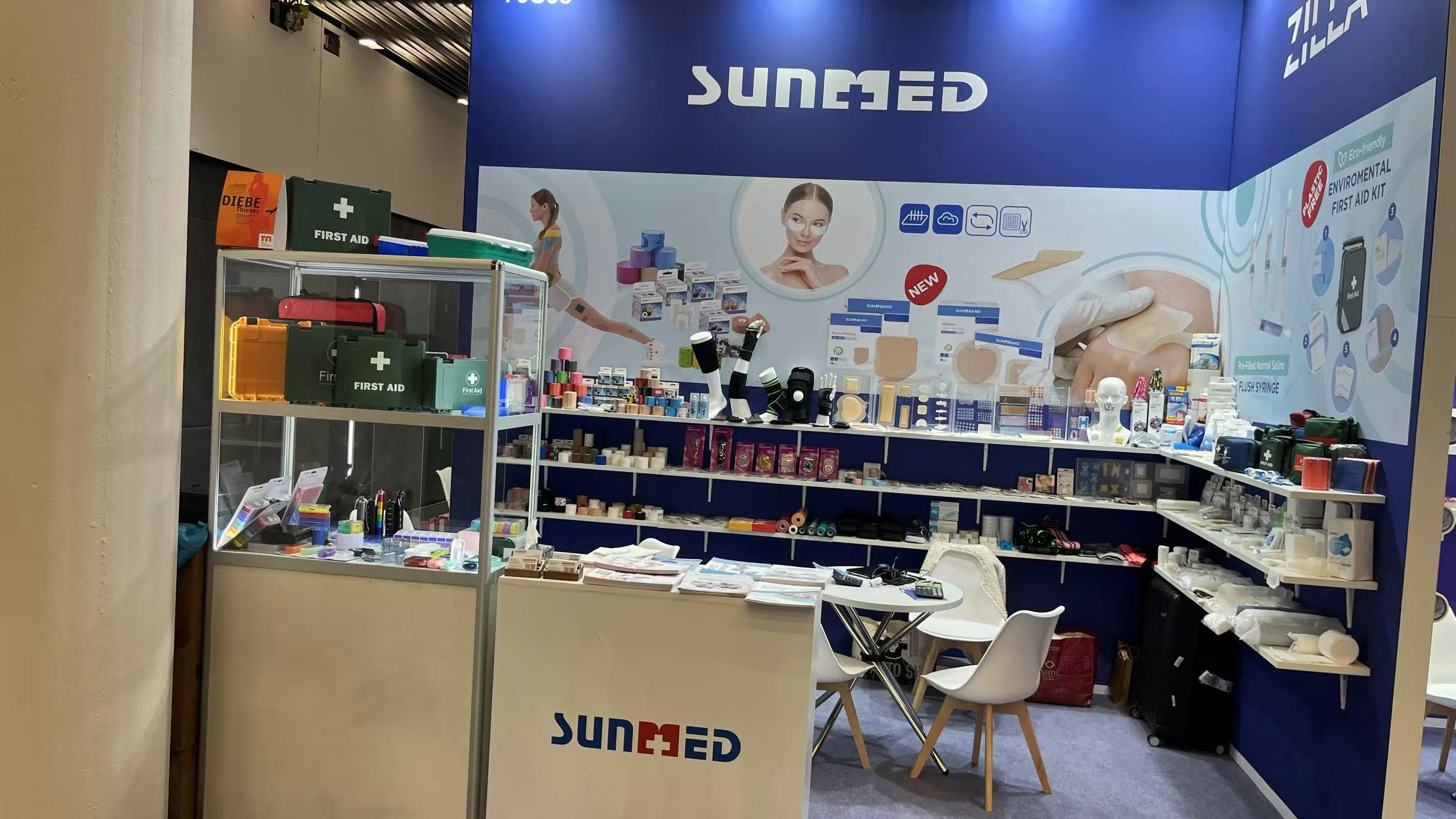
The manufacturer behind this product has extensive experience in medical consumables, first aid products, wound dressing supplies, medical gauze, bandages, medical tape, medical cotton, non-woven products, sports bandages, family healthcare items, and medical instruments. With decades of industry experience and multiple production bases in China, the company is able to support stable supply, broad product development, and large-scale export requirements. Its products have reached many international markets, including Europe, Southeast Asia, Africa, and Oceania, serving hospitals, first aid suppliers, supermarkets, and retail sports shops.
For an elastic net bandage, manufacturing consistency is critical. The product must stretch appropriately, recover its shape, maintain uniform mesh structure, and provide reliable retention. Advanced production management begins with material selection. Polyamide, nylon, rubber, and latex components must meet defined requirements for strength, elasticity, appearance, and compatibility with the final product design. Incoming material inspection helps ensure that each batch supports stable performance.
The net structure is produced through controlled textile processing. The manufacturing process must maintain uniform width, even mesh openings, consistent elasticity, and clean edges. A high-quality net bandage should not have excessive loose threads, irregular elasticity, weak sections, or uneven appearance. Process control during knitting or forming helps maintain repeatable product quality across different sizes.
After the bandage is formed, it may be cut, rolled, boxed, and packed according to customer and market requirements. Each stage requires attention to cleanliness, length accuracy, labeling, and packaging integrity. For medical consumables, packaging is not only a presentation element; it also supports traceability, shelf management, and product protection during transportation. Carton packing is planned to balance space efficiency and product protection, helping distributors manage international shipping and warehouse storage.
Quality Management and Compliance
Quality management is a core strength in medical consumable manufacturing. The manufacturer operates with a professional quality control team and inspection procedures aligned with ISO13485:2016 standards. ISO13485 is an internationally recognized quality management system standard for medical devices, emphasizing risk management, traceability, documentation, process control, supplier management, and continuous improvement. For a product such as elastic net bandage, this system helps ensure consistent production and reliable batch-to-batch performance.
The product is classified as a Class I medical device, and quality certification support includes CE, ISO, and FDA-related compliance. These certifications and compliance structures are important for international buyers because they help support regulatory review, market entry, and customer confidence. While exact regulatory requirements vary by country and region, working with an experienced exporter can simplify documentation preparation and reduce procurement risk.
Quality control for elastic net bandage may include checks for material quality, width, length, elasticity, appearance, packaging, labeling, carton information, and product cleanliness. Inspectors may evaluate whether the bandage stretches evenly and returns appropriately, whether the mesh is uniform, and whether the product matches customer specifications. Finished goods inspection before shipment helps reduce the chance of receiving defective or inconsistent products.
Traceability is another important part of quality management. Proper batch coding, production records, and inspection records help support investigation and corrective action if quality questions arise. For wholesalers and medical supply buyers, traceability provides confidence that the product is produced under controlled conditions rather than informal or inconsistent manufacturing.
Why This Elastic Net Bandage Stands Out in Competitive Markets
In many markets, elastic net bandages may look similar at first glance. However, differences in material quality, elasticity, mesh uniformity, sizing accuracy, packaging reliability, and manufacturer experience can significantly affect user satisfaction. This product stands out because it is supported by a complete size range, practical packaging options, established medical consumable manufacturing experience, and international quality management systems.
Compared with lower-cost products from less controlled sources, this elastic net bandage offers better procurement confidence. A well-managed manufacturer can provide stable specifications, consistent cartons, documentation support, and production capacity. This matters to importers and distributors because inconsistent medical consumables can cause customer complaints, regulatory issues, and increased replacement costs.
Another competitive advantage is the company’s broader product ecosystem. Because the manufacturer supplies first aid, wound dressing, gauze, bandage, tape, cotton, non-woven, sports support, hot and cold therapy, syringe products, infusion products, blood collection products, surgical consumables, and patient transfer items, buyers can consolidate sourcing. Instead of purchasing each category from a different supplier, customers may combine elastic net bandage orders with related wound care and first aid products. This can improve communication efficiency, reduce sourcing complexity, and support coordinated OEM packaging programs.
International export experience is also important. The company has served customers in many countries and understands the expectations of hospitals, first aid suppliers, supermarkets, and retail sports channels. Export capability includes documentation preparation, carton labeling, product customization, packaging adaptation, and communication with global buyers. For procurement teams, this experience reduces uncertainty and supports smoother cooperation.
OEM and Wholesale Value
The elastic net bandage is well suited for OEM and wholesale programs. Many distributors require private-label packaging, customer-specific carton quantities, multilingual labeling, or market-specific product sets. A manufacturer with broad medical consumable experience can support these needs more effectively than a supplier offering only generic stock items. OEM service allows the product to align with a distributor’s brand identity while maintaining controlled manufacturing quality.
For first aid kit assemblers, the elastic net bandage can be included as a versatile dressing-retention component. Its lightweight structure and broad applicability make it useful in workplace kits, sports kits, travel kits, emergency response kits, and household wound care sets. For pharmacies and medical retailers, boxed formats can be displayed as practical wound care accessories. For hospital supply channels, roll formats can support economical cutting and routine dressing retention.
Wholesale buyers also benefit from predictable packaging and carton planning. Carton sizes and box quantities are important for container loading, warehouse racking, and shipment cost calculation. The product’s common carton size of 68 x 38 x 28 cm across multiple specifications supports simplified logistics. Buyers can plan mixed-size shipments with fewer surprises and better inventory control.
Material Considerations
The product may contain latex depending on the selected material option, such as nylon with latex. Latex provides useful elasticity, but it may cause allergic reactions in individuals with latex sensitivity. Therefore, buyers should clearly confirm material composition when placing orders, and healthcare users should follow facility policies regarding latex-containing products. Where latex sensitivity is a concern, material alternatives or labeling requirements should be discussed with the supplier.
Polyamide and nylon are valued for strength and flexibility. In a net bandage, these fibers contribute to a stable mesh structure and comfortable handling. Rubber or latex components provide stretch and recovery. The correct combination of these materials helps the bandage fit body shape while maintaining enough resilience to secure dressings. Poor-quality elastic materials may overstretch, lose recovery, or break easily, which is why controlled material selection and inspection are essential.
Softness is also important. A retention bandage should not scratch, irritate, or feel harsh during use. The open-net structure helps reduce bulk, but the fiber surface and elasticity must also be comfortable. Quality manufacturing helps ensure that the product feels smooth and performs predictably.
Application Guidance
To use the elastic net bandage, first prepare the wound area according to appropriate wound care procedures. Apply the correct sterile primary dressing or absorbent pad as directed by a healthcare professional or according to first aid practice. Select the suitable net bandage size for the body part. If using a roll, cut an appropriate length that will cover the dressing and extend enough beyond the dressing edges to hold it securely.
Gently stretch the tubular bandage and slide it over the body part until it covers the dressing. Adjust the dressing and net bandage so that the wound pad remains properly positioned. Check that the bandage is not too tight. For fingers, toes, limbs, newborns, elderly patients, or patients with circulation problems, carefully monitor skin color, temperature, swelling, numbness, tingling, and comfort. If any signs of excessive pressure occur, remove or replace the bandage with a more suitable size.
The product is intended for retention and should not be used as a substitute for compression bandaging unless specifically assessed and directed by a qualified healthcare professional. It should not be placed directly into deep wounds, infected wounds, or surgical sites without an appropriate sterile primary dressing and medical direction. If bleeding is heavy, wound condition is serious, or infection is suspected, professional medical care should be sought.
Storage and Shelf Life
The product has a shelf life of 2 years under appropriate storage conditions. It should be stored in a clean, dry, well-ventilated environment away from excessive heat, moisture, direct sunlight, and chemical contamination. Proper storage helps maintain elasticity, packaging condition, and product appearance. Distributors should follow first-in, first-out inventory management to ensure products are used within shelf life.
Cartons should be protected from compression and water damage during transportation and warehousing. Because elastic materials can be affected by prolonged exposure to heat or certain chemicals, storage discipline is important. Buyers should also maintain carton labels and batch information to support traceability.
For large-volume procurement, shelf life management should be part of purchasing planning. The 2-year shelf life provides practical flexibility, but buyers should still forecast demand accurately and rotate inventory. Hospitals, pharmacies, and first aid suppliers should avoid using expired products, even if the bandage appears visually acceptable.
Role in First Aid and Wound Care Product Systems
The elastic net bandage works best as part of a complete wound care system. A typical wound care product set may include sterile gauze swabs, absorbent pads, adhesive bandages, medical tape, conforming bandages, cotton products, wound dressings, gloves, disinfectant products, scissors, and retention bandages. The tubular net bandage fills an important role in this system by helping secure the primary dressing with minimal adhesive dependence.
In first aid kits, versatility is valuable because the exact injury location cannot be predicted. A net bandage that can support dressings on fingers, hands, arms, knees, feet, and other areas improves the kit’s practical usefulness. It also helps users who may not be skilled at traditional wrapping. For workplace first aid, sports facilities, schools, travel kits, and community emergency supplies, simple application can make a significant difference.
For professional wound care, the product supports dressing retention where frequent dressing changes are required. Because it can be removed and replaced without pulling adhesive from the skin, it may improve patient tolerance during repeated care routines. It can also support dressing stability on areas where adhesive fixation is limited by moisture, movement, or body contour.
Manufacturing Process: From Raw Material to Finished Product
The manufacturing process begins with specification confirmation. Customers may require certain widths, lengths, packaging formats, carton quantities, labeling designs, or regulatory documentation. The production team translates these requirements into controlled manufacturing instructions. This stage is important because elastic net bandage performance depends heavily on correct size and elasticity.
Raw materials are then selected and inspected. Polyamide, nylon, rubber, and latex components must meet internal quality criteria before entering production. Material inspection can include visual checks, dimension verification, elasticity assessment, and supplier documentation review. Controlled material sourcing helps prevent variations that could affect the final bandage’s stretch, recovery, and comfort.
The textile forming process creates the tubular net structure. Equipment settings must be adjusted according to product size, mesh structure, and elasticity requirements. Operators and quality personnel monitor production to ensure the net is uniform and free from visible defects. Production consistency is essential because a weak or uneven mesh can compromise dressing retention.
After forming, the product is processed into the required format. Roll products may be wound to specified lengths such as 25 m. Other products may be prepared in cut lengths according to customer needs. During this stage, length accuracy and neat winding are important for user satisfaction. A poorly wound roll can be difficult to dispense, while inaccurate length may create customer complaints.
The bandage is then boxed and packed. Packaging may include printed boxes, labels, instructions, batch codes, and carton markings. Cartons are packed according to specification, such as 180 boxes per carton for small sizes or fewer boxes per carton for larger sizes. Final inspection checks product appearance, packaging accuracy, carton condition, and documentation before shipment.
Inspection Points That Matter
For elastic net bandage, quality inspection should focus on several practical performance indicators. Width accuracy ensures the product corresponds to the intended body part. Elastic recovery ensures the bandage can hold a dressing without becoming loose after stretching. Mesh uniformity supports stable appearance and retention. Softness affects patient comfort. Packaging integrity protects the product during transport and storage.
Appearance inspection is also important. Medical consumables should present a clean, professional appearance. Visible stains, broken threads, uneven mesh, damaged boxes, or unclear labels can undermine customer confidence. Because many buyers sell to hospitals and healthcare channels, visual quality is part of product credibility.
Carton inspection helps support export success. Incorrect carton labeling, damaged outer cartons, or inconsistent packing quantities can create warehouse and customs problems. A mature manufacturer understands that quality is not only about the product itself but also about the complete delivery condition.
Global Market Suitability
The elastic net bandage is suitable for many international markets because wound dressing retention is a universal healthcare need. Hospitals, clinics, first aid suppliers, retail pharmacies, sports shops, and home-care channels all require practical methods for securing dressings. The product’s simple design and broad size range make it adaptable to different healthcare systems and user habits.
In European markets, buyers often value quality management, CE documentation, packaging clarity, and consistent supply. In Southeast Asian markets, demand may include hospitals, pharmacies, distributors, and first aid suppliers seeking cost-effective but reliable medical consumables. In African markets, durable packaging, value, and supply reliability can be especially important. In Oceania, retail presentation and compliance support may be key procurement factors. A manufacturer with experience in these regions can better understand buyer expectations.
For wholesale customers, one of the strongest benefits is the ability to source related products from a single experienced supplier. Elastic net bandage can be combined with gauze, adhesive bandages, medical tapes, cotton products, wound dressings, PPE items, sports support products, hot and cold therapy items, and other medical consumables. Consolidated sourcing can reduce administrative effort, improve shipment coordination, and help customers build complete product catalogs.
Comparison With Competing Fixation Products
Elastic net bandage competes with adhesive tape, cohesive bandage, conforming gauze, elastic adhesive bandage, stockinette, and tubular support bandages. Each product has its place, but elastic net bandage offers a distinct combination of simplicity, breathability, and non-adhesive retention. It is not designed to replace every fixation method, but it can be the better choice when dressing retention is needed without adhesive skin contact or bulky wrapping.
Compared with cohesive bandage, elastic net bandage is lighter and more breathable. Cohesive bandage provides self-adherence and can offer stronger wrapping support, but it may be more compressive and less suitable for simple dressing retention on delicate areas. Compared with elastic adhesive bandage, net bandage avoids adhesive contact and is easier to remove. Compared with stockinette, the net structure is more open and can be more adaptable for dressing visibility and airflow.
Compared with low-quality net bandages, this product offers the advantage of manufacturing control, size range, packaging consistency, and quality system support. In competitive purchasing, the lowest unit price is not always the best value. If a bandage loses elasticity, has inconsistent width, breaks during application, or arrives with poor packaging, the real cost increases. A reliable product supports fewer complaints, better customer satisfaction, and stronger long-term distribution relationships.
Buyer Selection Tips
When selecting elastic net bandage for wholesale or clinical supply, buyers should consider size range, material composition, elasticity, packaging, shelf life, certifications, and supplier experience. A complete size series is important if the product will be used across hospitals or broad retail channels. Material confirmation is especially important when latex sensitivity must be managed. Packaging should match the target market, whether professional medical supply, pharmacy retail, or first aid kit assembly.
Buyers should request product samples for evaluation. Practical sample testing may include applying the bandage over gauze on different body parts, checking stretch and recovery, assessing softness, reviewing packaging, and confirming size accuracy. Distributors should also evaluate carton strength and labeling clarity because these affect warehouse handling and customer delivery.
Documentation support is another important factor. International medical supply buyers often need certificates, technical data, product specifications, labeling details, and compliance documents. An experienced manufacturer can provide these materials more efficiently and communicate clearly through the procurement process.
Safety and Responsible Use
Although elastic net bandage is simple to use, responsible application is important. The bandage should not be applied too tightly. It should not be used as a tourniquet or as a compression device unless directed by a healthcare professional. Users should check the skin around the bandage regularly, especially for swelling, discoloration, numbness, or discomfort. If any adverse signs occur, the bandage should be removed and medical advice should be sought.
The product is non-sterile, so it should generally be used over a sterile primary dressing rather than directly on an open wound. If the product becomes wet, dirty, or damaged, it should be replaced. Used bandages should be disposed of according to local hygiene and medical waste practices. In professional settings, staff should follow facility protocols.
Latex-containing versions should be clearly identified and used with awareness of latex allergy risk. Buyers serving markets with strict latex labeling requirements should confirm specifications before order confirmation. For sensitive applications, alternative material discussions may be necessary.

Frequently Asked Questions
What is an elastic net bandage used for?
An elastic net bandage is used to hold wound dressings, gauze pads, or absorbent pads in place. It is commonly used on fingers, hands, wrists, arms, feet, knees, legs, thighs, head, chest, and abdomen areas. It is a secondary retention product and is generally used over a primary dressing.
Is the elastic net bandage sterile?
The product described here is non-sterile. It is intended mainly for dressing retention over a sterile wound pad or dressing. It should not be placed directly into an open wound unless a healthcare professional provides specific instructions.
What materials are available?
Material options include polyamide with rubber and nylon with latex. Because some versions may contain latex, buyers and users should confirm the exact material composition before use, especially when latex allergy is a concern.
What sizes are available?
The product family includes sizes from small finger and gauze sizes to large chest and abdomen sizes. Example widths include 0.6 cm, 1.7 cm, 2.2 cm, 3.8 cm, 4.4 cm, and 5.2 cm. Code options cover Size 0 through Size 9 for different body areas.
How does it compare with medical tape?
Medical tape relies on adhesive contact with the skin, while elastic net bandage uses a tubular elastic structure to hold the dressing. This can make it more comfortable for repeated dressing changes and useful on curved, hairy, fragile, or mobile areas where tape may be difficult to apply or remove.
Can it be used for compression?
It is designed for dressing retention, not therapeutic compression. It should not replace compression bandages or compression therapy unless a qualified healthcare professional determines that it is appropriate for a specific case.
What is the shelf life?
The shelf life is 2 years when the product is stored properly in a clean, dry environment away from excessive heat, moisture, direct sunlight, and contamination.
Is it suitable for first aid kits?
Yes. Its lightweight structure, easy application, and wide range of uses make it suitable for workplace first aid kits, sports first aid kits, travel kits, emergency kits, and home wound care supplies.
Can it be supplied for OEM or private label orders?
Yes. The manufacturer has broad experience in medical consumables and can support wholesale and OEM needs such as packaging customization, carton planning, labeling, and related wound care product sourcing.
Why is manufacturer experience important for this product?
Manufacturer experience affects material control, elasticity consistency, size accuracy, packaging reliability, documentation support, and delivery stability. These factors are important for distributors, hospitals, pharmacies, and first aid suppliers that need dependable medical consumables.
Conclusion
The elastic net bandage tubular wound care product is a versatile, comfortable, and efficient dressing-retention solution. Its open-net tubular structure helps it conform to body shape and secure dressings without heavy reliance on adhesive tape. With multiple sizes for fingers, hands, arms, feet, knees, legs, thighs, newborn head, chest, abdomen, and broad chest applications, it offers broad utility across first aid, clinical care, sports support, home healthcare, and medical supply distribution.
Its advantages over conventional tape and gauze wraps include easier application, reduced adhesive contact, improved conformity on curved or mobile body parts, breathable structure, and flexible size selection. For buyers, the product also offers practical packaging, 2-year shelf life, Class I classification, and support from CE, ISO, and FDA-related quality systems. The manufacturer’s long experience in medical consumables, wound dressing products, bandages, medical tapes, cotton products, PPE, sports support items, and surgical consumables strengthens the product’s reliability and procurement value.
In competitive markets, success depends not only on the product’s appearance but also on consistency, documentation, packaging, export experience, and quality management. This elastic net bandage is supported by controlled manufacturing processes, professional quality inspection, international market experience, and OEM capability. For wholesalers, hospitals, first aid suppliers, pharmacies, and medical product distributors, it represents a practical wound care accessory that can improve dressing retention while supporting efficient sourcing and dependable supply.
References
International Organization for Standardization. ISO 13485:2016 Medical devices: Quality management systems requirements for regulatory purposes.
European Commission. Guidance on medical device classification and conformity assessment under European medical device regulations.
U.S. Food and Drug Administration. General principles for medical device quality systems and Class I device controls.
World Health Organization. Practical guidance on wound care, infection prevention, and safe use of medical consumables.
Clinical wound care practice literature on dressing retention, secondary bandages, patient comfort, and prevention of skin trauma during dressing changes.

 English
 Español
 русский
 Français
 Deutsch
 italiano
 By Admin