Outdoor activities create a special need for organized, portable, and dependable first aid storage. Hiking trails, camping sites, sporting events, road trips, and workplace safety stations may all require quick access to medical supplies. A well-designed first aid bag must do more than hold equipment. It should help users locate essential items quickly, protect supplies from everyday environmental exposure, remain comfortable to carry, and withstand repeated use.
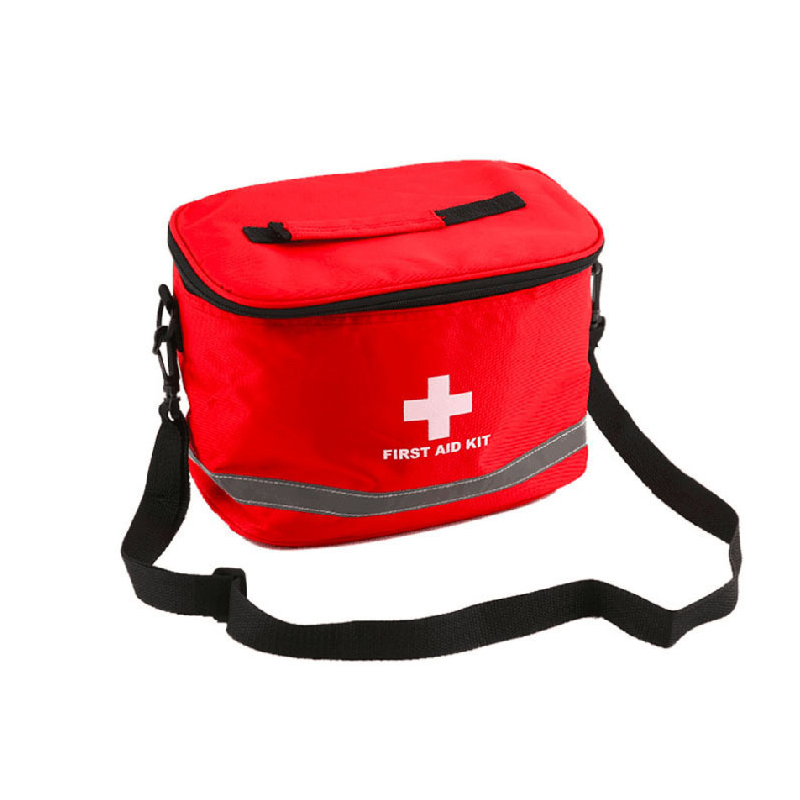
The Retail Outdoor Large Waterproof First Aid Bag for Hiking Camping, model DC660917, is designed as an empty medical organizer for customers who want to build their own first aid kit. With a practical 26 x 19 x 19 cm format, multiple internal compartments, a portable hand strap, a carabiner clip, reflective detailing, a durable zipper, and a water-resistant polyester exterior, the bag provides a versatile storage solution for outdoor and household preparedness.
Unlike a pre-filled first aid kit, this product allows retailers, distributors, families, organizations, and professional buyers to select the supplies that match their specific needs. Users can organize bandages, gauze, adhesive tape, antiseptic products, allergy supplies, medical accessories, and other compact essentials according to personal preference or local requirements. The bag is supplied empty, giving buyers greater flexibility in product configuration, inventory management, and private-label presentation.
The product is available in orange, red, and blue, with customization available for suitable orders. It can be branded for retail programs, corporate safety initiatives, outdoor organizations, sports teams, pharmacies, supermarkets, and first aid suppliers. A minimum order quantity of 1,000 pieces supports wholesale purchasing and coordinated branding projects.
Purpose-Built Storage for Outdoor First Aid Supplies
Outdoor first aid storage presents challenges that ordinary cosmetic bags, school pouches, or household organizers may not solve effectively. Medical supplies often have different shapes and sizes. Adhesive bandages may be small and easy to lose, while gauze, wraps, gloves, scissors, tape, cleansing wipes, and emergency accessories require more space. When these products are placed together without structure, the user may need to empty the entire bag to find one item.
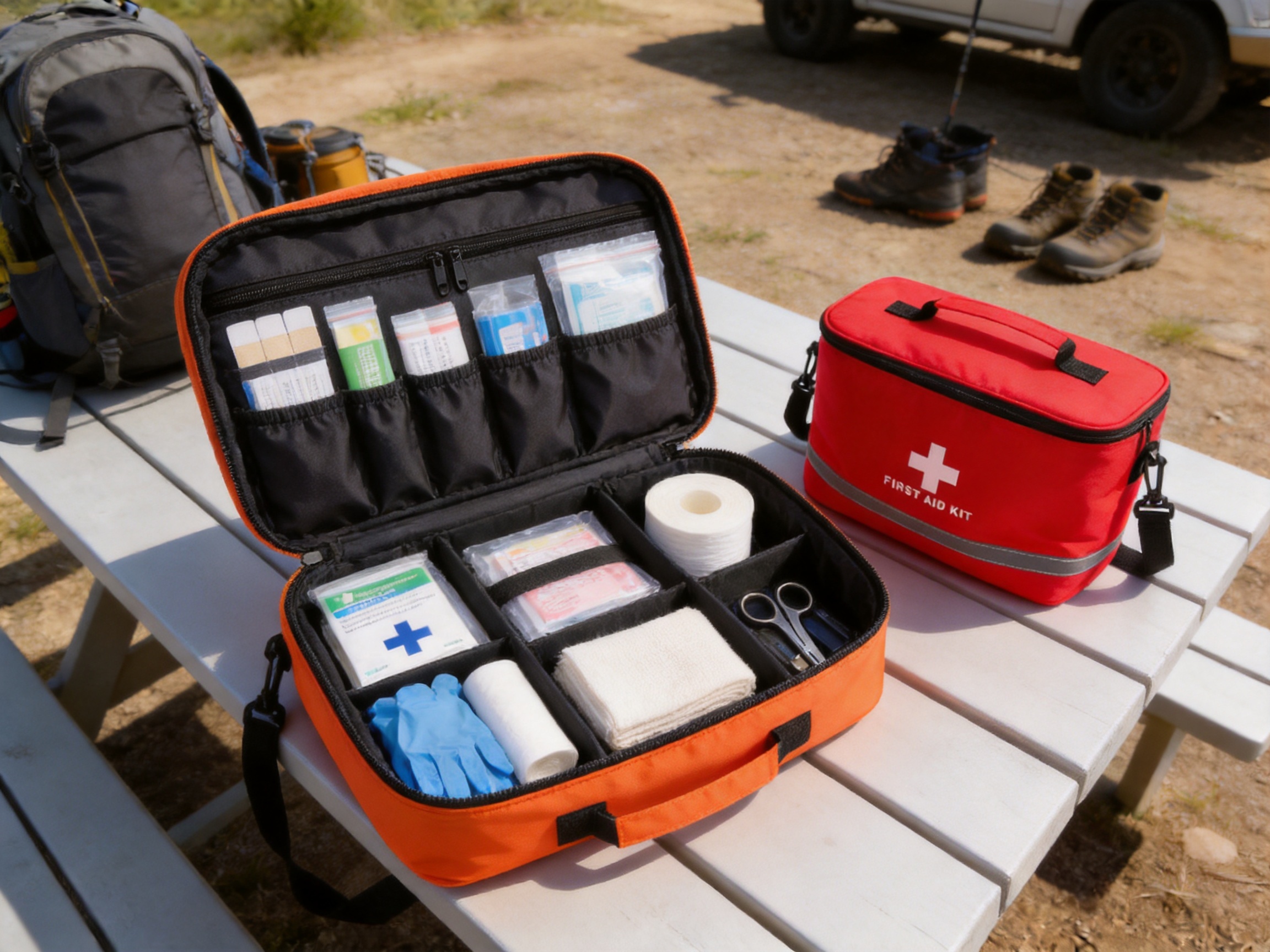
The DC660917 addresses this issue through an organized interior layout. Internal pockets help separate products and keep them in position during transport. This arrangement is useful for users who need a compact organizer but do not want a loose collection of supplies at the bottom of a bag. The internal structure can support category-based packing, such as placing wound dressings in one section, protective equipment in another, and personal medicines or allergy supplies in a separate compartment.
For families, this organization can make the first aid bag easier to understand. For outdoor guides and sports coordinators, it can support faster preparation before an activity. For retailers, it creates a practical product that can be sold empty or paired with selected supplies. For healthcare distributors, it provides a reusable outer case that can be configured for different customer groups.
The bag is especially suitable for users who need to carry a broader selection of supplies than would fit in a small pocket-sized pouch. Its large format provides additional capacity while remaining portable enough for a car, campsite, home emergency cabinet, office, or travel pack. The 26 x 19 x 19 cm dimensions offer a balanced relationship between storage volume and portability.
Key Product Advantages
Water-Resistant Outer Construction
The thick polyester shell is designed to resist ordinary moisture exposure. This is valuable in outdoor environments where a bag may encounter light rain, damp grass, condensation, splashes, or wet equipment. Water resistance helps reduce the risk of the outer fabric immediately absorbing moisture, giving users an additional layer of protection for the supplies stored inside.
The product should not be treated as a fully waterproof container for immersion or prolonged exposure to heavy rain. However, its water-resistant construction offers an important advantage over thin fabric pouches and unstructured textile organizers that may provide little protection against outdoor conditions. For routine hiking, camping, travel, and vehicle storage, this added resistance can contribute to better supply protection.
Foam Insulation and Padding
Foam insulation inside the bag creates a padded layer around stored items. The padding can help protect packaging from compression, impact, and friction during transport. It also provides an additional barrier between the contents and the outside environment.
The insulated construction is useful for users who carry sensitive or easily crushed items, although the bag is not described as a temperature-controlled medical refrigerator. It should not be used to maintain a specific pharmaceutical temperature range unless the purchaser independently validates the complete packing method and storage conditions. The product does not include a gel pack.
Multiple Internal Organizer Sections
One of the primary competitive benefits of the product is its emphasis on organization. Internal pockets help prevent supplies from becoming disarranged. This can be particularly helpful when the bag contains items with different sizes, packaging, and functions.
A practical packing system might place adhesive bandages and small dressings in an accessible pocket, gauze and elastic wraps in a larger section, gloves and protective items in another location, and personal supplies in a separate compartment. Because the bag is empty, the purchaser can adapt this arrangement to a specific market or activity rather than accepting a fixed assortment chosen by a manufacturer.
Many low-cost competitors rely on a single open compartment. Although such designs may have a lower initial cost, they can create an inefficient user experience. Loose contents can shift during transport, small products can become hidden under larger items, and the user may have difficulty checking inventory. The organized structure of the DC660917 is intended to reduce these problems.
Portable Hand Strap
The integrated hand strap supports convenient carrying. A user can move the bag from a vehicle to a campsite, from a storage room to a sports field, or from a home cabinet to an outdoor location without needing a separate carrying case. The strap also makes the product easy to display or transport in retail environments.
A hand strap is a simple feature, but it improves day-to-day usability. A first aid bag that is difficult to carry may be left in a vehicle or storage area, while a bag that can be lifted quickly is more likely to be included in routine travel preparation. For organizations, the strap also allows a designated person to move the kit efficiently during events or field operations.
Carabiner Clip for Attachment
The included carabiner clip provides another carrying option. It can be used to attach the bag to suitable loops, handles, equipment systems, or external storage points, subject to the strength and compatibility of the attachment location. This feature is useful for hikers and campers who want the bag to remain accessible rather than placing it deep inside a larger backpack.
The clip also supports practical storage in vehicles, workshops, sports facilities, and emergency preparedness areas. It can help keep the bag visible and reduce the chance that it will be misplaced among other equipment. Users should follow safe attachment practices and should not rely on the carabiner as climbing or load-bearing safety equipment.
Reflective Strip for Improved Visibility
The reflective strip is a valuable feature for outdoor readiness. When illuminated by a flashlight, vehicle headlamp, or other light source, reflective material can make the bag easier to identify in low-light conditions. This may be useful during evening camping, nighttime roadside incidents, outdoor events, and emergency searches inside a dark vehicle or storage space.
Reflective detailing does not replace a dedicated light, illuminated emergency marker, or high-visibility safety garment. Its purpose is to improve recognition and visibility. Compared with plain black or non-reflective fabric bags, this design feature can make the first aid bag easier to locate when lighting is limited.
Durable Zipper Closure
The premium zipper is designed for secure closure and convenient access. A reliable zipper helps keep supplies inside the organizer during transport and allows the bag to be opened quickly when needed. Smooth access is important because a first aid organizer should be practical during both planned preparation and unexpected situations.
The zipper also contributes to the overall appearance of the bag. For private-label programs and retail distribution, a clean and secure closure can make the product appear more professional than a simple drawstring pouch or loosely folded fabric case. Buyers should still avoid overloading the bag, since excessive pressure can place unnecessary strain on any closure system.
Retail Outdoor Large Waterproof First Aid Bag for Hiking Camping
Comparison with Common First Aid Storage Alternatives
Compared with Basic Single-Compartment Pouches
Basic pouches are often lightweight and inexpensive, but they may offer limited internal structure. Their contents can move freely, making inventory checks and rapid access more difficult. They may also provide less padding and less protection against moisture.
The DC660917 offers a more structured alternative. Its internal pockets help create separate storage zones, while the polyester shell and foam layer provide a more substantial construction. The hand strap, carabiner clip, and reflective strip further enhance its suitability for outdoor use.
A single-compartment pouch may be appropriate for a very small personal kit. However, buyers seeking a larger organizer for family travel, group activities, vehicle storage, or outdoor programs may benefit from the additional organization and protective features of this model.
Compared with Hard Plastic First Aid Boxes
Hard plastic boxes can offer rigid protection and may be suitable for fixed storage in a workplace or household. However, they can be bulky, less comfortable to carry, and less adaptable to backpacks or soft luggage. A rigid box may also occupy more space when not completely full.
The textile construction of the DC660917 provides greater flexibility. The bag can be carried using the hand strap, attached using the carabiner clip, and positioned in places where a hard box would be inconvenient. The padded shell offers protection without the weight and inflexibility associated with many rigid cases.
The choice between a soft organizer and a hard box depends on the application. A hard case may be preferred where crushing protection is the highest priority. A soft, insulated, water-resistant organizer may be more convenient for hiking, camping, vehicle travel, household use, and mobile first aid programs.
Compared with Pre-Filled First Aid Kits
Pre-filled kits offer convenience because the purchaser receives a predetermined group of supplies. However, the included contents may not match local regulations, customer preferences, activity requirements, or the inventory strategy of a retailer. Some users may receive items they do not need while lacking products they consider essential.
An empty first aid bag provides greater configuration freedom. A distributor can create separate versions for hiking, family travel, school activities, sports, workplace use, vehicle safety, or general household preparedness. A retailer can also offer the same outer bag with different contents and pricing tiers.
This flexibility can simplify product line development. Instead of sourcing many different cases, a buyer may use one durable organizer as the base for multiple kits. The contents can be selected according to the destination market, customer profile, or seasonal promotion.
Compared with Fashion and Cosmetic Organizers
Cosmetic and toiletry bags may have attractive shapes but are not necessarily designed for medical organization. They may lack reflective details, exterior water resistance, internal compartments suited to first aid supplies, and a structure intended for repeated outdoor handling.
The DC660917 has a purpose-oriented design. Its colors, reflective strip, portable attachments, and internal organization communicate its role as a first aid storage product. These features can help users identify the bag quickly and distinguish it from personal luggage or cosmetic storage.
Applications Across Retail and Professional Markets
Hiking and Camping
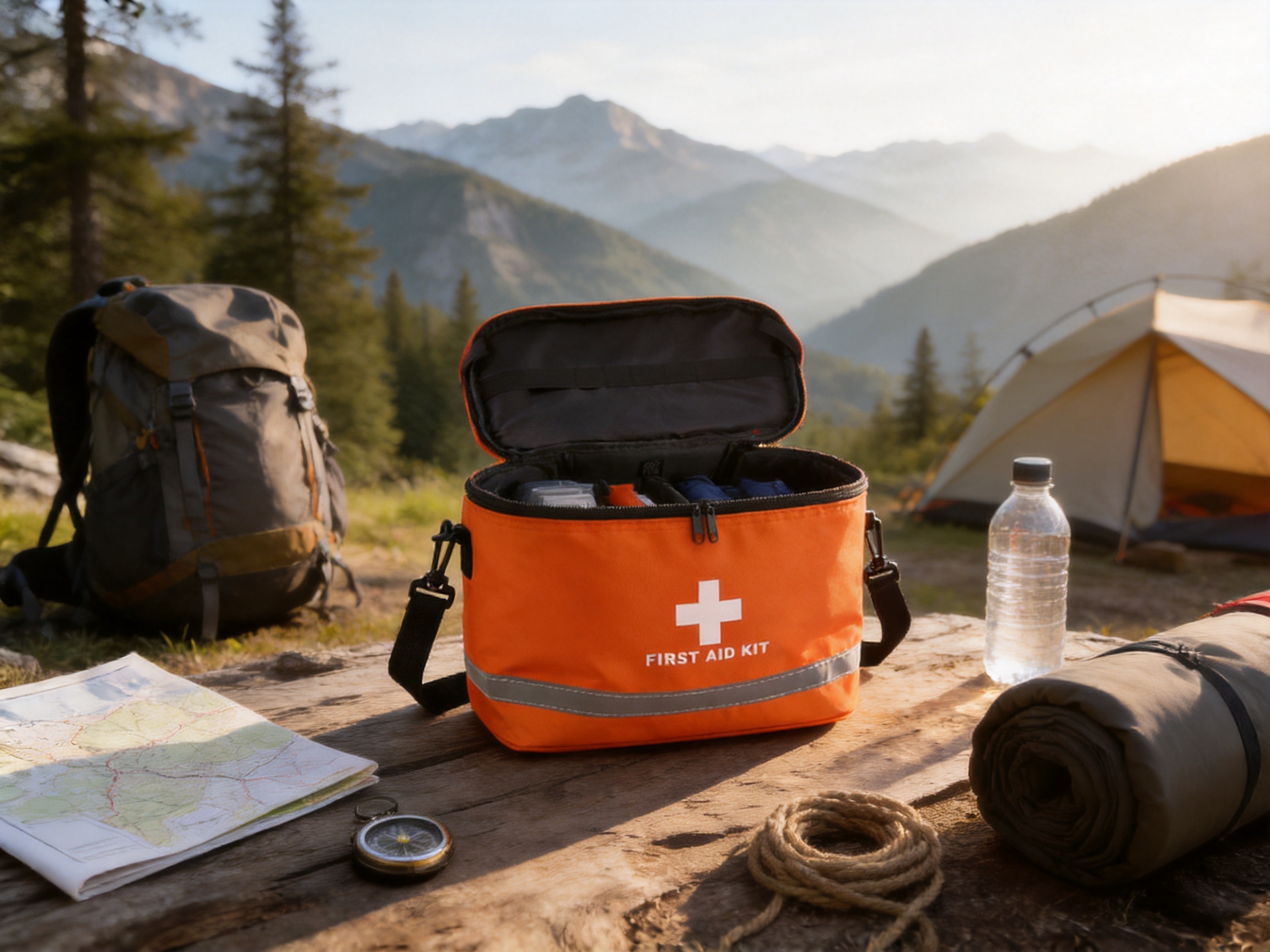
Hikers and campers often need to manage limited space while carrying supplies for minor injuries, personal care, and unexpected situations. The bag can be packed with selected bandages, gauze, tape, cleaning products, gloves, scissors, wraps, and other compact items. Its attachment options allow it to remain accessible during outdoor travel.
The water-resistant shell is helpful in changing weather, while the reflective strip can support identification after sunset. The size is suitable for group or family use when a small personal pouch would not provide enough capacity.
Family Travel and Road Trips
Families can use the bag as a reusable travel organizer for cars, recreational vehicles, luggage, and holiday accommodation. Because the interior can be customized, parents or caregivers can select supplies appropriate for children and adults while keeping personal medicines and general first aid items organized.
The bag can be stored in a vehicle emergency compartment, provided it is protected from excessive heat, freezing conditions, direct sunlight, and other storage conditions that may affect medical products. The organizer itself does not determine the storage requirements of the products placed inside it.
Sports and Outdoor Events
Sports clubs, schools, training centers, camps, and event organizers often need a portable first aid bag that can move between fields, courts, trails, and activity areas. A branded version can support consistent identification across an organization.
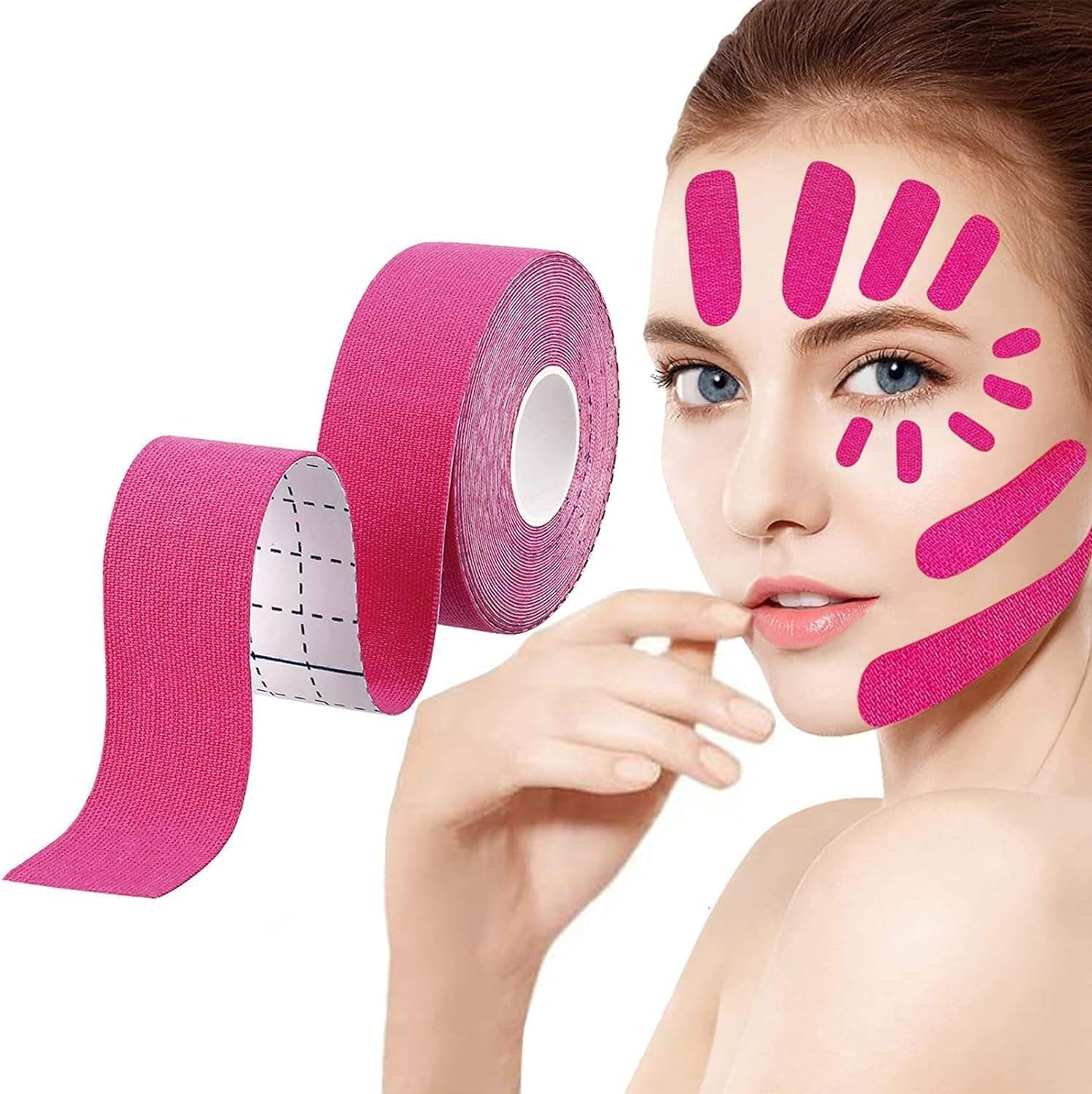
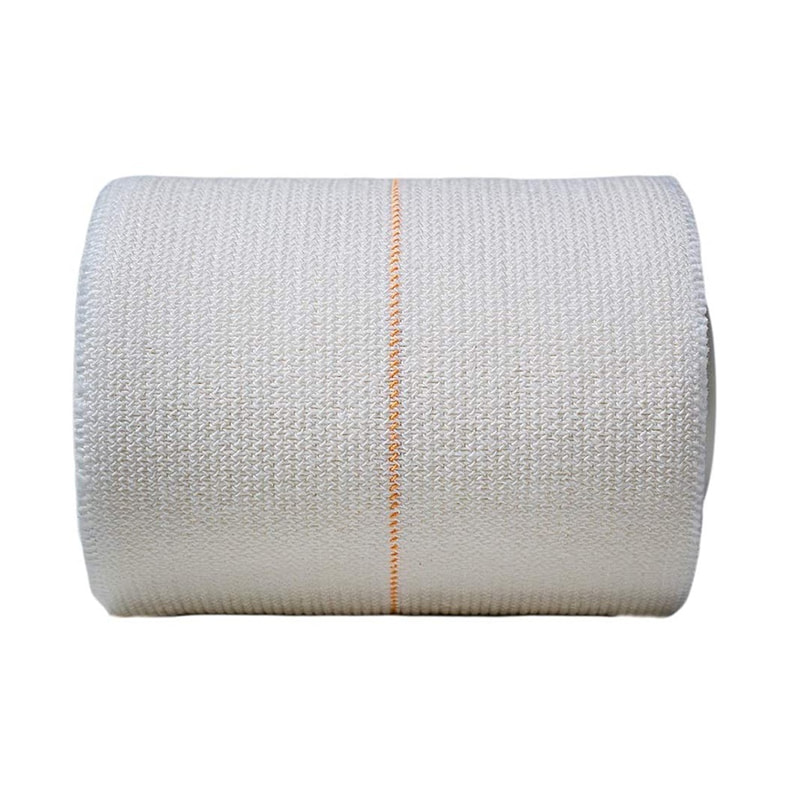
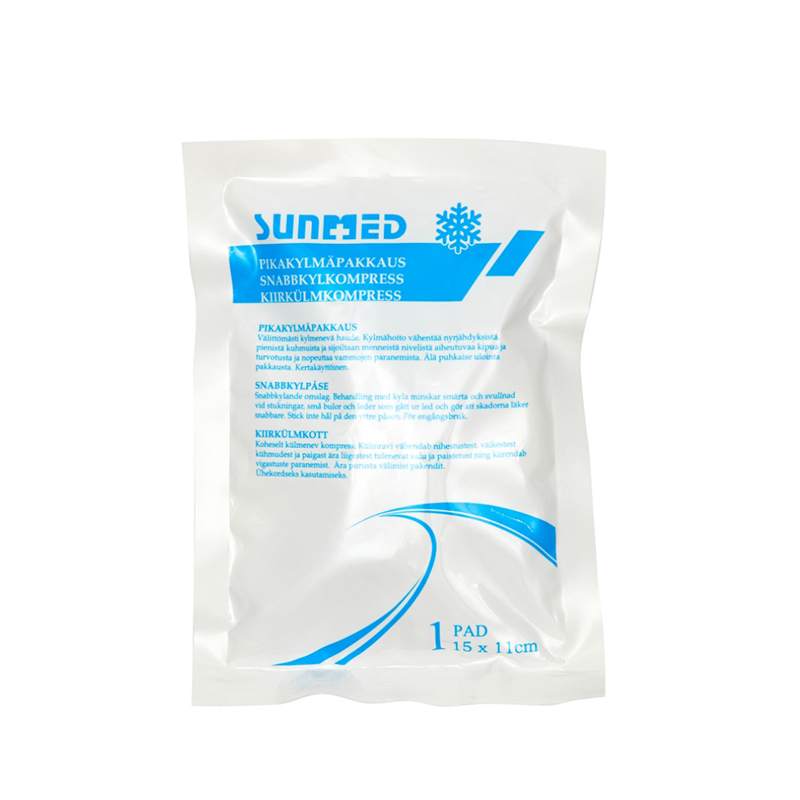
The bag can be configured with sports support items, adhesive bandages, cohesive wraps, gauze, disposable gloves, cold therapy products, and other supplies selected by the responsible organization. The product is an organizer and should be stocked according to the activity’s risk assessment and applicable safety procedures.
Workplace and Workshop Safety
Small workshops, warehouses, construction support areas, offices, and service vehicles may use the bag as a mobile first aid storage solution. Its compact format allows it to be placed near work areas without taking up the floor space required by a large cabinet.
For workplace use, the buyer should determine the required contents based on local occupational health and safety rules. The empty bag can then be used as a practical outer case for the selected supplies.
Retail and Promotional Programs
Retailers can sell the product as an empty case, a customizable organizer, or part of a complete first aid package. Outdoor stores may pair it with camping essentials. Pharmacies may offer it with household wound care products. Supermarkets may use it in seasonal travel and emergency preparedness promotions.
The ability to add branding makes the bag suitable for corporate gifts, insurance promotions, school safety programs, charity campaigns, outdoor clubs, and healthcare distributors. Orange, red, and blue provide multiple visual options, while custom colors or branding may be discussed for qualified orders.
Flexible Packing and Inventory Management
The empty configuration is a practical advantage for professional buyers. Contents can vary by region, application, and customer expectation. A distributor serving outdoor markets may prioritize compact wound care and protective products. A family-oriented retailer may focus on adhesive bandages, gauze, cleansing supplies, and children’s care items. A workplace supplier may include products selected for a particular industrial environment.
Businesses can also use the same bag for several product levels. An entry-level kit may contain basic dressings and bandages. A mid-range version may add gloves, tape, wraps, scissors, and cold therapy items. A premium version may include a broader selection for group activities. This approach can simplify purchasing while allowing different retail price points.
Inventory checks are also easier when supplies are assigned to specific compartments. Staff can identify missing products, check expiration dates, and replenish stock without removing every item. A consistent arrangement may be documented through a packing list or printed insert.
Since medical products can have different storage requirements, buyers should verify compatibility before filling the bag. Items requiring controlled temperature, protection from light, or special handling should be stored in accordance with their own instructions. The bag’s water-resistant and insulated features are supportive design elements, not substitutes for regulated storage equipment.
Materials, Construction, and Manufacturing Strengths
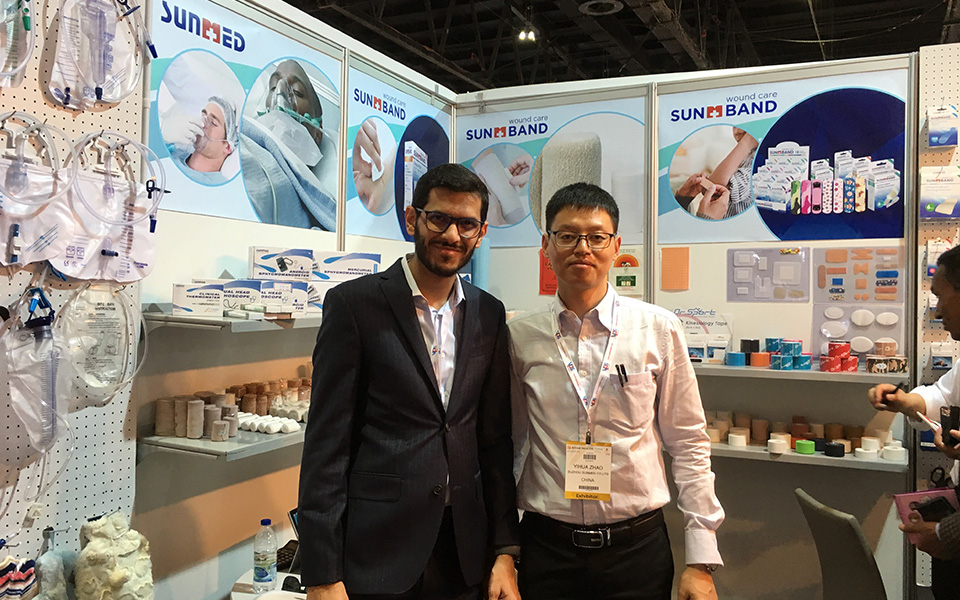
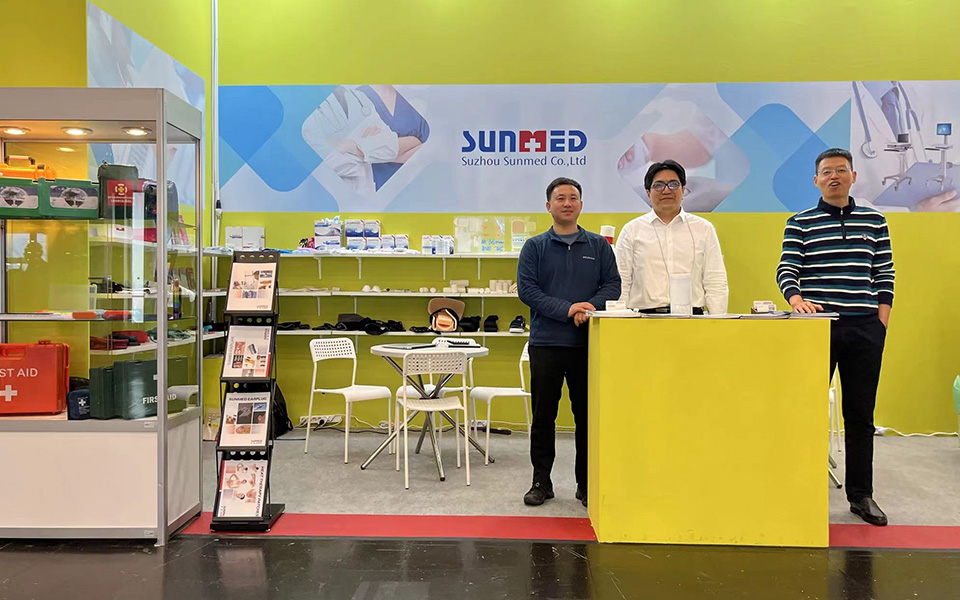
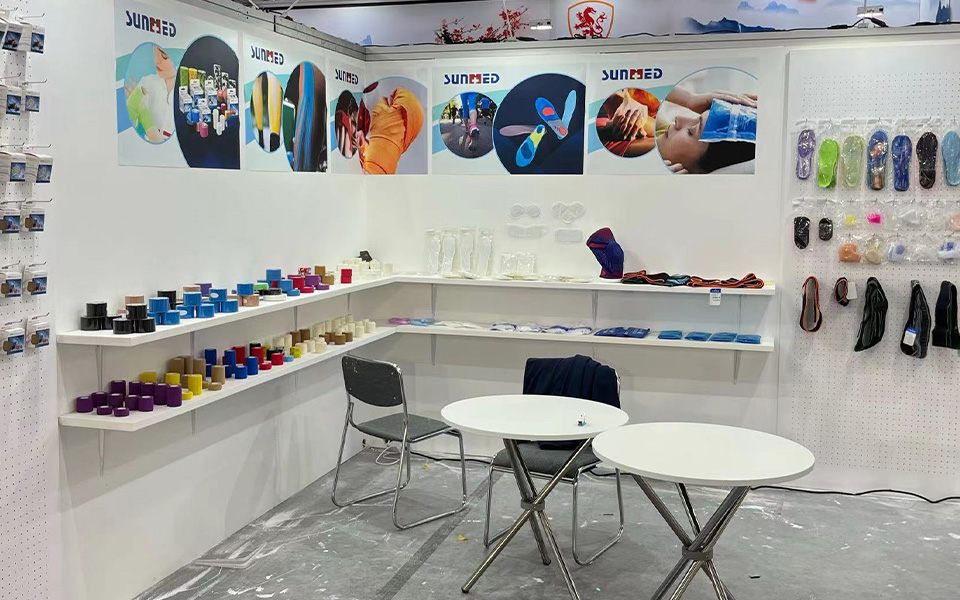
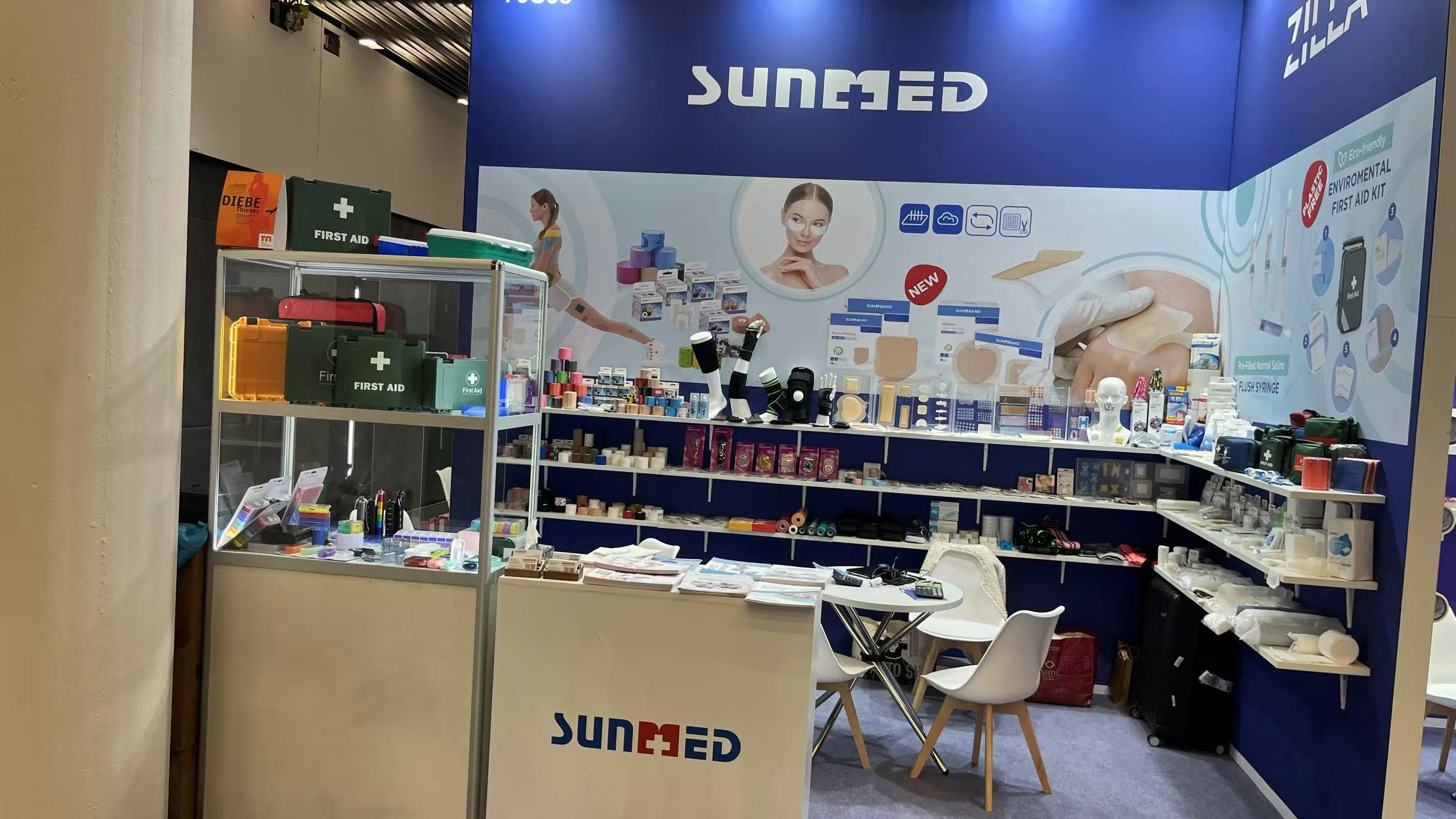
The manufacturer behind this product is an experienced Chinese supplier of first aid, medical, and healthcare products. Its business covers first aid products, wound dressings, gauze, bandages, medical tape, medical cotton, non-woven products, sports bandages, kinesiology tape, cohesive bandages, family healthcare products, medical instruments, syringes, catheters, surgical consumables, and related medical supplies.
This broad product knowledge is relevant to the development of an empty first aid bag. A company that manufactures and exports many categories of medical consumables can understand how different products are packaged, transported, organized, and used. That experience supports the creation of storage products intended for bandages, dressings, protective items, and family healthcare supplies.
The company operates production bases in Jiangsu, Zhejiang, and Anhui Province. Multiple production locations can support a broader manufacturing and supply structure, subject to production planning, product allocation, and quality requirements. The company has approximately 30 years of experience in the medical device and medical consumables industry, providing a long-term foundation for international cooperation.
Quality Management Orientation
The manufacturer reports a professional quality control team comprising hundreds of personnel. Its inspection procedures are designed to support consistent manufacturing and compliance with ISO 13485:2016-related quality management expectations. The company also reports that many of its products are CE certified and that its Suzhou factories comply with FDA requirements.
Certification and regulatory status can vary by product, market, and intended use. Buyers should request the specific documentation applicable to the DC660917 and confirm the requirements of the destination country before importing or marketing the product. Nevertheless, the manufacturer’s quality-system orientation is an important advantage for customers seeking a structured medical supply partner rather than an un specialized general bag factory.
For an organizer such as this, quality control may include examination of fabric and components, stitching consistency, zipper operation, attachment strength, reflective strip placement, dimensional accuracy, color consistency, packaging, labeling, and final appearance. A professional inspection process can help reduce variation between production batches.
Experience with International Markets
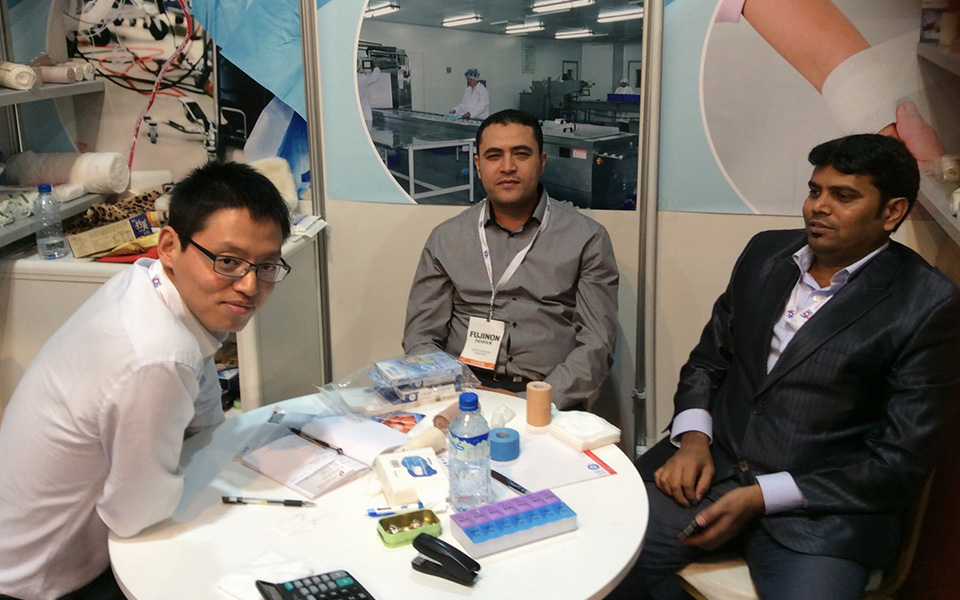
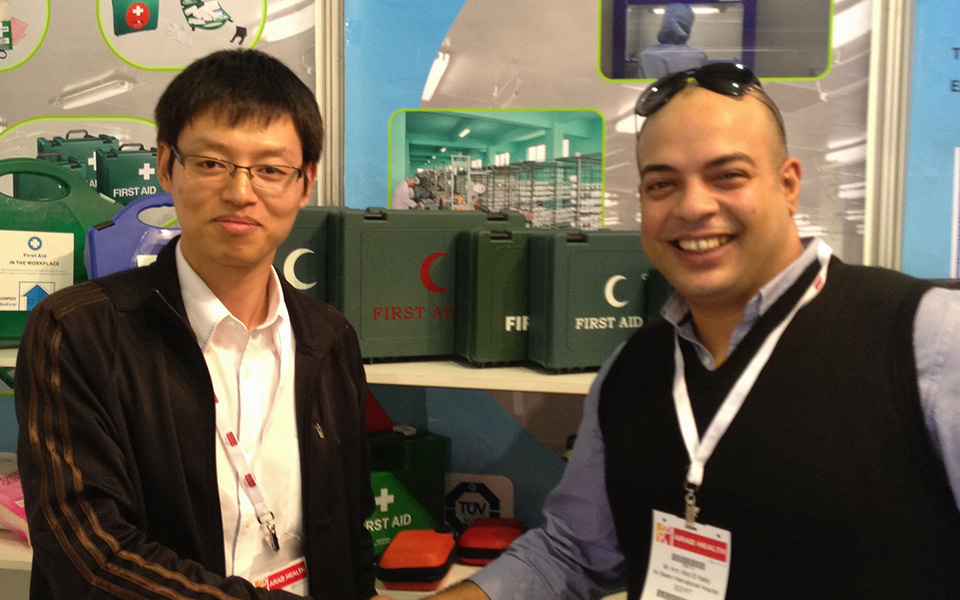
The company has exported products to more than 60 countries, including markets in Europe, Southeast Asia, Africa, and Oceania. Its reported customer markets include hospitals, first aid suppliers, supermarkets, and retail sports shops.
International experience can help a supplier understand the importance of export packaging, product specifications, documentation, communication, lead-time planning, and customer-specific requirements. It may also support cooperation with distributors that need private labeling, customized colors, or product assortments for different channels.
For wholesale buyers, reliable communication is as important as the physical product. Product drawings, sample approvals, packing instructions, brand artwork, carton specifications, and inspection requirements should be confirmed before mass production. A manufacturer with established export experience is better positioned to participate in these stages.
OEM and Branding Capability
The product can be branded, allowing buyers to place a logo, organization name, or campaign identity on suitable areas of the bag. Branding may improve product recognition, support retail differentiation, and help organizations identify their own emergency equipment.
OEM projects should be planned carefully. Buyers should confirm the available branding method, logo size, color limitations, artwork format, sample approval procedure, minimum order quantity, production schedule, and packaging requirements. Branding placement should remain clear and should not interfere with the zipper, reflective strip, handle, or functional compartments.
Design Details That Support Usability
Color Selection
Orange, red, and blue provide multiple positioning options. Red and orange are strongly associated with emergency readiness and can be easy to identify in many storage environments. Blue offers a different visual style for retailers, family healthcare programs, or organizations with a blue-based identity.
Color selection may influence visibility, branding, and product segmentation. For example, a retailer may use red for general first aid, orange for outdoor programs, and blue for family or vehicle applications. Custom color development may be possible for suitable orders, but buyers should confirm color standards, sample approval, and production conditions.
Practical Dimensions
The 26 x 19 x 19 cm dimensions provide a relatively spacious organizer for a soft first aid case. The cubic format can make the interior useful for items that are difficult to store in a thin flat pouch. It may accommodate rolled bandages, compact boxes, small bottles, gloves, and other supplies more effectively than a narrow organizer.
Actual internal capacity may be affected by the thickness of the shell, internal pockets, zipper construction, and the size of the products placed inside. Buyers should evaluate a sample with their intended contents before finalizing a packing configuration.
The product should not be filled beyond the point at which the zipper closes naturally. Overpacking can damage the closure, deform the bag, reduce the effectiveness of the internal organization, and make the contents difficult to access.
Access and Visibility
A first aid bag should be easy to recognize and open. The color options and reflective strip can support visual identification, while the zipper provides access to the main storage area. Internal pockets help the user identify where products have been placed.
Organizations may improve usability further by adding a contents list, color-coded packing labels, or an inventory card. These additions can be supplied separately or incorporated into a customized retail package, depending on the project requirements.
Responsible Use and Care
The bag is an empty storage organizer and does not itself provide medical treatment. Users should select appropriate contents and follow the instructions supplied with each medical product. If an injury or medical emergency is serious, professional medical assistance should be sought.
Before each trip or activity, the bag should be inspected for missing supplies, damaged packaging, expired products, moisture, and zipper or stitching problems. A regular inventory schedule is particularly important for kits stored in vehicles, outdoor facilities, workplaces, and seasonal equipment areas.
The exterior can generally be maintained by wiping it with a suitable cloth and allowing it to dry completely. Harsh chemicals, excessive heat, and aggressive washing methods may affect the fabric, coating, reflective material, or printed branding. Care instructions should be validated with the supplier for the specific production batch.
The bag should be stored away from prolonged direct sunlight, extreme temperatures, sharp objects, and heavy loads that could crush the organizer. Products placed inside should remain in their original packaging whenever possible, with their labels and usage instructions visible.
Although the shell is water-resistant, the bag should not be submerged. If it becomes wet, the contents should be checked, the exterior should be dried, and any compromised medical packaging should be replaced. The absence of a gel pack means that the bag should not be marketed as a cold-storage kit unless an appropriate validated cooling solution is added by the buyer.
Wholesale Procurement Considerations
The model DC660917 has a minimum order quantity of 1,000 pieces. This quantity is appropriate for distributors, retailers, institutional purchasers, and brands planning a coordinated launch. At this volume, buyers may be able to discuss logo application, color planning, packaging design, and product assortment development.
Before placing an order, buyers should confirm the following details:
Product model: DC660917.
Product type: Empty first aid bag.
Dimensions: 26 x 19 x 19 cm.
Available colors: Orange, red, and blue.
Customization: Branding is available; specific options should be confirmed.
Minimum order quantity: 1,000 pieces.
Declared HS code: 4202920000, subject to confirmation by the importer and customs authorities.
Contents: No medical supplies and no gel pack are included unless separately agreed in writing.
Wholesale buyers should request a pre-production sample or reference sample before approving a large order. The sample review should cover dimensions, fabric, color, pocket arrangement, zipper performance, handle attachment, carabiner clip, reflective strip, logo quality, packaging, and labeling.
It is also advisable to agree on acceptable quality limits, inspection procedures, carton dimensions, loading quantities, shipping marks, documentation, and after-sales communication. These details help reduce misunderstandings and create a clearer purchasing process.
Private-Label and Product-Line Opportunities
The bag can serve as the foundation for several private-label product lines. An outdoor brand may offer a branded hiking organizer. A pharmacy group may create a family travel first aid case. A workplace supplier may develop a vehicle safety kit. A sports organization may create a team-branded injury care bag.
Because the case is empty, each buyer can determine the final kit composition. This offers a useful balance between manufacturing efficiency and market differentiation. The physical organizer remains consistent, while the contents, instruction card, packaging, and branding can be adapted to different customer groups.
Retail packaging may include a product sleeve, hanging card, printed carton, insert, or multilingual instruction sheet. The correct format depends on the sales channel. A supermarket product may need strong shelf presentation, while a professional distributor may prioritize carton efficiency and technical documentation.
Branding should be durable and legible. Buyers should ask whether printing, embroidery, heat transfer, rubber labels, woven labels, or another method is recommended for the selected fabric and order quantity. Artwork should be approved before production, and the buyer should review a physical sample when appearance is important.
How the Product Supports Competitive Differentiation
Competition in the first aid storage market often centers on price, appearance, capacity, and functionality. The DC660917 is differentiated by combining several practical features rather than relying on one isolated selling point.
First, it offers larger capacity than many personal pouches while remaining soft and portable. Second, it provides internal organization rather than a single empty cavity. Third, it combines a water-resistant polyester shell with foam padding. Fourth, it includes both a hand strap and a carabiner clip. Fifth, the reflective strip supports visibility in low-light environments. Sixth, the empty format gives distributors flexibility to create their own contents and pricing.
These advantages may be especially relevant to buyers who want a product that can be used across multiple channels. A simple case may be suitable for one narrow market, whereas a versatile organizer can be configured for outdoor, family, workplace, vehicle, and sports applications.
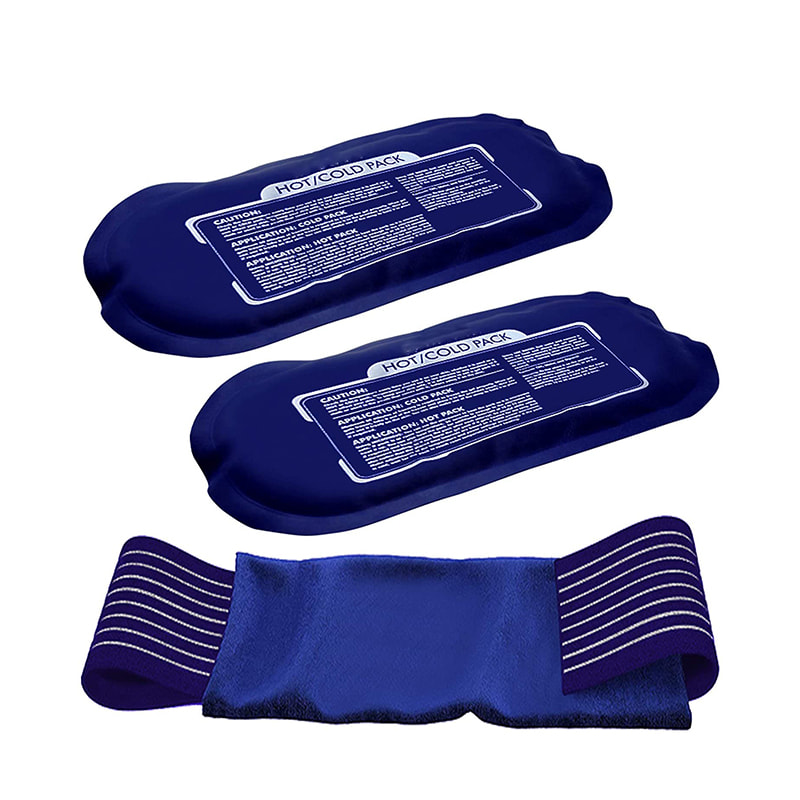
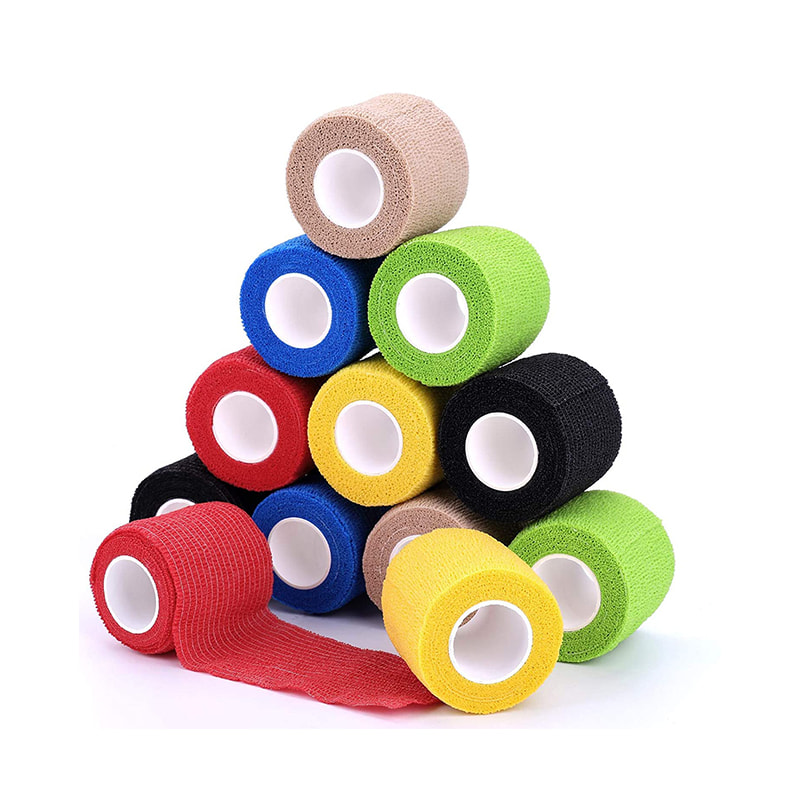
The product also benefits from the manufacturer’s broader medical product experience. Buyers can potentially coordinate the bag with related medical consumables, including gauze, bandages, medical tape, cotton products, sports support products, hot and cold therapy items, and other first aid supplies. This can simplify sourcing for customers seeking both an organizer and the supplies to fill it.
A single-supplier relationship may improve purchasing coordination, reduce the number of separate vendor contacts, and support more consistent packaging and documentation. Buyers should still evaluate each product independently and confirm the applicable regulatory and quality requirements.
Manufacturing and Quality Expectations
A dependable first aid bag requires attention to details that may not be obvious from a product photograph. The shell should be cut consistently, seams should be secure, internal pockets should be aligned, and the zipper should operate without excessive resistance. The handle and carabiner attachment points should be properly reinforced for ordinary carrying conditions.
Reflective material should be positioned consistently and should remain attached during normal use. The foam layer should be distributed evenly enough to support the intended padded construction. Color should remain within the approved sample range, and printed or branded elements should be clear and properly positioned.
Quality control may be performed at incoming-material, in-process, and final-inspection stages. Incoming checks can verify fabric, foam, zipper, clips, reflective material, thread, labels, and packaging components. In-process checks can identify stitching, assembly, and dimensional issues. Final inspections can review appearance, functionality, packing, and order quantity.
For a medical organizer, clean handling and suitable packaging are also important. The bag is not necessarily a sterile product, but it should be protected from avoidable contamination, moisture, and damage during production and transportation. Buyers with specific cleanliness or packaging requirements should communicate them before production.
The manufacturer’s quality control team and experience with ISO 13485:2016-oriented procedures provide a strong foundation for these activities. Nevertheless, quality expectations should be documented in a purchase agreement, technical specification, approved sample, or inspection standard.
Q&A
Is this product sold with first aid supplies?
No. The product is an empty first aid bag. Medical supplies, medicines, and gel packs are not included unless the buyer separately arranges a customized package.
What are the dimensions of the bag?
The listed size is 26 x 19 x 19 cm. Buyers should confirm usable internal dimensions with a sample if they plan to pack products with specific sizes.
Is the bag completely waterproof?
The bag has a water-resistant polyester shell, but it should not be considered a fully waterproof or submersible container. It is intended to provide resistance against ordinary moisture exposure such as light rain and splashes.
Does the insulated construction keep medicines cold?
The foam insulation provides padding and an additional protective layer, but the bag is not a validated temperature-controlled storage device. No gel pack is included. Products with temperature-sensitive requirements must be stored according to their individual instructions.
What colors are available?
The standard colors are orange, red, and blue. Custom color requests may be possible for suitable orders and should be confirmed with the supplier.
Can the bag carry a company logo?
Yes. The product can be branded. Buyers should confirm the available branding method, artwork requirements, placement, color limitations, sample approval, and additional costs.
What is the minimum order quantity?
The listed minimum order quantity is 1,000 pieces.
Is the carabiner clip suitable for climbing?
No. The carabiner clip is intended for convenient attachment and carrying of the bag. It should not be used as climbing equipment, fall-protection equipment, or a certified load-bearing safety device.
Who can use this product?
The organizer is suitable for outdoor retailers, first aid suppliers, pharmacies, sports shops, family travel customers, schools, workplaces, vehicle owners, camps, and organizations that need a customizable first aid storage solution.
Can the bag be used for medicines?
It can be used to organize suitable medicines and medical supplies when their storage requirements are compatible with the bag and local regulations. Users must follow each product’s labeling, temperature, moisture, light, and handling instructions.
What makes this bag different from a basic pouch?
It combines a larger format with internal organization, a water-resistant polyester shell, foam padding, a hand strap, a carabiner clip, a reflective strip, and a durable zipper. These features make it more suitable for structured outdoor and family first aid storage.
Can the product be included in a complete first aid kit?
Yes. A distributor or retailer can fill the empty bag with selected supplies and create a complete kit. The final contents should be chosen according to the intended application and applicable legal or safety requirements.
What should be checked before a wholesale order?
Buyers should confirm the approved sample, dimensions, materials, colors, branding, packaging, contents, labeling, inspection standards, delivery schedule, shipping documentation, and regulatory requirements for the destination market.
Recommended Buyer Evaluation Checklist
When evaluating this organizer against competing products, buyers should consider more than the unit price. A lower-priced pouch may have fewer pockets, weaker fabric, no padding, no reflective detail, and limited branding potential. The total value should include usability, product presentation, expected service life, packing flexibility, and supplier support.
Assess whether the dimensions match the intended contents. Place representative products inside the sample and check whether the pockets remain accessible. Test the zipper with the organizer filled to its planned capacity. Examine the handle and carabiner attachment points. Review the reflective strip in low-light conditions. Inspect the fabric and seams for consistency.
For private-label programs, evaluate logo visibility, color accuracy, packaging appearance, and barcode or label placement. For institutional orders, assess whether the bag can be identified quickly and whether the contents list can be added. For export orders, confirm carton protection and shipping marks.
Buyers should also determine whether they need one standard bag or several versions with different contents. The empty design makes multiple configurations possible, but the packing process should be documented so that every finished kit is consistent.
Supply Chain and Long-Term Cooperation
A first aid bag can be a simple purchase or part of a broader medical supply program. Customers that already source gauze, bandages, tape, cotton products, sports wraps, hot and cold therapy products, or other healthcare items may benefit from discussing a coordinated purchasing plan.
The manufacturer’s product range includes many of these categories. Its experience with first aid factories, medical consumables, sports support products, and family healthcare supplies can support cross-category sourcing. In 2008, the company established a first aid factory, and in 2021 it established a factory for kinesiology tape, cohesive bandages, and elastic adhesive bandages to meet growing customer demand.
This manufacturing background may be useful when developing a complete retail assortment. A buyer could combine the empty organizer with selected wound care and sports support products, subject to product availability, regulatory review, and commercial agreement. A coordinated assortment can create a clearer brand identity and reduce the complexity of managing unrelated suppliers.
Long-term cooperation depends on clear specifications, reliable communication, quality consistency, transparent commercial terms, and appropriate documentation. Samples and technical details should be reviewed before mass production, especially when custom branding or a new market is involved.
Product Information Summary
| Item | Specification |
|---|
| Product name | Retail Outdoor Large Waterproof First Aid Bag for Hiking Camping |
| Product type | Empty first aid bag and medical organizer |
| Model | DC660917 |
| Size | 26 x 19 x 19 cm |
| Standard colors | Orange, red, and blue |
| Customization | Branding available; custom specifications subject to confirmation |
| Construction | Thick polyester shell with foam insulation |
| Organization | Multiple interior pockets |
| Carrying features | Hand strap and carabiner clip |
| Visibility feature | Reflective strip |
| Closure | Zipper closure |
| Gel pack | Not included |
| Minimum order quantity | 1,000 pieces |
| HS code | 4202920000, subject to customs confirmation |
Conclusion
The Retail Outdoor Large Waterproof First Aid Bag for Hiking Camping is a versatile storage solution for customers who need more capacity and organization than a basic pouch can provide. Its 26 x 19 x 19 cm format, internal pockets, padded and water-resistant construction, secure zipper, hand strap, carabiner clip, and reflective strip make it well suited to hiking, camping, travel, sports, workplace, vehicle, and household applications.
Its empty configuration is one of its strongest commercial advantages. Retailers and distributors can select the contents, create different product tiers, adapt the bag to local needs, and add their own branding. This provides more flexibility than a fixed pre-filled kit and can support a broader range of sales channels.
The manufacturer adds value through long-term experience in first aid, medical consumables, healthcare products, sports support products, and medical instruments. Production bases in Jiangsu, Zhejiang, and Anhui, an established quality control team, reported ISO 13485:2016-oriented procedures, international export experience, and OEM capability provide a foundation for wholesale and private-label cooperation.
For best results, buyers should review a sample, confirm the intended contents, verify the applicable regulatory requirements, and agree on branding, packaging, inspection, and shipping details before placing a mass order. Used and packed responsibly, the DC660917 can provide a professional, portable, and adaptable foundation for outdoor and everyday first aid preparedness.
References
1. Product specification sheet for model DC660917, including dimensions, colors, minimum order quantity, features, and declared HS code.
2. Manufacturer-provided company profile covering first aid products, medical consumables, sports support products, family healthcare products, and medical instruments.
3. ISO 13485:2016, Medical devices — Quality management systems — Requirements for regulatory purposes.
4. General principles for the storage, inspection, and handling of first aid supplies and medical consumables.
5. Manufacturer-provided information regarding production bases, export markets, OEM capability, and quality control procedures.

 English
 Español
 русский
 Français
 Deutsch
 italiano
 By Admin