When a dog experiences a minor injury, needs a protective dressing, or requires support around a paw, leg, or joint, the bandage used can make a significant difference. A wrap must remain secure without becoming uncomfortable, restricting movement, irritating the skin, or pulling hair during removal. It should also be simple enough for pet owners, veterinary assistants, first aid suppliers, and retailers to use confidently.
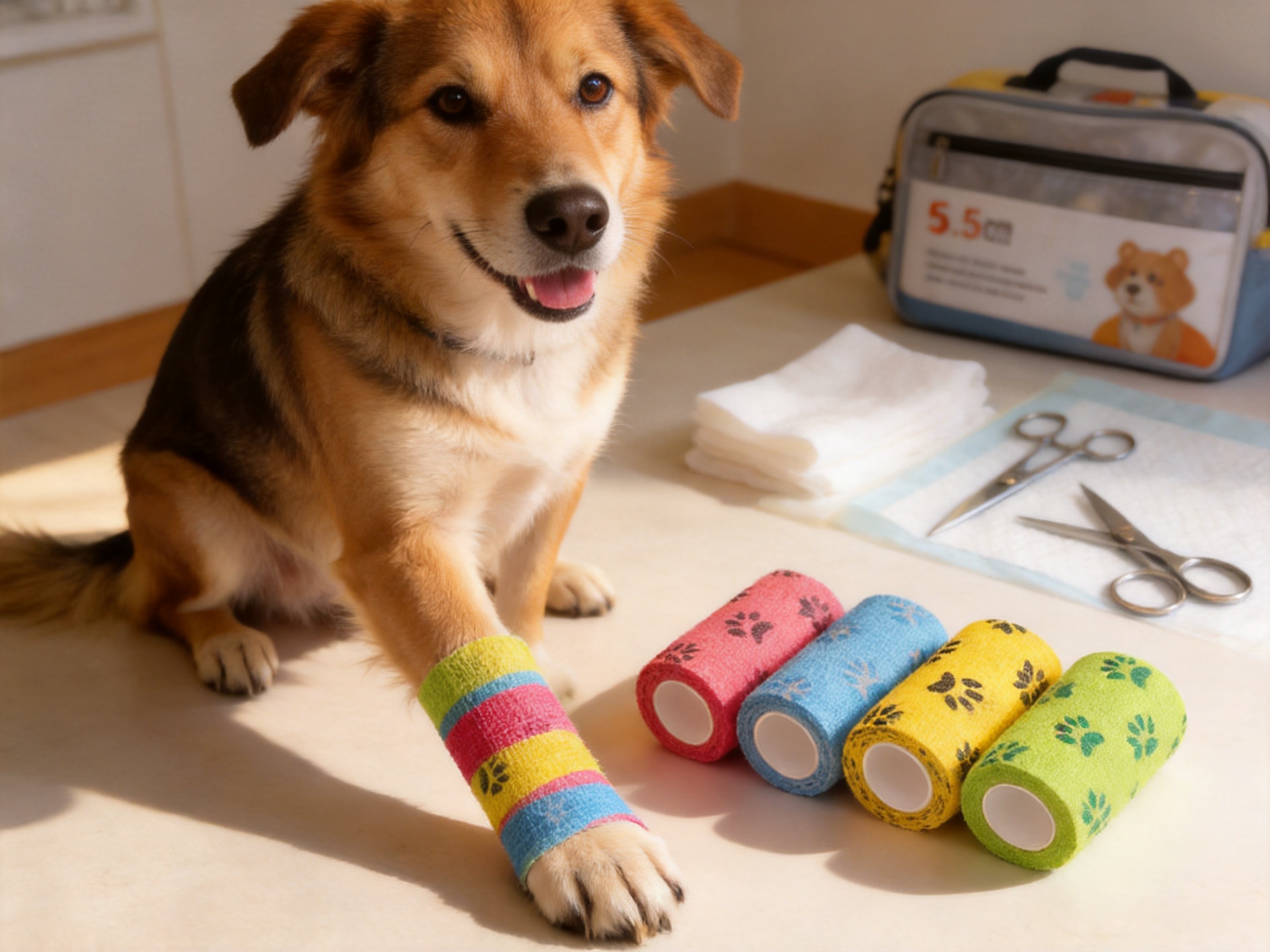
The non-woven cohesive bandage for dogs, model DC660034, is designed to address these practical requirements. It is a self-adhesive bandage wrap made from breathable non-woven material. Unlike conventional adhesive tapes, it is designed to adhere to itself rather than directly to skin, fur, clothing, or hair. This feature helps simplify application and removal while making the product suitable for both pets and people.
Available in widths of 2.5 cm, 5 cm, 7.5 cm, and 10 cm, with a length of 4.5 meters per roll, the product offers useful options for small areas, narrow limbs, larger body contours, and general support. Its elastic construction conforms around difficult-to-bandage areas, while its cohesive surface helps keep the wrap in position during normal activity.
For distributors and professional buyers, this product combines practical performance, straightforward packaging options, multiple color choices, and the manufacturing capabilities of an experienced medical consumables supplier. It is suitable for first aid, wound care support, sports applications, home healthcare, and pet care channels.
What Is a Non-Woven Cohesive Bandage?
A non-woven cohesive bandage is a flexible wrap that sticks to itself when overlapping layers are applied. It does not function like ordinary pressure-sensitive adhesive tape. Instead of using adhesive to bond directly to skin or hair, the cohesive material creates a secure wrap through contact between its own layers.
This construction provides a useful balance between stability and convenience. The bandage can be positioned around a dressing, joint, paw, limb, or other body contour without the need for clips or additional fastening devices. Once the wrap is complete, the overlapping layers help keep it together.
The non-woven substrate contributes to the product’s softness, breathability, and flexibility. It is suitable for areas that need light support or protection but may be difficult to cover with a flat adhesive strip. Dogs can have irregular body contours, active movements, and sensitive skin or fur. A flexible cohesive wrap is therefore often more practical than rigid tape or adhesive bandages.
The wrap is not intended to replace professional veterinary care. Deep wounds, heavy bleeding, suspected fractures, severe burns, animal bites, infected wounds, and circulation problems require professional assessment. The bandage is best understood as a support and protection product for appropriate first aid and dressing management.
Product Overview
| Item | Specification |
|---|
| Product type | Non-woven cohesive bandage and self-adhesive wrap |
| Model | DC660034 |
| Material | Non-woven material |
| Available widths | 2.5 cm, 5 cm, 7.5 cm, and 10 cm |
| Roll length | 4.5 meters |
| Quantity | One roll |
| Color options | Animal patterns and assorted colors |
| Adhesion method | Self-adhering to the wrap itself |
| Application areas | Pet care, first aid, wound dressing support, sports support, and general healthcare |
| Model description | DC660034 |
The selection of four widths allows buyers to match the bandage to the application. The narrowest width can be useful for small paws, toes, fingers, or focused support. The medium widths can be used around limbs and joints, while the widest option may be appropriate for larger areas or situations requiring more coverage.
A 4.5-meter roll offers enough material for repeated applications, depending on the body area, wrapping technique, and amount of overlap. Because the product can be torn by hand, users do not need to carry scissors for routine application or dressing changes.

Cheap Non Woven Cohesive Bandage for Dogs
Key Benefits for Dogs and Their Owners
Self-Adhering Performance
The most important feature of the DC660034 is its cohesive design. The wrap is intended to stick to itself rather than to the dog’s skin or hair. This makes it easier to create a stable dressing cover without relying on aggressive adhesive contact with the animal.
Dogs may resist bandage changes when tape pulls fur or causes discomfort. A self-adhering wrap can help reduce this difficulty because the user can remove the outer wrap without the same level of pulling associated with conventional adhesive products. This can be especially helpful for pets with dense coats, sensitive skin, or anxiety during treatment.
The self-adhesive structure also reduces the need for separate fasteners. There is no requirement for metal clips, pins, or additional adhesive strips to hold the wrap in place. This makes the product simpler for home users and more efficient for professional caregivers who need to complete applications quickly.
Breathable Non-Woven Material
The non-woven material is breathable and designed to provide a comfortable wearing experience. Breathability is important because a bandage can cover the skin for an extended period. A material that allows air movement may help create a more comfortable environment around the dressing.
Non-woven construction also provides a soft, textile-like feel while maintaining the flexibility required for wrapping. It can conform to curved areas more readily than stiff materials. This is beneficial when bandaging a paw, ankle, lower leg, wrist, or another area where a flat strip may wrinkle or fail to fit evenly.
Comfort is particularly important in pet applications. Dogs may walk, run, scratch, or attempt to remove an uncomfortable wrap. A flexible material that follows the body’s contours may help improve acceptance, although the bandage should always be applied with appropriate tension and monitored regularly.
Designed for Easy Removal
Traditional adhesive tape can attach to skin, hair, and clothing. Removing it may require careful peeling and can be stressful for an animal. The cohesive wrap is designed to avoid this direct bonding. It adheres to itself, allowing the user to loosen and remove the wrap without the same struggle associated with adhesive tape.
This feature also helps reduce waste and simplify dressing changes. The caregiver can cut or tear away the used wrap, inspect the dressing, and apply a new piece when necessary. Regular inspection is important for dogs because swelling, moisture, movement, and chewing can affect the condition of a bandage.
Elasticity and Conformability
The elastic structure allows the wrap to follow body contours and provide support around areas that are difficult to bandage. It can be wrapped around joints, limbs, paws, and other uneven surfaces more easily than rigid tape.
Conformability helps reduce large gaps and unnecessary folds. When applied correctly, the material can create a more uniform covering around a dressing. Its elasticity also supports movement without requiring the bandage to be excessively tight.
However, elasticity should be used responsibly. A bandage must never be wrapped so tightly that it affects blood circulation. Users should monitor the toes or areas beyond the bandage for changes in temperature, color, swelling, or sensitivity. If any concerning signs appear, the wrap should be removed and professional veterinary advice should be sought.
Hand-Tear Convenience
The wrap can be torn by hand at the desired length. This is a practical advantage in first aid situations, veterinary environments, sports settings, and home use. Scissors can be inconvenient around a moving dog, particularly when one hand is needed to steady the animal or hold the dressing.
Hand tearing also supports faster application. The user can measure the approximate amount needed, tear the material, and apply it immediately. This reduces preparation time and makes the product suitable for portable first aid kits, travel bags, grooming supplies, and emergency pet care equipment.
Resistance to Loosening from Everyday Exposure
The product description indicates that the self-adhering wrap is designed to remain in place during everyday exposure to sweat or water. This can be helpful for active dogs and for applications where the bandage may encounter normal moisture. The wrap may also be useful for outdoor activities, provided that the condition of the bandage and the wound are checked regularly.
No wrap should be considered completely waterproof unless a specific waterproof performance claim has been verified. If the bandage becomes soaked, dirty, loose, or contaminated, it should be assessed and replaced as appropriate. A wet or damaged bandage can reduce comfort and may affect the condition of the underlying dressing.
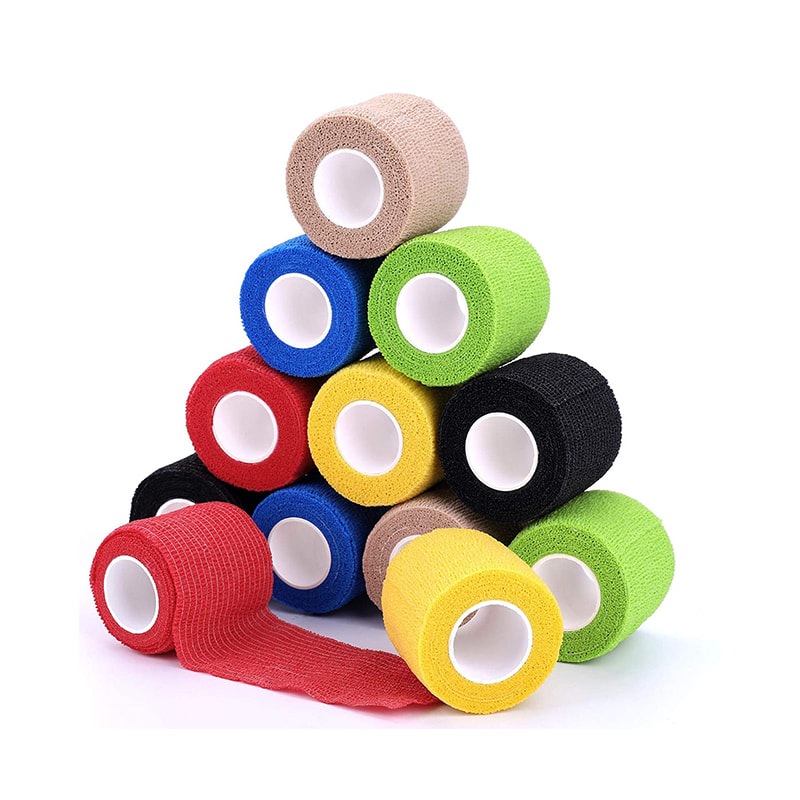
Color and Pattern Variety
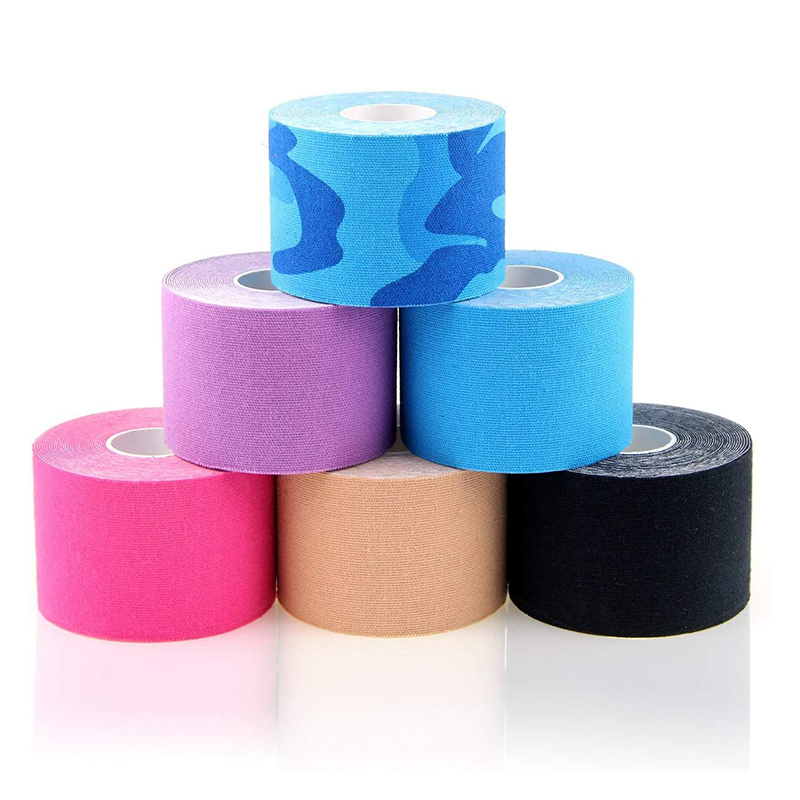
The product is available in animal patterns and assorted colors. These options add visual appeal and may improve product presentation in retail stores, veterinary supply outlets, pet shops, and online catalogs.
Color variation can also make it easier for users to distinguish between bandage widths or identify a pet’s wrap at a glance. For retailers, attractive patterns can help position the product as a practical but friendly pet care accessory rather than an intimidating medical item.
Advantages Over Conventional Adhesive Tape
Conventional adhesive tape remains useful for many medical applications, but it may not be ideal for every dog bandaging situation. Its adhesive surface can bond to fur and skin, making removal uncomfortable. It may also leave residue or require careful cutting and peeling.
The cohesive wrap offers several practical distinctions:
It is designed to adhere to itself rather than directly to fur or skin.
It can be torn by hand without scissors.
It is flexible and conforms around curved areas.
It is available in multiple widths for different applications.
It can provide light support and dressing security.
It is breathable and comfortable to wear.
It is available in assorted colors and animal patterns.
Compared with rigid bandage materials, the non-woven cohesive design is easier to shape around joints and limbs. Compared with ordinary gauze alone, it provides an outer securing layer that helps hold the dressing in position. Compared with elastic adhesive tape, it offers the benefit of self-adhesion without requiring direct adhesion to the animal.
These benefits make the product a useful complementary item. It can be used over an appropriate sterile or non-sterile dressing when a dressing needs additional support. It can also be used for light protection in situations where a veterinarian or trained caregiver determines that wrapping is appropriate.
Applications in Pet Care
Paw and Foot Protection
Paws are exposed to dirt, moisture, rough surfaces, and repeated movement. A cohesive wrap may be used to secure a suitable dressing over a minor wound or to provide a protective outer layer when recommended by a professional.
The narrow widths are useful for focused applications, but the wrap should not be placed so tightly that it affects toe movement or circulation. The paw should be checked regularly, especially if the dog is active or attempts to chew the bandage.
Leg and Limb Wrapping
The 5 cm, 7.5 cm, and 10 cm widths can be considered for different limb sizes and dressing requirements. The wrap can help secure gauze or another appropriate dressing around a lower limb, provided that the user understands correct wrapping technique.
A limb bandage should be smooth, secure, and free from excessive pressure. Wrinkles can create localized pressure points. Excessive overlap can also increase compression. The cohesive wrap should support the dressing without restricting natural movement or blood flow.
Joint Support
The elastic material can conform around joints and other curved areas. This makes it potentially useful as an outer support wrap in selected situations. It may be applied around areas such as the ankle or wrist of a dog, subject to professional guidance where injury is suspected.
A cohesive wrap is not a substitute for a brace, splint, diagnostic examination, or treatment plan. If a dog is limping, unable to bear weight, showing severe pain, or experiencing swelling, veterinary evaluation is recommended.
Post-Treatment Dressing Security
After a dressing has been applied, an outer cohesive wrap can help keep it in place. The wrap may be particularly useful when ordinary tape cannot be safely applied to fur. It can also provide a neat and adaptable covering around a dressing.
Caregivers should follow any instructions from a veterinary professional regarding dressing changes, cleaning, medication, and bandage duration. A wrap should not conceal worsening symptoms or delay treatment.
Outdoor and Travel First Aid
The product’s compact roll format makes it appropriate for pet travel kits, hiking bags, camping supplies, vehicle first aid kits, and household emergency storage. Its hand-tear design is useful when a quick response is needed away from a fully equipped treatment area.
Pet owners can combine the cohesive wrap with gauze, wound cleansing supplies, disposable gloves, scissors for other tasks, and a basic first aid guide. The wrap itself is not a complete wound care system, but it is a valuable component of a broader kit.
Applications Beyond Dogs
Although the product title focuses on dogs, the wrap’s features are also relevant to other appropriate applications. The product can be used as a general self-adhering bandage for people, pets, sports support, and first aid, subject to proper use and any applicable local requirements.
Human First Aid
The wrap may be used to secure gauze or provide light support around wrists, ankles, fingers, or other areas. Its self-adhering design can be helpful for users who prefer to avoid adhesive contact with skin. It is also convenient for home first aid kits and workplace medical supplies.
Sports Support
Athletes and active users may use cohesive wraps around wrists, ankles, and other areas requiring light support or dressing security. The elastic material can follow movement more comfortably than a rigid strip. However, it should not be used to conceal a serious injury or replace professional diagnosis.
Family Healthcare
The wrap can be stored as part of a family first aid collection. Because it is available in several widths, a household can select the size that best suits the application. The product is portable, easy to handle, and suitable for quick protective wrapping when appropriate.
How to Use the Cohesive Bandage
Prepare the Area
Before applying the wrap, inspect the area and identify the purpose of the bandage. If a wound is present, clean it and apply the appropriate dressing according to professional advice. The cohesive wrap should generally be used as an outer securing layer rather than placed directly into an open wound.
Make sure the skin, fur, and surrounding area are reasonably dry. Excessive moisture, dirt, oil, or debris may affect the wrap’s performance. Have the required dressing and any other supplies ready before beginning.
Select the Appropriate Width
Choose a width that matches the size of the application. A narrow wrap may be easier to control around a small paw or finger, while a wider wrap may provide better coverage on a larger limb. Using an appropriate width helps reduce unnecessary overlap and may improve comfort.
Apply with Even Tension
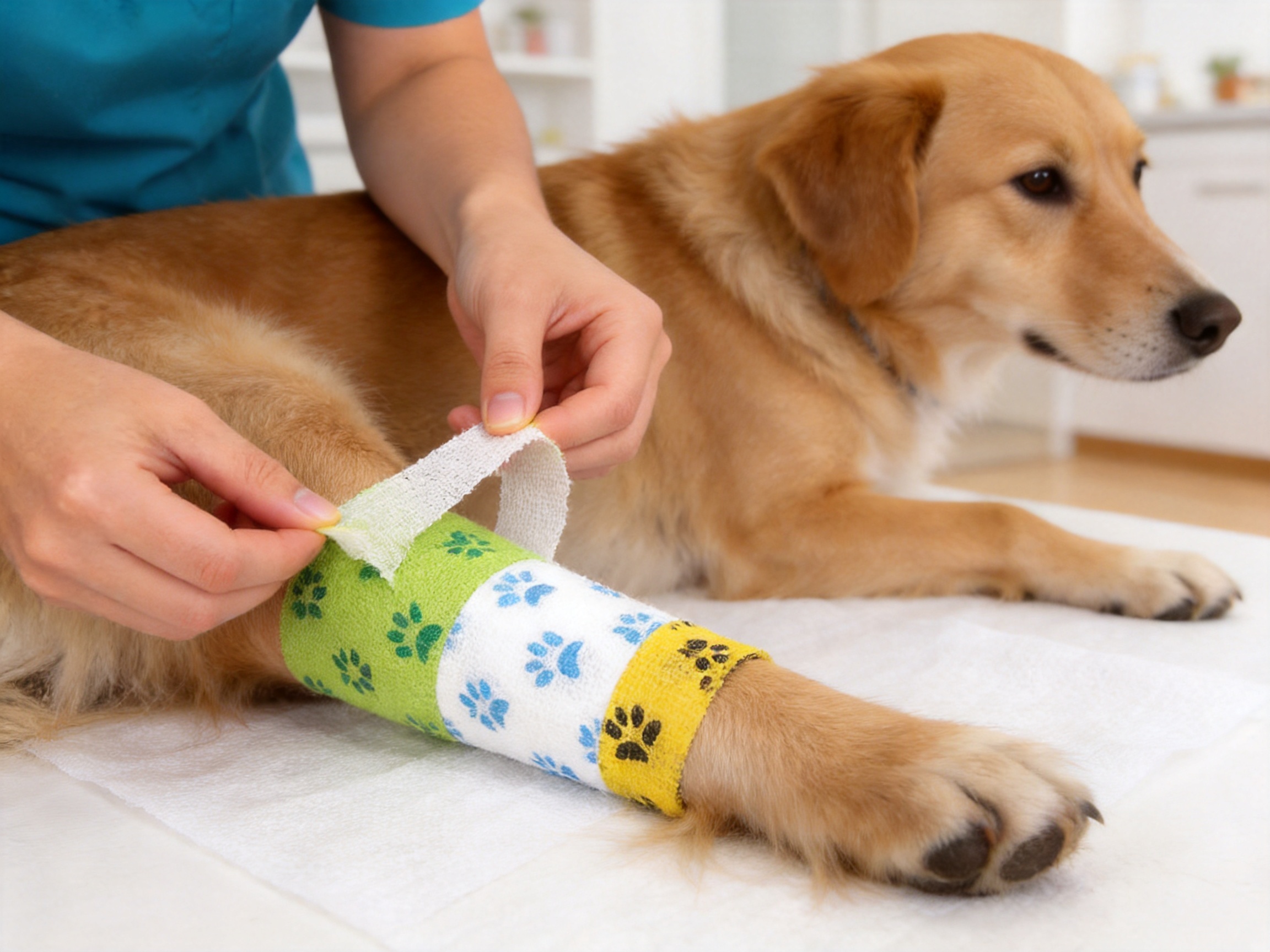
Start with the end of the wrap and overlap each layer slightly. Apply enough tension to create a secure covering, but do not stretch the material excessively. The wrap should remain comfortable and should not cause constriction.
When wrapping a dog, keep the animal calm and supported. A second person may help hold the dog gently. Avoid covering areas that require observation unless the wrap has been planned for that purpose.
Secure the End
Press the final layer against the underlying wrap so that the cohesive material bonds to itself. No separate clip or adhesive strip should normally be necessary. Check that the end is secure and that there are no loose edges that the dog can easily pull.
Monitor the Bandage
Check the wrap regularly for loosening, wetness, dirt, chewing, odor, swelling, or signs of discomfort. Observe the areas beyond the wrap for changes in color or temperature. If the dog becomes distressed or the bandage appears too tight, remove it and seek appropriate advice.
Remove and Replace Carefully
Because the wrap is designed to adhere to itself, removal should not require pulling adhesive away from fur or skin. Loosen the layers carefully and replace the bandage when needed. Used material should be disposed of responsibly and should not be reused if it is soiled, stretched, wet, or contaminated.
Quality and Manufacturing Strengths
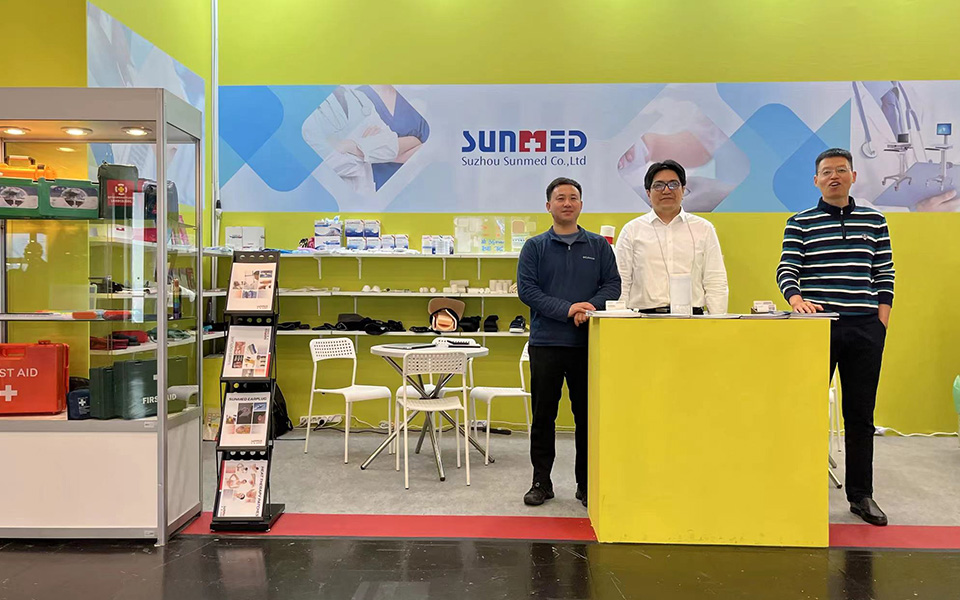
Product performance depends not only on the design but also on how consistently the material is manufactured, converted, inspected, and packaged. The manufacturer behind this product has extensive experience in first aid, medical, and healthcare products, with approximately 30 years of industry knowledge.
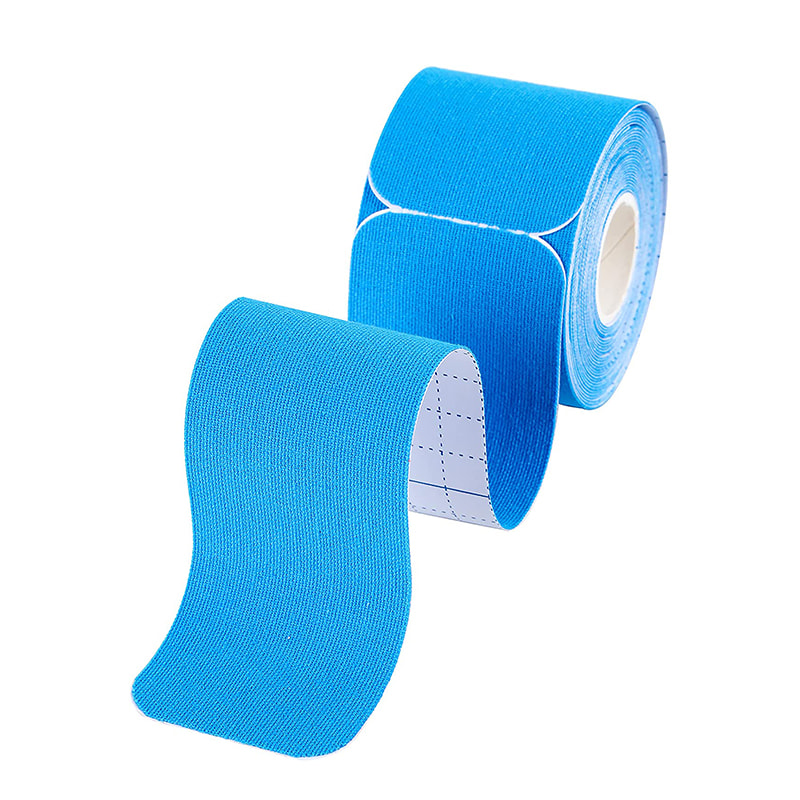
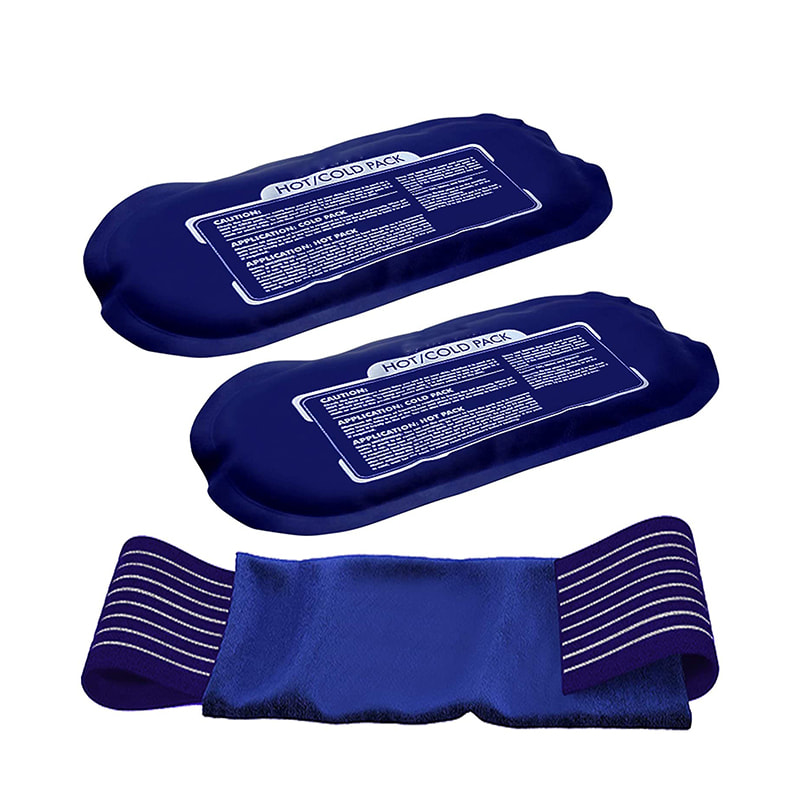
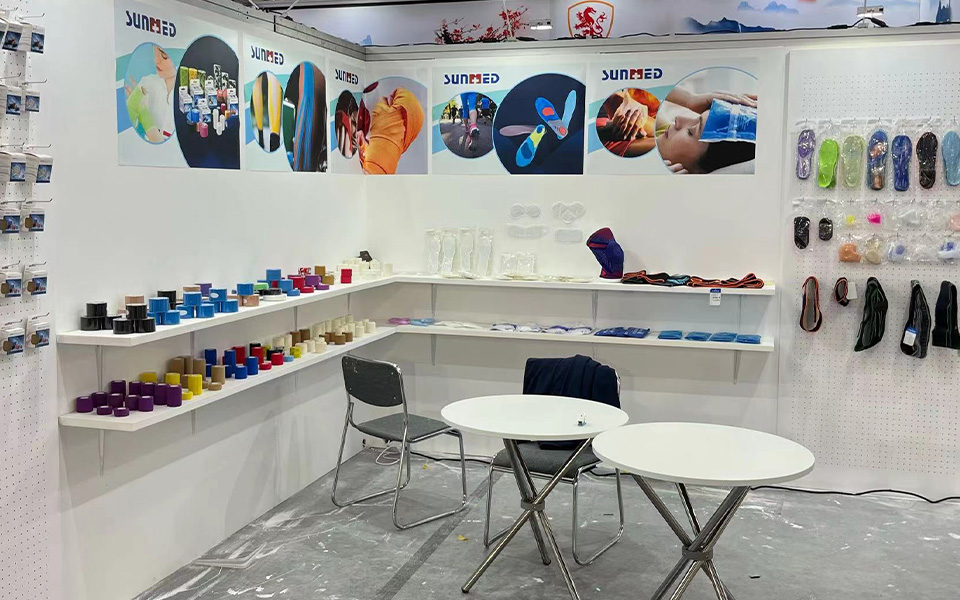
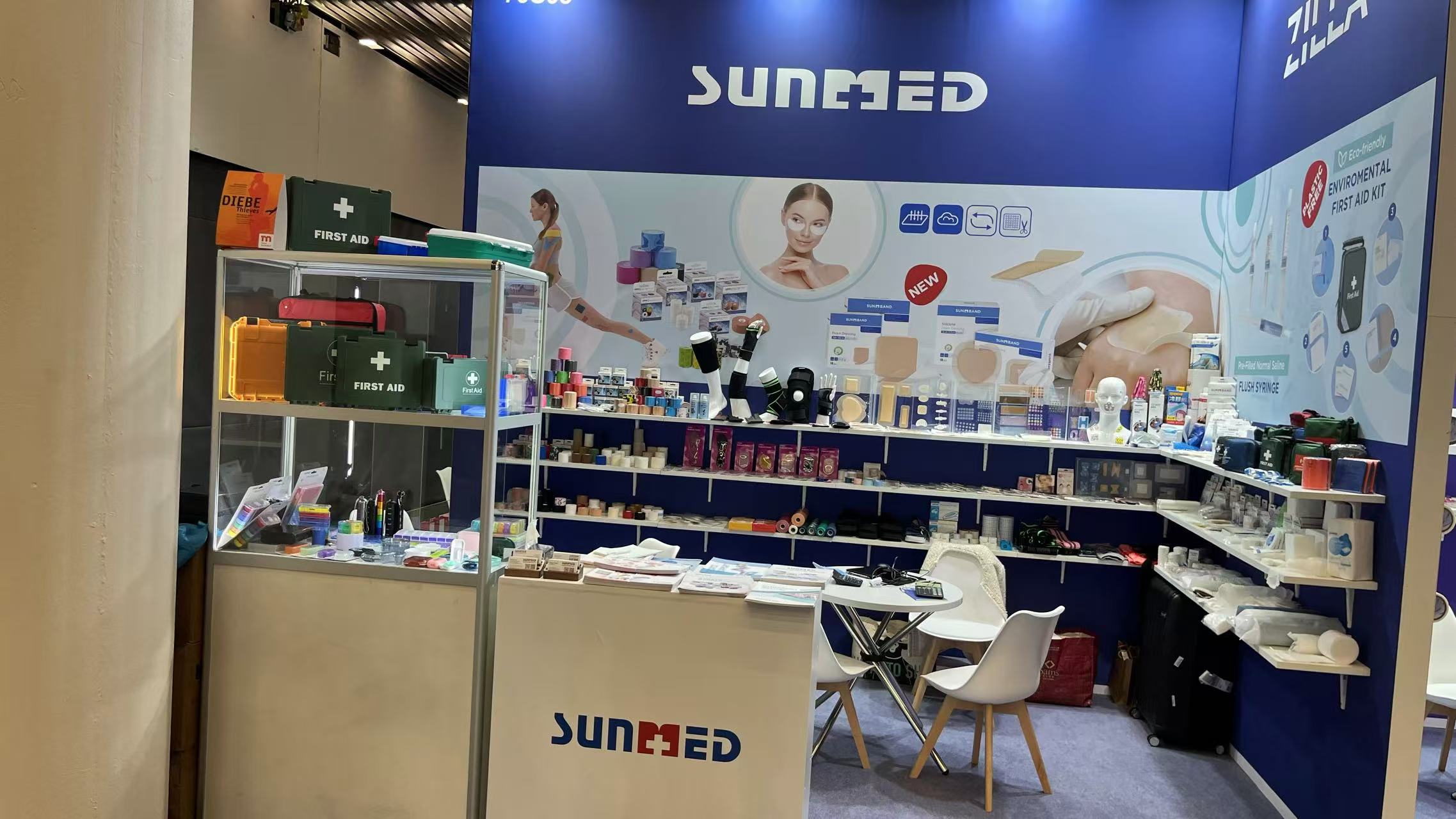
Suzhou Sunmed Co., Ltd. operates multiple production bases in Jiangsu, Zhejiang, and Anhui Province. This manufacturing network supports a broad product range that includes gauze, bandages, medical tape, cotton products, non-woven products, sports bandages, kinesiology tape, cohesive bandages, elastic adhesive bandages, pill boxes, hot and cold packs, disposable syringes, catheters, surgical consumables, and other medical supplies.
The company established its first aid factory in 2008 to serve first aid customers. In 2021, it established its own factory for kinesiology tape, cohesive bandages, and elastic adhesive bandages. This dedicated production capability is particularly relevant to the DC660034 product because cohesive wraps require controlled material handling, coating or cohesion management, elastic performance control, slitting, roll formation, and packaging consistency.
Material Preparation
The manufacturing process begins with the selection and preparation of suitable non-woven raw material. Material quality influences softness, breathability, tear behavior, flexibility, and the overall feel of the finished wrap.
Production teams must manage the material carefully to avoid excessive variation in thickness, surface structure, or mechanical strength. Uniform material preparation helps ensure that the final roll performs consistently during application and hand tearing.
Cohesive Performance Control
A cohesive bandage must adhere effectively to itself while remaining practical to handle. If cohesion is too weak, the wrap may loosen during use. If it is too strong or uneven, application and removal may become difficult.
Dedicated production capabilities allow the manufacturer to focus on the balance between self-adhering performance, flexibility, and user comfort. Quality checks may evaluate whether layers hold together, whether the surface remains manageable during wrapping, and whether the product performs consistently across the roll.
Slitting and Width Accuracy
The product is available in four widths: 2.5 cm, 5 cm, 7.5 cm, and 10 cm. Accurate slitting is important because width affects application control, coverage, and packaging presentation.
Consistent dimensions help distributors and end users identify the appropriate product for a particular application. Controlled converting also helps maintain a clean roll edge and reduces the risk of irregular material that may be difficult to apply.
Roll Formation and Length Management
Each roll is specified as 4.5 meters long. Proper roll formation helps prevent loose edges, uneven winding, and unnecessary deformation during storage or transport.
Consistent winding supports easier dispensing. It also helps maintain the compact form expected by retailers and end users. For wholesale customers, standardized roll dimensions simplify inventory planning, packaging, and product comparison.
Inspection and Quality Assurance
The manufacturer has a professional quality control team comprising hundreds of personnel. The stated inspection procedures are designed to support compliance with ISO13485:2016 standards. This quality management orientation is an important strength for buyers seeking medical consumables from an established supplier.
Quality control for cohesive bandages may include checks of material appearance, dimensions, roll length, cohesion, elasticity, tear behavior, packaging integrity, and labeling. The exact inspection plan may vary according to production requirements, customer specifications, and applicable regulations.
Most of the manufacturer’s products are CE certified, and its Suzhou factories comply with FDA requirements. Buyers should confirm the specific certification and regulatory status applicable to the DC660034 model, destination market, intended use, packaging, and private-label configuration.
Why Manufacturing Experience Matters to Buyers
For wholesalers and distributors, reliable supply is as important as product functionality. A product may be attractive in a sample but difficult to commercialize if dimensions vary, packaging is inconsistent, lead times are unpredictable, or communication is slow.
An experienced medical consumables manufacturer can provide a stronger foundation for long-term purchasing. Its product knowledge can support specification discussions, packaging development, production planning, quality documentation, and market adaptation.
The manufacturer has exported products to more than 60 countries, including markets in Europe, Southeast Asia, Africa, and Oceania. Its customers include hospitals, first aid suppliers, supermarkets, and retail sports shops. This international market experience can help support buyers working across different distribution channels.
Its product portfolio also creates opportunities for product bundling. A buyer interested in cohesive bandages may also require gauze, medical tape, cotton products, wound dressings, elastic bandages, kinesiology tape, hot and cold therapy products, or family healthcare supplies. Working with a supplier that manufactures several related categories may simplify sourcing and reduce the number of separate vendor relationships.
Wholesale and Private-Label Potential
The DC660034 product is suitable for multiple sales channels. Pet supply distributors can position it as a practical first aid accessory for dogs. Medical supply wholesalers can include it in their wound care and self-adhering bandage portfolios. Sports retailers can offer it as a general support wrap. Supermarkets and pharmacies can place it in first aid or family healthcare sections.
Assorted colors and animal patterns support consumer-friendly presentation. The product can appeal to buyers who want functionality without the clinical appearance of plain white medical tape. At the same time, the neutral medical use of a cohesive bandage makes it appropriate for professional and household applications.
Wholesale buyers should clarify the following points before placing a large order:
Required width and roll length.
Color or animal pattern preferences.
Packaging format and labeling language.
Private-label or original packaging requirements.
Target market regulations and documentation.
Carton dimensions and shipping configuration.
Minimum order quantity and production lead time.
Sample approval and quality inspection procedures.
Clear specifications help reduce misunderstandings and ensure that the finished goods match the buyer’s sales strategy. Packaging should communicate the self-adhering function accurately and should not imply that the product is a substitute for veterinary diagnosis or emergency treatment.
Storage and Handling Recommendations
Store cohesive bandages in a clean, dry environment away from excessive heat, direct sunlight, and high humidity. Keep the original packaging intact until the product is ready for use. Avoid placing heavy objects on top of rolls, as compression may affect their shape.
Products should be rotated according to the manufacturer’s recommended shelf-life and stock management instructions. Retailers and distributors should use a first-in, first-out inventory system where appropriate.
Before use, inspect the packaging and roll. Do not use a product if the package is damaged, the material is contaminated, or the bandage shows unexpected changes in texture, odor, or cohesion. Product storage conditions can affect performance, so distribution warehouses should maintain suitable environmental controls.
Safety Considerations
The bandage should be applied by a person who understands basic wrapping principles. It must not be wrapped excessively tightly. A dog’s bandage should be checked regularly because animals may not communicate discomfort clearly.
Seek veterinary attention for serious wounds, persistent bleeding, suspected fractures, severe swelling, abnormal limb position, significant pain, infection, or any injury that does not improve. A dog that repeatedly chews or removes a bandage may require a different treatment approach.
Do not use the wrap as a direct replacement for a sterile wound dressing when sterility is required. The available product information identifies the material as non-woven but does not state that the roll is sterile. Buyers and users should confirm the product’s exact sterilization and regulatory status before making claims related to sterile applications.
Pet owners should follow professional instructions when a veterinarian has applied a dressing or prescribed a bandage schedule. The product is intended to provide support and protection, but correct diagnosis and treatment remain essential.
Comparison with Common Alternative Products
| Product type | Main strength | Potential limitation | Advantage of cohesive non-woven wrap |
|---|
| Ordinary adhesive tape | Strong direct adhesion | May stick to skin, hair, or clothing | Adheres to itself and is easier to remove from fur |
| Loose gauze alone | Soft wound coverage | May loosen without an outer securing layer | Can help secure a dressing around the application area |
| Rigid bandage material | Firm structure | Less flexible around curved body areas | Elastic and conformable around contours |
| Elastic adhesive bandage | Stretch and direct adhesion | May attach to fur or skin | Provides elasticity without intended direct adhesion to the dog |
| Clips or pins | Mechanical fastening | Can be inconvenient or unsuitable around animals | Self-adhering layers reduce the need for separate fasteners |
The best product depends on the application. A cohesive wrap is not designed to replace every form of medical tape, gauze, compression bandage, or veterinary dressing. Its advantage is the combination of self-adhering performance, flexibility, hand-tear convenience, breathable non-woven construction, and suitability for irregular contours.
Environmental and Operational Efficiency
The product’s hand-tear design can reduce dependence on scissors during routine applications. This is especially useful in mobile settings, pet travel kits, sports bags, and home first aid storage.
Its compact roll format also supports efficient inventory management. Different widths can be stocked according to customer needs without requiring bulky equipment. Retailers can display the rolls in first aid, pet care, or sports support sections.
Operational efficiency also comes from sourcing related items from one experienced manufacturer. A distributor may be able to coordinate cohesive bandages with wound dressings, gauze, medical tape, sports support products, and family healthcare supplies. Consolidated sourcing can simplify communication, quality review, and shipment planning.
Product Positioning in Competitive Markets
Price is important in the wholesale market, but value is determined by more than unit cost. A competitive cohesive bandage should combine reliable function, attractive presentation, acceptable comfort, consistent dimensions, and dependable supply.
The DC660034 model can be positioned as a value-oriented product because it offers multiple practical features in one roll. The user receives a breathable non-woven material, self-adhering performance, elastic support, hand-tear convenience, and a choice of widths. These features may reduce the need to stock separate wrapping accessories for different routine applications.
For pet retailers, animal patterns can make the product more appealing to consumers. For medical distributors, the same product can be classified within self-adhering bandages and wound care accessories. For sports retailers, it can be presented as a flexible support wrap. This cross-category potential can improve product versatility for wholesalers.
Manufacturing depth further strengthens the product’s competitive position. A supplier with dedicated cohesive bandage production, established quality systems, international export experience, and broad related product capabilities can offer more than a one-time transaction. It can support continuing supply and product expansion.
Recommended Buyer Evaluation Checklist
Before approving a cohesive bandage for a market or application, buyers should evaluate the following points:
Does the wrap adhere securely to itself?
Can it be removed without excessive pulling of hair or skin?
Is the non-woven material soft and breathable?
Does the elastic material conform to curved areas?
Can the roll be torn by hand?
Are the width and roll length consistent?
Are the colors and patterns suitable for the target market?
Is the packaging clear and accurate?
Are the necessary quality and regulatory documents available?
Can the supplier support repeat orders and customized requirements?
Sample evaluation should be conducted under realistic conditions. Buyers can test the roll around suitable models or dressing materials, examine cohesion after overlapping, review ease of tearing, and inspect the material after storage and handling. For pet applications, product testing should be carried out responsibly and should not expose an animal to unnecessary risk.
Frequently Asked Questions
What is the DC660034 cohesive bandage made of?
The product is made from non-woven material. The non-woven construction is designed to be breathable, flexible, and comfortable to wear while providing a suitable base for self-adhering performance.
Does the bandage stick directly to a dog’s fur?
The product is designed to stick to itself rather than to skin, clothing, or hair. This can make removal easier than with ordinary adhesive tape. Users should still apply and remove it carefully, especially if loose fur becomes caught between layers.
What sizes are available?
The available widths are 2.5 cm, 5 cm, 7.5 cm, and 10 cm. Each roll is specified as 4.5 meters long. The correct width depends on the size of the dog, the body area, and the dressing or support requirement.
Can the wrap be torn by hand?
Yes. The product is designed to be torn by hand at the desired length, which makes it convenient for home use, pet travel, first aid kits, sports applications, and professional care environments.
Can this product be used on people?
The product description identifies it as suitable for humans and pets. It may be used for appropriate first aid, dressing support, and light sports support. Users should follow proper application practices and seek professional medical advice for significant injuries.
Is the product sterile?
The provided product information identifies the material as non-woven but does not state that the product is sterile. Buyers should confirm the specific sterilization status, packaging configuration, and regulatory documentation for the intended market before making sterile-use claims.
Can it be used for serious dog injuries?
The wrap should not be considered a substitute for veterinary treatment. Serious bleeding, deep wounds, fractures, severe swelling, infection, burns, or significant pain require professional evaluation. The wrap may be used only as an appropriate temporary or supporting measure when recommended.
How should the bandage be applied?
Apply it over a suitable dressing or around the intended support area with even, moderate tension. Overlap the layers so that the wrap adheres to itself. Avoid excessive tightness and monitor the dog for discomfort, swelling, changes in color, or changes in temperature.
What colors are available?
The listed color options are animal patterns and assorted colors. Specific pattern availability may depend on production and order requirements, so wholesale buyers should confirm the available assortment before ordering.
Who manufactures the product?
The product is manufactured by Suzhou Sunmed Co., Ltd., a Chinese manufacturer and exporter of first aid, medical, and healthcare products. The company has approximately 30 years of industry experience and operates multiple production bases.
Can the product be purchased for wholesale or private-label distribution?
The manufacturer supplies international customers and produces a broad range of medical and healthcare products. Wholesale buyers should contact the supplier to confirm minimum order quantities, packaging, customization, documentation, lead times, and destination-market requirements.
Conclusion
The non-woven cohesive bandage for dogs, model DC660034, offers a practical combination of comfort, flexibility, self-adhering performance, and application convenience. Its ability to stick to itself rather than directly to fur or skin makes it a useful alternative to ordinary adhesive tape in many pet care and first aid situations.
With four width options and a 4.5-meter roll length, the product can serve a wide range of applications, from small paw dressings to larger limb or support wraps. Its breathable non-woven material helps promote comfortable wear, while its elastic construction conforms around curved and difficult-to-bandage areas. The hand-tear design further improves speed and portability.
For distributors, the product benefits from attractive animal patterns, assorted colors, broad application potential, and compatibility with pet care, medical supply, sports, and retail channels. Its manufacturer adds further value through dedicated cohesive bandage production, extensive industry experience, international export capability, and a quality management system aligned with ISO13485:2016 requirements.
As with all bandaging products, safe use depends on correct tension, regular inspection, suitable wound care, and professional treatment when needed. Used appropriately, this cohesive wrap can be a convenient and versatile addition to pet first aid kits, veterinary supply portfolios, household healthcare collections, and sports support product lines.
References
1. Product specification sheet for non-woven cohesive bandage, model DC660034.
2. Manufacturer-provided information concerning material, sizes, colors, applications, and self-adhering performance.
3. Manufacturer profile describing production bases, product categories, export markets, and industry experience.
4. ISO 13485:2016, Medical devices—Quality management systems—Requirements for regulatory purposes.
5. General first aid and bandaging principles concerning dressing support, circulation monitoring, and safe wrap application.
6. General veterinary wound-care guidance concerning professional evaluation of serious injuries and regular monitoring of animal bandages.

 English
 Español
 русский
 Français
 Deutsch
 italiano
 By Admin