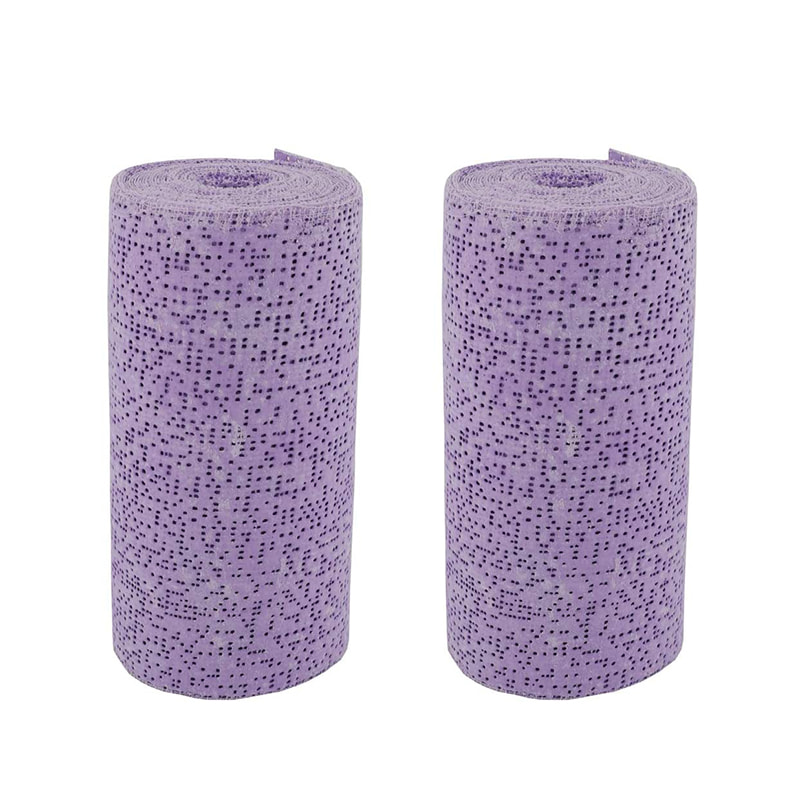
Plaster bandages have long been valued for their ability to transform a flexible textile roll into a firm, shaped structure after activation with water. The Purple Super Strong Plaster Sports Bandages represented by model DC660044 combine fine knitted cotton gauze with a generous coating of plaster of Paris to provide a practical material for casting, modeling, arts and crafts, educational projects, scenery construction, mask making, and other shaping applications. Their purple presentation gives finished projects a distinctive appearance, while the underlying plaster-and-gauze structure provides the strength and detail retention expected from a professional plaster casting material.
Although the product is listed within the POP Bandage category and carries a sports-oriented product name, its stated applications extend beyond athletic support. It is especially suitable for users who need a fast-setting, easy-to-cut, water-activated plaster cloth. The material can be shaped around a form, molded over a prepared surface, or layered to create a stronger structure. It can also accept pigments, paints, and markers after drying, which makes it useful for both practical casting and decorative work.
This article examines the product’s construction, handling characteristics, manufacturing strengths, quality considerations, applications, purchasing value, and comparative advantages. It also explains how a manufacturer with established production bases, dedicated quality-control personnel, international export experience, and a broad medical-consumables portfolio can support consistent supply for distributors, retailers, healthcare suppliers, schools, creative businesses, and professional buyers.
Product Overview
The Purple Super Strong Plaster Sports Bandages use a fine knit cotton gauze as the supporting substrate. Plaster of Paris is embedded throughout the gauze, creating a coated textile that remains flexible and easy to cut before wetting. Once moistened, the plaster becomes workable and can be applied to a prepared surface or form. As the plaster begins to set, it hardens into a rigid shell or shaped structure.
Model DC660044 is available in white, yellow, purple, and assorted color options. The featured purple version is particularly suitable for products, projects, or retail displays that require a more recognizable visual identity than conventional white plaster cloth. The assorted option may be useful for educational kits, craft assortments, seasonal products, or multi-color retail packaging.
The supplied product information identifies an approximate soaking time of five seconds, a setting time of about five minutes, and a crafting time of approximately three to three and a half minutes. Actual performance can vary according to water temperature, water quantity, ambient humidity, layer thickness, handling technique, and the surface being covered. These stated times nevertheless provide a useful operating framework for users planning a casting or modeling process.
The product is supplied in an assorted-size format, with a minimum order quantity of 5,000 pieces and a listed quantity of one. These characteristics make the product well suited to wholesale, private-label, institutional, and project-based purchasing rather than only occasional individual use.
Construction and Material Design
Fine Knit Cotton Gauze
The cotton gauze forms the internal framework of the plaster bandage. A fine knit structure allows the textile to conform to curved surfaces while retaining sufficient integrity during wetting and application. Compared with a loose or uneven textile base, a consistent knit can help distribute the plaster more evenly and reduce weak gaps in the finished surface.
The gauze is also easy to cut with ordinary scissors. This is important when users need narrow strips for edges, small sections for detailed work, or larger pieces for broad surfaces. Cutting before activation helps users control the application process and reduces unnecessary handling after the plaster becomes wet.
Generous Gypsum Coverage
The bandage contains a generous amount of gypsum, or plaster of Paris, distributed through the cotton gauze. Adequate gypsum coverage is central to the performance of a plaster cloth. If the coating is too sparse, the finished material may require excessive layering, provide limited surface detail, or develop weak areas. A well-coated bandage can create a more uniform plaster surface and help capture fine contours of the casting subject.
The product’s plaster distribution is designed to support both general shaping and detailed work. It can be used for body-form projects, masks, sculptures, relief work, model scenery, and other applications where the material must follow a three-dimensional form. Once dry, additional layers of plaster, paint, marker, or other suitable finishing materials may be added according to the project requirements.
Water-Activated Function
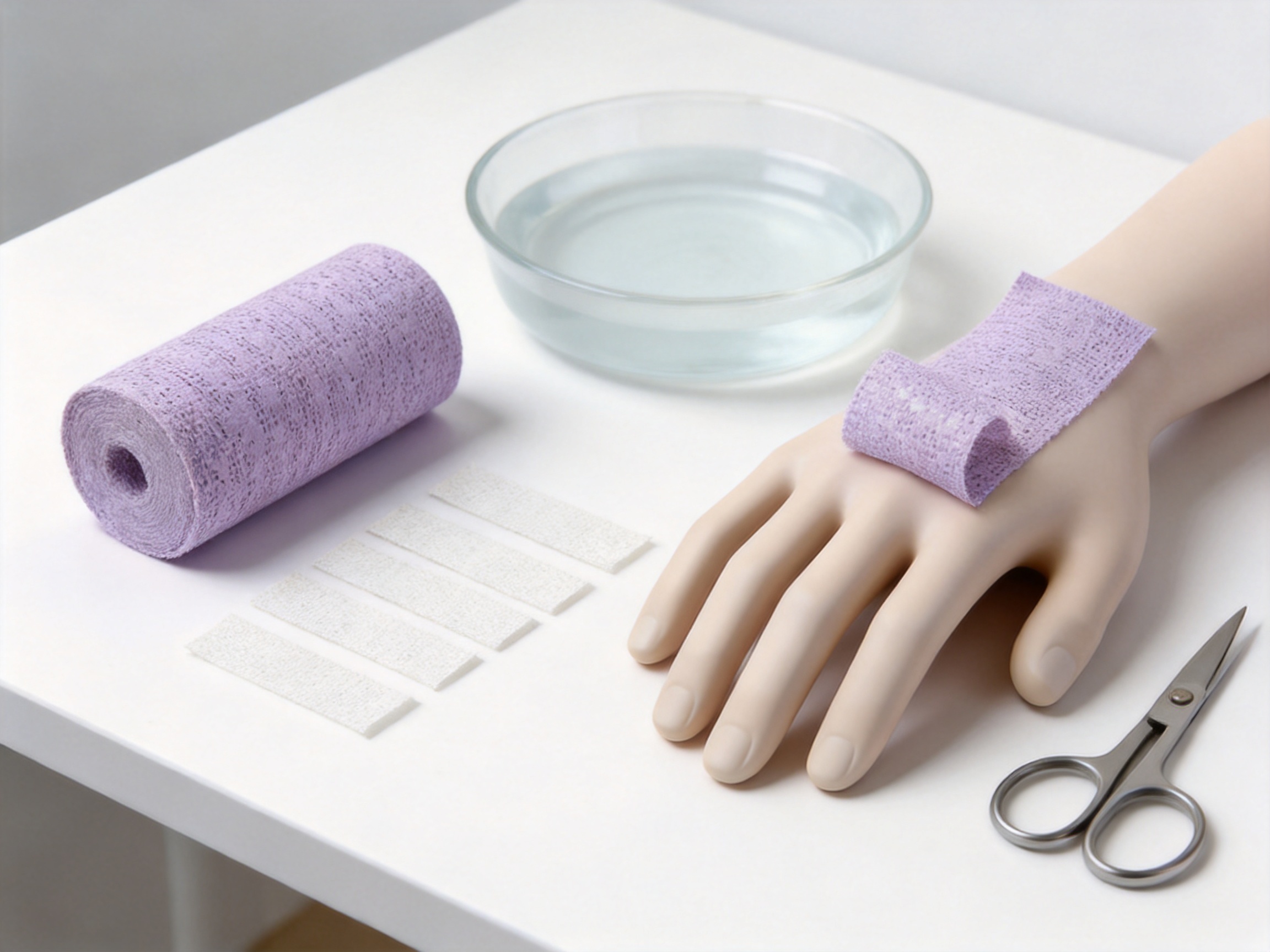
The operating method is straightforward. A cut section is briefly dipped or moistened with water, then placed on the intended surface. The user smooths the material so that the plaster contacts the gauze and the underlying form. As the plaster begins to set, the bandage retains the shape into which it has been molded.
Its short soaking time can improve workflow efficiency. Users do not need to wait for a lengthy saturation period before beginning application. A controlled wetting process also helps avoid excessive water, which can dilute the plaster coating and create unnecessary mess. For larger projects, preparing and wetting manageable sections in sequence can provide better control than soaking the entire roll at once.
Key Performance Characteristics
Rapid but Manageable Setting
A setting time of approximately five minutes offers a useful balance between speed and workability. The material can harden quickly enough for classroom projects, theatrical construction, model production, and time-sensitive casting tasks, while the stated crafting time of approximately three to three and a half minutes gives the user a short but practical window for positioning and smoothing.
Rapid setting is valuable when multiple layers are required. A user can apply an initial layer, allow it to stabilize, and then add further material without waiting for the same length of time required by slower-setting alternatives. This can shorten production schedules and help organizations manage projects with limited labor or classroom time.
At the same time, rapid-setting materials require preparation. The work surface, scissors, water container, protective covering, and any release barrier should be ready before activation. Users should also avoid wetting more material than they can apply within the available crafting period.
Shape Conformability
The flexible gauze base allows the plaster cloth to follow curves and contours. This is valuable for masks, belly molds, sculpture forms, model landscapes, decorative shapes, and other three-dimensional projects. Narrow strips can be used around edges or contours, while wider strips can cover broader areas efficiently.
Conformability can also reduce the need for complicated cutting patterns. Instead of using multiple rigid pieces, the user can apply overlapping strips that follow the shape naturally. This simplifies the construction process and can create a more continuous surface after drying.
Detail Capture
The generous gypsum content helps the bandage record surface details. Fine contours can be preserved when the material is applied carefully and pressed evenly against a properly prepared form. This makes the product appropriate for projects where shape accuracy is important, including keepsakes, educational models, theatrical props, and artistic relief work.
Detail capture depends not only on the plaster bandage but also on preparation and technique. The form should be stable, the surface should be protected with an appropriate release layer when necessary, and the wet bandage should be smoothed without damaging the underlying detail.
Post-Drying Decoration
After complete drying, the plaster surface can be painted or decorated with markers and other suitable artistic media. The white, yellow, purple, and assorted color options give buyers flexibility at the design stage. Purple material can serve as a finished visual element or as a colorful foundation for further embellishment.
The ability to decorate the dried surface expands the product’s value beyond basic structural use. Schools can incorporate the bandage into science and art projects, theater departments can produce painted props, hobbyists can create sculptures, and retailers can package it as part of a craft kit.
Purple Super Strong Plaster Sports Bandages
Advantages Compared with Ordinary Plaster Cloth and Alternative Materials
More Convenient than Loose Plaster Mixing
Traditional loose plaster requires separate measuring, mixing, and application. That process can be effective, but it may create dust, require additional tools, and produce inconsistent proportions when handled by inexperienced users. Pre-coated plaster bandages simplify the workflow by combining the textile reinforcement and plaster material in one ready-to-activate product.
The user only needs to cut the desired length, wet it, and apply it. This reduces the number of preparation steps and makes the material more accessible for schools, workshops, retail customers, and first-time users. It also helps improve repeatability because each section of the bandage is manufactured with a defined plaster coating rather than mixed manually at the point of use.
More Adaptable than Rigid Sheets
Rigid plaster sheets or boards may be suitable for flat applications, but they are less convenient for curved forms, irregular contours, and three-dimensional shapes. The cotton gauze foundation of DC660044 remains flexible before setting, allowing it to conform to rounded surfaces and complex outlines.
This adaptability can reduce cutting waste and simplify the creation of masks, body-form molds, model terrain, sculpture bases, and decorative structures. Users can select strip widths according to the geometry of the project, creating a more efficient application process than trying to force a rigid material around a curved form.
Faster Workflow than Slow-Curing Modeling Materials
Some modeling materials require extended drying or curing periods before they can be moved, painted, or layered. The approximately five-minute setting time of this plaster bandage supports faster project progression. While complete drying may take longer depending on thickness and environmental conditions, the initial set allows the structure to stabilize relatively quickly.
This feature is particularly valuable for workshops, classrooms, stage production, retail demonstrations, and production environments where several pieces must be completed within a scheduled session.
More Visual Variety than Conventional White Bandages
White plaster cloth is widely recognized, but color options can provide additional merchandising and creative value. Purple, yellow, white, and assorted choices allow buyers to coordinate products with school programs, sports themes, craft kits, seasonal displays, or project-specific color systems.
The purple version may also be easier to identify within a mixed-material workspace. Color differentiation can help users distinguish one layer, project stage, or product variant from another, although the color should not be treated as a substitute for product labeling or technical identification.
Suitable for Layered Construction
The bandage can be applied in overlapping layers when a thicker or stronger structure is needed. Layering allows users to adapt the finished piece to the intended purpose. A lightweight decorative form may require fewer layers, while a larger sculpture, prop, or model support may require additional reinforcement.
This flexibility allows one product type to serve several project scales. Instead of purchasing separate materials for every thickness requirement, users can adjust the number and arrangement of layers according to the design.
Applications Across Creative, Educational, and Professional Settings
Art and Craft Projects
Plaster bandages are widely used for handmade sculptures, relief panels, decorative forms, textured artwork, and three-dimensional craft projects. The material is easy to cut, activate, shape, and finish. Once dry, it can be painted or marked, allowing users to create customized surfaces without needing advanced equipment.
For hobbyists, the product offers a practical way to build volume over an armature or form. Newspaper, cardboard, foam, wire structures, and other suitable supports may be covered with plaster cloth to create a hardened exterior. The bandage can also be used to add texture, raised details, or a plaster-like finish to existing forms.
Mask Making
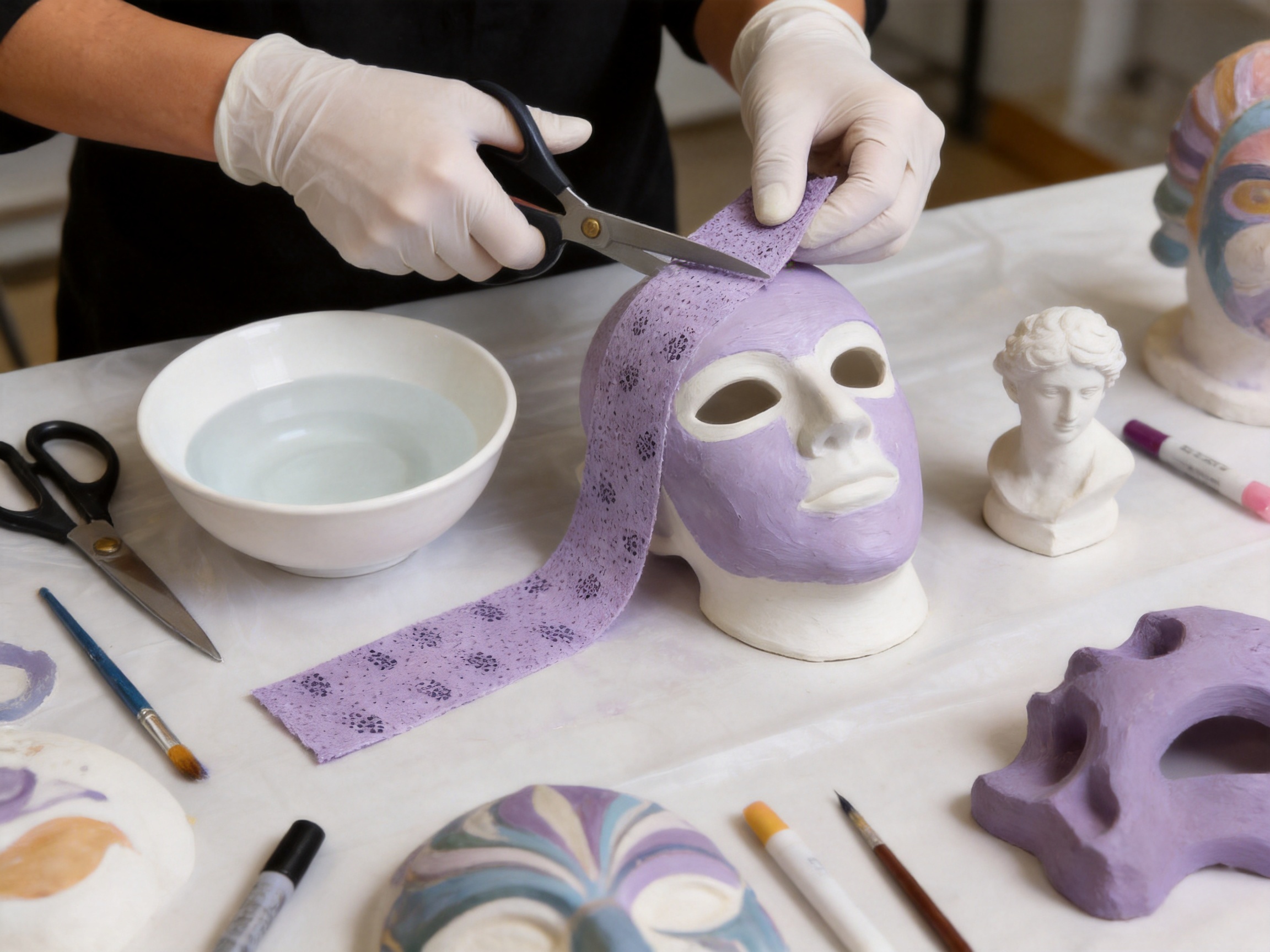
Mask construction requires a material that can follow facial or sculpted contours while becoming sufficiently rigid after drying. Plaster bandages can be applied over a properly prepared model or support to create a shaped shell. After drying, the surface can be trimmed, refined, painted, and decorated.
Users should take appropriate precautions when making any mask or body-related mold. A suitable release barrier should be used, breathing must never be obstructed, and the material should not be applied in a manner that creates a safety risk. The product should be used only for appropriate external projects and according to the instructions supplied for the specific application.
Pregnancy Belly Casting and Keepsakes
The product information identifies belly casting and keepsake creation as potential uses. These projects preserve a temporary three-dimensional shape as a decorative or commemorative object. The bandage’s ability to conform to a curved form and set relatively quickly makes it convenient for this type of work.
Because skin contact may be involved, users should follow safe handling procedures, use a suitable barrier where appropriate, and avoid applying plaster to broken, irritated, or sensitive skin. The material must not be used to restrict breathing, circulation, or movement. Professional guidance may be appropriate for body-related applications.
School and Science Projects
Educational institutions can use plaster cloth for volcano models, geological formations, anatomy demonstrations, topographical displays, three-dimensional maps, historical reconstructions, and engineering prototypes. The short working cycle makes it practical for lessons with defined class periods.
Color options also support classroom organization. Teachers can assign different colors to different groups or use color as part of a visual design plan. Once hardened, the surface can be painted and labeled, helping students connect the physical model with the subject being studied.
Theater Props and Scenery
Theater departments, film workshops, event designers, and exhibition builders can use plaster bandages to create lightweight scenic surfaces, textured props, masks, landscape features, and decorative elements. The material can provide a hard outer skin over a prepared base and can be finished with paint to achieve different visual effects.
For larger scenery, a suitable internal frame and safe support structure should be used. The plaster bandage is a surface-forming material and should not automatically be treated as a load-bearing structural component. Project designers should evaluate the required strength, weight, fire considerations, and installation conditions independently.
Model Railroading and Miniature Construction
Model railroad builders and miniature hobbyists can use plaster cloth to form hills, embankments, tunnels, canyon walls, terrain contours, and scenery bases. The ability to cut narrow strips makes it suitable for detail work, while broader sections can cover larger terrain forms.
After drying, the surface can be painted, textured, or combined with other modeling materials. Because the bandage can be layered, users can build up terrain gradually and modify the shape during construction.
Sports and Support-Related Projects
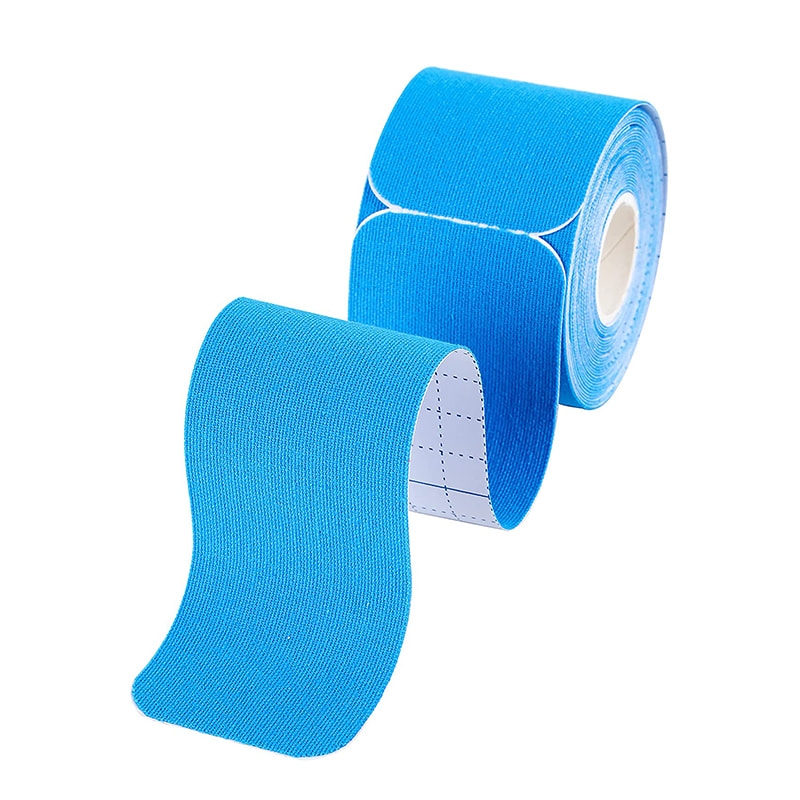
The product name includes sports bandages, and the broader product portfolio includes sports support products. However, this plaster bandage is primarily described as a casting and molding material. It should not be assumed to be interchangeable with elastic athletic tape, cohesive bandages, kinesiology tape, or medical immobilization products unless the intended use is specifically supported by applicable product documentation and regulations.
For sports-related creative projects, team displays, athletic-themed props, educational demonstrations, or non-clinical modeling, the product can provide a useful hardening material. For direct clinical use, buyers should confirm the applicable classification, intended purpose, labeling, and regulatory requirements before ordering.
Recommended Handling Procedure
Prepare the Workspace
Cover the work surface with a disposable or washable protective layer. Arrange scissors, clean water, gloves if needed, a support form, towels, and finishing tools before opening the bandage. Preparation is especially important because the material begins setting soon after wetting.
Measure and Cut
Estimate the required length and cut the bandage while dry. Smaller pieces are generally easier to control on curved or detailed areas. Longer pieces may be efficient for broad surfaces but can be more difficult to position before the plaster begins to set.
Wet Briefly
Dip the cut section in clean water for approximately five seconds, or moisten it according to the project’s requirements. Avoid prolonged soaking unless the product instructions specifically recommend it. Excess water may create a thinner mixture, increase mess, or reduce handling control.
Apply and Smooth
Place the wet bandage on the prepared form and smooth it with fingers or an appropriate tool. Overlap adjacent pieces to reduce gaps. Gentle rubbing helps release and distribute the plaster across the gauze, improving surface continuity. Avoid excessive pressure that could distort the form or remove material from the textile.
Build Additional Layers
If the project requires greater thickness or rigidity, apply additional strips after the preceding layer has stabilized sufficiently. Pay attention to edges, corners, joints, and areas that may receive additional handling. Layer orientation can be varied to improve coverage and reduce the formation of continuous weak lines.
Allow Complete Drying
The initial set is not the same as complete drying. Leave the finished piece undisturbed until the plaster has hardened throughout. Drying time depends on layer thickness, ventilation, temperature, and humidity. Do not paint, package, or transport a piece while internal moisture remains unless the project instructions permit it.
Finish the Surface
After drying, the surface may be painted or decorated with markers and other suitable materials. Edges can be refined carefully, and additional details may be attached using compatible methods. Users should wear suitable protection when sanding or cutting dried plaster because dust can be generated.
Manufacturing Process and Quality Strengths
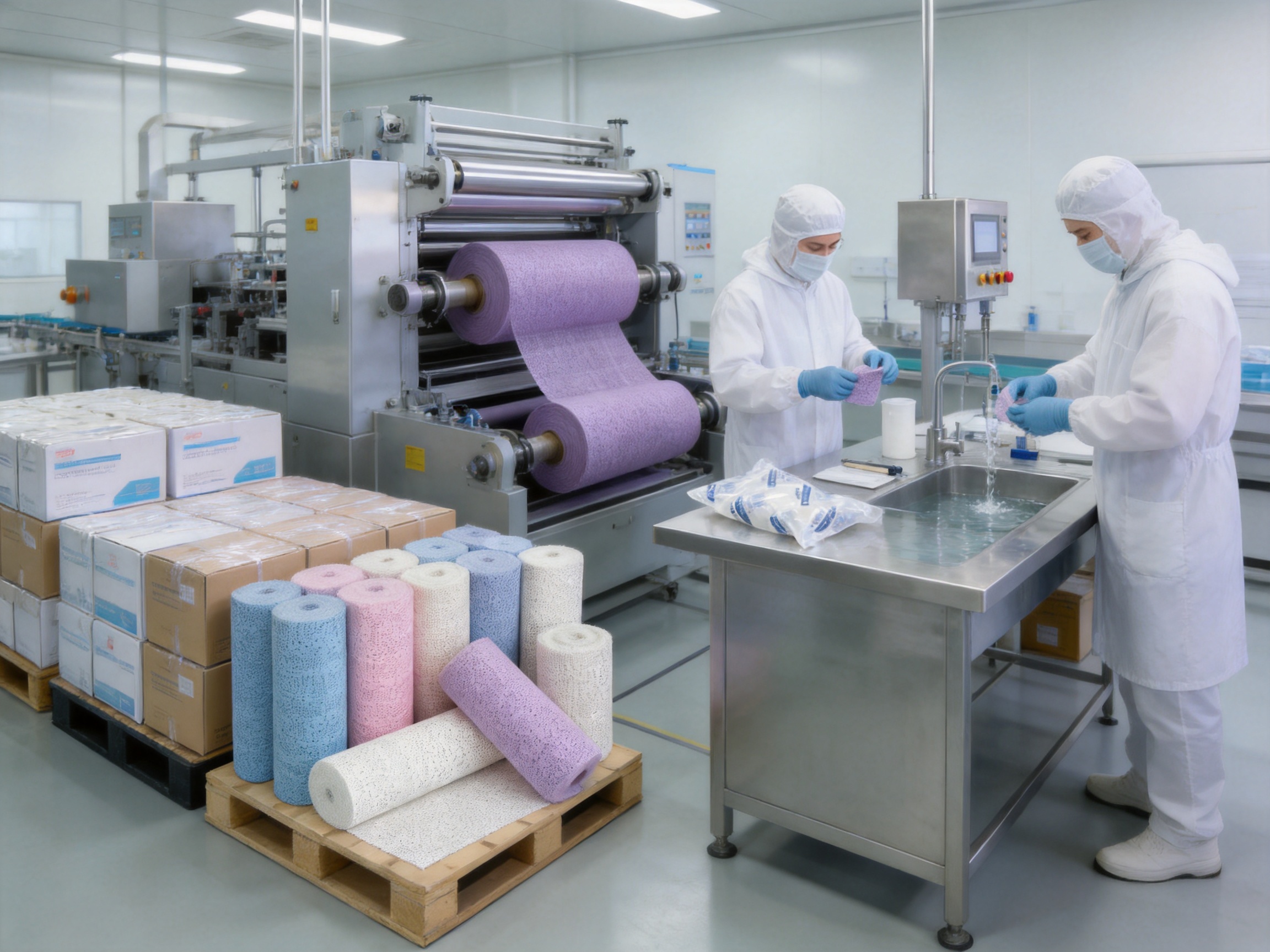
A plaster bandage’s performance depends heavily on manufacturing consistency. The cotton gauze must have a stable knit, the gypsum must be distributed evenly, and the coating must remain secure during storage, cutting, wetting, and shaping. Variations in any of these areas can affect soaking behavior, setting time, surface smoothness, and final strength.
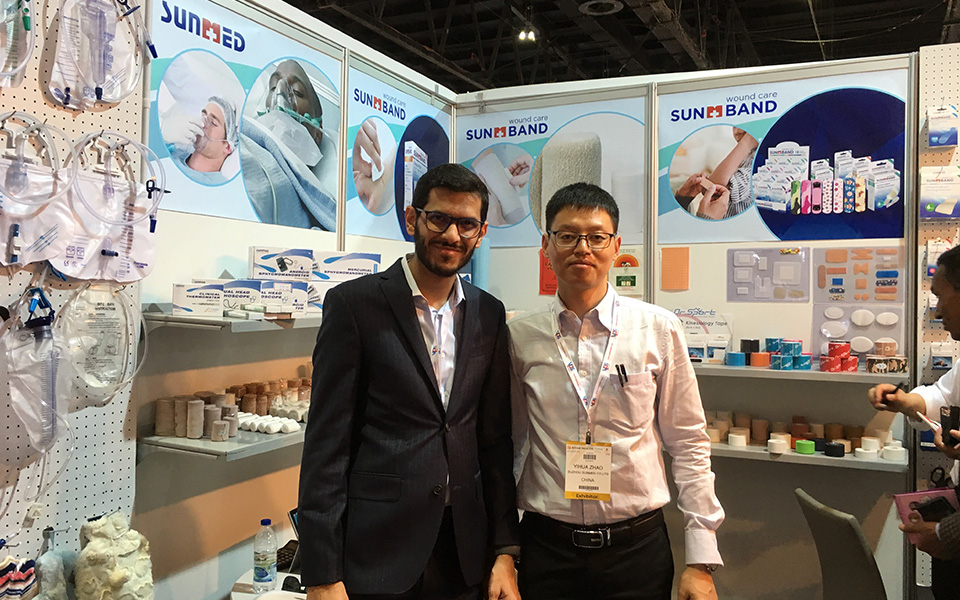
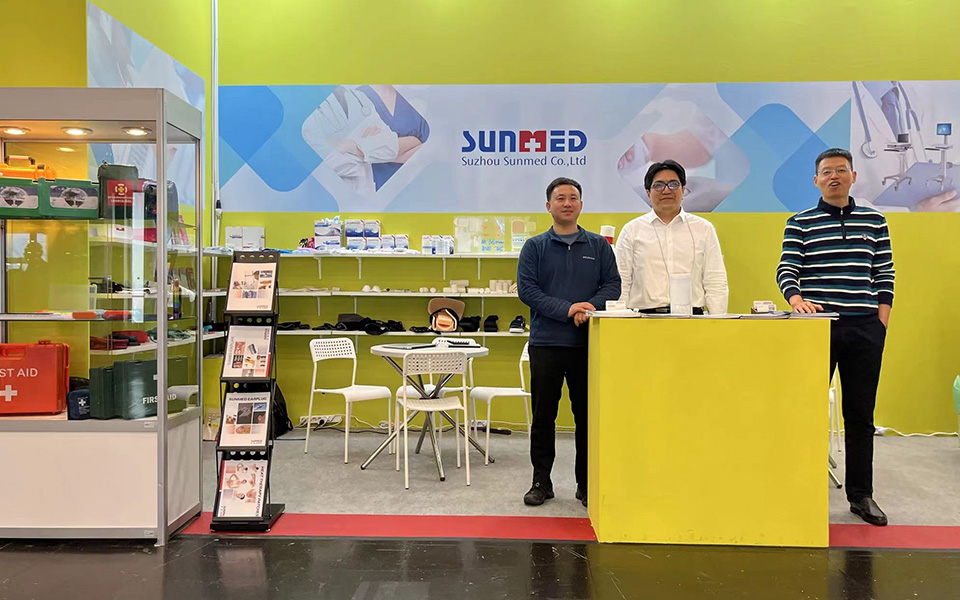
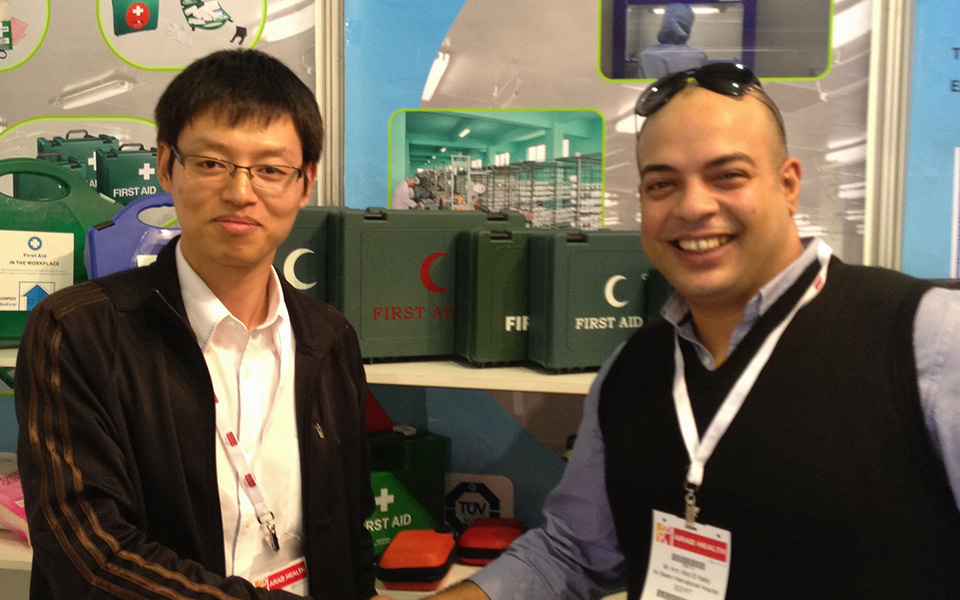
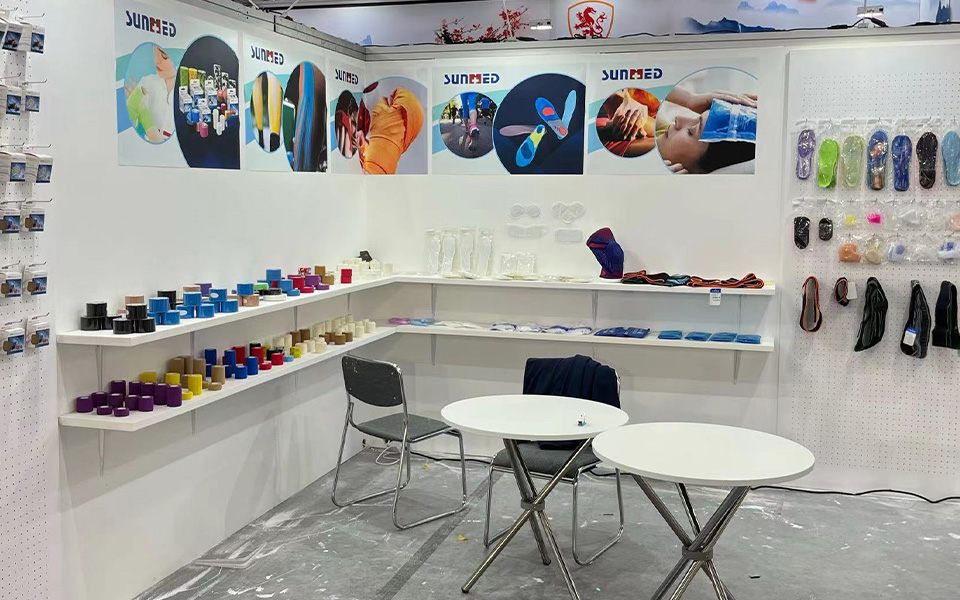
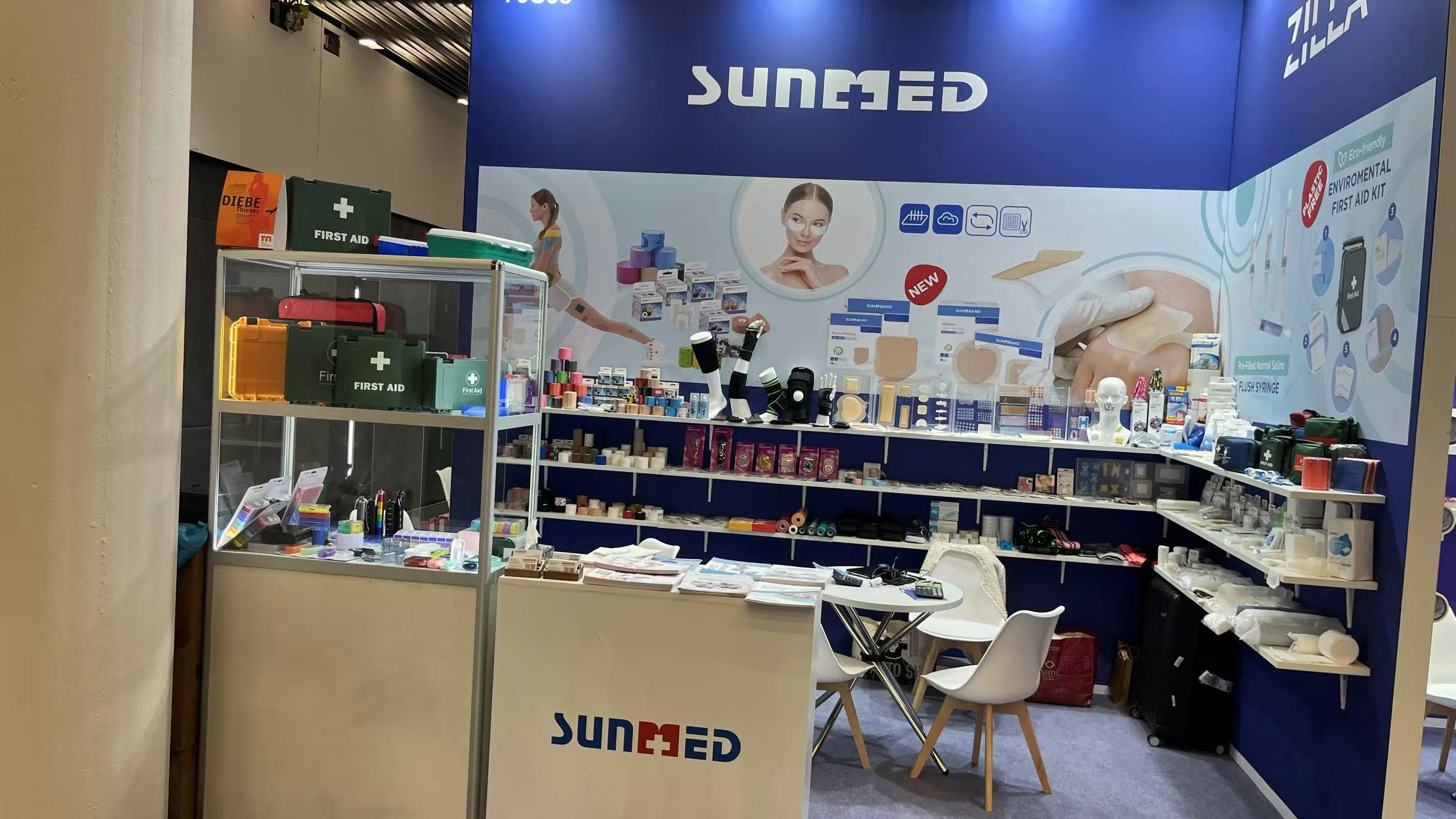
The manufacturer associated with DC660044 has approximately 30 years of experience in the medical device and medical-consumables industry. Its product scope includes first aid products, wound dressings, gauze, medical tape, cotton products, non-woven products, sports bandages, family healthcare items, medical instruments, syringes, catheters, surgical consumables, and related supplies. This broad experience supports a manufacturing culture familiar with textile materials, coated products, packaging, inspection, and export documentation.
Multiple Production Bases
The company operates multiple production bases in Jiangsu, Zhejiang, and Anhui Province. A multi-base production structure can provide broader manufacturing capacity and support the supply requirements of international distributors and large-volume buyers. It may also help organize production according to product type, customer specifications, or order schedules.
For buyers, production capacity is an important consideration. A product with good technical characteristics is less valuable if it cannot be supplied consistently. Established production resources can support repeat orders, planned purchasing, and the development of private-label or OEM programs.
Dedicated Quality-Control Personnel
The company reports a professional quality-control team comprising hundreds of personnel. A substantial quality organization can support inspections throughout the manufacturing process, from incoming raw materials to finished-product evaluation. For plaster bandages, important inspection areas may include gauze construction, plaster coverage, roll integrity, packaging condition, appearance, and functional consistency.
Quality control is especially significant for products that are sold internationally. Different markets may require specific documentation, labeling, traceability, or conformity evidence. A structured inspection system helps buyers manage these requirements and reduces the risk associated with inconsistent product batches.
ISO 13485:2016-Oriented Quality Management
The company states that its inspection procedures rigorously adhere to ISO 13485:2016 standards. ISO 13485 is associated with quality-management systems for medical devices. Applying a disciplined quality framework can encourage documented processes, controlled production conditions, corrective-action procedures, supplier management, and traceability practices.
Buyers should request current certificates, declarations, test reports, and product-specific regulatory documentation relevant to their market and intended use. A quality-management statement is valuable, but product compliance must always be confirmed for the exact model, configuration, packaging, and application being purchased.
OEM and Wholesale Capability
The company’s business model includes OEM medical consumables and wholesale supply. This is relevant for distributors, buying groups, supermarket suppliers, sports retailers, first aid companies, healthcare procurement organizations, and craft-product importers. OEM capability may allow customers to discuss packaging, labeling, color options, assortment configurations, and order requirements.
The minimum order quantity of 5,000 pieces indicates that the product is designed for organized commercial purchasing. Buyers can potentially incorporate the bandage into a private-label line, a school-project kit, a theatrical supply assortment, or a professional craft distribution program, subject to agreement on specifications and compliance requirements.
International Export Experience
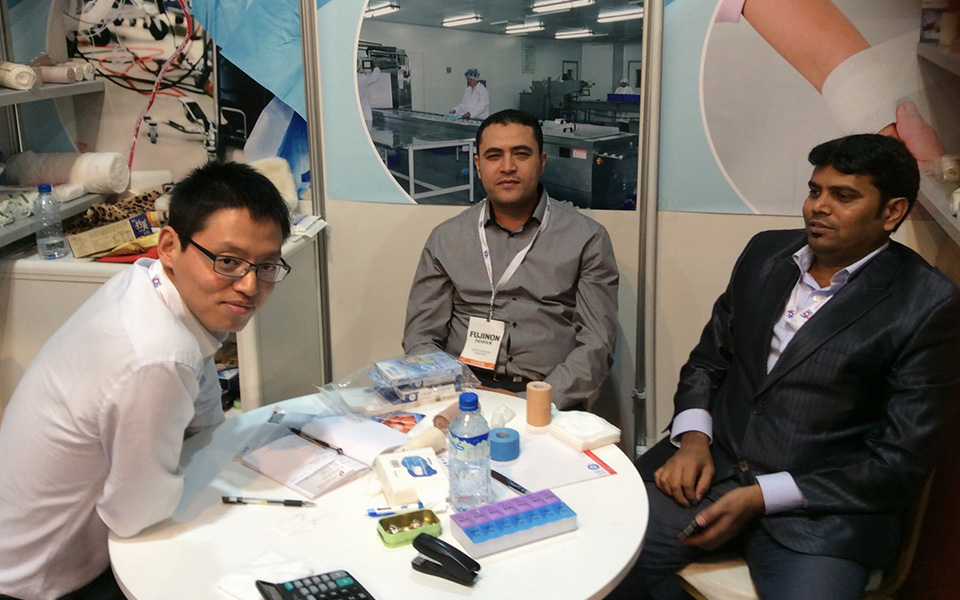
The manufacturer reports exports to more than 60 countries, including markets in Europe, Southeast Asia, Africa, and Oceania. Experience across different regions can help a supplier understand the practical requirements of international trade, including commercial documentation, packaging expectations, shipment coordination, and communication across time zones.
International market experience may also help the supplier respond to different customer segments. Hospitals, first aid suppliers, supermarkets, retail sports shops, schools, and professional users may require different packaging formats and purchasing support. A broad customer base can contribute to more adaptable product-development and order-management practices.
Commercial Advantages for Buyers
Broad Application Potential
One of the strongest commercial benefits of DC660044 is its application breadth. A distributor does not need to sell it only as a single-purpose medical or sports item. Depending on the applicable market rules and product labeling, it may be positioned for arts and crafts, educational use, model construction, prop making, mask projects, belly casting, and general molding applications.
Multiple use cases can support several sales channels. Craft stores may present it as plaster cloth. Educational suppliers may include it in science and art kits. Theater suppliers may sell it for prop construction. Sports retailers may offer it in a category connected with support and casting materials, provided the intended use and regulatory classification are clear.
Color-Based Product Differentiation
White plaster cloth is familiar, but purple and yellow options provide differentiation in a crowded supply market. Color can make the product easier to recognize on a retail shelf and can support themed packaging. Assorted colors can also increase perceived variety in multi-piece kits.
Color selection should be coordinated with customer requirements, packaging design, and production feasibility. Buyers should confirm the available color assortment, colorfastness expectations, and whether the color is intended as a final appearance or a base for further painting.
Reduced Preparation Requirements
Ready-coated bandages reduce the need for separate gauze, plaster powder, mixing bowls, measuring tools, and manual preparation. This can lower the training burden for new users and make the product more convenient for organized activities. It can also reduce the variability that occurs when users mix plaster and water in inconsistent proportions.
Efficient Storage and Distribution
As a dry, rolled material, the bandage can be stored before use when kept in appropriate conditions. Buyers should follow the supplier’s storage guidance and protect the product from moisture, damage, and contamination. Proper packaging is important because premature exposure to humidity can affect plaster performance.
For distributors, a rolled format may simplify carton arrangement and warehouse handling. Exact package dimensions, weight, shelf life, and carton quantity should be confirmed with the supplier before commercial planning.
Safety, Compliance, and Responsible Use
The product information describes the material as made from natural materials and as non-toxic and safe to use on skin. Even so, users should follow the product label and application instructions. “Safe for skin” does not mean that the product is suitable for every person, every duration of contact, or every body-related application.
The bandage should not be applied over open wounds, infected skin, severe irritation, or areas with impaired circulation. It should not be wrapped tightly around a body part unless the intended application and professional instructions specifically support that use. Users should monitor for discomfort, excessive heat, numbness, restricted circulation, or skin reaction and stop the application if a problem occurs.
Dried plaster can generate dust when cut, sanded, or drilled. Appropriate eye protection, ventilation, and dust-control practices should be used during finishing. Children should work under responsible adult supervision, particularly when scissors, water containers, dust, or body-form casting is involved.
For professional or clinical applications, buyers must verify the product’s intended use, classification, labeling, and certifications in the destination market. A product designed for art, craft, or general molding should not be promoted for clinical immobilization or medical treatment without the necessary technical and regulatory support.
Storage areas should remain dry and clean. Packaging should be inspected before use. Any roll showing signs of moisture damage, hardening before activation, unusual odor, contamination, or compromised packaging should be isolated and evaluated according to the supplier’s quality procedure.
Why Manufacturing Reliability Matters
Manufacturing reliability is more than a production-volume issue. It affects the customer experience at every stage. A consistent roll is easier to cut. Even plaster coverage makes wetting more predictable. Stable setting behavior allows users to plan their work. Secure packaging protects the product during shipping and storage. Clear documentation supports responsible sales and end-user instructions.
For wholesale customers, consistency also affects returns, training, and brand reputation. If one batch behaves significantly differently from another, retailers may receive complaints and professional users may lose confidence. A supplier with established processes, quality-control resources, production experience, and export knowledge is better positioned to support repeatability than an unverified source with limited manufacturing history.
The manufacturer’s combined experience in medical gauze, bandages, tapes, cotton products, sports support, and other consumables is relevant because plaster bandages depend on textile and coating expertise. Knowledge of gauze formation, material handling, roll production, packaging, and inspection can contribute to a more dependable finished product.
Purchasing and Customization Considerations
Buyers evaluating DC660044 should begin by defining the intended application. A craft retailer may prioritize color, presentation, and kit compatibility. A school supplier may focus on ease of use and classroom safety. A theater supplier may require larger quantities and predictable setting behavior. A medical or first aid distributor may require detailed regulatory documentation and a clearly defined clinical purpose.
Before placing a large order, buyers should confirm roll dimensions, unit packaging, carton configuration, net and gross weight, storage conditions, shelf-life information, available colors, product labeling, and quality documents. If the material will be marketed under a private label, the buyer should also confirm artwork requirements, language versions, barcode arrangements, warning statements, and sample-approval procedures.
Sample evaluation is recommended for every important application. Users can compare soaking time, workability, setting behavior, surface smoothness, layer adhesion, and finished hardness under realistic conditions. Testing should use the same water temperature, ambient environment, layer count, and finishing process expected in normal production.
Color consistency should also be evaluated where appearance is important. The buyer may wish to compare color samples under different lighting conditions and after drying. If paint or markers will be used, compatibility testing can help avoid unexpected surface effects.
Best Practices for Product Presentation
Retail and wholesale descriptions should communicate that the product is a water-activated plaster cloth containing cotton gauze and gypsum. Instructions should explain cutting, wetting, application, setting, drying, finishing, storage, and safety. Clear language helps prevent customers from confusing it with elastic sports tape, adhesive bandages, or ordinary gauze.
Packaging can emphasize the purple appearance, quick activation, easy cutting, shape conformity, detail capture, and broad creative applications. Images used in marketing should show the product in its dry and finished forms while avoiding claims that are not supported by technical documentation.
For educational or craft kits, the product can be bundled with brushes, paints, markers, release materials, project instructions, or lightweight support forms. For theater or model-making customers, it can be sold alongside armature materials, scenic paints, modeling tools, and finishing supplies.
Frequently Asked Questions
What is the Purple Super Strong Plaster Sports Bandage made from?
The bandage consists of fine knit cotton gauze embedded with plaster of Paris, also known as gypsum plaster. The gauze provides flexible reinforcement before activation, while the plaster hardens after the material is moistened and applied.
How long should the bandage be soaked?
The stated soaking time is approximately five seconds. Users should follow the product instructions and adjust their technique according to the project conditions. Avoid soaking large amounts of material in advance because the plaster begins to set after activation.
How quickly does it set?
The stated setting time is about five minutes, with an approximate crafting time of three to three and a half minutes. Actual timing may change with water temperature, humidity, layer thickness, and handling technique.
Can the bandage be cut?
Yes. It can be cut with scissors while dry to obtain the desired length or width. Cutting smaller sections can make it easier to work around curves, edges, and detailed shapes.
Can the dried surface be painted?
Yes. The product information states that the dried surface can be decorated with paints and markers. Users should allow the plaster to dry completely and test the selected finishing material on a small area first.
Is the product suitable for body casting?
The product information identifies body casts and pregnancy belly casting as possible applications. Body-related projects require careful preparation and safe handling. The material should not restrict breathing or circulation, should not be applied to damaged skin, and should be used with an appropriate protective barrier and responsible supervision.
Can it be used as ordinary athletic tape?
No assumption should be made that a plaster casting bandage can replace elastic athletic tape, cohesive wrap, kinesiology tape, or adhesive sports bandages. Its principal function is water-activated shaping and hardening. Buyers should use a product specifically intended and labeled for athletic support when that is the required application.
What colors are available?
The listed colors are white, yellow, purple, and assorted. Availability, assortment ratios, and color customization should be confirmed with the supplier before ordering.
What is the minimum order quantity?
The listed minimum order quantity is 5,000 pieces. This makes the product appropriate for wholesale, OEM, institutional, retail, and project-based procurement.
What should buyers confirm before placing an order?
Buyers should confirm dimensions, packaging, color, quantity per carton, storage requirements, shelf life, documentation, labeling, intended use, shipping details, and any OEM requirements. Sample testing is recommended before a large commercial order.
Does the manufacturer support international orders?
The manufacturer reports exporting products to more than 60 countries and serving customers in Europe, Southeast Asia, Africa, and Oceania. International buyers should discuss destination-market requirements and request product-specific documentation before purchase.
Conclusion
Purple Super Strong Plaster Sports Bandages model DC660044 offer a convenient combination of flexible cotton gauze, generous gypsum coverage, rapid water activation, manageable setting behavior, easy cutting, and broad shaping potential. The purple option adds visual distinction, while the available white, yellow, and assorted colors support different commercial and creative requirements.
Compared with loose plaster, the product simplifies preparation. Compared with rigid sheets, it offers greater conformability. Compared with slower-curing materials, it supports a faster workflow. Its ability to capture details and accept paints and markers gives it value across arts and crafts, education, theater, modeling, keepsake creation, and other non-clinical applications.
The product is further supported by a manufacturer with approximately 30 years of industry experience, multiple production bases, a large quality-control team, ISO 13485:2016-oriented procedures, OEM capability, and export experience in more than 60 countries. These strengths can help wholesale buyers obtain a more dependable supply partner for plaster bandages and related medical-consumable categories.
Responsible product positioning remains essential. Buyers should distinguish plaster casting cloth from elastic athletic tape and clinical immobilization products, verify all market-specific requirements, and provide clear safety and handling instructions. When selected for the right purpose and used according to appropriate procedures, DC660044 can provide an efficient, adaptable, and commercially attractive solution for creating durable three-dimensional forms.
References
1. Product specification sheet for Model DC660044, Purple Super Strong Plaster Sports Bandages.
2. Manufacturer-provided product information covering material composition, soaking time, setting time, applications, colors, quantity, and minimum order quantity.
3. ISO 13485:2016, Medical devices — Quality management systems — Requirements for regulatory purposes.
4. General technical guidance for the handling, storage, activation, and finishing of plaster-impregnated gauze materials.
5. Manufacturer corporate information concerning production bases, quality-control resources, OEM services, export markets, and medical-consumables experience.

 English
 Español
 русский
 Français
 Deutsch
 italiano
 By Admin