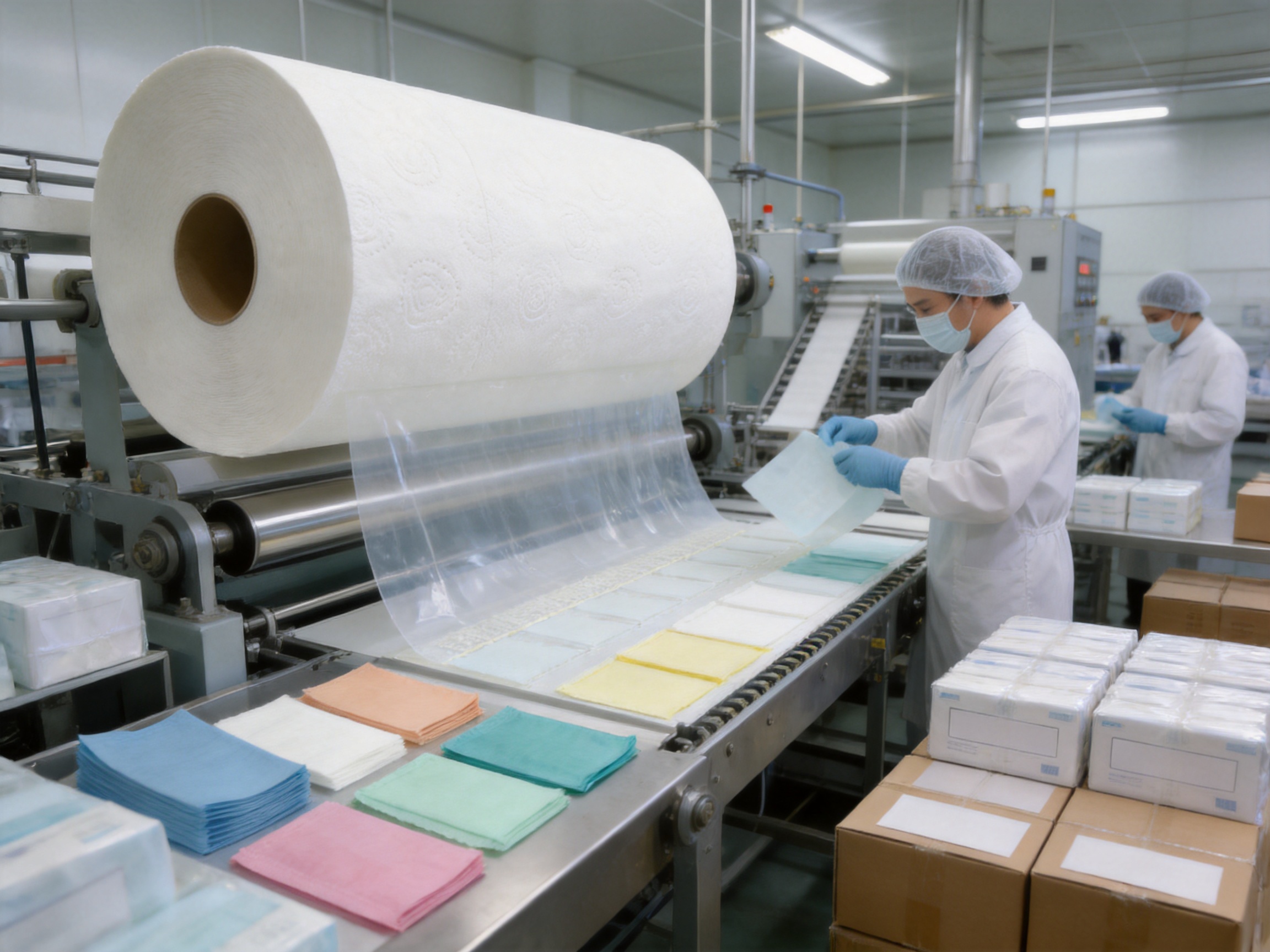
Dental procedures require a clean, orderly, and comfortable working environment. Even routine examinations can involve water, saliva, rinsing solutions, polishing materials, impression materials, and small particles that may reach a patient’s clothing or skin. A suitable dental bib provides a practical barrier between the patient and the clinical environment while helping dental professionals maintain efficient infection-control routines. The Dental Bib identified by product code SMD-282401 is designed for this purpose, combining two-ply pulp tissue with a polyethylene film layer to help prevent fluid strike-through.
Measuring 13 inches by 18 inches, this disposable dental bib offers coverage suitable for many general dental examinations, hygiene appointments, restorative procedures, and chairside treatments. Its embossed structure supports practical handling, while its disposable design helps reduce the cleaning and reprocessing burden associated with reusable protective garments. The product is also positioned as a low-cost consumable, making it suitable for clinics, hospitals, dental offices, distributors, wholesalers, and healthcare supply programs that need dependable protection at a manageable operating cost.
In a competitive market, dental bibs are not differentiated only by appearance. Their value depends on material construction, resistance to fluid penetration, dimensional consistency, ease of use, packaging, manufacturing control, and supply reliability. This product combines a paper-like absorbent surface with a film backing, creating a balanced structure that supports patient protection without making the bib unnecessarily complicated or expensive. The manufacturing and quality capabilities of the supplier further support consistent production for professional and commercial buyers.
Understanding the Role of a Dental Bib
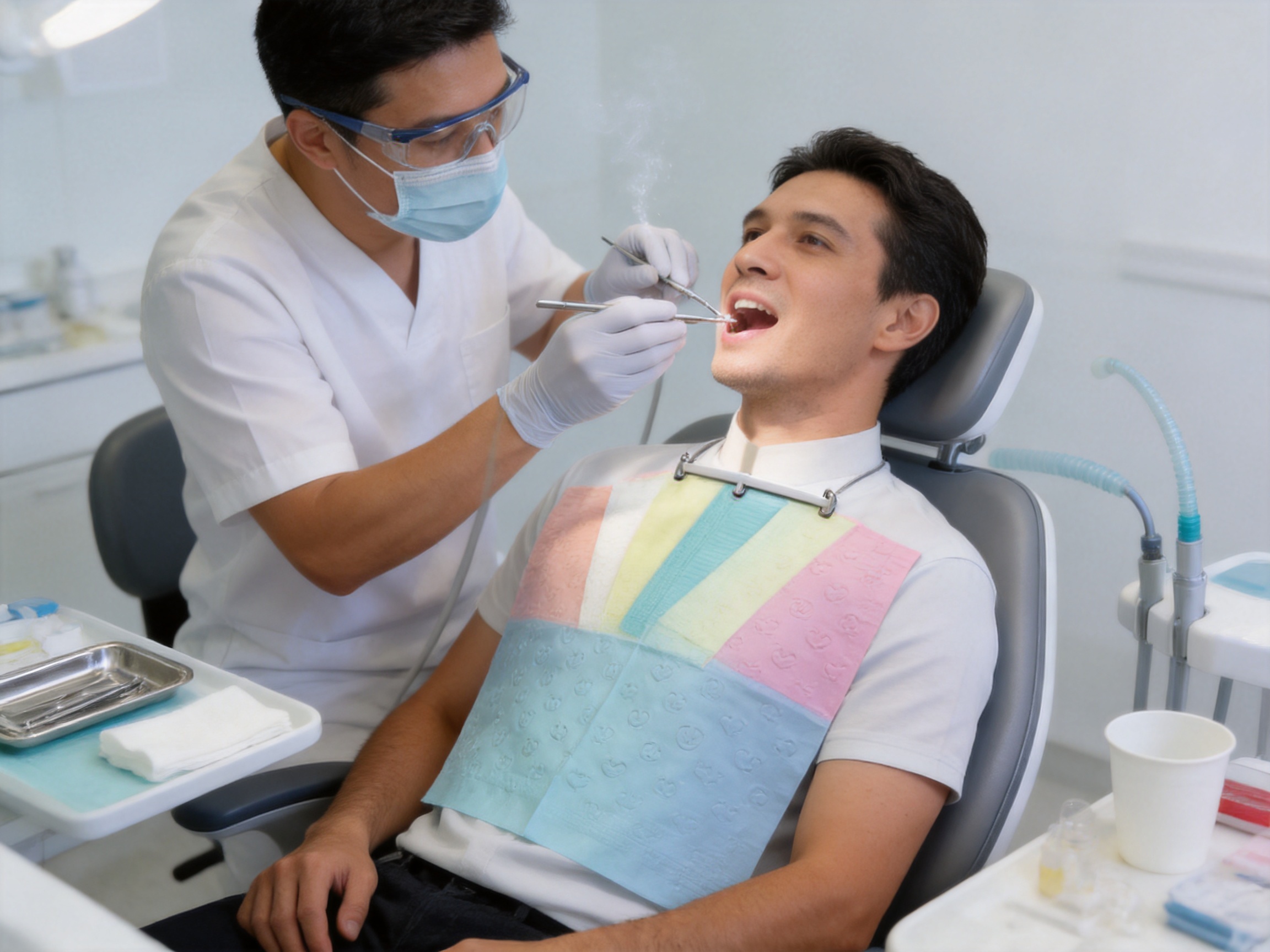
A dental bib is a disposable protective sheet placed over the patient’s chest during dental treatment. It is commonly secured with a bib clip, chain, adhesive fastening system, or another suitable holder. The bib helps protect clothing from moisture, rinsing water, saliva, dental materials, and minor splashes that may occur during treatment. It also contributes to a more organized treatment area by giving clinicians a defined surface for managing routine contamination.
Although a dental bib is a simple product, its performance affects several parts of the patient experience. A bib that absorbs surface moisture but allows liquids to pass through can fail to protect clothing. A bib that is too thin may tear during placement or adjustment. A bib with poor dimensions may provide insufficient coverage, while a bib that is excessively large may interfere with instruments, suction tubing, or patient movement. The 13-inch by 18-inch format provides a practical balance between coverage and manageability for many ordinary dental applications.
Dental bibs also contribute to workflow efficiency. Because they are supplied for single use, staff can place a fresh bib before treatment and discard it after the appointment according to the facility’s waste-management procedures. This reduces the need to collect, sort, wash, dry, inspect, and store reusable cloth bibs. In busy practices, these time savings can support smoother room turnover and more predictable appointment preparation.
For patients, the bib serves as a visible sign that the treatment area is being prepared carefully. A clean, intact bib can help patients feel that the procedure is organized and professionally managed. The disposable format also provides reassurance that a fresh protective item is being used for each appointment.
Product Construction: Two-Ply Pulp Tissue with PE Film
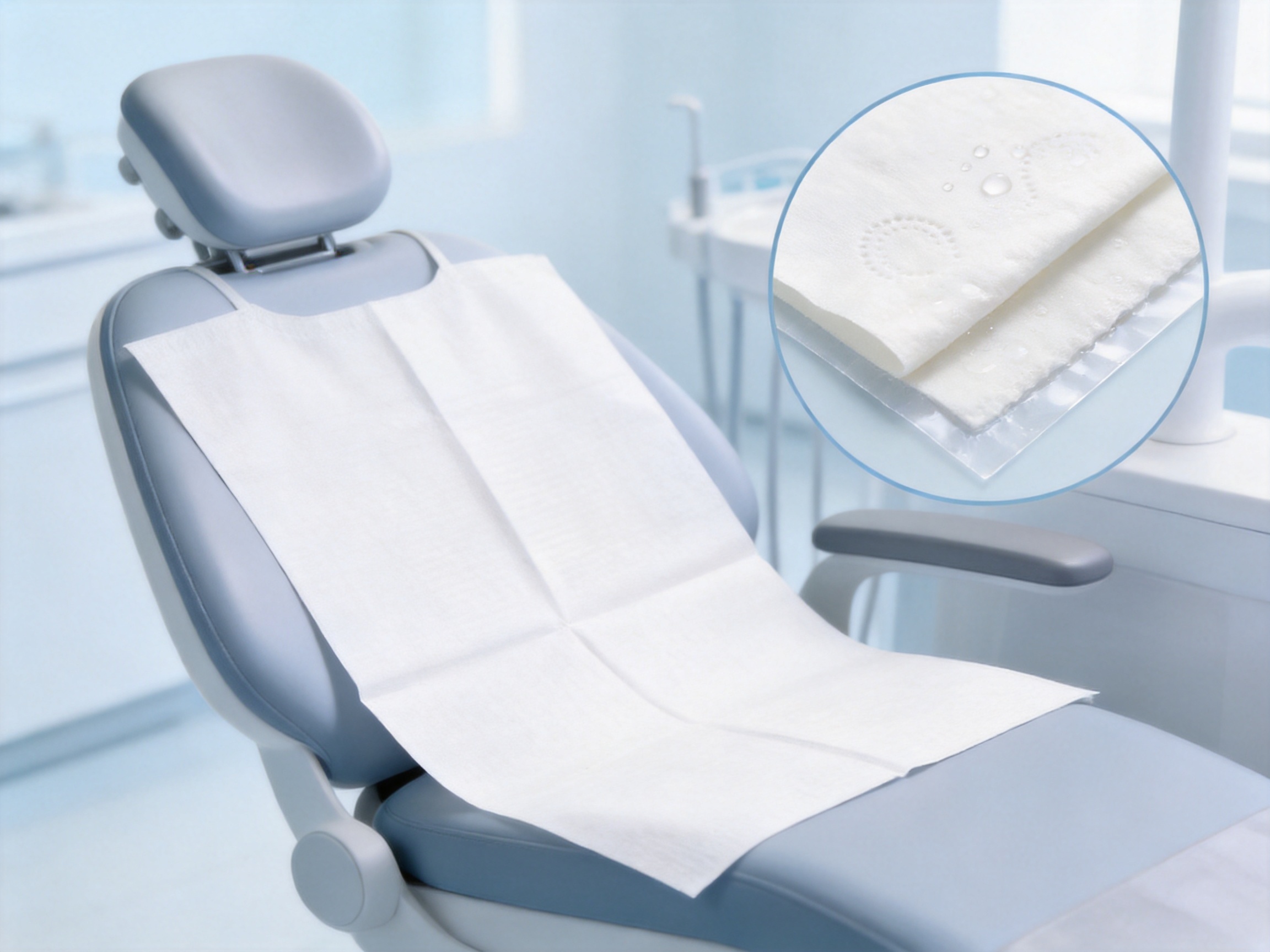
The core construction of this dental bib consists of two-ply pulp tissue combined with a polyethylene film layer. Each component performs a different function. The pulp tissue offers a soft, absorbent surface that can help collect moisture and minor liquid contact. The PE film serves as a backing layer intended to reduce the risk of fluid passing through the bib and reaching the patient’s clothing.
The combination is important because a single material rarely provides an equally effective balance of absorbency, flexibility, barrier performance, comfort, and cost. Uncoated paper may absorb liquid but can become saturated or allow fluid to penetrate. A plastic-only sheet may provide a strong barrier but can feel less comfortable and may not manage surface moisture as effectively. By combining pulp tissue with PE film, the dental bib is designed to provide an absorbent patient-facing surface and a protective backing.
The two-ply tissue construction adds substance compared with a single-layer paper sheet. Multiple tissue layers can improve handling strength and provide additional material for absorbing small amounts of moisture. At the same time, the product remains lightweight enough for everyday clinical use. This balance is especially useful in general dentistry, where the bib is expected to perform reliably without adding unnecessary bulk or cost.
The polyethylene film layer is a key protective feature. It is intended to help prevent fluid strike-through, which refers to liquid passing through the bib from the front surface to the rear surface. In a dental setting, reducing strike-through is important because liquids may include water, saliva, diluted rinsing solutions, or material residue. The PE layer helps separate the wet working surface from the patient’s clothing, supporting cleaner and more comfortable treatment conditions.
The construction also supports easy disposal. Unlike reusable textile bibs, the paper-and-film design does not require laundering after use. Once the appointment is complete, the bib can be removed and handled according to the clinic’s applicable waste procedures. This makes the product suitable for practices that prioritize quick turnover and standardized disposable supplies.
Embossed Surface Design and Practical Handling
The dental bib is embossed, giving the tissue surface a structured appearance and texture. Embossing can support the physical character of the sheet by creating controlled surface patterns rather than leaving it completely flat. A textured surface may also improve the way the layers feel and handle during unfolding, placement, and removal.
Embossing is valuable in disposable medical and dental products because the sheet must be light while remaining practical to handle. Staff need to separate the bib from its packaging, open it without excessive tearing, and position it quickly. A surface with suitable structure can help the product feel more substantial than an extremely thin, smooth sheet while retaining the convenience of a disposable item.
The embossed design also contributes to product presentation. Dental practices often use large quantities of bibs, and a consistently embossed sheet can signal controlled manufacturing and uniformity. For distributors and private-label buyers, consistent texture and appearance may support a more professional product line and help distinguish the item from low-grade alternatives.
Embossing does not replace the barrier function of the PE film. Instead, it complements the layered construction by supporting handling and material performance. The primary protection against strike-through is provided by the film backing, while the tissue layers manage surface contact and routine moisture absorption.

Dental Bib
Key Advantages Compared with Basic Disposable Bibs
Improved Protection Against Fluid Strike-Through
One of the most important advantages of this dental bib is its PE film backing. Basic paper bibs without a film layer may absorb liquid initially, but they can become saturated during treatment. Once saturation occurs, moisture may pass through to the patient’s clothing. The laminated or layered design used in this product is intended to reduce that risk by creating a liquid-resistant rear surface.
This feature is particularly useful during procedures involving frequent rinsing, ultrasonic scaling, polishing, water spray, or suction. While no disposable bib should be considered a substitute for appropriate clinical technique or protective equipment, a film-backed bib provides a practical additional barrier for routine chairside protection.
Balanced Absorbency and Barrier Performance
Some competing products focus mainly on absorbency, while others use a plastic sheet that prioritizes barrier performance but may not offer the same soft tissue contact. This product uses two-ply pulp tissue together with PE film, allowing the two materials to work together. The tissue side is intended to manage surface moisture, while the film side helps protect against penetration.
This balanced design is useful because dental procedures can involve both liquid contact and patient comfort considerations. A bib should not merely stop liquid; it should also be easy to place, light enough for the patient, and suitable for routine handling by dental staff. The product’s construction addresses these requirements in a simple format.
Convenient Single-Use Operation
Single-use dental bibs help simplify appointment preparation. A fresh bib can be selected for each patient, placed on the patient, and discarded after use. This eliminates the laundering steps required for reusable cloth products and reduces the risk of reusing an item that has not been processed correctly.
For clinics with high patient volume, the labor implications can be significant. Staff do not need to manage textile collection, washing cycles, drying space, folding, or inspection for stains and damage. Disposable bibs can be stocked close to the dental chair or in a central supply area, supporting rapid access during room setup.
Practical 13-Inch by 18-Inch Size
The specified size is 13 inches by 18 inches. This format offers coverage across the upper torso while remaining manageable during placement. It can be used for many routine dental appointments, including examinations, cleanings, polishing, restorative work, and other procedures where a modest protective sheet is appropriate.
A practical size is important for minimizing waste. An oversized bib may provide more material than necessary and can interfere with the patient’s arms or dental equipment. An undersized bib may fail to cover clothing adequately. The 13-inch by 18-inch format is designed as a useful middle ground for everyday clinical needs.
Low-Cost Consumable Economics
Dental bibs are frequently used products, so purchasing decisions must consider more than the unit price. The total cost also includes storage, staff handling, laundering, replacement, waste, and the potential cost of clothing contamination. A low-cost disposable bib with a suitable barrier layer can be economically attractive because it delivers practical protection while keeping per-patient supply expenses controlled.
The product is specifically described as low-cost, which supports use in clinics and procurement programs that need to control spending. Wholesale customers can also benefit from a standardized item that is easy to add to broader dental, medical, first aid, or institutional supply portfolios.
Clean and Professional Presentation
A fresh disposable bib provides a clean presentation for each patient. The embossed tissue surface and layered construction give the item a purposeful, professional appearance. This can support patient confidence and reinforce a clinic’s broader hygiene and preparation standards.
Professional presentation is also relevant for distributors. A well-made dental bib can complement related products such as examination gloves, face masks, saliva ejectors, disposable cups, patient drapes, gauze, and other dental consumables. Its straightforward format makes it suitable for inclusion in procedure packs or broader dental supply programs.
Applications in Dental and Healthcare Settings
General Dental Examinations
During a routine examination, the dental bib protects the patient’s clothing from water, saliva, and minor debris. The appointment may not involve intensive liquid exposure, but the bib still serves as a simple and visible protective measure. Its disposable nature allows staff to prepare the chair quickly before the patient is seated.
Dental Hygiene and Scaling
Cleaning and scaling procedures often involve water spray, rinsing, polishing paste, and suction. A bib with a PE film layer can help reduce the chance that moisture will reach the patient’s clothing. The absorbent tissue surface can also help manage small amounts of liquid that collect on the front of the bib.
Restorative Procedures
Fillings, bonding, temporary restorations, and other restorative procedures may involve rinsing, dental materials, and instrument handling. The bib helps create a protective area over the patient’s upper body. It should be placed carefully so that it remains secure without restricting the patient’s breathing, movement, or communication.
Prosthodontic and Impression Procedures
Impression materials, trays, water, and saliva can create mess during prosthodontic procedures. A disposable dental bib offers a convenient protective surface during preparation and removal of impression trays. It can be discarded immediately after use, helping the practice maintain a consistent room turnover routine.
Pediatric Dentistry
Children may move more frequently during treatment, and a bib must be easy to position and replace. The lightweight, disposable design is suitable for quick setup. The clinic can provide a fresh bib for every appointment and avoid the complexities of laundering reusable items in a high-turnover pediatric environment.
Dental Training and Educational Clinics
Dental schools and training clinics often manage multiple patients and student operators in the same facility. Standardized disposable bibs help maintain consistent chairside procedures across different treatment rooms. Their simple design makes them suitable for teaching basic patient preparation and infection-control routines.
Mobile and Community Dental Services
Mobile dental units, outreach programs, and temporary clinics need products that are compact, easy to transport, and simple to discard after use. Disposable bibs can be packed in procedure kits or portable supply cases. Their low weight and practical dimensions support use where storage and waste-handling resources may be limited.
Manufacturing Strengths Supporting Product Consistency
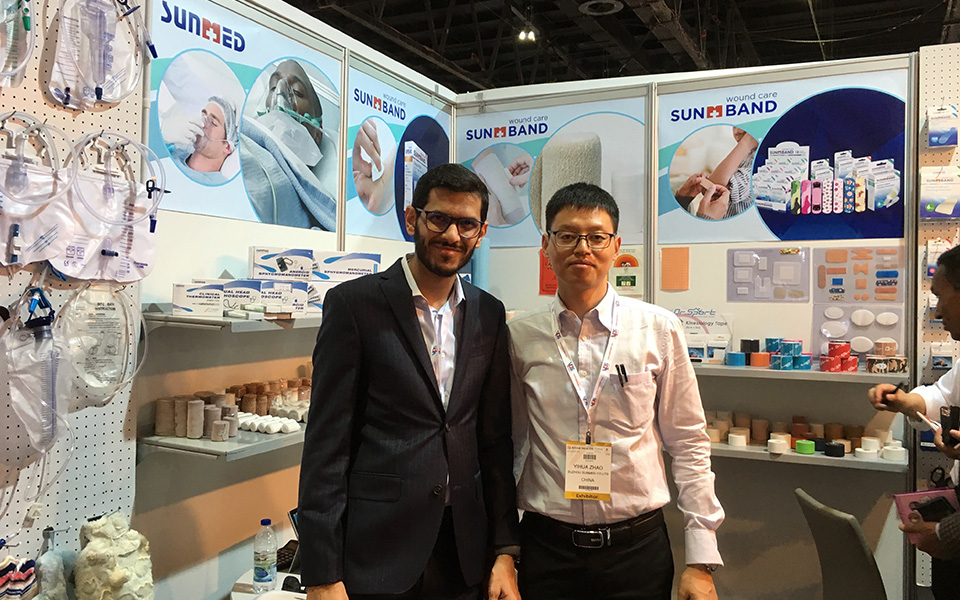
The supplier is an established manufacturer and exporter of first aid, medical, and healthcare products with approximately 30 years of experience in the medical device and medical consumables industry. This background is relevant because disposable products depend on repeatable production, stable sourcing, inspection discipline, and familiarity with international customer requirements.
The company operates multiple production bases in Jiangsu, Zhejiang, and Anhui Province. A multi-site manufacturing structure can support broader production capacity and supply flexibility. It also reflects experience managing different product categories, materials, production teams, and quality-control requirements. For buyers, this type of manufacturing network may be advantageous when seeking continuity of supply for recurring consumable orders.
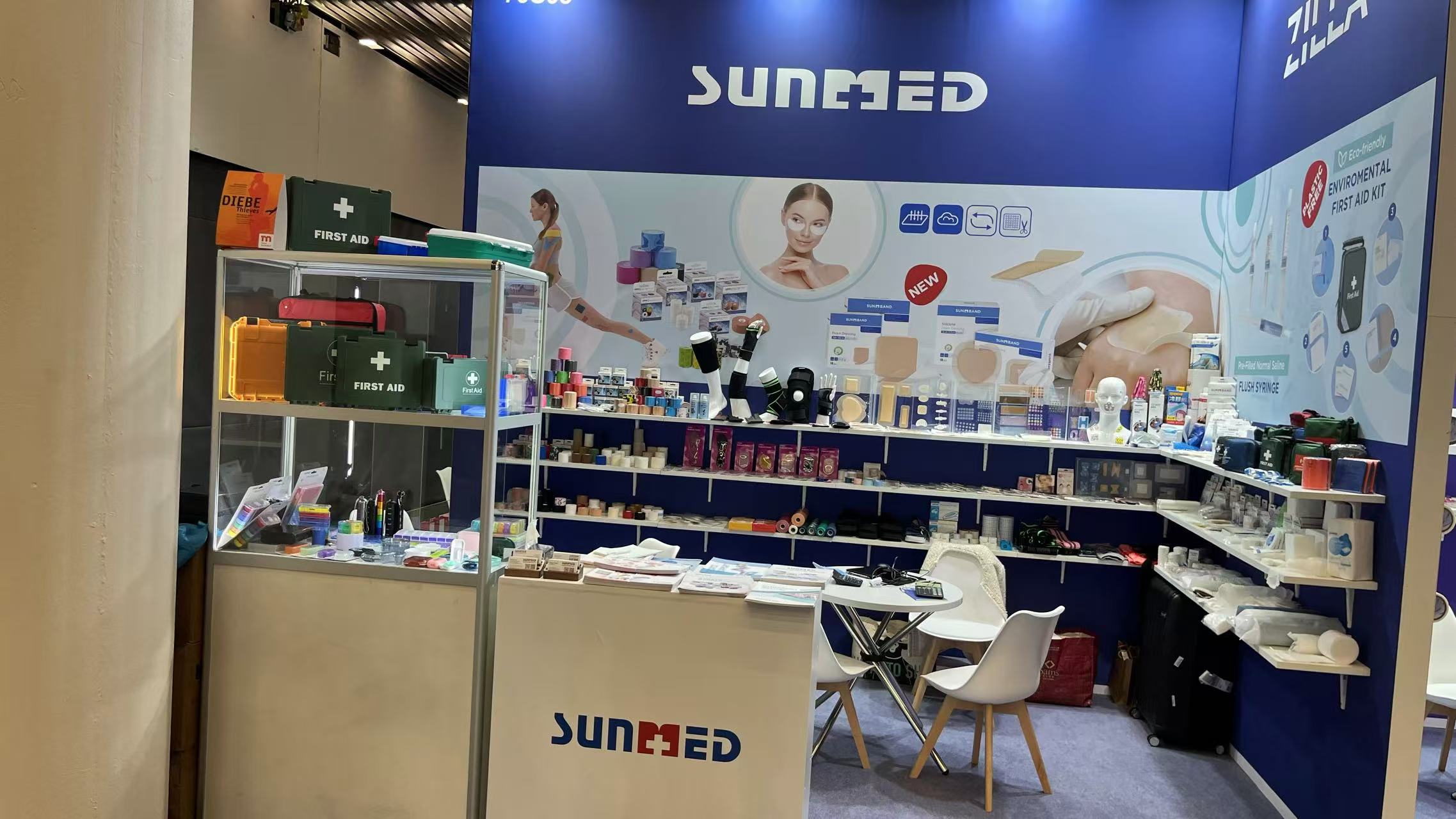
The supplier’s product experience includes medical gauze, bandages, medical tape, cotton products, non-woven products, sports supports, family healthcare products, disposable syringes, catheters, surgical consumables, and other medical supplies. This broad portfolio creates useful manufacturing knowledge in areas such as absorbent materials, adhesive and film technologies, packaging, inspection, and disposable product handling.
Although a dental bib is a relatively simple product, its quality still depends on process control. Tissue ply count, PE film application, embossing, cutting, dimensional accuracy, packaging, and final inspection must be coordinated. Experience across related medical consumables can help a manufacturer establish practical controls for these stages.
Material Preparation and Layer Control
The first manufacturing consideration is the selection and preparation of the pulp tissue and polyethylene film. The tissue must be suitable for conversion into a soft, absorbent sheet, while the film must provide a consistent backing layer. Material rolls need to be stored and handled in a way that protects them from damage, moisture, contamination, and deformation before processing.
Two-ply tissue requires controlled alignment and joining of the layers. If the plies are not properly aligned, the finished sheet may have uneven edges, weak areas, or inconsistent appearance. The PE film must also be positioned accurately relative to the tissue. Stable equipment settings and trained operators are important for maintaining a uniform product structure throughout a production run.
Embossing and Conversion
Embossing is performed during the conversion process to create the product’s structured surface. The embossing pattern must be controlled so that it provides the intended appearance and handling characteristics without excessively weakening or tearing the tissue. Excessive pressure may damage the sheet, while insufficient pressure may produce an inconsistent pattern.
After embossing and layer formation, the material is converted into individual 13-inch by 18-inch sheets. Cutting equipment must maintain dimensional accuracy and produce clean edges. Reliable cutting reduces irregularity and supports efficient packing. It also helps distributors and end users receive a product that can be unfolded and placed consistently.
Process Inspection
Quality inspection may include visual checks, dimensional verification, assessment of layer alignment, examination of embossing, and review of packaging integrity. The product description emphasizes prevention of fluid strike-through, so barrier performance is a particularly important quality consideration. Appropriate production controls should help identify defective film, incomplete bonding, holes, tears, or other conditions that could reduce protective performance.
The supplier states that it maintains a professional quality-control team comprising hundreds of personnel and follows inspection procedures aligned with ISO 13485:2016 requirements. ISO 13485 is a quality-management standard associated with medical devices and related regulated products. A quality system based on documented procedures, traceability, inspection records, corrective action, and controlled production can strengthen consistency across product lines.
Quality management is not limited to final inspection. Strong manufacturing systems monitor incoming materials, production parameters, work-in-process conditions, finished products, packaging, and shipment release. This approach helps reduce dependence on detecting problems only after production has been completed.
Packaging and Shipment Preparation
Dental bibs are lightweight but may be ordered in large quantities. Packaging must protect the sheets from dust, moisture, compression, and handling damage. It should also support efficient counting, storage, and distribution. Clear product identification is helpful for warehouse personnel and customers who manage multiple sizes or product codes.
The product code SMD-282401 and the specified size of 13 inches by 18 inches provide useful purchasing and inventory references. Accurate identification is particularly important for wholesalers, dental distributors, hospitals, and clinics that maintain standardized procurement systems.
Quality, Compliance, and International Supply Capability
The supplier reports that most of its products are CE certified and that its Suzhou factories comply with FDA requirements. Certification and regulatory claims should always be verified for the specific product, market, intended use, and current documentation before purchase. Nevertheless, the stated compliance experience indicates familiarity with international medical-product expectations and customer documentation requirements.
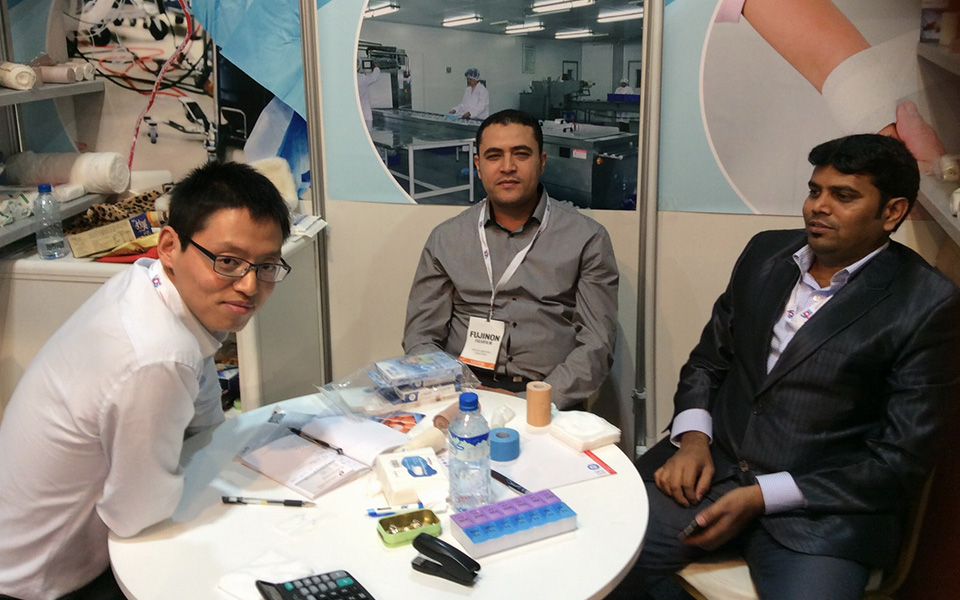
The company has exported products to more than 60 countries, including markets in Europe, Southeast Asia, Africa, and Oceania. International distribution requires more than manufacturing capacity. It also involves export documentation, packaging suitability, communication across time zones, shipment planning, product specifications, and responsiveness to local customer needs.
For dental bib buyers, international supply experience can make cooperation easier. Importers and distributors often need product descriptions, technical details, packing information, commercial documents, samples, and quality records. A supplier experienced in export markets is more likely to understand the importance of consistent documentation and order coordination.
The company’s markets include hospitals, first aid suppliers, supermarkets, and retail sports shops. This range demonstrates experience supplying both professional healthcare organizations and commercial distribution channels. Dental bibs may be purchased directly by clinics or incorporated into wider portfolios managed by medical, dental, and healthcare wholesalers.
Manufacturing scale can also support private-label or OEM discussions, subject to technical review and agreement. Buyers may request customized packaging, labeling, carton configuration, color selection where available, or product bundling. Any customization should be evaluated carefully to ensure that changes do not compromise material performance, product identification, or applicable regulatory requirements.
Operational Benefits for Clinics and Distributors
Faster Chair Preparation
A disposable dental bib can be stored near the treatment area and placed quickly when preparing the patient. This supports a standardized setup routine. Staff can combine the bib with other disposable items such as gloves, masks, suction accessories, cups, gauze, and protective barriers to create a repeatable procedure workflow.
Reduced Laundry Requirements
Reusable cloth bibs require collection, washing, drying, folding, storage, and periodic replacement. Each of these steps consumes labor, utilities, space, and management attention. A disposable tissue-and-film bib removes those laundering steps. The clinic still needs an appropriate waste-management procedure, but the day-to-day handling process can be simpler.
Predictable Consumption Planning
The product’s standardized size and product code make it suitable for inventory planning. A clinic can estimate usage based on daily appointments, treatment-room capacity, and expected replacement needs. Distributors can organize stock by product code and pack configuration, simplifying order processing and replenishment.
Flexible Use Across Treatment Types
A dental bib does not need to be restricted to one procedure. The 13-inch by 18-inch format can support examinations, preventive care, routine restorative work, pediatric appointments, training clinics, and mobile services. This versatility can reduce the number of different bib formats a facility needs to stock.
Suitable for Wholesale and OEM Programs
Because the item is a commonly used consumable, it can be included in wholesale healthcare portfolios. Distributors may supply dental practices, hospitals, educational institutions, public health programs, and retail healthcare channels. The manufacturer’s broader experience in medical consumables can support discussions involving recurring orders, product combinations, and market-specific packaging requirements.
Recommended Use and Handling Practices
Before use, staff should confirm that the package is intact and that the bib is clean, dry, and free from visible damage. A bib with torn tissue, a punctured film layer, or compromised packaging should not be used for patient protection. Storage should take place in a clean and dry area away from excessive heat, moisture, direct sunlight, and chemicals that could affect the tissue or film.
The bib should be unfolded carefully and positioned over the patient’s chest. It should be secured with a suitable bib holder or other appropriate fastening method. Staff should ensure that the bib remains comfortable and does not interfere with the patient’s airway, neck, breathing, arm movement, or communication.
During treatment, the bib should be observed for heavy saturation, tearing, displacement, or contamination beyond its intended use. If the bib becomes unsuitable, it should be replaced. A dental bib is a protective consumable for routine chairside use; it is not a substitute for gloves, masks, protective eyewear, gowns, clinical drapes, sterilization, disinfection, or other required infection-control practices.
After the appointment, the bib should be removed carefully to minimize contact with contaminated surfaces. Disposal should follow the dental facility’s local regulations and internal policies. The correct waste category may depend on the level and type of contamination, local law, and the procedures of the healthcare institution.
Purchasing Considerations for Professional Buyers
When evaluating dental bibs, buyers should assess the complete product specification rather than focusing only on unit price. Important factors include tissue ply, film type, film coverage, dimensions, embossing, resistance to fluid strike-through, packaging, shelf life, storage requirements, and quality documentation.
Buyers should confirm whether the stated size refers to the finished unfolded bib and whether dimensional tolerances are defined. They should also review the number of sheets per inner pack, the number of packs per carton, carton dimensions, gross weight, and pallet information when planning warehouse capacity or international shipping.
For regular procurement, it is useful to evaluate sample consistency across different production batches. Samples can be examined for ease of unfolding, surface feel, tissue strength, edge quality, film coverage, visible defects, and response to representative liquid exposure. Any performance testing should be defined in advance so that comparisons between suppliers are fair and repeatable.
Procurement teams should also ask for information about quality systems, inspection procedures, material specifications, production location, export experience, and available certificates. If the product is intended for a specific country or regulatory market, the buyer should identify all applicable requirements before placing a commercial order.
Forecasting is another important consideration. Dental bibs are frequently consumed products, and interruptions can affect clinic operations. Buyers may wish to establish reorder points, maintain safety stock, and agree on production lead times with the supplier. A manufacturer with several production bases and experience serving more than 60 countries may be able to support broader supply planning, subject to capacity and order conditions.
Comparison with Alternative Protective Solutions
| Product Type |
Absorbent Surface |
Fluid Barrier |
Reuse Requirement |
Typical Operational Consideration |
| Basic single-layer paper bib |
Yes, but limited by thickness |
Usually limited |
Disposable |
Low purchase cost but greater risk of saturation and strike-through |
| Two-ply tissue with PE film |
Yes |
Designed to reduce fluid strike-through |
Disposable |
Balanced protection, handling, and cost for routine dental use |
| Plastic-only drape |
Limited |
Generally strong as a barrier |
Usually disposable |
May feel less absorbent and less comfortable for some applications |
| Reusable cloth bib |
Often good |
Depends on construction and condition |
Requires laundering and inspection |
May create higher handling, labor, and processing requirements |
| Large medical drape |
Varies by material |
Varies by construction |
Usually disposable |
May provide more coverage than needed for routine dental appointments |
This comparison shows why a two-ply tissue and PE film design can be attractive. It avoids the limited barrier performance of a basic paper sheet while retaining more surface absorbency and flexibility than a plastic-only drape. It also avoids the laundering requirements of a reusable cloth bib. The result is a practical middle-ground solution for everyday dental care.
Sustainability and Waste Considerations
Disposable products must be evaluated responsibly because frequent use generates waste. The advantage of a disposable dental bib is operational simplicity and single-patient use, but clinics should still manage consumption carefully. Staff can help reduce unnecessary waste by selecting the appropriate bib size, storing products properly, avoiding damage during opening, and using one bib for the intended appointment rather than replacing it without cause.
Waste handling should be based on the level of contamination and local regulations. Clean unused packaging and contaminated bibs may be subject to different disposal requirements. Healthcare facilities should maintain clear procedures so staff understand how dental bibs are to be segregated, collected, and removed from treatment rooms.
Buyers may also ask suppliers about packaging optimization. Efficient pack and carton design can reduce unnecessary materials, improve shipping density, and lower storage requirements. Any packaging change should preserve product hygiene, protection, identification, and shelf stability.
The material selection of a dental bib should be considered in relation to its intended clinical function. A film-backed absorbent bib is designed to provide a barrier during treatment, and that performance must remain the first priority. Sustainability initiatives should therefore focus on responsible material selection, efficient manufacturing, optimized packaging, controlled consumption, and appropriate disposal rather than compromising essential patient protection.
Why Manufacturing Experience Matters in a Simple Product
Dental bibs may appear straightforward, but reliable production requires attention to multiple details. A small variation in film coverage can affect barrier performance. Uneven embossing can affect handling. Poor cutting can create rough or irregular edges. Inconsistent tissue quality can affect strength and absorbency. Weak packaging can expose finished goods to moisture or contamination.
A manufacturer with long-term experience in medical consumables is better positioned to understand these connected requirements. Experience with gauze, bandages, medical tape, cotton products, non-woven materials, syringes, catheters, and surgical consumables creates knowledge that can be applied to material control, clean production, inspection, and export packaging.
The company’s quality-control organization, described as comprising hundreds of personnel, is another stated strength. A substantial quality team can support incoming inspection, in-process monitoring, finished-product checks, documentation, and corrective-action systems across multiple production facilities. The value of such a team depends on how effectively procedures are implemented, but the organizational scale indicates a structured approach to quality management.
The supplier’s stated commitment to ISO 13485:2016 requirements, CE certification for most products, and FDA-compliant Suzhou factories further indicates an orientation toward regulated healthcare markets. Buyers should verify the exact status of the dental bib and request current documentation, but this compliance experience can be a meaningful factor when comparing suppliers.
The combination of manufacturing breadth, production-base coverage, quality-control resources, and export experience supports the product’s suitability for professional procurement. It also provides a foundation for long-term cooperation rather than one-time purchasing alone.
Q&A About the Dental Bib
What is the main purpose of this dental bib?
The main purpose is to protect the patient’s clothing and upper body from routine moisture, water spray, saliva, rinsing liquid, and minor material contact during dental treatment. It also helps dental staff maintain a clean and organized chairside workflow.
What materials are used in the product?
The product is made of two-ply pulp tissue with a polyethylene film layer. The pulp tissue provides the absorbent, paper-like surface, while the PE film is intended to help prevent fluid strike-through.
What does “fluid strike-through” mean?
Fluid strike-through occurs when liquid passes through a material from one side to the other. The PE film backing is designed to reduce this risk and help protect the patient’s clothing from moisture reaching the rear side of the bib.
What is the size of the dental bib?
The specified size is 13 inches by 18 inches. This format is suitable for many routine examinations, hygiene appointments, restorative procedures, pediatric treatments, and other general dental applications.
Is the dental bib reusable?
No. It is an embossed, disposable product intended for single-use application. After the appointment, it should be handled and discarded according to the dental facility’s waste-management procedures and applicable local requirements.
What is the advantage of two-ply tissue?
Two-ply tissue provides more material than a single-layer paper sheet, supporting handling strength and surface moisture management while keeping the bib lightweight. It works together with the PE film to create a balanced absorbent-and-barrier construction.
Can the bib be used for all dental procedures?
It is suitable for many routine dental procedures, but users should evaluate the size, coverage, and barrier needs of each specific treatment. It is not a substitute for specialized surgical drapes or other protective equipment required for procedures with greater fluid exposure or special contamination risks.
Does the bib replace other infection-control products?
No. The bib is one component of chairside protection. Dental professionals must continue to use appropriate gloves, masks, protective eyewear, gowns, sterilization, disinfection, hand hygiene, suction, and other measures required by clinical protocols and regulations.
What should buyers inspect before placing a large order?
Buyers should review material construction, size, layer coverage, embossing, packaging, dimensional consistency, fluid-barrier performance, quality documentation, production lead time, shipment terms, and regulatory requirements for the target market. Samples and batch evaluations are recommended before full-scale procurement.
Is the product suitable for wholesale distribution?
Yes. Its standardized product code, practical size, disposable format, and broad dental applications make it suitable for wholesale and institutional supply. It can be distributed to dental clinics, hospitals, dental schools, mobile healthcare programs, and medical supply retailers.
Can the product be considered for OEM supply?
OEM possibilities should be discussed directly with the manufacturer. Depending on production capacity and market requirements, buyers may inquire about customized packaging, labeling, carton configurations, and recurring supply programs. Any customization should preserve product performance and comply with applicable regulations.
What is the product code?
The product code is SMD-282401. The corresponding description is a 13-inch by 18-inch dental bib.
Conclusion
The Dental Bib SMD-282401 is designed as a practical, disposable protective solution for everyday dental care. Its two-ply pulp tissue construction provides a soft and absorbent surface, while the PE film backing is intended to help prevent fluid strike-through. The embossed finish supports handling, and the 13-inch by 18-inch size offers useful coverage without unnecessary bulk.
Compared with basic paper bibs, the film-backed structure provides an additional layer of protection. Compared with plastic-only sheets, the tissue surface offers a more balanced combination of absorbency and comfort. Compared with reusable cloth bibs, the disposable format simplifies workflow by removing laundering and reprocessing requirements. These advantages make the product suitable for dental clinics, hospitals, educational facilities, mobile services, wholesalers, and healthcare distributors.
The supplier strengthens the product offering through approximately 30 years of medical consumables experience, multiple production bases, a broad healthcare portfolio, international export capability, and a large quality-control organization. Its stated alignment with ISO 13485:2016 quality procedures, CE certification experience, and FDA-compliant Suzhou facilities further support its position as an experienced medical-product manufacturer. Specific certifications and technical claims should be verified for the intended market and product order, but the overall manufacturing profile is relevant to professional buyers seeking consistent supply.
For organizations that require a cost-conscious dental bib with an absorbent tissue surface, a protective PE film layer, practical dimensions, and efficient disposable handling, this product offers a well-balanced option. Proper storage, correct placement, responsible disposal, and use alongside comprehensive infection-control practices will help ensure that the dental bib performs effectively within the broader clinical workflow.
References
1. Product specification for Dental Bib, product code SMD-282401, including construction, size, and disposable design information.
2. ISO 13485:2016, Medical Devices — Quality Management Systems — Requirements for Regulatory Purposes.
3. General principles of infection prevention and control in dental healthcare settings.
4. Standard clinical guidance for the use, handling, and disposal of disposable patient-protection barriers.
5. General material and process considerations for absorbent tissue products with polyethylene film backing.
6. Manufacturer-provided company profile covering medical consumables production, quality control, production bases, export markets, and healthcare product expertise.

 English
 Español
 русский
 Français
 Deutsch
 italiano
 By Admin