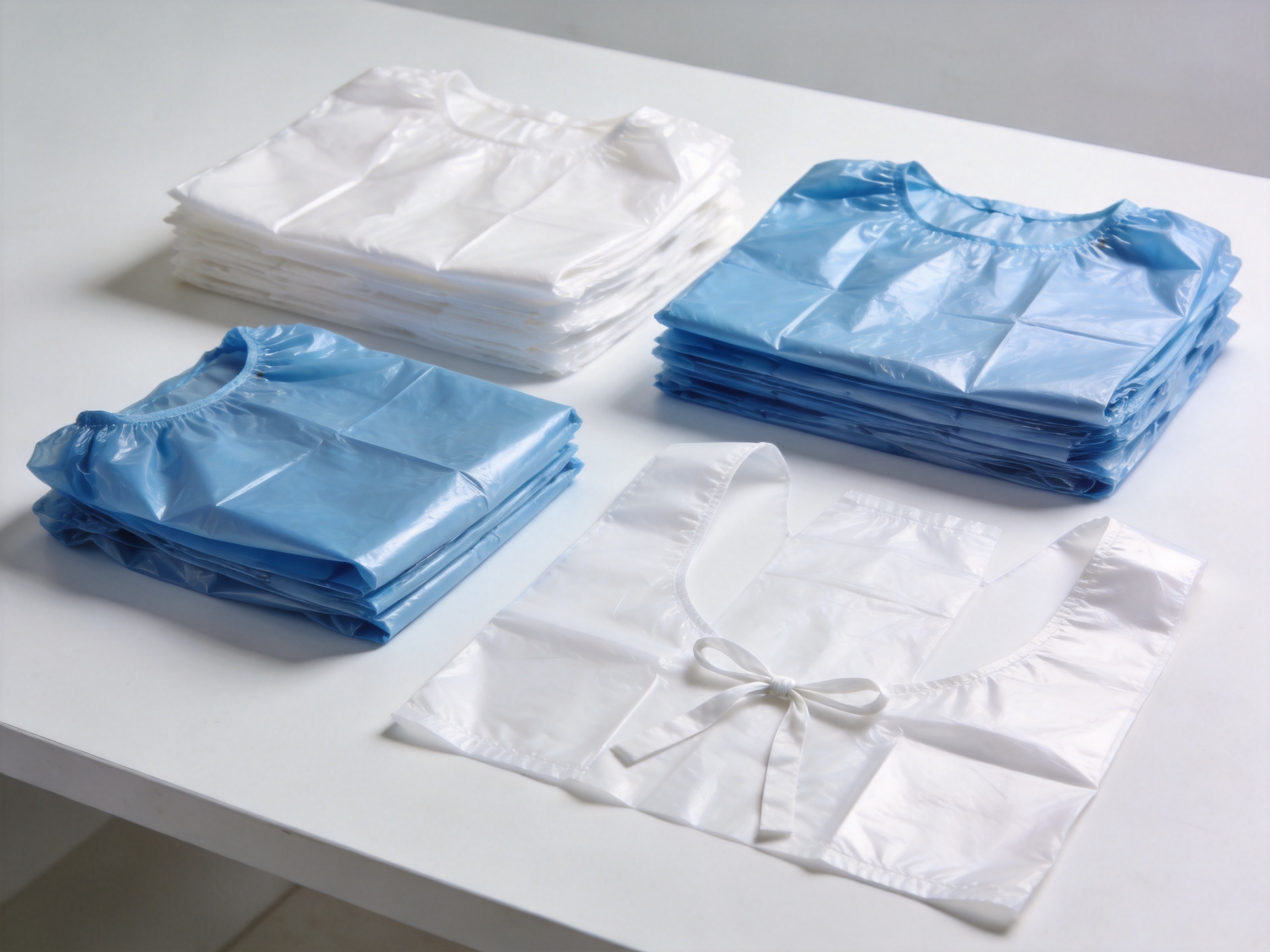
In dental clinics, nursing facilities, food preparation areas, first aid environments, and general healthcare settings, simple protective barriers often make a major difference in daily hygiene control. The disposable medical white polythene dental apron is designed for exactly this purpose: to provide a clean, lightweight, low-cost, and practical protective layer for clothing and uniforms during procedures or messy tasks. Manufactured from lightweight polythene, this apron offers dependable splash and contamination protection while remaining comfortable enough for routine use.
The product model DC662511 is a disposable PE apron available in white or blue, supplied flat packed, and packed at 100 pieces per pack. Its one-size-fits-all design makes it convenient for hospitals, dental practices, nursing homes, laboratories, food service teams, cleaning staff, caregivers, and emergency preparedness suppliers. With CE and ISO certification support, it is positioned as a reliable medical consumable for buyers seeking consistency, convenience, and scalable supply.
Unlike reusable aprons that require laundering, disinfection, storage, and monitoring, disposable polythene aprons are used once and then discarded according to facility protocols. This greatly supports infection prevention routines, reduces cross-contamination risks, and simplifies workflow for busy teams. For dental professionals, the apron is particularly valuable because it can protect clothing from splashes, droplets, polishing residues, impression materials, cleaning solutions, and other minor contaminants commonly encountered during patient care.
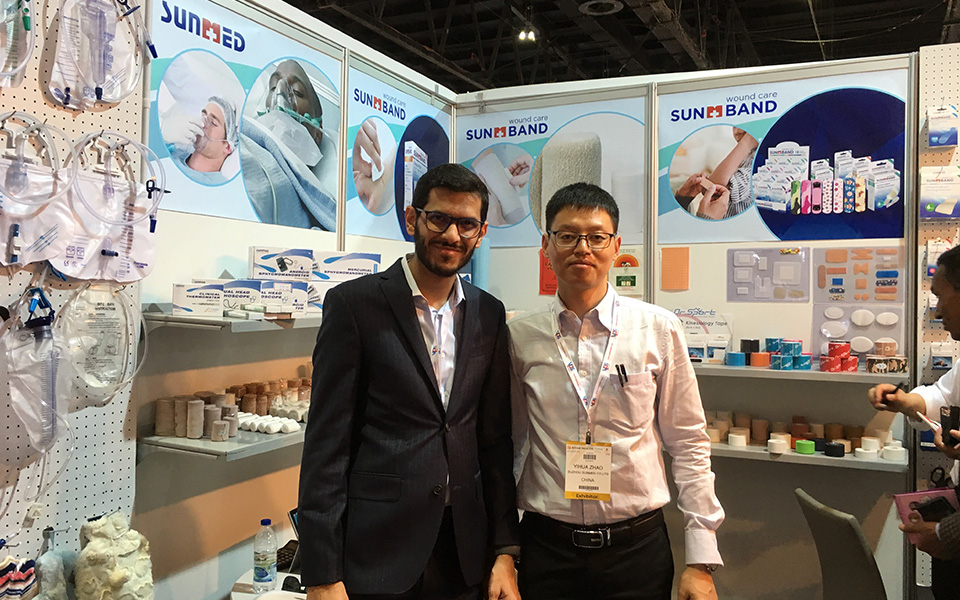
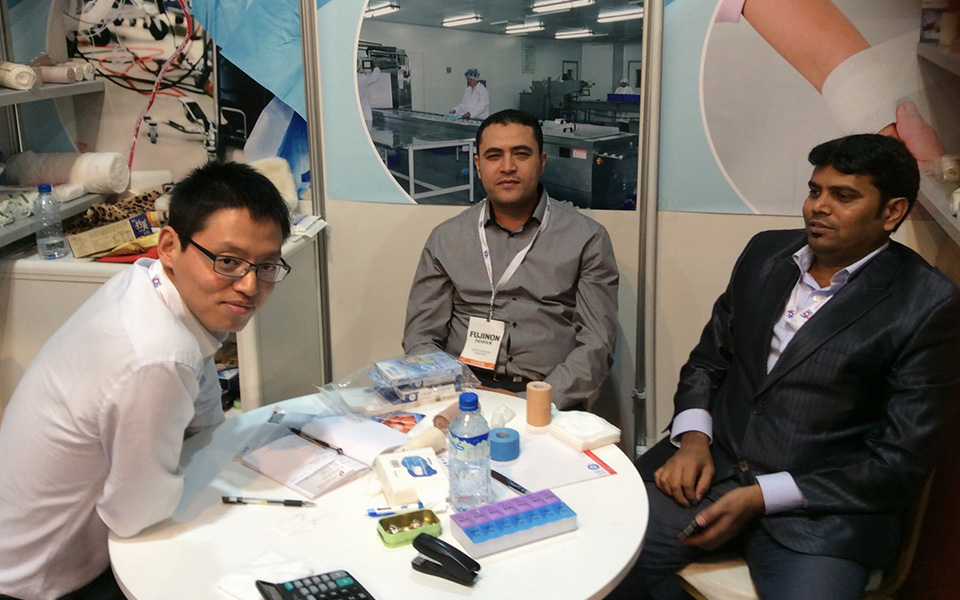
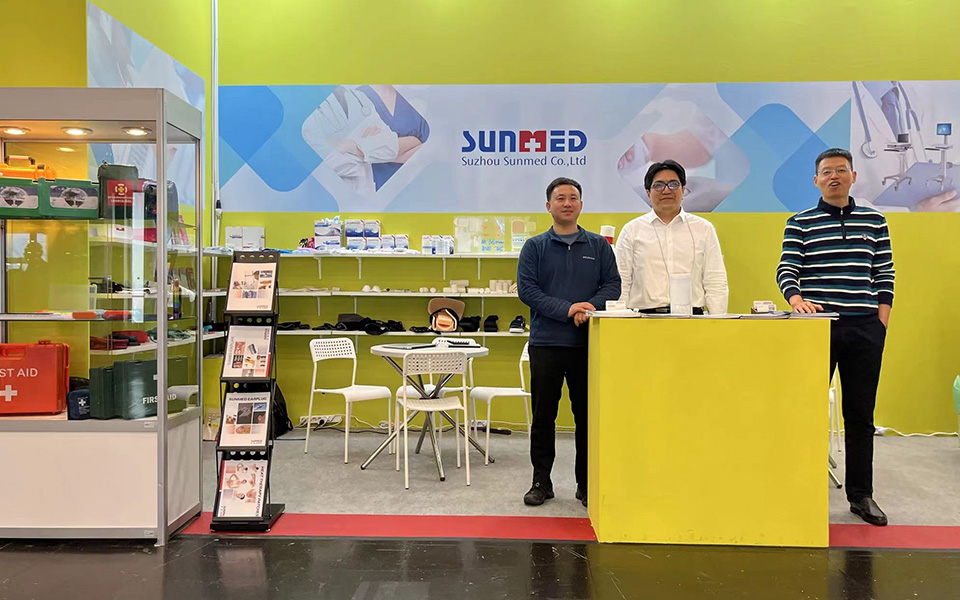
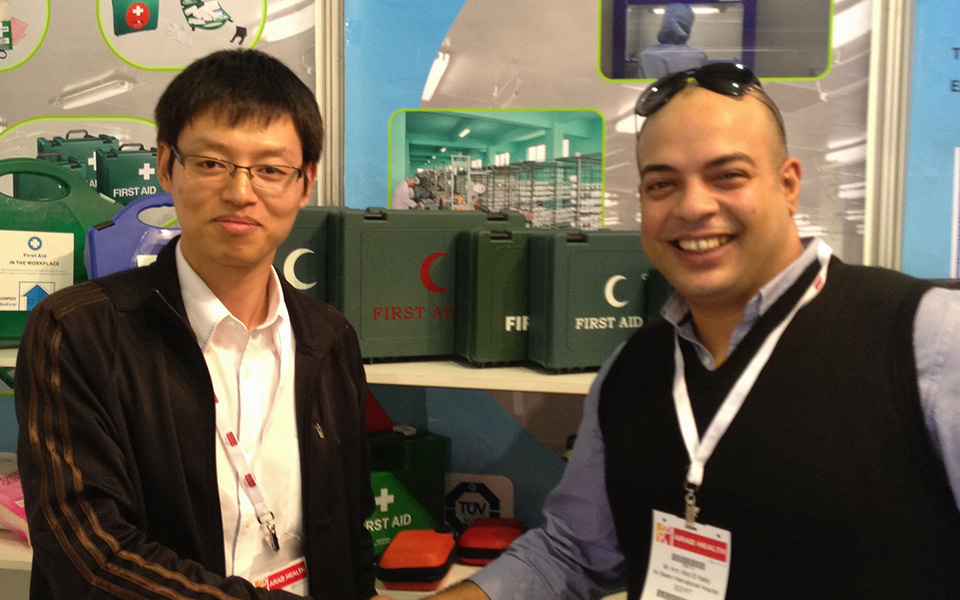
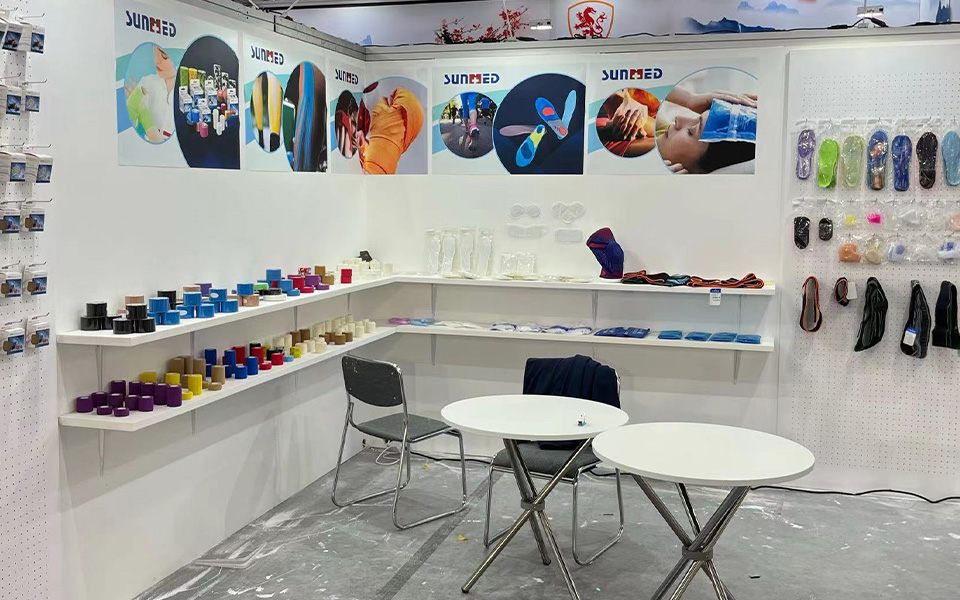
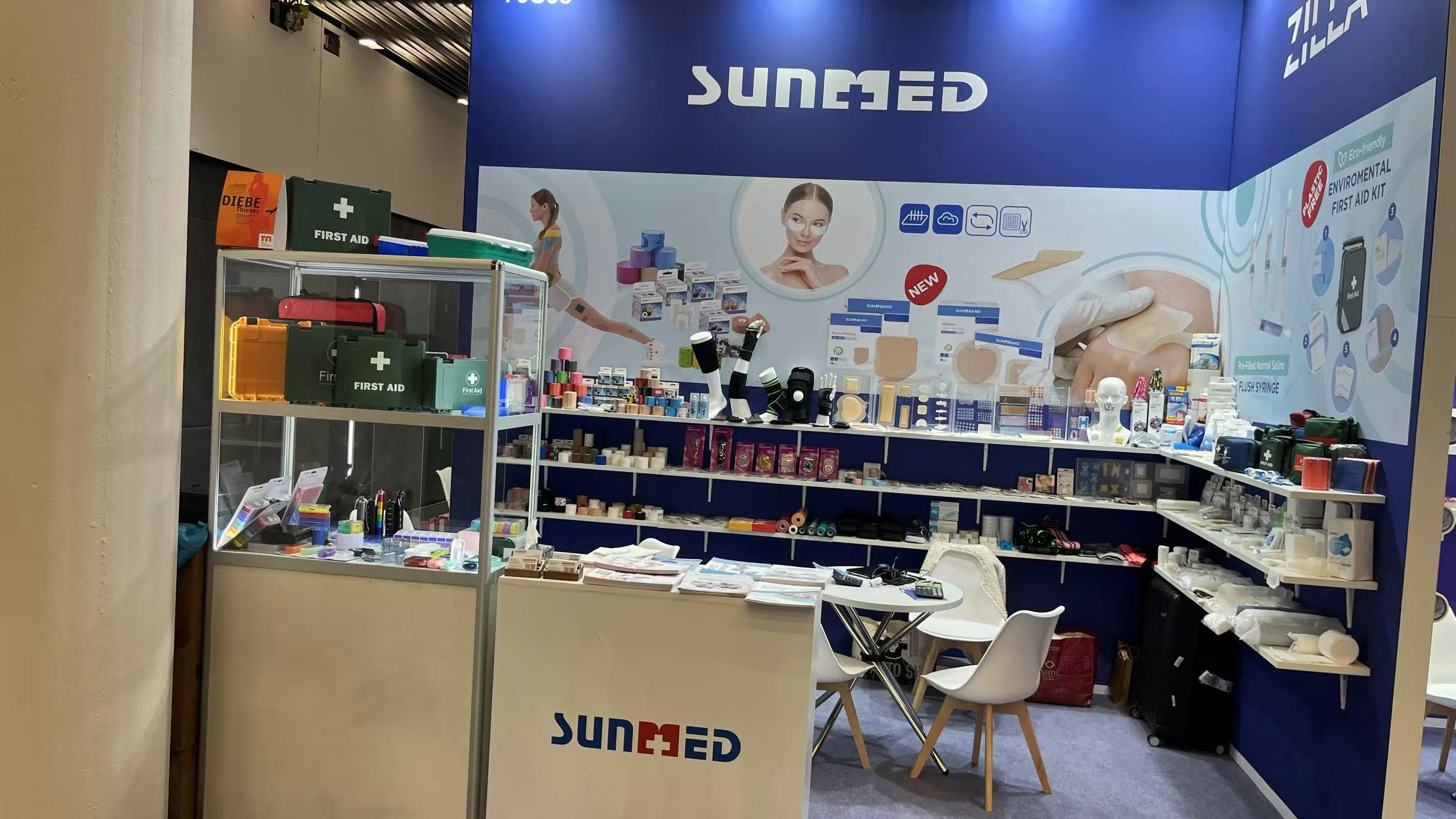
Suzhou Sunmed Co., Ltd. brings extensive experience in medical consumables, first aid products, wound care, PPE, sports support products, and healthcare devices. With production bases in Jiangsu, Zhejiang, and Anhui Province, the company combines manufacturing capacity, quality control, export experience, and OEM flexibility. The disposable medical white polythene dental apron benefits from this broader manufacturing background, offering customers a product that is economical, practical, and suitable for large-volume procurement.
Product Overview
The disposable medical white polythene dental apron is a multi-purpose protective garment made from lightweight PE material. It is intended to keep clothing clean during clinical procedures, dental work, nursing care, food preparation, patient assistance, cleaning, and other tasks where exposure to minor splashes or soiling may occur. The apron is supplied flat packed, making it easy to store, distribute, and use in high-turnover environments.
Its core advantages are simplicity, affordability, and versatility. The apron is not complicated to wear, does not require training beyond basic donning and disposal procedures, and can be stocked in large quantities. The one-size-fits-all format helps standardize purchasing across departments and reduces the need to manage multiple size inventories. Color options in white and blue allow facilities to match their procurement preferences or organize products by department or application.
In dental care, the apron can be used by dentists, hygienists, assistants, laboratory technicians, sterilization room staff, and cleaning teams. In nursing, it can be used during patient hygiene support, meal assistance, wound dressing preparation, routine cleaning, and general care activities. In food preparation, it offers a cost-effective barrier for staff handling ingredients or performing messy preparation tasks. Its broad usability makes it an efficient consumable for distributors and institutional buyers.
Key Product Specifications
| Product Name |
Disposable Medical White Polythene Dental Apron |
| Model |
DC662511 |
| Category |
Disposable PE Apron |
| Material |
Lightweight Polythene |
| Color Options |
White, Blue |
| Certification |
CE, ISO |
| Packing |
100 pcs/pack |
| Size |
One size fits all |
| Supply Format |
Flat packed |
| Typical Uses |
Dental care, nursing, food preparation, cleaning, general hygiene protection |
Why Polythene Aprons Remain Essential in Modern Healthcare
Although healthcare technology continues to advance, basic disposable protective products remain indispensable. A polythene apron is one of the most efficient forms of personal protective covering because it provides a practical barrier without excessive cost or complexity. In many daily healthcare tasks, a full gown may be unnecessary, too costly, or too time-consuming. A disposable apron, by contrast, provides fast front-body coverage and supports quick turnover between tasks.
The importance of protective apparel became more widely recognized in recent years, but infection control teams have long understood that everyday contamination events often occur during routine work. Dental procedures can generate droplets and splashes. Nursing care may involve contact with fluids, lotions, food, or cleaning agents. Food preparation involves wet ingredients and cross-contact concerns. Even in non-sterile environments, the consistent use of disposable barriers can help reinforce clean working habits.
Disposable PE aprons are especially useful because they are moisture resistant and simple to discard. When a task is completed, the apron can be removed in a controlled manner and disposed of according to local hygiene rules. This reduces the risk of carrying contaminants from one workspace to another. In fast-moving environments, the ability to quickly change protective apparel is a major advantage.
Advantages Over Competing Apron Options
The disposable medical white polythene dental apron offers several advantages when compared with traditional cloth aprons, heavier reusable protective garments, or low-grade disposable alternatives. The first advantage is cost efficiency. Lightweight polythene allows large-volume production and economical unit pricing, making the apron suitable for facilities that use high quantities every day. This is particularly important for hospitals, dental groups, nursing homes, food service contractors, and wholesale distributors.
The second advantage is hygiene convenience. Reusable aprons must be collected, laundered, dried, inspected, stored, and redistributed. Each step adds labor, time, and operational cost. Disposable aprons eliminate most of these tasks. Staff can take a clean apron from the pack, wear it for the necessary task, and dispose of it after use. This improves workflow and supports compliance because the barrier is always ready when needed.
The third advantage is broad usability. Some protective garments are designed only for a single environment. This PE apron, however, is suitable for dental care, nursing support, food preparation, and general cleaning. This multi-purpose capability reduces procurement complexity. Instead of stocking many separate apron types for similar low-risk tasks, facilities can standardize around one dependable product.
The fourth advantage is comfort. Heavy protective gowns may cause heat build-up, restrict movement, and reduce user compliance. A lightweight polythene apron is easier to wear during routine work. It does not add significant weight, and the simple design allows users to move freely. In busy dental and nursing environments, comfort has a direct impact on whether staff consistently follow protective protocols.
The fifth advantage is storage efficiency. Flat-packed aprons occupy less space than bulky reusable garments or individually boxed protective items. Packs of 100 pieces can be placed in treatment rooms, supply cabinets, preparation areas, cleaning carts, and emergency stations. Compact storage is valuable for facilities with limited space or multiple departments.
Finally, the apron benefits from manufacturing and quality management experience associated with a professional medical consumables exporter. For international buyers, consistency matters. A low-cost product still needs reliable dimensions, acceptable material performance, proper packing, and dependable documentation. This is where the company’s long-term experience in medical supplies becomes an important competitive factor.

Material Benefits of Lightweight Polythene
Polythene, commonly referred to as polyethylene or PE, is widely used in disposable protective products because it combines moisture resistance, flexibility, and cost effectiveness. For apron production, lightweight polythene provides sufficient coverage for general splash and soil protection while remaining easy to fold, pack, and wear. It is a practical material for high-use consumables because it can be manufactured consistently at scale.
The moisture-resistant nature of PE helps protect clothing from water-based splashes, food liquids, cleaning residues, and minor clinical soiling. In dental environments, this can include water spray, saliva-contaminated droplets, polishing splatter, or impression material residues. In nursing, it can include fluids encountered during personal care, feeding assistance, or cleaning. In food service, it can include sauces, oils, water, and other preparation materials.
Another benefit of lightweight PE is that it supports easy disposal. The apron can be removed without requiring special handling beyond standard facility guidelines. This is essential for workflows where staff may need to change aprons frequently. If a protective product is too expensive or cumbersome, users may delay changing it. A low-cost disposable apron encourages appropriate single-use behavior.
The material also contributes to the product’s universal fit. PE can be formed into a flexible apron shape that accommodates different body types. The one-size-fits-all design reduces the risk of staff selecting the wrong size and eliminates the inventory burden associated with multiple size variants. For procurement teams, this means fewer stock keeping units and simpler reordering.
Designed for Dental Applications
Dentistry requires careful attention to hygiene because dental procedures often involve close contact, water spray, aerosols, droplets, polishing compounds, blood traces, saliva, and disinfectant use. While masks, gloves, eye protection, and patient bibs are widely recognized, protective aprons for staff also play an important role. They help keep uniforms and clothing clean during treatment and support professional appearance throughout the workday.
The disposable medical white polythene dental apron is suitable for a wide range of dental tasks. During scaling and polishing, it can help protect against spray and polishing paste. During impression taking, it can protect clothing from alginate or silicone residues. During chairside assisting, it offers a barrier against routine splashes and contact with contaminated surfaces. During sterilization room work, it can help protect staff from water and cleaning residues.
Dental clinics often have high patient turnover and limited time between appointments. Protective apparel must therefore be quick to access and easy to replace. A flat-packed disposable apron can be stored near treatment rooms or sterilization areas so staff can put it on when needed. Because the product is economical, clinics can encourage use during appropriate tasks without placing unnecessary pressure on consumable budgets.
White aprons present a clean and professional appearance, which is often preferred in healthcare and dental settings. Blue aprons may be useful where color differentiation is desired. For example, a facility may use white aprons in clinical zones and blue aprons in cleaning or food preparation areas. Such color coding can help support internal organization and hygiene practices.
Value in Nursing and Patient Care
Nursing environments require frequent contact with patients, bedding, meals, personal care items, cleaning materials, and medical supplies. Staff may move rapidly between tasks, and protective garments must be practical. Disposable PE aprons support nursing routines by providing quick protection during activities where clothing may become soiled.
Common nursing applications include patient washing, feeding support, bed making, cleaning spills, assisting with toileting, handling non-sterile supplies, and preparing certain care materials. The apron is not intended to replace higher-level protective gowns when those are clinically required, but it is highly suitable for routine low-risk tasks where front-body protection is beneficial.
In nursing homes and long-term care facilities, cost control is important because consumables are used daily and in large quantities. A low-cost apron that is comfortable and easy to store can improve compliance while protecting budgets. The 100 pieces per pack format supports frequent use and easy distribution across wards or care units.
The one-size-fits-all feature is particularly useful in care environments with rotating staff. Temporary workers, agency nurses, caregivers, cleaning teams, and kitchen staff may all need access to protective apparel. A universal apron eliminates fitting complications and supports rapid use by different personnel.
Use in Food Preparation and General Hygiene
The product is widely used in food preparation because PE aprons provide a simple barrier against splashes, stains, and food residues. Kitchens, catering businesses, institutional cafeterias, food processing support areas, and community service facilities can all benefit from disposable aprons. The product helps protect worker clothing and may support cleaner workflow when used as part of an overall hygiene program.
Food preparation tasks can be messy. Cutting produce, handling sauces, preparing meat or fish, washing dishes, and cleaning surfaces all create exposure to liquids and residues. A disposable apron allows workers to maintain a cleaner appearance and avoid transferring mess from one area to another. When tasks change, the apron can be replaced quickly.
Beyond food and healthcare, the apron is useful for beauty care, cleaning services, laboratory support, educational settings, first aid training, emergency kits, and household care. Its multi-purpose character makes it attractive to wholesalers and distributors who serve several customer segments. A single product can meet needs in clinics, care facilities, food service, and general maintenance.

Manufacturing Strengths Behind the Product
The quality of a disposable apron may appear simple at first glance, but reliable manufacturing requires experience, process control, material management, packing accuracy, and inspection discipline. Suzhou Sunmed Co., Ltd. has developed broad expertise in medical consumables and healthcare products over decades of activity. The company operates multiple production bases and serves international markets in Europe, Southeast Asia, Africa, Oceania, and other regions.
This manufacturing background is important because medical and healthcare buyers are not only purchasing a physical product; they are also purchasing supply reliability. A hospital or distributor needs products that arrive as ordered, with consistent packing, stable material quality, and appropriate documentation. Inconsistent aprons can cause user complaints, stock problems, or quality concerns. A professional manufacturer reduces these risks through organized production and inspection systems.
The company’s experience covers first aid products, wound dressing materials, gauze, bandages, medical tape, cotton products, non-woven products, sports bandages, family healthcare items, disposable syringes, catheters, surgical consumables, and other medical devices and consumables. This wide product foundation supports a strong understanding of regulated healthcare supply chains. The same commitment to quality control applies to economical disposable products such as PE aprons.
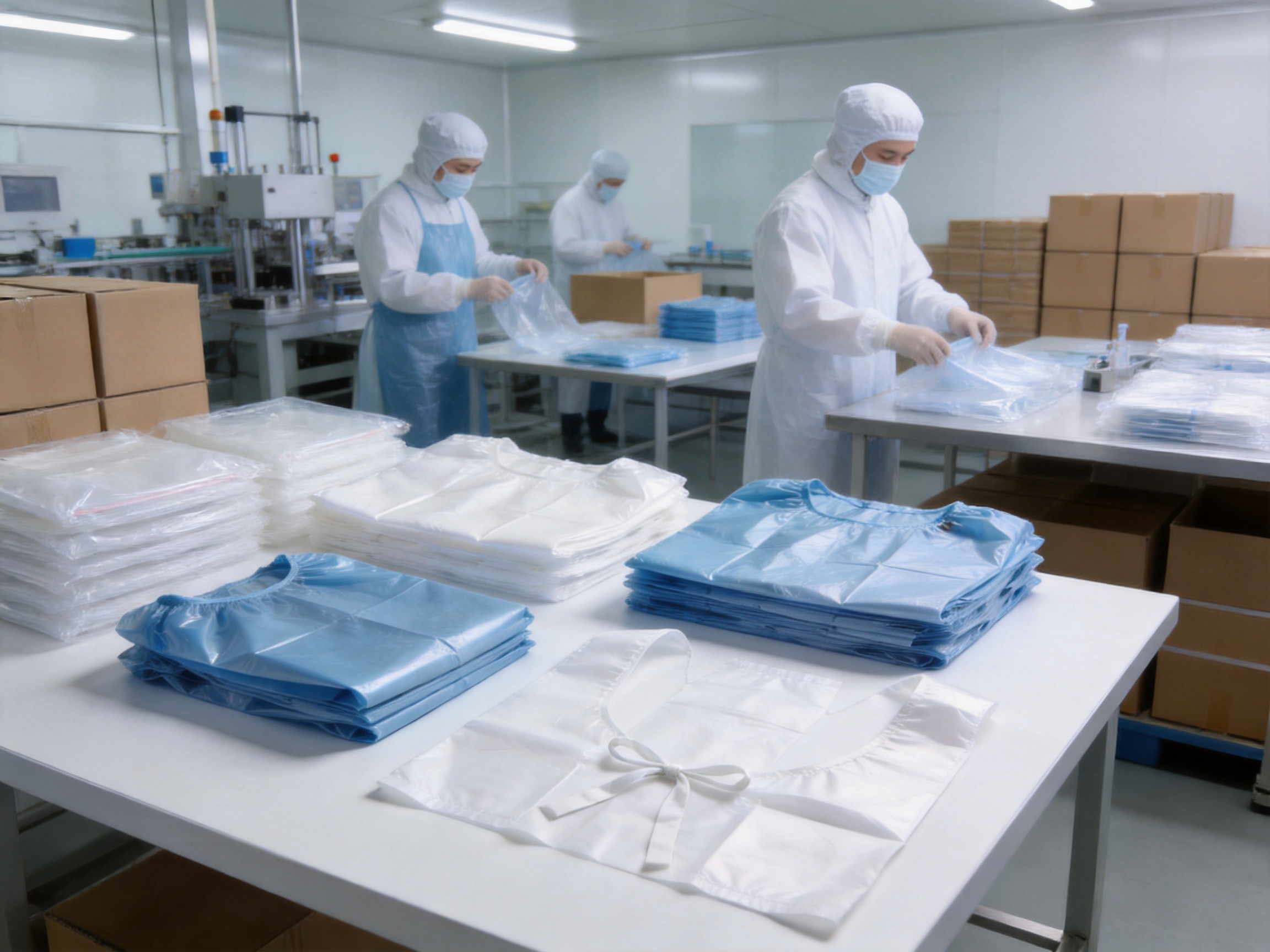
Advanced manufacturing processes for disposable PE aprons typically include material selection, film control, cutting, shaping, packing, and batch inspection. Material quality must be monitored to ensure the apron is light enough for comfort yet suitable for its protective purpose. Cutting processes must create a consistent shape and fit. Packing processes must ensure the correct count, clean arrangement, and efficient flat-packed presentation. Inspection procedures help verify product appearance, dimensions, color, packing count, and overall acceptability.
Quality Control and Certification
Certification and quality management are essential for medical consumables. The product is supported by CE and ISO certification information, giving buyers additional confidence in its suitability for regulated markets. The company’s broader quality system is aligned with ISO13485:2016 standards, and its Suzhou factories comply with FDA requirements. These strengths reflect a structured approach to manufacturing and product control.
Quality control for a PE apron includes both process inspection and final inspection. During production, staff may check raw material condition, film appearance, cutting accuracy, and packing status. Final inspections can confirm that the aprons are correctly packed, the color matches the order, the pack count is accurate, and the product is free from obvious defects that could affect use.
For international buyers, documentation is often as important as the product itself. Importers, distributors, and healthcare purchasers may require certificates, packing information, product descriptions, and compliance documents. A company with long export experience can help simplify this process by providing appropriate support and communication.
The company’s professional quality control team, consisting of numerous trained personnel, plays a central role in maintaining consistency. Disposable products are often purchased in large volumes, so even small inconsistencies can become significant. A disciplined inspection culture helps ensure that shipments meet customer expectations repeatedly, not only once.
OEM and Wholesale Advantages
Many buyers require more than standard supply. They may need private labeling, customized packing, color preferences, market-specific documentation, or container-load purchasing. Suzhou Sunmed Co., Ltd. is positioned as an OEM medical consumables manufacturer and medical devices factory, offering wholesale medical consumables and medical supplies for sale. This capability is valuable for distributors, healthcare brands, supermarket suppliers, first aid companies, and regional importers.
OEM flexibility allows the disposable PE apron to fit different market strategies. A distributor may want neutral bulk packing for institutional customers, while a retail supplier may need branded packaging. A hospital group may require consistent carton labeling for warehouse management. A food service supplier may prefer blue aprons. A dental supplier may prefer white aprons for professional clinical presentation. The ability to adapt to customer needs supports long-term cooperation.
Wholesale supply is particularly important for products used daily. Buyers need competitive pricing, stable production capacity, and dependable delivery schedules. Because the apron is packed at 100 pieces per pack and supplied flat packed, it is well suited for efficient carton packing and logistics planning. Large-volume ordering can reduce per-unit freight and simplify inventory management.
The company’s export experience across more than 60 countries indicates familiarity with different market expectations. European buyers may focus strongly on documentation and consistency. Southeast Asian buyers may require competitive pricing and reliable lead times. African and Oceania markets may prioritize durability, practical packing, and dependable supply. A manufacturer with global experience can communicate effectively and support varied requirements.
Practical Packaging for High-Use Environments
Packaging is a key part of disposable apron usability. The 100 pieces per pack format provides a practical balance between quantity and manageability. Packs can be placed in multiple locations without occupying excessive space. Staff can remove aprons as needed, while supply managers can easily count remaining inventory and reorder before stockouts occur.
Flat-packed supply improves storage efficiency. In healthcare facilities, storage space is often limited and must be shared among gloves, masks, gauze, bandages, tapes, syringes, disinfectants, and many other consumables. A compact flat-packed apron helps reduce storage pressure. It also supports efficient transport, which is important for wholesale buyers managing shipping costs.
For clinics and care homes, practical packaging helps improve compliance. If aprons are stored in an inconvenient way, staff may skip them during busy moments. If the product is easy to access and simple to remove from the pack, usage becomes more consistent. Good packaging therefore contributes indirectly to hygiene performance.
Comparison With Alternative Protective Apparel
| Protective Option |
Main Strength |
Potential Limitation |
Best Use Scenario |
| Disposable PE Apron |
Low cost, lightweight, easy to use, moisture resistant |
Front-body protection only; not a substitute for high-level gowns |
Routine dental, nursing, food preparation, cleaning, and general hygiene tasks |
| Reusable Cloth Apron |
Durable and familiar |
Requires laundering, may retain contamination if not processed correctly |
Non-medical tasks where laundering systems are reliable |
| Disposable Isolation Gown |
Greater body coverage |
Higher cost and may be unnecessary for simple messy tasks |
Situations requiring enhanced protective coverage |
| Heavy Waterproof Apron |
Strong splash resistance |
Bulkier, less comfortable, more expensive |
High-splash cleaning, industrial, or specialized tasks |
This comparison shows why the disposable medical white polythene dental apron occupies an important middle ground. It does not attempt to replace every protective garment. Instead, it provides an efficient solution for everyday tasks where staff need quick, affordable, and disposable front-body protection. In many settings, that is exactly what is required most often.
Comfort and User Compliance
Protective apparel only works when people actually use it. Comfort, convenience, and availability strongly influence compliance. A lightweight PE apron reduces the burden on users by providing protection without unnecessary weight. It is simple to put on, simple to remove, and suitable for short-duration or repeated tasks.
In dental and nursing work, staff already wear gloves, masks, eye protection, and uniforms. Adding heavy apparel for every minor task can be uncomfortable and may slow workflow. A lightweight apron is more acceptable for routine protection. Because it is low cost, staff can replace it whenever needed rather than trying to reuse it beyond its appropriate purpose.
The one-size-fits-all format further supports compliance. If staff must search for the correct size, they may avoid using the product. A universal design removes that barrier. This is especially valuable in shared supply areas, multi-shift operations, and facilities with diverse staff body types.
Color Options: White and Blue
The apron is available in white or blue. White is commonly associated with clinical cleanliness and is often preferred in medical and dental environments. It gives a professional appearance and matches many healthcare uniforms and treatment room aesthetics. White aprons can also make visible contamination easier to notice, reminding users to change the apron when appropriate.
Blue is widely used in food preparation, cleaning, and healthcare support areas. It can help distinguish tasks or departments. For example, a facility may reserve blue aprons for food handling and white aprons for clinical care. Color differentiation can support internal hygiene policies and simplify training.
Offering both colors improves market flexibility. Distributors can serve customers with different expectations without changing the fundamental product type. This is especially useful for suppliers that sell to dental clinics, nursing homes, food service businesses, and general healthcare customers at the same time.
Sustainability Considerations and Responsible Use
Disposable products must be used responsibly. The main purpose of a disposable PE apron is hygiene protection and contamination control. Facilities should choose disposable aprons when single-use protection is appropriate and should dispose of them according to applicable local regulations. Responsible use includes avoiding unnecessary waste while ensuring that protective standards are not compromised.
Compared with reusable alternatives, disposable aprons reduce laundering demands, water use, detergent use, and processing labor. However, they also create disposable waste. The best choice depends on risk level, workflow, available laundering systems, and hygiene requirements. In clinical and care settings where contamination control is important, disposable aprons often provide a practical balance of safety, cost, and convenience.
Manufacturing efficiency also matters. Flat-packed lightweight products help reduce shipping volume compared with bulkier items. Efficient packing can improve transport utilization and reduce logistics burden. A reliable manufacturer can also help reduce waste caused by defective products, incorrect shipments, or inconsistent quality.
Applications Across Multiple Sectors
The disposable medical white polythene dental apron is not limited to one industry. Its multi-purpose design allows it to serve many sectors. In dental clinics, it protects staff during patient care and cleaning. In hospitals, it supports routine care and non-sterile tasks. In nursing homes, it helps caregivers maintain cleanliness during daily resident support. In food service, it helps workers keep clothing clean. In first aid training, it can be used during demonstrations involving simulated fluids or messy materials.
Beauty and daily care providers can also use disposable aprons during hair coloring, skincare, makeup application, and body care services. Rehabilitation centers may use them during patient assistance or therapy sessions where creams, water, or cleaning products are involved. Laboratories and educational institutions may use them for low-risk demonstrations where clothing protection is required.
This broad application range gives the product strong commercial value. Distributors prefer items that can be sold to multiple customer groups because it increases turnover and reduces stock risk. A simple disposable apron with medical-style quality support can be marketed to healthcare, care, food, cleaning, and personal care sectors.
Procurement Benefits for Distributors and Institutions
For procurement managers, the ideal consumable is affordable, consistent, easy to store, easy to reorder, and acceptable to end users. The disposable PE apron meets these criteria. Its low-cost nature supports high-volume purchasing. Its flat-packed format supports efficient warehousing. Its one-size-fits-all design reduces SKU complexity. Its white and blue color options support different customer preferences.
Distributors benefit from the product’s universal demand. Dental suppliers, first aid suppliers, medical wholesalers, supermarket healthcare aisles, cleaning supply companies, and food service suppliers can all include disposable aprons in their product portfolios. Because the product is used repeatedly, it creates recurring demand rather than one-time purchasing.
Institutional buyers benefit from standardization. A hospital group or care organization can adopt one apron model across multiple departments for routine tasks. Standardization simplifies staff training, purchasing contracts, warehouse management, and usage monitoring. It also improves bargaining power through larger consolidated orders.
Company Strengths Supporting Long-Term Cooperation
Suzhou Sunmed Co., Ltd. is a professional manufacturer and exporter of first aid, medical, and healthcare products in China. The company has 30 years of experience in the medical device and medical consumables industry. Its product coverage includes first aid, wound dressing, medical gauze, bandages, medical tape, medical cotton, non-woven products, sports bandages, kinesiology tape, pill boxes, hot and cold packs, disposable syringes, catheters, surgical consumables, and many other medical supplies.
This broad capability is important for buyers who want a reliable long-term partner rather than a single-product supplier. Many importers prefer to consolidate purchasing across several related medical consumables. Working with a manufacturer that can supply multiple product categories reduces communication costs, simplifies audits, and strengthens procurement planning.
The company has exported products to more than 60 countries, including markets in Europe, Southeast Asia, Africa, and Oceania. This experience supports effective international trade communication, documentation preparation, and market adaptation. Buyers from hospitals, first aid suppliers, supermarkets, and retail sports shops can benefit from a supplier that understands varied distribution channels.
The company’s quality control team follows inspection procedures to ensure products meet relevant standards. Most products are CE certified, and the factories comply with important quality expectations. This commitment to quality management is a key strength when supplying consumables used in healthcare and hygiene-sensitive environments.
How the Apron Supports Infection Prevention Culture
Infection prevention is not built only on advanced equipment; it is also built on routine habits. Disposable aprons help reinforce the habit of using barriers during tasks that may involve contamination. When aprons are readily available and affordable, staff are more likely to use them appropriately. This supports a workplace culture where hygiene is visible, practical, and consistent.
In dental care, a clean apron for each appropriate task can help reduce the chance of carrying splashes or residues from one patient area to another. In nursing, changing aprons between tasks can support separation of care activities. In food preparation, replacing soiled aprons can help maintain cleanliness. The product therefore contributes to a broader system of hand hygiene, glove use, surface cleaning, waste disposal, and protective equipment selection.
Facilities should provide training on proper donning and doffing. Users should avoid touching contaminated front surfaces during removal and should dispose of the apron according to local policy. After removal, hand hygiene should be performed as required. These simple steps help maximize the benefit of the apron.
Recommended Storage and Handling
To maintain usability, packs of disposable PE aprons should be stored in a clean, dry area away from excessive heat, sharp objects, and direct contamination. Packs should remain closed or protected until needed. Supply areas should be organized so that staff can access aprons quickly without contaminating unused pieces.
Stock rotation is also recommended. Facilities should use older stock first and monitor pack condition. Although PE aprons are generally stable under normal storage conditions, good inventory practice supports consistent quality and reduces waste. Procurement teams should estimate monthly usage and maintain appropriate safety stock to avoid shortages.
When distributing aprons across departments, labels or storage bins can help users identify the correct product. If both white and blue aprons are used, facilities should define the purpose of each color clearly. Simple signage can improve compliance and reduce confusion.
Q&A Section
What is the main purpose of the disposable medical white polythene dental apron?
The main purpose is to protect clothing and uniforms from minor splashes, stains, and soiling during dental procedures, nursing tasks, food preparation, cleaning, and other messy activities. It provides a lightweight disposable barrier for routine hygiene protection.
Is the apron suitable only for dental clinics?
No. Although it is highly suitable for dental use, it is a multi-purpose PE apron. It can also be used in nursing homes, hospitals, food preparation areas, first aid settings, cleaning tasks, beauty care, laboratories, and general hygiene applications.
What material is used to manufacture the apron?
The apron is manufactured from lightweight polythene, also known as polyethylene or PE. This material is flexible, moisture resistant, economical, and suitable for disposable protective apparel.
What colors are available?
The apron is available in white and blue. White is often preferred in dental and medical settings, while blue may be useful for food preparation, cleaning, or color-coded workplace systems.
How is the product packed?
The apron is supplied flat packed, with 100 pieces per pack. This format supports efficient storage, easy distribution, and convenient use in high-volume environments.
Does the apron come in multiple sizes?
The apron is designed as one size fits all. This reduces procurement complexity and makes it suitable for facilities with many different users.
What certifications are associated with the product?
The product information includes CE and ISO certification. The manufacturer also operates with strong quality management practices and experience in medical consumables.
How does this apron compare with reusable cloth aprons?
Reusable cloth aprons can be durable, but they require laundering, handling, inspection, and storage. Disposable PE aprons reduce these operational steps and support single-use hygiene practices, making them more convenient for many healthcare and food preparation tasks.
Can the apron replace an isolation gown?
No. A disposable PE apron is intended for routine front-body protection and low-risk messy tasks. If a procedure requires full-body coverage or higher-level protection, an appropriate isolation gown or other protective garment should be selected according to facility policy.
Why is flat packing important?
Flat packing saves storage space, improves logistics efficiency, and makes it easier to place apron packs in treatment rooms, supply cabinets, cleaning carts, and food preparation areas.
Who are the typical buyers for this product?
Typical buyers include dental distributors, hospitals, clinics, nursing homes, food service suppliers, first aid suppliers, supermarkets, cleaning supply companies, and medical consumables wholesalers.
What makes the manufacturer a strong supply partner?
The manufacturer has decades of experience in medical consumables, multiple production bases, broad product coverage, international export experience, professional quality control, CE-certified products, and the ability to support OEM and wholesale supply.
Conclusion
The disposable medical white polythene dental apron is a practical, economical, and versatile protective product designed for everyday hygiene needs. Made from lightweight polythene, supplied flat packed, and available in white or blue, it provides a convenient barrier for dental care, nursing, food preparation, cleaning, and general messy tasks. Its one-size-fits-all design simplifies purchasing and supports quick use by different staff members.
Compared with reusable aprons and heavier protective garments, this disposable PE apron offers strong advantages in cost efficiency, convenience, comfort, storage, and workflow support. It is not intended to replace specialized protective clothing when higher-level protection is required, but it is an excellent solution for routine situations where front-body splash and soil protection is needed.
Backed by the manufacturing experience, quality control systems, export knowledge, and OEM capability of Suzhou Sunmed Co., Ltd., the product is well suited for distributors and institutions seeking reliable medical consumables. For buyers who value consistent supply, practical packaging, international documentation support, and competitive wholesale options, this apron represents a dependable addition to any hygiene protection portfolio.
References
World Health Organization. Practical Guidelines for Infection Control in Health Care Facilities.
Centers for Disease Control and Prevention. Guidelines for Infection Control in Dental Health-Care Settings.
International Organization for Standardization. ISO 13485: Medical Devices Quality Management Systems Requirements for Regulatory Purposes.
European Commission. Guidance on CE Marking and Medical Device Compliance.
Occupational Safety and Health Administration. Personal Protective Equipment Standards and Guidance.
Health and Safety Executive. Personal Protective Equipment at Work Guidance.
Association for the Advancement of Medical Instrumentation. Quality Systems and Risk Management Principles for Medical Products.

 English
 Español
 русский
 Français
 Deutsch
 italiano
 By Admin