Managing medication, vitamins, fish oil, and other daily supplements can become difficult when several doses must be taken at different times. A reliable pill organizer helps users separate tablets and capsules by day and time, reducing confusion and making daily routines easier to follow. The Prescription Medication Wallet Pill Box for Fish Oil is designed for people who need a compact, organized, and travel-friendly solution for storing weekly medication and supplements.
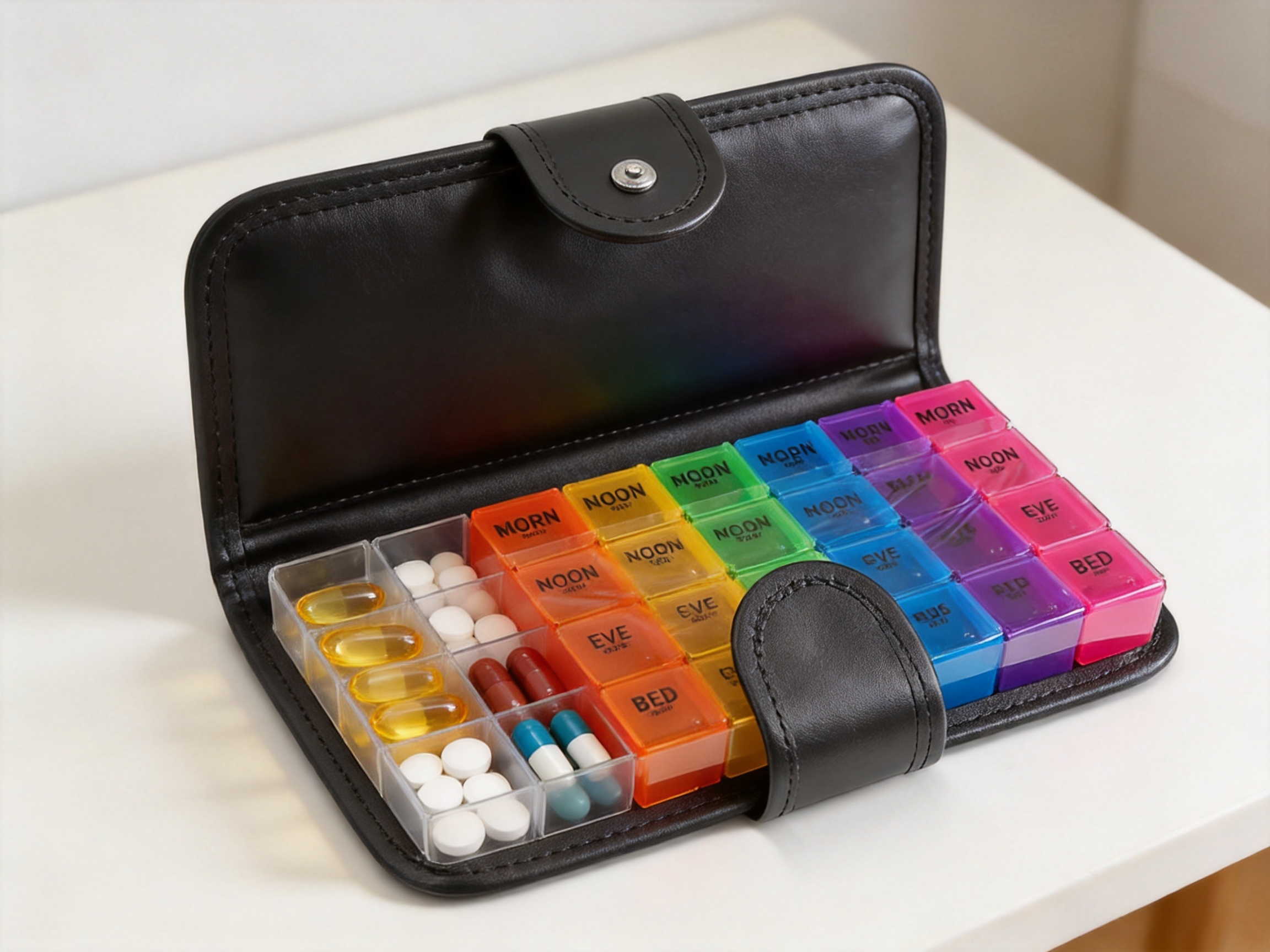
This product combines a portable PU wallet with a durable PP pill box containing 28 translucent compartments. The layout is intended to support four daily dosing periods across seven days, giving users a practical way to prepare a full week of pills in advance. Each compartment has a snap-shut lid, helping keep tablets and capsules in their assigned positions while the wallet provides additional portability and protection.
In addition to its consumer convenience, the product is suitable for wholesalers, pharmacies, healthcare distributors, supermarkets, first-aid suppliers, elder-care providers, and retail businesses seeking a practical medication-management item. It is produced by Suzhou Sunmed Co., Ltd., a Chinese manufacturer and exporter with extensive experience in medical consumables, healthcare products, first-aid supplies, and family-care products.
Understanding the Prescription Medication Wallet Pill Box
A pill organizer is more than a simple container. For many users, it is part of a daily health-management routine. People may need to take prescription medicines, vitamins, fish oil, nutritional supplements, or other non-prescription products at breakfast, midday, evening, and bedtime. Without a clear system, doses may be forgotten, repeated, mixed together, or accidentally left behind during travel.
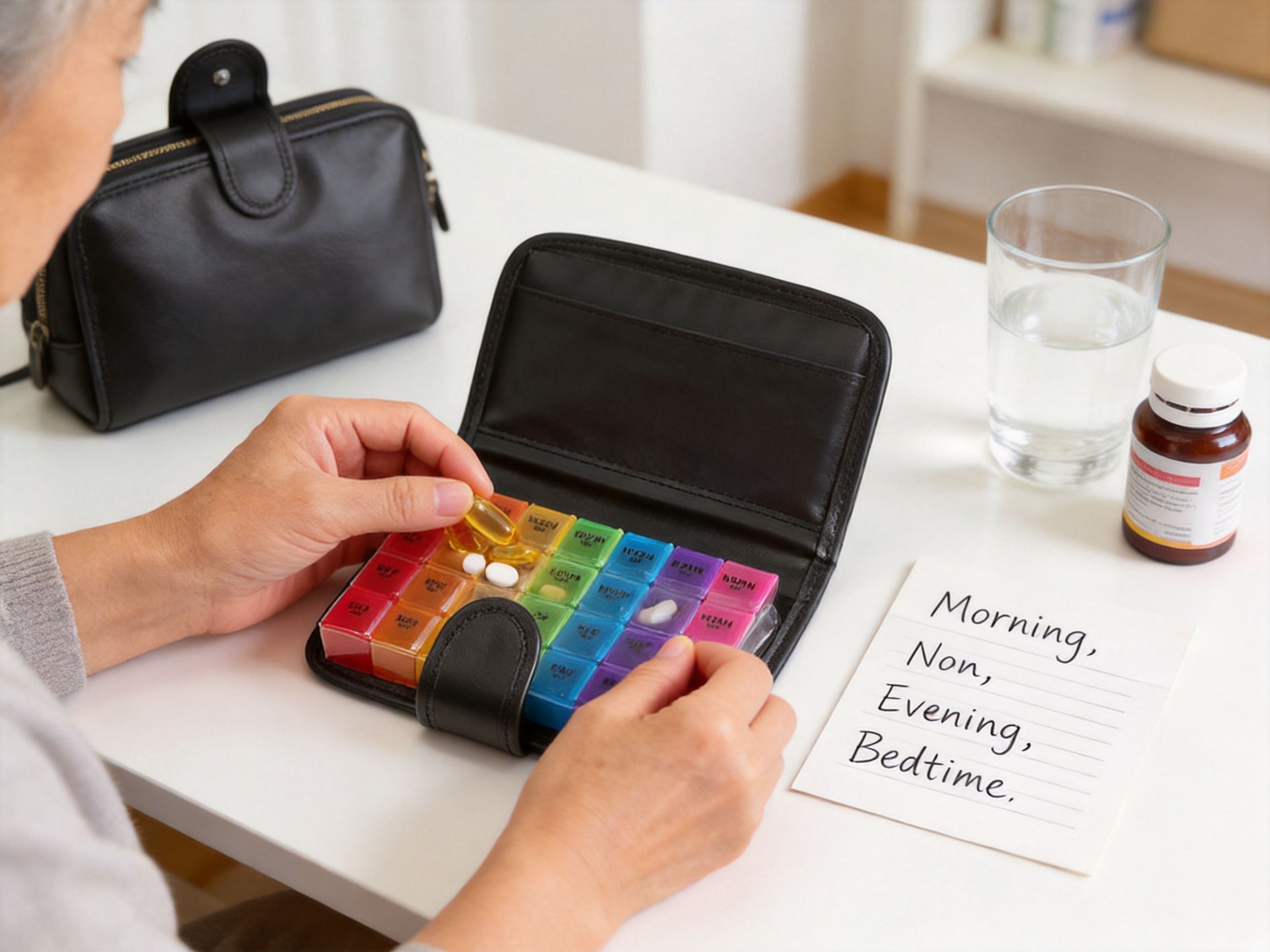
The Prescription Medication Wallet Pill Box for Fish Oil addresses this challenge by dividing a weekly supply into 28 individual compartments. The translucent design allows users to view the contents without immediately opening every section. Printed or manually labeled day and time sections can help users identify the correct compartment quickly, while the compact wallet format makes the organizer easier to carry than a collection of separate medicine bottles.
The product model is DC660182. Its listed product size is 19 x 14 x 3.5 cm. The wallet is made from PU, while the internal pill box is made from PP. The combination provides a balance between portability, organization, and everyday durability. The organizer is intended for pills, tablets, capsules, fish oil softgels, and similar small-dose products, subject to the size and quantity that each compartment can accommodate.
Key Product Specifications
| Specification |
Details |
| Product name |
Prescription Medication Wallet Pill Box for Fish Oil |
| Model |
DC660182 |
| Product category |
Pill Organizers |
| Compartment configuration |
28 translucent compartments |
| Suggested weekly arrangement |
Seven days with four dosing periods per day |
| Product size |
19 x 14 x 3.5 cm |
| Outer material |
PU bag or wallet |
| Internal box material |
PP |
| Closure design |
Individual snap-shut lids |
| Model description |
DC660182 |
| Minimum order quantity |
5,000 pieces |
Four-Period Weekly Organization
The most important feature of this pill box is its 28-compartment structure. Four compartments for each day of the week can support common morning, midday, evening, and bedtime medication schedules. Users can prepare the organizer once a week rather than opening multiple bottles every day.
This format can be useful for people taking several medications at different times. It may also help caregivers prepare medication for family members, provided that the medication schedule has been confirmed by a qualified healthcare professional. Because the compartments are separated, tablets and capsules can be kept apart from one another instead of being placed together in one large container.
The four-period structure also provides flexibility. One user may assign the compartments to breakfast, lunch, dinner, and bedtime. Another may use them for morning, afternoon, evening, and an additional scheduled dose. The organizer itself does not replace medical instructions, but it can provide a physical system for following an established schedule.
For fish oil users, the organizer can help keep daily softgels together with other planned supplements. Fish oil capsules can sometimes be relatively large, so users should confirm that the compartment dimensions and quantity are appropriate before filling the organizer. The same consideration applies to large tablets, irregularly shaped capsules, and products that require special storage conditions.
Translucent Compartments for Easier Identification
The compartments are made from translucent PP, allowing users to see the general contents inside. This visual access can make it easier to check whether a compartment has been filled or emptied. It can also reduce the need to open every lid when reviewing the week's supply.
Translucency is especially valuable for older users or people who prefer a quick visual confirmation. When the organizer is used in combination with a written medication schedule, color coding, or professional instructions, the visible compartments can support a clearer routine. Retailers may also find that the translucent design communicates the product's function immediately when displayed in stores or online catalogs.
The material is described as durable and BPA-free. PP is widely used in consumer storage products because it is lightweight and suitable for repeated everyday handling. Its relatively low weight helps keep the organizer portable, while its rigid structure gives each compartment a defined shape.
Although the box is designed for routine pill organization, it should not be considered completely protective against moisture, heat, contamination, or light-sensitive storage requirements. Certain medications must remain in their original packaging or need controlled environmental conditions. Users should follow the storage instructions supplied with every medicine.
Snap-Shut Lids and Spill Reduction
Each compartment includes a snap-shut lid designed to remain closed during normal handling. This is an important advantage over basic open trays or organizers with loose covers. A secure closure helps reduce the possibility of pills moving between compartments, falling out, or becoming mixed during transport.
When the organizer is placed inside a handbag, backpack, suitcase, or travel pouch, it may be exposed to movement and pressure. Individual lids help keep the contents in their intended sections. The product information also describes the organizer as having an airtight seal and a secure locking design intended to help prevent pills from spilling out.
A snap-shut mechanism can also improve user confidence. If a lid is difficult to close or opens unintentionally, users may avoid carrying the organizer. A positive closure gives a simple tactile indication that the section has been shut. It is still advisable to inspect the organizer periodically, especially if it has been dropped, heavily compressed, or used for an extended period.
Compared with low-cost organizers that use weak or poorly fitted lids, a durable snap-shut structure can contribute to a longer useful life. For buyers selecting products for resale, this feature can reduce dissatisfaction associated with broken covers, mixed pills, and accidental loss during ordinary use.

Prescription Medication Wallet Pill Box for Fish Oil
Portable PU Wallet Design
The PU wallet gives the pill organizer a more finished and portable format. Instead of carrying a loose plastic tray, the user can place the internal PP box inside a protective outer wallet. This arrangement is useful for travel, work, school, appointments, and everyday commuting.
With a listed size of 19 x 14 x 3.5 cm, the product is compact enough for many handbags, shoulder bags, backpacks, and luggage compartments. The dimensions also provide enough surface area to organize 28 sections without requiring a collection of separate boxes. The flat wallet-style design can be easier to store than multiple round bottles or bulky medicine containers.
PU is commonly used for cases and wallets because it can provide a smooth, flexible, and presentable outer surface. For distributors, the wallet style may make the product more attractive as a gift item or family healthcare accessory. It can also support a more discreet appearance for users who do not want to carry an exposed medicine tray.
Portability does not mean the organizer should be treated as indestructible. The product is designed for practical daily use, but excessive bending, sharp pressure, water exposure, or prolonged high temperatures may affect the wallet or the internal compartments. Proper handling will help maintain both appearance and function.
Advantages Compared with Basic Pill Organizers
More organized than a single-compartment container
A single-compartment container may be suitable for a small number of pills, but it provides little assistance when several doses are scheduled throughout the day. The 28-section configuration offers a more systematic alternative for weekly medication planning.
More portable than multiple original bottles
Original medicine bottles are important for identification and should be retained when required by healthcare professionals or medication labels. However, carrying several bottles can take up considerable space. A prepared organizer may reduce the amount of packaging needed for short trips, provided the user's medication-storage requirements allow it.
More secure than open trays
Open trays can expose pills to movement, dust, and accidental contact. Individual snap-shut lids provide a layer of separation and help prevent contents from shifting into neighboring sections.
More convenient than unmarked storage bags
Small bags or improvised containers do not usually provide a clear weekly structure. They may make it difficult to identify whether a dose has already been taken. A dedicated organizer creates a predictable location for every planned dose.
More discreet than a collection of bottles
The PU wallet format presents a compact, organized appearance. This can be helpful for users who want to carry medication in a professional or discreet manner while traveling or working.
More suitable for regular routines
Medication adherence depends on many factors, but a well-organized physical aid can support consistency. Preparing the organizer on a fixed day each week may help users establish a repeatable routine.
Use for Fish Oil, Vitamins, and Supplements
The product title specifically references fish oil, making it relevant to users who take fish oil softgels as part of a daily supplement routine. Fish oil is often taken regularly and may be used alongside vitamins or prescribed medication. A dedicated organizer can help users separate daily doses and remember whether the scheduled supplement has been taken.
Fish oil capsules can vary considerably in size. Before placing them in the organizer, users should check that the softgels fit comfortably and that the lid closes without pressure. Overfilling a compartment may prevent secure closure or place stress on the hinge and lid. A clean, dry compartment is also important for maintaining the condition of the contents.
Some fish oil products include storage instructions relating to heat, light, or refrigeration. If the product label requires conditions that cannot be provided by a portable pill organizer, the original packaging and storage instructions should take priority. The organizer is a scheduling and carrying aid, not a substitute for specialized pharmaceutical packaging.
The same principle applies to vitamins, mineral tablets, probiotics, and other supplements. Users should confirm compatibility with the organizer and follow the original product instructions. For prescription medicine, a pharmacist or healthcare professional should be consulted if there is any uncertainty about transferring pills from original packaging.
Recommended Preparation Method
A weekly preparation routine can help users make effective use of the 28 compartments. The first step is to review the current medication and supplement schedule. The user should check the name, strength, frequency, and timing of every product. If there has been a recent change in medication, the organizer should be refilled only after the new instructions have been confirmed.
The second step is to clean and dry the organizer according to the applicable care instructions. It should not contain moisture, residue, or loose particles before pills are placed inside. The user can then arrange the doses in a quiet, well-lit area to reduce the chance of mistakes.
The third step is to fill one day at a time, using the four daily sections in a consistent order. For example, the user may always work from morning to bedtime. Repeating the same sequence each week can reduce confusion.
The fourth step is to check the completed organizer against the medication schedule. A second check by a caregiver or family member may be helpful for users managing complex routines. After checking, each lid should be closed firmly, and the organizer should be stored in a cool, dry location unless the medication label specifies otherwise.
Users should avoid placing loose pills from different medications together in a single compartment unless this arrangement has been approved and is appropriate for the specific products. Pills should not be removed from original packaging if doing so could affect their stability, identification, or safe use.
Considerations for Caregivers and Older Adults
Caregivers often need a simple way to prepare and review medication schedules. The 28-compartment format can make the week's plan more visible and may simplify routine checks. A caregiver can compare the remaining contents with the expected schedule, while the translucent sections help identify whether a particular period has been filled.
For older adults, ease of opening and closing is important. Snap lids should be secure but usable. People with limited hand strength, arthritis, or reduced dexterity may require assistance when filling or opening the organizer. Retailers and care providers should consider user ability when recommending this type of product.
Clear labeling can further improve usability. Users may write the day and dosing period on an external schedule, use a printed instruction card, or follow a color-coded arrangement. Any labeling system should remain consistent and easy to understand.
The organizer should be kept away from children and from anyone who might mistake medication for candy. Although the wallet offers convenience, it should not be treated as child-resistant packaging unless it has been specifically tested and labeled as such. Secure storage remains essential.
Quality Materials and Everyday Durability
The internal PP box is made from rugged, durable plastic intended for repeated handling. A rigid PP structure helps maintain the shape of the compartments and supports the operation of the lids. The translucent finish allows visual checking while retaining a lightweight profile.
The PU outer wallet adds a layer of structure and presentation. It helps keep the internal organizer together and may reduce exposure to ordinary scuffing during transport. For distribution customers, the combination of PU and PP creates a product that is both functional and visually suitable for consumer retail.
The product information describes the pill box as BPA-free. This is a useful consideration for a product that comes into routine contact with supplements and medication packaging. Nevertheless, users should avoid using the compartments for liquids, wet products, food, or substances that could damage the plastic or leave residue.
Durability is influenced not only by materials but also by manufacturing precision. Properly formed compartments, consistent wall thickness, accurately fitted lids, and reliable assembly all contribute to everyday performance. These factors are especially important in wholesale products, where the organizer may be used by a large and diverse customer base.
Manufacturing Strengths of Suzhou Sunmed Co., Ltd.
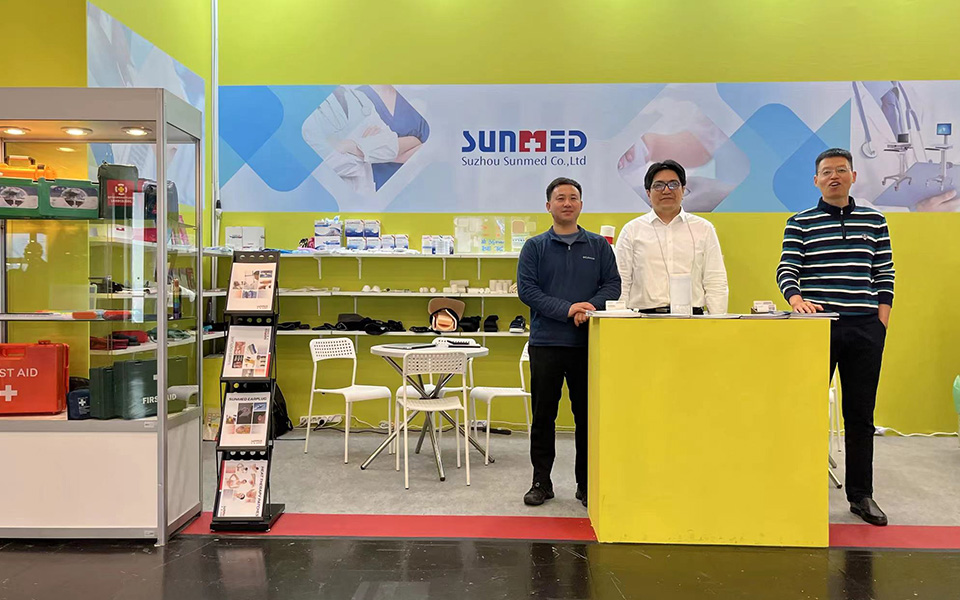
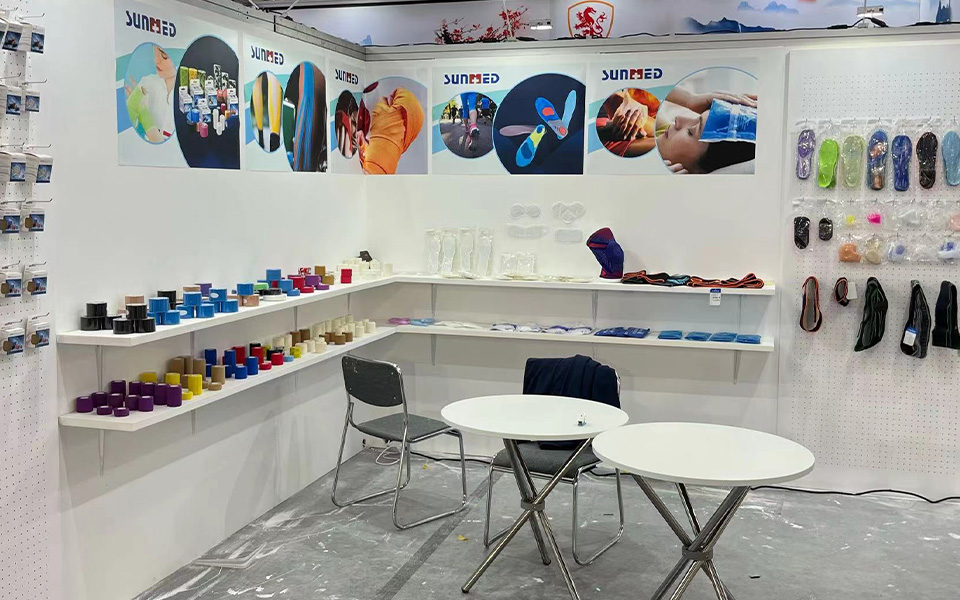
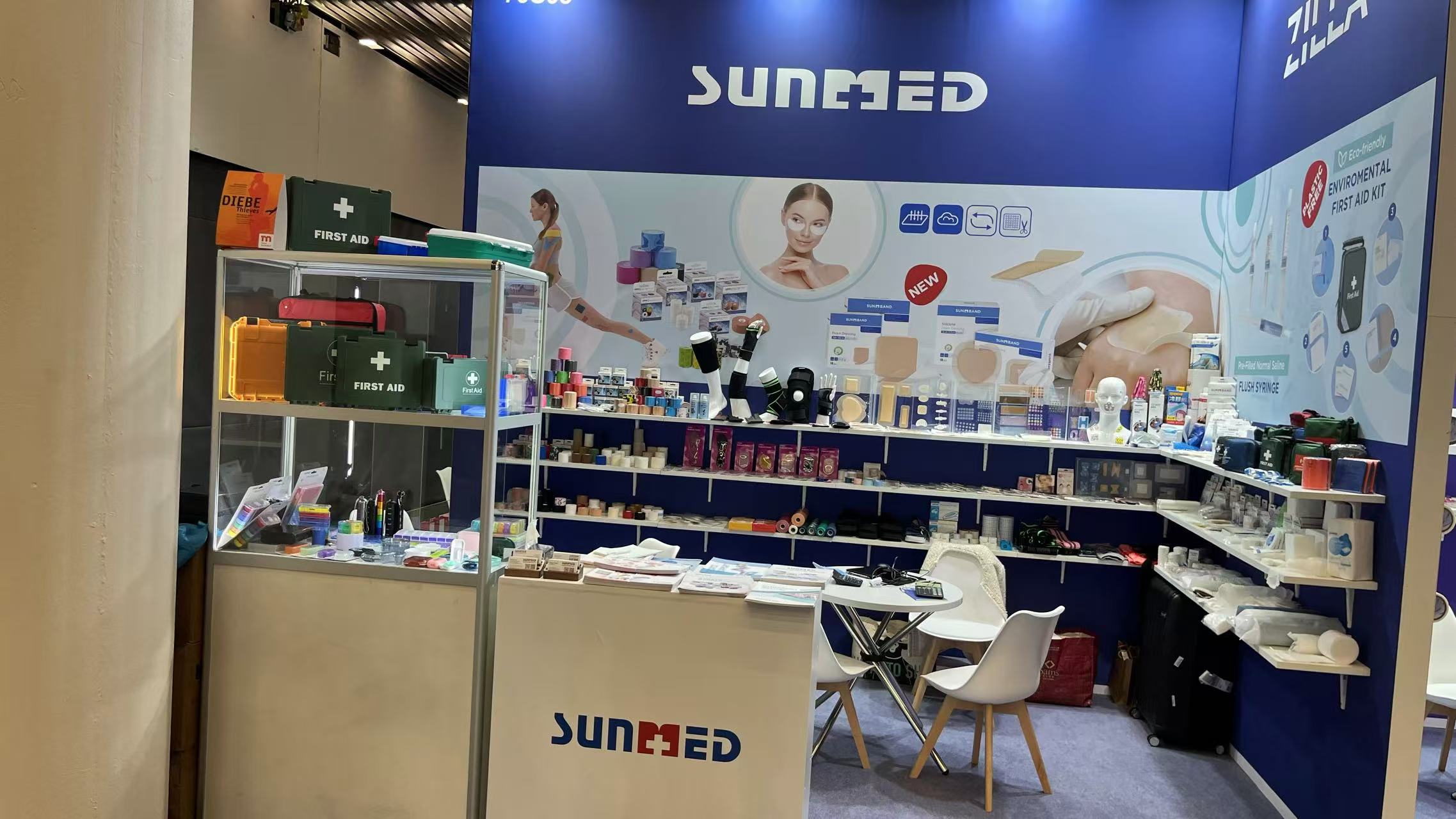
Suzhou Sunmed Co., Ltd. is a professional manufacturer and exporter of first-aid, medical, and healthcare products in China. The company operates multiple production bases in Jiangsu, Zhejiang, and Anhui Province. Its product scope includes wound dressings, medical gauze, bandages, medical tape, medical cotton, non-woven products, sports support products, family healthcare items, pill boxes, hot and cold packs, disposable syringes, catheters, surgical consumables, and other medical supplies.
This broad manufacturing background is relevant to the Prescription Medication Wallet Pill Box because it demonstrates experience across both medical consumables and consumer healthcare products. A supplier familiar with hospitals, first-aid distributors, retail channels, and family-care products can better understand the importance of consistent quality, clear specifications, dependable supply, and practical product design.
The company reports approximately 30 years of experience in the medical device and medical consumables industry. During this period, it has developed production and export capabilities for a wide range of healthcare products. Such experience can support more effective communication with importers, distributors, purchasing departments, and private-label customers.
In 2008, the company established its first-aid factory. In 2021, it established an additional factory for kinesiology tape, cohesive bandages, and elastic adhesive bandages to respond to growing customer demand. These investments indicate an approach centered on dedicated production capabilities and ongoing expansion of product categories.
Quality Control and Production Management
Quality control is especially important for products used in medication routines. Although a pill organizer is not itself a medicine or a treatment device, defects such as broken lids, inaccurate assembly, sharp edges, contaminated surfaces, or poor-fitting parts can affect user confidence and product performance.
Suzhou Sunmed reports a professional quality-control team comprising hundreds of personnel. The company states that its inspection procedures follow ISO 13485:2016 requirements. ISO 13485 is an internationally recognized quality-management standard associated with medical devices and related organizations. Applying structured quality procedures can help support traceability, process consistency, documentation, inspection, and corrective action.
For a pill organizer, a quality-management approach may include checks of incoming materials, plastic component appearance, compartment formation, lid alignment, snap closure, wallet assembly, dimensions, labeling, packaging, and finished-product condition. Exact inspection points may vary according to customer specifications and applicable market requirements.
Consistent inspection is also important for large-volume orders. The stated minimum order quantity is 5,000 pieces, meaning that buyers may receive products for multiple retail locations, a national distribution program, or a private-label launch. Reliable batch consistency helps reduce variation between units and supports smoother downstream operations.
OEM and Export Capabilities
Suzhou Sunmed serves international customers and reports exports to more than 60 countries. Its markets include Europe, Southeast Asia, Africa, and Oceania. The company identifies customers in hospitals, first-aid supply businesses, supermarkets, retail sports shops, and other healthcare channels.
For international buyers, experience in export markets can be valuable because product orders involve more than manufacturing. Packaging, shipping documents, communication, quality records, production schedules, and destination-market expectations must also be coordinated. A supplier with established international activity may be better positioned to support these requirements.
The company offers medical consumables and healthcare products for wholesale and OEM cooperation. Buyers interested in the pill organizer may discuss packaging design, labeling, color, logo placement, carton configuration, inspection standards, and target-market requirements directly with the supplier. Any customization should be confirmed before production begins.
The stated company address is 20F-2001, Gold River Center Building, No. 88 Shishan Road, Suzhou, Jiangsu Province, China, 215011. Sales contact information includes [email protected] and telephone numbers +86-512-68785855 and +86-13812795048.
Compliance and Market Suitability
The company states that most of its products are CE certified and that its Suzhou factories comply with FDA requirements. Buyers should request the specific certificate, declaration, test report, or compliance documentation applicable to the Prescription Medication Wallet Pill Box and the destination market. Compliance status can vary by product, intended use, labeling, and country.
Importers should independently confirm whether a pill organizer is classified as a general consumer healthcare product, a medical accessory, or another category under local regulations. Requirements may include material declarations, packaging information, language translations, product testing, labeling rules, and restrictions on medical claims.
Marketing language should remain accurate. The product can be described as a pill organizer, medication wallet, supplement container, or weekly dose-management aid. It should not be promoted as a device that diagnoses, treats, cures, or prevents disease. It also should not be described as guaranteeing medication adherence, because safe use depends on the user's schedule, health instructions, and personal circumstances.
Packaging and Wholesale Opportunities
The Prescription Medication Wallet Pill Box is suitable for several distribution channels. Pharmacies may offer it alongside prescription services or family-care products. Supermarkets can place it in personal healthcare, travel, or wellness sections. Medical supply distributors may include it in home-care product ranges. First-aid suppliers and elder-care businesses may also find it relevant.
For online sellers, the 28-compartment configuration, compact dimensions, PU wallet, translucent PP sections, and snap-shut lids are clear product features that can be explained in product listings. Accurate photography and dimensions are important because customers need to understand the physical size and compartment capacity before purchase.
For private-label buyers, the wallet format can provide a suitable surface for brand presentation, subject to manufacturer approval and minimum order requirements. A buyer should confirm whether the PU cover, packaging, labels, instruction cards, and cartons can be customized. Production lead time, sampling, artwork approval, and shipping terms should also be agreed in writing.
Because the MOQ is 5,000 pieces, the product is particularly suitable for established distributors, chain retailers, healthcare brands, or organizations planning a larger launch. Buyers with smaller requirements may wish to ask whether mixed orders, stock availability, or alternative quantities are possible.
Product Selection and Buyer Checklist
Before placing an order, buyers should confirm the exact product configuration. The supplied information identifies 28 translucent compartments and a PU bag with an internal PP box. Buyers should verify whether the compartments are labeled, whether the printed markings can be customized, and whether the wallet is supplied in a particular color.
Packaging details should also be clarified. Important questions include the number of units per inner box, the number of inner boxes per carton, carton dimensions, gross weight, net weight, and loading quantity. These details affect warehouse planning and transportation costs.
Material and compliance documents should be requested where required. Buyers may ask for material declarations, BPA-related documentation, product inspection records, quality certificates, and applicable test reports. If the product will be sold in a regulated market, the importer should confirm the documentation needed before production.
Samples are recommended before a large order. A sample evaluation can confirm compartment size, lid performance, wallet appearance, stitching or assembly quality, dimensions, packaging, and ease of use. It also gives the buyer an opportunity to test the product with common pill and fish oil capsule sizes.
| Buyer review point |
Why it matters |
| Compartment size |
Confirms that intended tablets, capsules, and softgels fit properly. |
| Lid closure |
Helps assess spill resistance and ease of everyday operation. |
| Wallet construction |
Confirms appearance, portability, and overall assembly quality. |
| Dimensions |
Supports product listing accuracy and packaging planning. |
| Material documentation |
Helps meet internal quality and market requirements. |
| Packaging configuration |
Supports warehousing, shipping, and retail preparation. |
| Customization options |
Determines suitability for private-label or OEM programs. |
| Production lead time |
Helps coordinate launch dates and inventory planning. |
Safe and Responsible Use
The organizer should be filled only according to a verified medication or supplement schedule. Users should not change doses, timing, or medication combinations simply because the organizer has multiple compartments. Any uncertainty should be discussed with a physician or pharmacist.
Some medications should remain in their original blister packs or containers because of moisture sensitivity, light sensitivity, stability requirements, identification needs, or legal instructions. The product should therefore be used as appropriate for the specific medicine rather than as a universal replacement for original packaging.
The organizer should be kept dry and away from excessive heat. It should be inspected regularly for cracks, loose lids, damaged hinges, stains, or contamination. If the box no longer closes securely, it should be replaced. Old or unidentified pills should never be consumed simply because they remain in a compartment.
Users should avoid storing medications belonging to different people in the same organizer unless the sections are clearly identified and the arrangement is supervised. The wallet should be stored out of the reach of children and pets. Travel users should also consider carrying prescriptions, labels, or original packaging when required by transport rules or healthcare guidance.
Why This Product Fits Modern Family Healthcare
Family healthcare increasingly includes medication routines, nutritional supplements, preventive products, and home-care planning. A compact pill organizer supports this environment by giving users a visible and repeatable method for preparing daily doses. It can be used at home, taken to work, packed for travel, or provided to a caregiver.
The product's main value lies in its combination of capacity and portability. A small one-day box may not provide enough room for a complex weekly schedule, while a large multi-bottle system may be inconvenient to carry. Twenty-eight compartments offer a practical middle ground for many users.
The PU wallet also positions the product beyond a basic plastic tray. It can be presented as a personal healthcare accessory with a neat, organized appearance. For manufacturers and distributors, this makes it appropriate for both medical supply channels and general wellness retail.
When supported by responsible instructions, accurate labeling, appropriate material selection, and consistent quality control, the product can contribute to a more organized medication experience without making medical promises that it cannot support.
Q&A
What is the main purpose of this pill box?
The main purpose is to organize pills, capsules, fish oil softgels, vitamins, and similar products into 28 separate compartments. The weekly structure can support four planned dosing periods per day across seven days.
How many compartments does the organizer have?
The organizer has 28 translucent compartments. This configuration is commonly used for four daily periods over one week, although the exact arrangement depends on the user's schedule.
What materials are used?
The outer wallet is made from PU, and the internal pill box is made from PP. The product information describes the plastic as durable and BPA-free.
What are the product dimensions?
The listed product size is 19 x 14 x 3.5 cm. Buyers should confirm final production tolerances and packaging dimensions with the supplier before creating retail artwork.
Can it be used for fish oil capsules?
It is designed for organizing fish oil and similar supplements, but users should confirm that the size and number of softgels fit comfortably in each compartment. The lid should close fully without pressure or overfilling.
Does the organizer replace original medicine packaging?
No. Some medicines must remain in their original packaging because of stability, identification, legal, or storage requirements. Users should follow the medication label and consult a pharmacist when uncertain.
Are the compartments individually closed?
Yes. The product is described as having individual snap-shut lids intended to help keep contents separated and reduce spills during normal handling.
Is it suitable for travel?
The compact wallet design is intended to be travel-friendly. However, travelers should consider medication-storage conditions, airline or border requirements, prescriptions, and the need to retain original labels or packaging.
What is the minimum order quantity?
The listed minimum order quantity is 5,000 pieces. Buyers should contact the supplier to confirm current MOQ policies, sample arrangements, customization conditions, and production schedules.
Can the product be customized?
Potential OEM options should be discussed directly with Suzhou Sunmed Co., Ltd. Buyers may ask about wallet colors, labels, logos, packaging, instruction cards, carton configuration, and other specifications.
What quality-management experience does the manufacturer have?
Suzhou Sunmed Co., Ltd. reports approximately 30 years of experience in medical devices and medical consumables. It also reports a large quality-control team, procedures aligned with ISO 13485:2016, multiple production bases, and exports to more than 60 countries.
What should buyers check before ordering?
Buyers should evaluate samples, compartment capacity, lid closure, wallet assembly, dimensions, materials, packaging, compliance documents, customization options, production lead time, and shipping requirements. These checks help ensure that the product matches the intended market.
Conclusion
The Prescription Medication Wallet Pill Box for Fish Oil is a compact weekly organizer designed to make medication and supplement routines more structured. Its 28 translucent compartments support four daily periods across seven days, while individual snap-shut lids help keep contents separated and reduce the risk of spills. The PU wallet and PP box provide a practical combination of portability, visibility, and everyday durability.
Compared with simple containers, open trays, or multiple loose bottles, this product offers a more complete organization system for users who manage several daily pills or supplements. Its design is relevant to families, travelers, caregivers, pharmacies, healthcare retailers, and wholesale distributors.
The product is supported by the manufacturing capabilities of Suzhou Sunmed Co., Ltd., a long-established Chinese supplier of medical consumables, first-aid products, sports support items, and family healthcare products. The company's reported production bases, export experience, quality-control personnel, ISO 13485:2016-oriented procedures, and OEM capabilities provide a foundation for large-volume supply and international cooperation.
For the best results, buyers should confirm product specifications, documentation, packaging, customization, and market requirements before ordering. End users should use the organizer responsibly, follow professional medication instructions, and retain original packaging whenever it is required. Used in this way, the pill box can serve as a practical aid for organized, portable, and more convenient weekly medication management.
References
1. Product specification information for Prescription Medication Wallet Pill Box for Fish Oil, model DC660182.
2. Manufacturer-provided material information: PU outer wallet and PP internal pill box.
3. Manufacturer-provided product dimensions and minimum order quantity for model DC660182.
4. ISO 13485:2016, Medical devices — Quality management systems — Requirements for regulatory purposes.
5. General pharmaceutical storage and medication-management guidance from professional pharmacy practice.
6. General principles for responsible use of weekly medication organizers and supplement containers.
7. Manufacturer profile and company information provided by Suzhou Sunmed Co., Ltd.

 English
 Español
 русский
 Français
 Deutsch
 italiano
 By Admin