Finger injuries are common in homes, workplaces, clinics, sports environments, and healthcare facilities. Minor cuts, abrasions, nail damage, post-procedure sensitivity, and soft-tissue injuries often require a dressing that is easy to apply, comfortable to wear, and sufficiently secure for everyday movement. A tubular finger bandage with an applicator provides a practical solution by combining a soft elastic tubular structure with a dedicated applicator that helps position the bandage accurately over the injured finger.
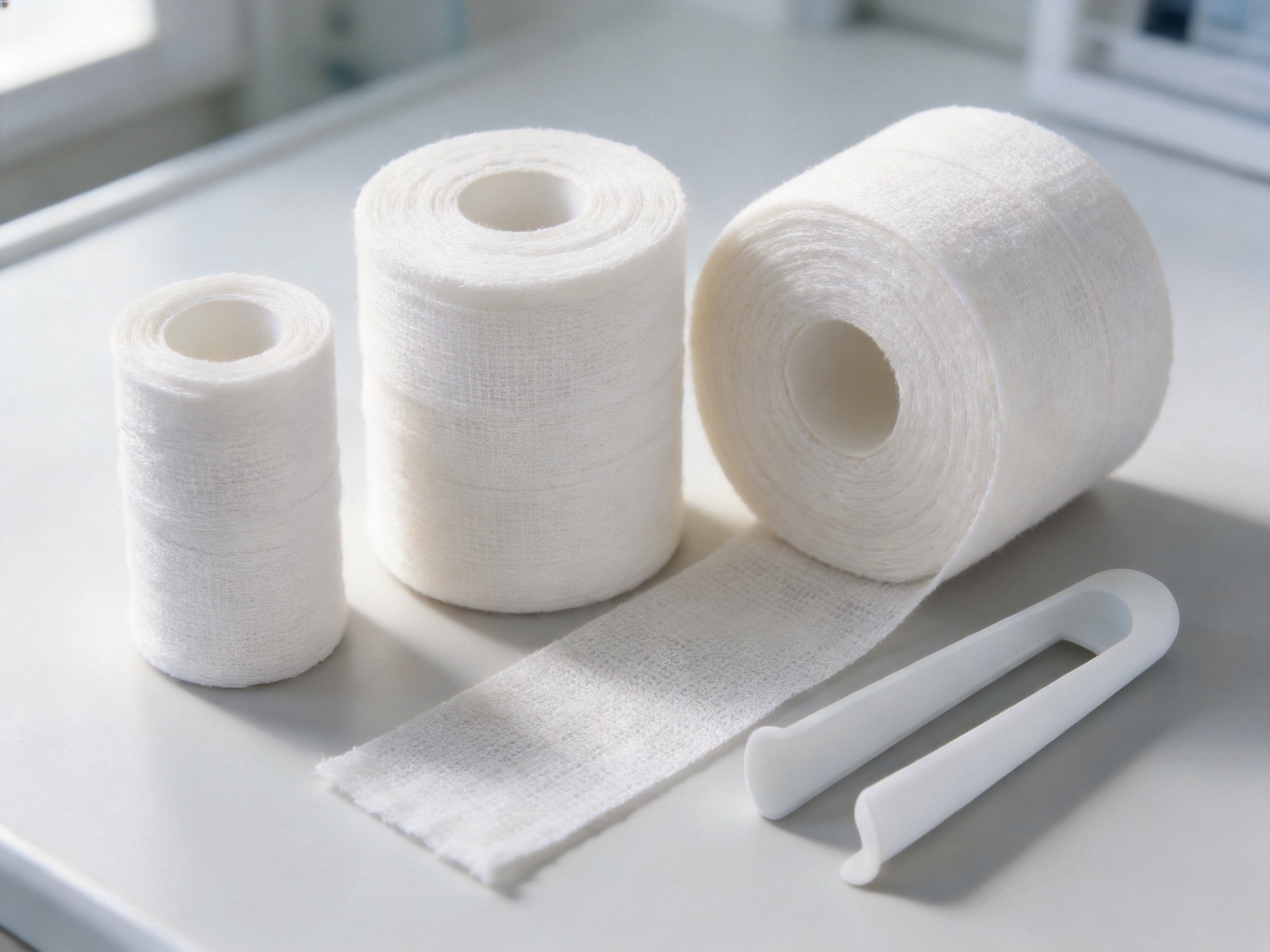
This type of bandage is designed for users who need more than a simple adhesive strip but do not necessarily require a bulky, rigid, or heavily layered dressing. Its tubular shape creates gentle support around the finger, while the open construction allows ventilation and helps reduce the uncomfortable feeling commonly associated with tightly wrapped dressings. The product is made of bleached cotton yarn and is washable, breathable, comfortable, and non-allergic according to the supplied product specifications.
The product is identified by the series codes SMD-241001, SMD-241002, and SMD-241003. These versions are supplied in different widths, making it possible to select an appropriate option for different finger sizes, injury locations, and dressing requirements. Each version is supplied in a 4-meter roll, with a listed 40-centimeter measurement in the product information, allowing healthcare professionals, distributors, and end users to prepare multiple applications from one unit.
Understanding Tubular Finger Bandages
A tubular bandage is a knitted or woven sleeve-shaped dressing material. Unlike a conventional flat gauze roll, it is formed as a continuous tube. This design enables the material to be placed over a finger without requiring complicated wrapping techniques. Once positioned, the bandage gently conforms to the finger and helps hold a dressing or protective layer in place.
For finger care, the tubular format is particularly useful because fingers are narrow, mobile, and irregularly shaped. Conventional wrapping can become loose around the joints, create uncomfortable folds, or interfere with bending. Adhesive bandages may also irritate sensitive skin, lose adhesion after contact with water, or fail to cover a damaged nail effectively. A tubular finger bandage offers an alternative that relies on elasticity and shape retention rather than adhesive contact with the skin.
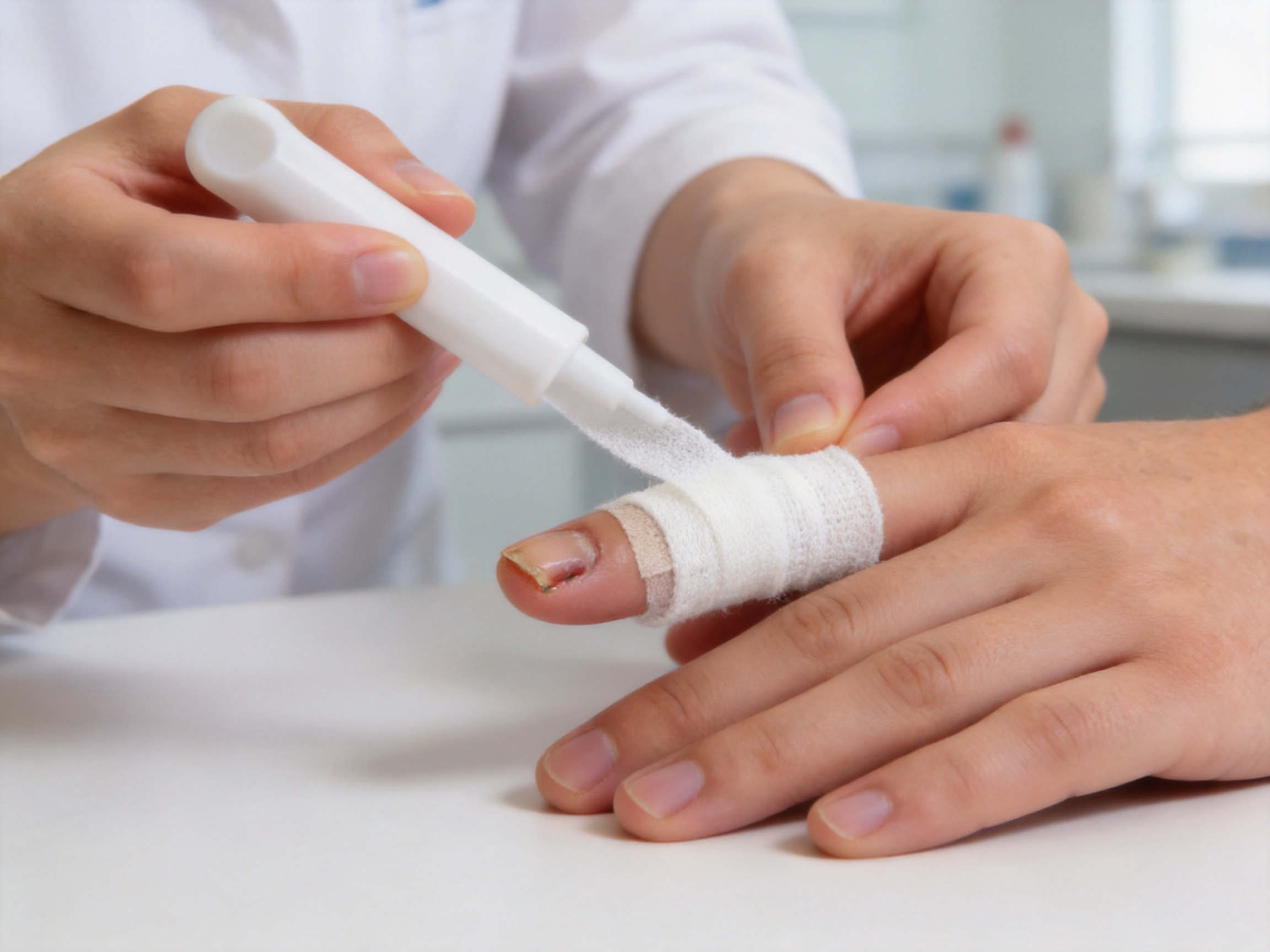
The included applicator is an important part of the product concept. Applying a narrow tubular sleeve directly over a tender finger can be difficult, especially when the user must avoid touching an open wound or disturbing a primary dressing. The applicator helps expand and guide the tubular material during placement. This can support a more controlled application and may reduce unnecessary pulling, friction, and contact with the injured area.
The product is categorized as a gauze bandage and is suitable for protective dressing applications. It is not described as a sterile wound dressing, an antimicrobial dressing, a hemostatic product, or a substitute for clinical treatment. If a wound is deep, heavily contaminated, infected, associated with a fracture, or accompanied by severe pain or loss of movement, professional medical assessment should be obtained.
Product Specifications and Available Sizes
The product family consists of three listed models. The main difference between them is width. Selecting the correct width helps ensure that the bandage sits comfortably without excessive compression or unwanted looseness.
| Code |
Listed Description |
Typical Selection Consideration |
| SMD-241001 |
1.6 inches x 4 meters / 40 centimeters |
Suitable where a narrower tubular format is preferred for smaller fingers or focused coverage. |
| SMD-241002 |
2 inches x 4 meters / 40 centimeters |
A versatile intermediate option for a range of finger protection applications. |
| SMD-241003 |
2.4 inches x 4 meters / 40 centimeters |
Suitable where a wider sleeve is needed for larger fingers or broader protective coverage. |
The supplied product information presents the dimensions in the format “4m/40cm.” Buyers should confirm the intended package configuration, roll length, cut length, and labeling requirements during commercial discussions, particularly when preparing private-label packaging or regulatory documentation. Width selection should also be confirmed against the intended user group and application method.
Because the bandage is supplied as a continuous tubular material, it can be cut to the required length. This flexibility may help reduce waste and makes the product adaptable to different finger lengths and dressing thicknesses. A distributor can therefore offer one product family for multiple first aid, wound care, sports support, and household healthcare situations.
Material Construction and User Comfort
The bandage is made of cotton yarn and is bleached. Cotton is widely used in medical and healthcare textile products because it is soft, familiar to users, and capable of providing a comfortable contact surface. In a tubular structure, cotton yarn can create a flexible sleeve that follows the shape of the finger while allowing air movement through the textile.
Comfort is a major consideration for finger dressings. Fingers are involved in nearly every daily activity, including typing, writing, handling tools, dressing, eating, and personal care. A dressing that is too stiff, abrasive, or bulky can encourage the wearer to remove it prematurely. The stated comfortable and breathable construction is therefore relevant not only to patient satisfaction but also to consistent use.
The product is also described as non-allergic. This wording indicates that the material is intended to be gentle and suitable for users who may be concerned about irritation associated with some adhesive products. However, individual sensitivity varies, and no textile product can guarantee that every user will experience the same response. Users should discontinue use and seek medical advice if redness, itching, swelling, pain, or other signs of irritation appear.
Washability provides another practical benefit. A washable tubular bandage can be cleaned and reused when appropriate, helping users manage routine protective support without relying on a new adhesive strip for every application. Reuse should always follow suitable hygiene practices. A bandage that has contacted blood, wound drainage, contaminated surfaces, or an infected area should be handled according to applicable clinical and disposal procedures rather than casually reused.
The breathable cotton construction may also help reduce the damp, enclosed feeling that can develop under an impermeable covering. Ventilation is especially valuable when a bandage is worn during ordinary activities or when the surrounding skin needs to remain comfortable. Nevertheless, the wound itself should be monitored, and the dressing should be changed as instructed by a healthcare professional or according to the needs of the injury.

Tubular Bandage Finger Bandage With Applicator Net Elastic Bandage
Protecting Injured Fingers and Damaged Nails
The product is specifically intended to protect injured fingers and damaged nails. Finger injuries may include superficial cuts, abrasions, small areas of skin loss, bruising, minor burns after appropriate first aid, and protection needed after nail trauma. In these situations, the primary requirement is often to shield the affected area from accidental contact while permitting practical movement.
A damaged nail can be particularly sensitive because the nail plate and surrounding tissue may catch on clothing, paper, tools, or other objects. A tubular covering can create a smooth protective layer around the finger and reduce the likelihood of direct knocks. It may also help keep a primary dressing in position when the nail or fingertip is difficult to cover with a standard adhesive bandage.
For a superficial wound, the recommended sequence generally begins with hand hygiene, assessment of the injury, gentle cleaning when appropriate, and application of a suitable primary dressing. The tubular bandage can then be used as a secondary protective layer. It should not be placed over a wound that requires urgent treatment, nor should it replace bleeding control, wound closure, infection management, or specialist care.
The tubular sleeve can be useful in settings where a dressing must remain discreet and flexible. Office workers, students, retail employees, musicians, and athletes may appreciate the lower profile of a textile sleeve compared with a thick immobilizing wrap. In sports environments, it can provide a layer of protection against friction and incidental contact, provided that the injury is suitable for continued activity.
For nail damage, the bandage may help protect the nail from snagging and external pressure. The user should still check for severe bruising, nail-bed injury, deformity, persistent bleeding, loss of sensation, or suspected fracture. These signs may require professional examination and cannot be resolved by a protective sleeve alone.
How the Applicator Improves Application
The applicator distinguishes this product from many ordinary tubular bandage rolls. Small tubular materials can be difficult to open and slide over a finger because the opening may collapse when handled. The applicator is intended to make the process more straightforward by holding or expanding the sleeve as it is positioned.
A controlled application method can reduce the need to pull the bandage sharply. Excessive pulling may create unnecessary pressure, stretch the fabric unevenly, or cause the sleeve to roll at the edge. By guiding the sleeve into place, the applicator may help produce a smoother distribution around the finger.
The applicator can also be valuable for caregivers. A parent, nurse, first aid provider, or retail customer may need to dress an injured finger without causing additional discomfort. The tool provides a more repeatable method than attempting to stretch the bandage open with both hands while simultaneously supporting the injured finger.
For institutional users, a simple applicator may contribute to consistency. When several staff members apply finger dressings, a guided process can help reduce variation in placement. This can be useful in first aid stations, outpatient settings, sports clubs, schools, and occupational health environments.
Users should follow the supplied instructions and avoid forcing the bandage over a swollen finger. If the finger becomes pale, blue, cold, numb, increasingly painful, or visibly compressed, the bandage should be removed or loosened and medical advice should be sought. A protective bandage should never compromise circulation.
Advantages Compared with Conventional Finger Dressings
The tubular finger bandage offers several functional advantages over conventional adhesive strips and manually wrapped flat gauze. These advantages arise from the combination of cotton construction, elastic tubular form, washability, multiple widths, and an applicator.
Less Dependence on Skin Adhesive
Adhesive bandages rely on glue to remain in place. Some users experience irritation from adhesives, while others find that adhesive products lose their grip when exposed to moisture, perspiration, handwashing, or oily skin. A tubular bandage is held by its sleeve-like form and elastic fit, reducing the need for adhesive contact around the finger.
This feature may be valuable for users with sensitive skin or for applications where repeated removal of adhesive strips would be uncomfortable. It can also help preserve skin integrity around the wound, especially when a primary dressing needs to be changed frequently.
More Flexible than Rigid Protective Covers
Rigid finger guards can provide strong protection, but they may restrict movement and create a bulky profile. The elastic tubular design is intended to move with the finger. This makes it more appropriate for light protective coverage where mobility remains important.
The product should not be represented as a splint or immobilization device. Its strength lies in flexible coverage and dressing retention rather than rigid stabilization. This distinction helps buyers select the right product for the right clinical or first aid purpose.
More Convenient than Flat Gauze Wrapping
Flat gauze can be effective, but wrapping a narrow finger evenly requires technique. The gauze may overlap inconsistently, loosen at the joints, or form folds that create pressure points. A tubular format simplifies the basic geometry of application and may reduce the time needed to achieve a neat covering.
Potentially More Economical for Repeated Use
The washable construction and continuous roll format can support economical use in suitable non-contaminated applications. A healthcare distributor may also benefit from offering a product that can be cut to different lengths rather than stocking a separate pre-sized adhesive bandage for every finger dimension.
Better Adaptability through Multiple Widths
The three listed sizes allow buyers to match the material to different requirements. A narrow option may be appropriate for a smaller finger, while a wider option may provide easier coverage around a larger finger or over a secondary dressing. Multiple size options are an advantage over one-size products that may be too tight for some users and too loose for others.
Application in First Aid and Wound Care
In first aid, speed and simplicity are important. A tubular finger bandage can be stored in first aid kits, workplace cabinets, sports bags, school health rooms, and household medicine boxes. Its compact roll format allows a relatively small package to provide multiple dressing applications.
A typical application may involve protecting a cleaned superficial wound after bleeding has been controlled. The user may place a suitable sterile pad or primary dressing over the wound and then use the tubular bandage to hold it in place. The sleeve can also protect the dressing from accidental rubbing during ordinary movement.
For small abrasions, the material may serve as a light covering where direct protection is required. The user should ensure that the bandage is clean and that the wound remains observable as often as necessary. If the bandage becomes wet, dirty, tight, or displaced, it should be replaced or adjusted according to the wound-care plan.
The product may also be used as a secondary retention layer after minor procedures, subject to clinical instructions. Medical professionals should determine whether the material, cleanliness, packaging, and application method are appropriate for the specific procedure. Buyers should not infer sterility unless the product is explicitly supplied and labeled as sterile.
Healthcare facilities can use tubular bandages as part of a broader selection of gauze, non-woven dressings, medical tape, cotton products, adhesive bandages, and wound-care supplies. The product is particularly complementary to dressings that need gentle retention without aggressive adhesive fixation.
Use in Sports and Active Environments
Fingers are vulnerable during ball sports, racket sports, climbing, fitness training, manual work, and recreational activities. Minor skin injuries and nail damage may make it uncomfortable to continue normal movement. A flexible tubular covering can help protect the affected area from contact, friction, and incidental impact.
The cotton material may provide a comfortable interface under gloves or sports equipment. Its tubular shape can also reduce the need for multiple layers of tape. This can be useful when an athlete wants a low-profile protective option that does not significantly interfere with grip or hand movement.
Sports use should be determined by the injury and the rules of the activity. A bandage cannot make an unstable joint safe, eliminate fracture risk, or replace medical evaluation. The user should stop activity if pain increases, movement becomes restricted, swelling worsens, or circulation changes.
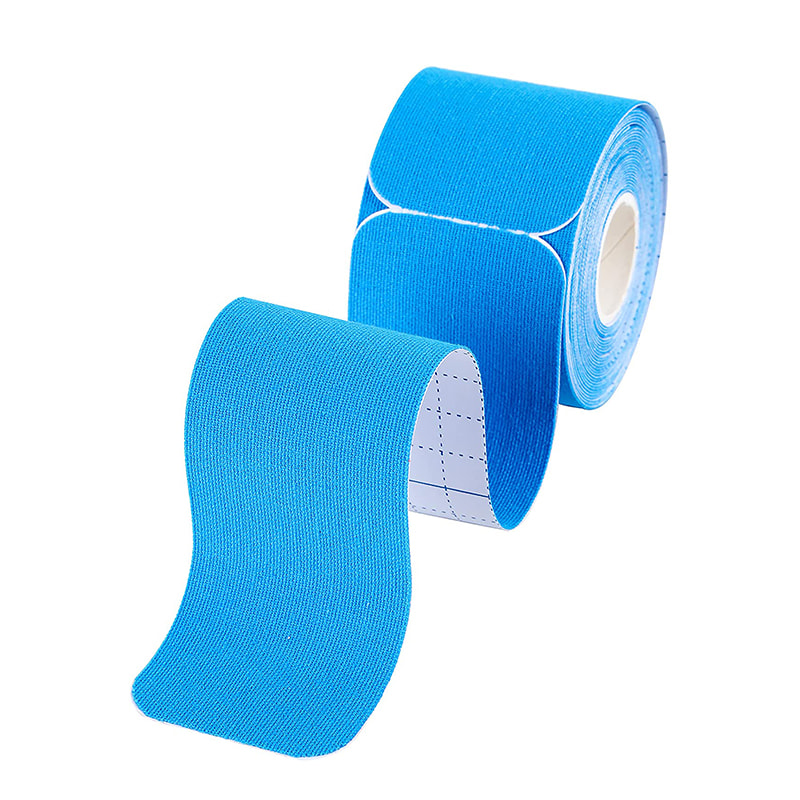
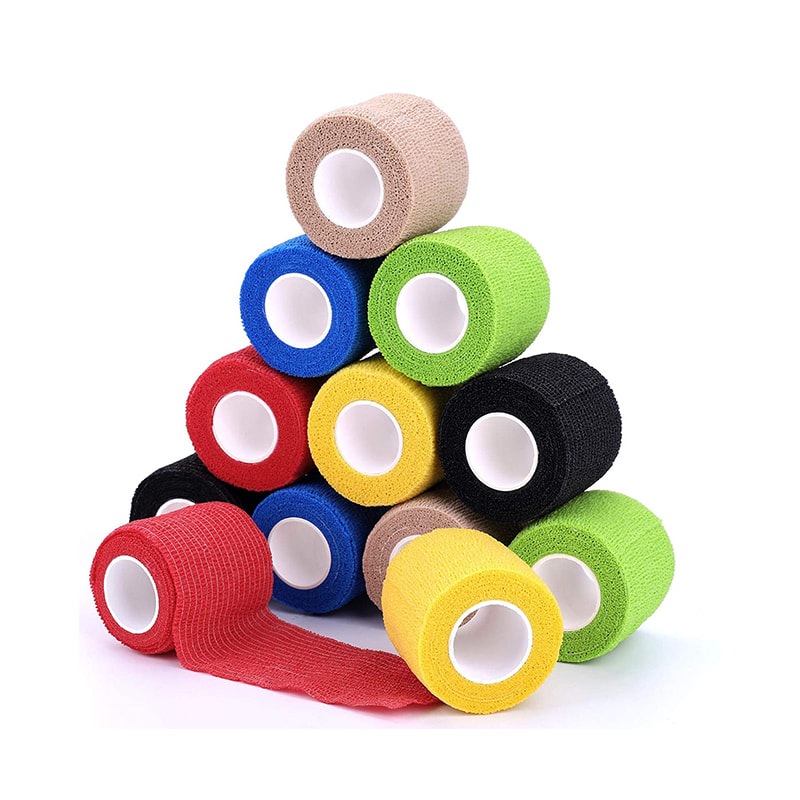
For sports retailers and first aid suppliers, the product can be positioned as part of a broader sports support range. It may be stocked alongside cohesive bandages, elastic adhesive bandages, kinesiology tape, athletic tape, hot and cold therapy products, and general wound dressings. Its washability and multiple widths may offer practical differentiation in a competitive sports-care market.
Quality of Cotton Textile Manufacturing
The performance of a tubular bandage begins with the consistency of its yarn and textile construction. Cotton yarn must be selected and processed to create a material that is soft enough for comfortable use while retaining the elasticity and structural integrity required for application.
Bleaching is part of the listed product description and contributes to a clean, uniform appearance. In a controlled manufacturing environment, textile preparation, bleaching, rinsing, drying, and finishing should be managed to support consistent color, hand feel, cleanliness, and dimensional stability. The exact process parameters should be controlled according to the manufacturer’s internal procedures and applicable product requirements.
Knitting or forming the yarn into a tube requires attention to diameter, edge quality, tension, and uniformity. If the tubular structure is inconsistent, one section may be too tight while another may be too loose. Such variation could affect comfort, positioning, and product reliability. Consistent manufacturing therefore supports both the user experience and the distributor’s confidence in repeat orders.
Cutting and winding operations also influence usability. A roll should be organized so that the material can be pulled or cut smoothly. Edges should be managed to reduce excessive fraying and avoid rough points that could irritate the skin. Packaging should protect the product from dust, moisture, and handling contamination before use.
Although the product is washable, washability depends on the integrity of the textile, the suitability of the cleaning method, and the condition of the material after use. Manufacturers and distributors should provide practical care instructions and should distinguish between washable use and sterile clinical use.
Manufacturing Strengths and Quality Management
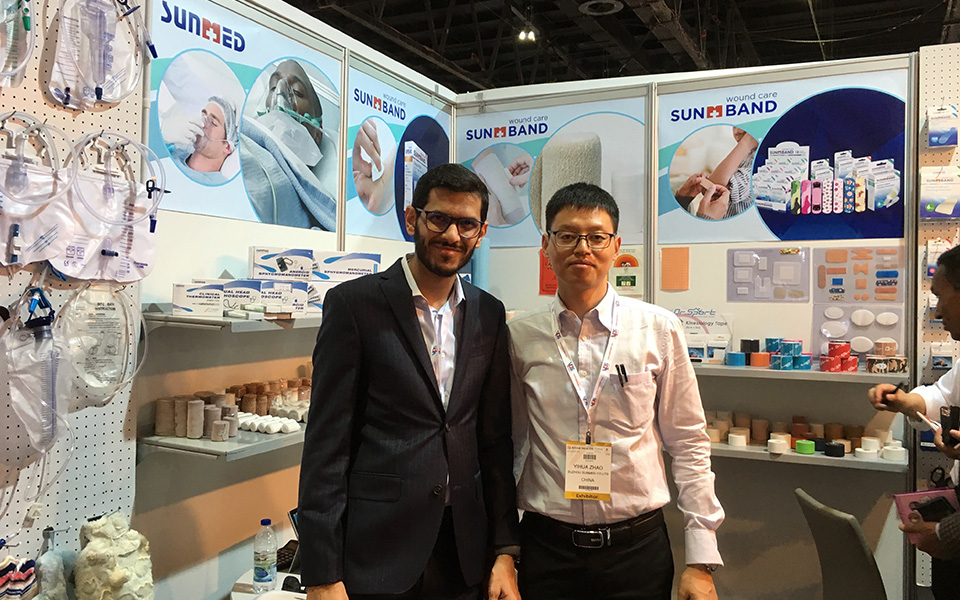
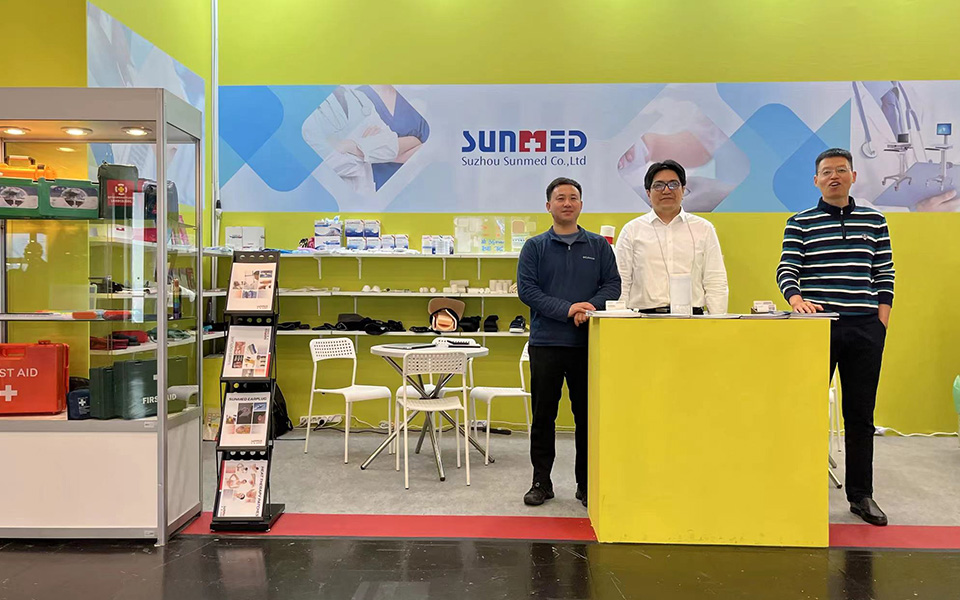
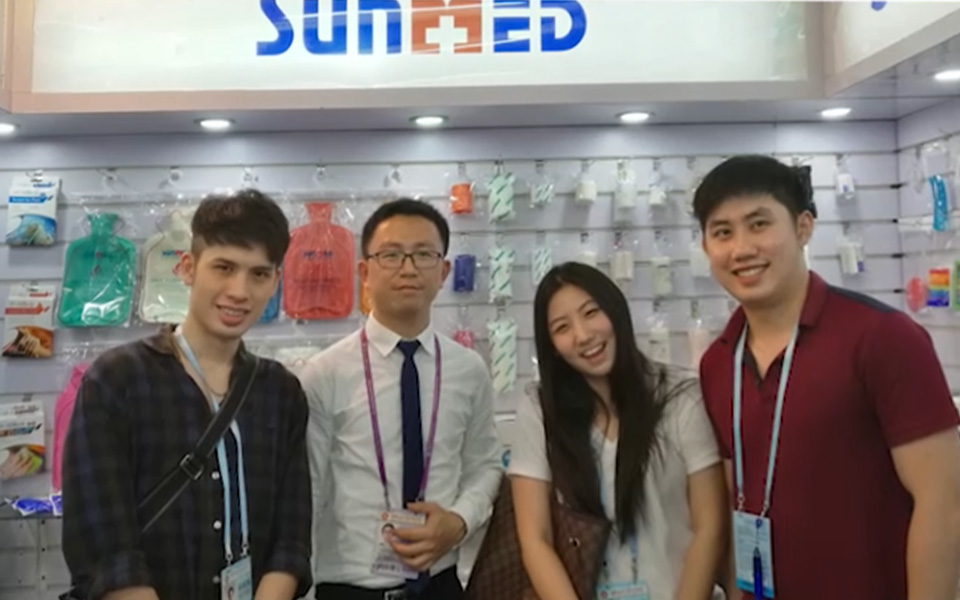
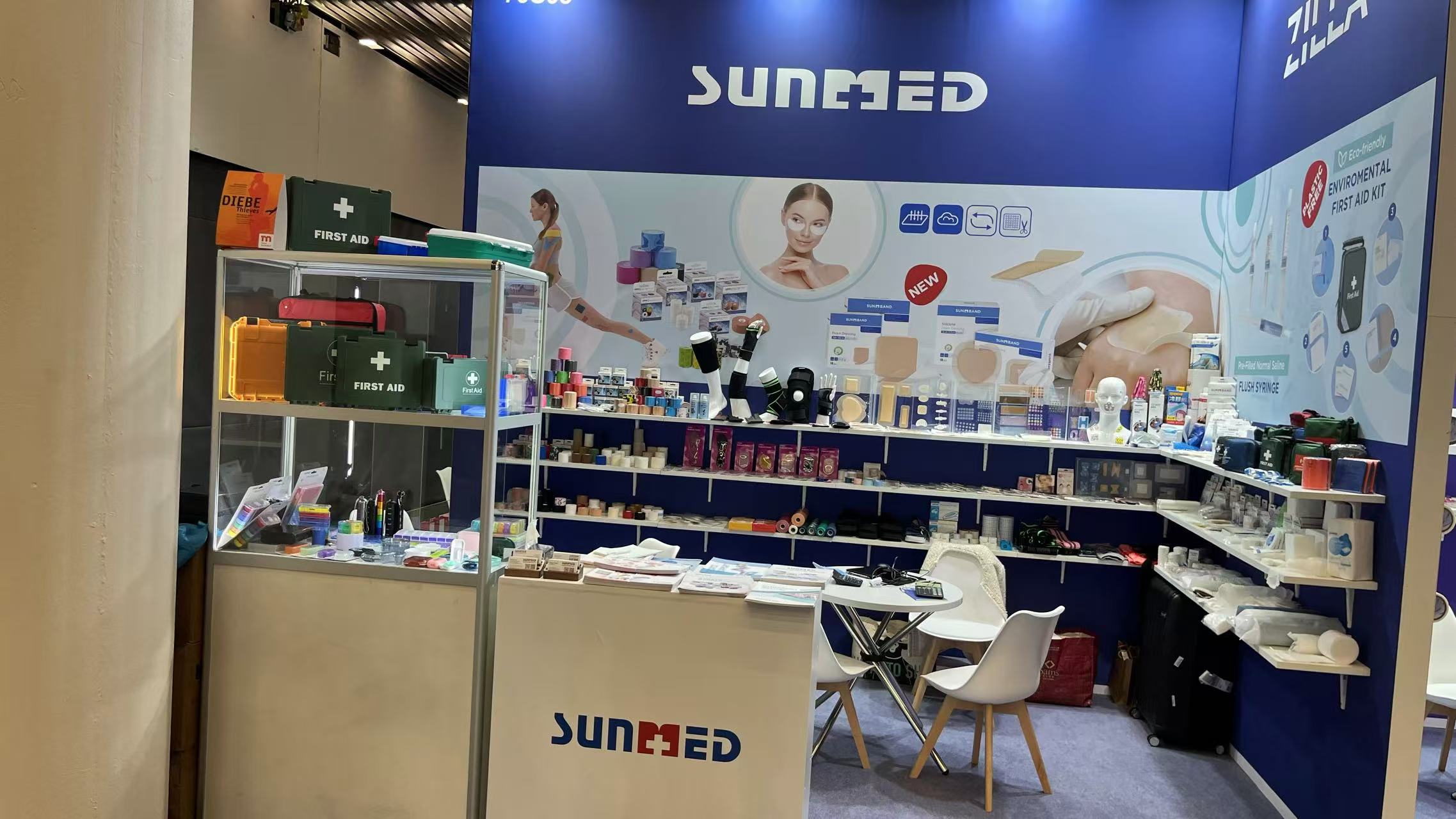
The manufacturer, Suzhou Sunmed Co., Ltd., is described as a professional manufacturer and exporter of first aid, medical, and healthcare products in China. According to the supplied company information, the business operates multiple production bases in Jiangsu, Zhejiang, and Anhui Province and has approximately 30 years of experience in the medical device and medical consumables industry.
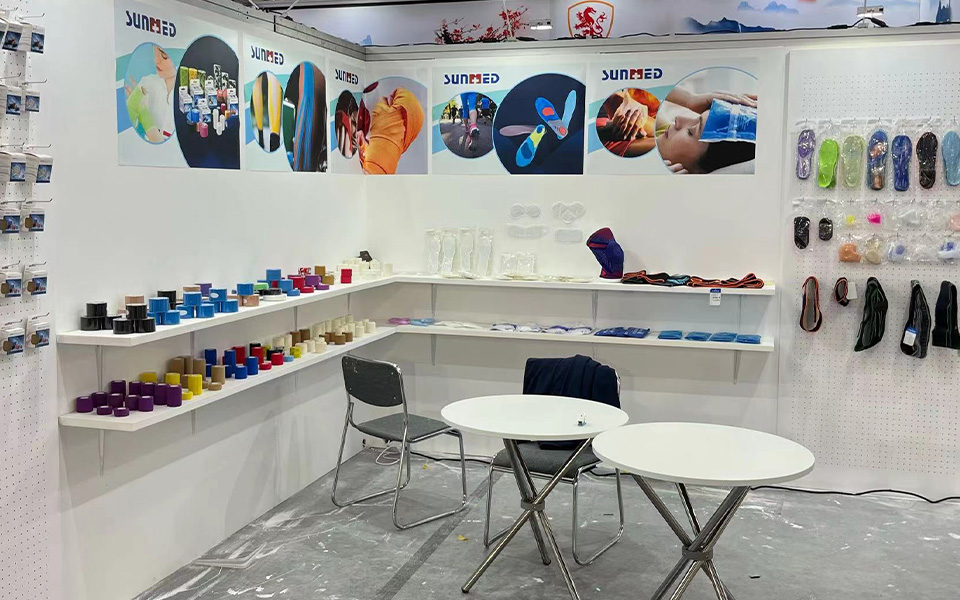
This breadth of experience is relevant to the tubular finger bandage because the product belongs to a wider portfolio of gauze, bandages, medical tape, cotton products, non-woven products, sports bandages, family healthcare goods, medical instruments, and surgical consumables. Experience across related categories can support knowledge of raw-material control, packaging, quality documentation, customer requirements, and export preparation.
The company reports having established a first aid factory in 2008 to meet customer demand and later establishing a dedicated factory in 2021 for kinesiology tape, cohesive bandages, and elastic adhesive bandages. These investments indicate a strategy of developing specialized production capacity rather than relying exclusively on general trading operations.
The supplied information also describes a professional quality control team comprising hundreds of personnel. The company states that its inspection procedures are designed to ensure that products meet ISO 13485:2016 standards. ISO 13485 is widely associated with quality management systems for medical devices. For buyers, this type of quality-system orientation may support more organized production records, inspection practices, corrective actions, and traceability.
The manufacturer further states that most of its products are CE certified and that its Suzhou factories comply with FDA requirements. Certification and compliance status can vary by product, model, market, and intended use, so purchasers should request current certificates, declarations, test reports, and product-specific regulatory documents before making claims or placing regulated-market orders.
Process Control from Material to Finished Roll
A reliable production process for tubular finger bandages may include supplier qualification, incoming yarn inspection, textile formation, bleaching and finishing, dimensional checks, cutting or winding, visual inspection, packaging, and final release. Each stage provides an opportunity to identify defects before the product reaches the customer.
Incoming inspection may consider yarn appearance, cleanliness, composition documentation, and consistency. During textile production, quality personnel may monitor tube width, elasticity, surface condition, edge quality, and continuity. After finishing, samples may be checked for appearance, dimensions, odor, cleanliness, and behavior under intended handling.
Finished goods inspection is especially important for products supplied to international distributors. Buyers may require consistent codes, roll lengths, carton quantities, labels, instructions, lot identification, and export packaging. Clear identification of SMD-241001, SMD-241002, and SMD-241003 can help reduce picking errors and support inventory management.
Quality control should also address the applicator. The applicator must be compatible with the tubular material and should be inspected for defects that could damage the textile or cause discomfort during use. Packaging should keep the applicator paired with the correct bandage and provide understandable directions.
Scalable Production for Wholesale Customers
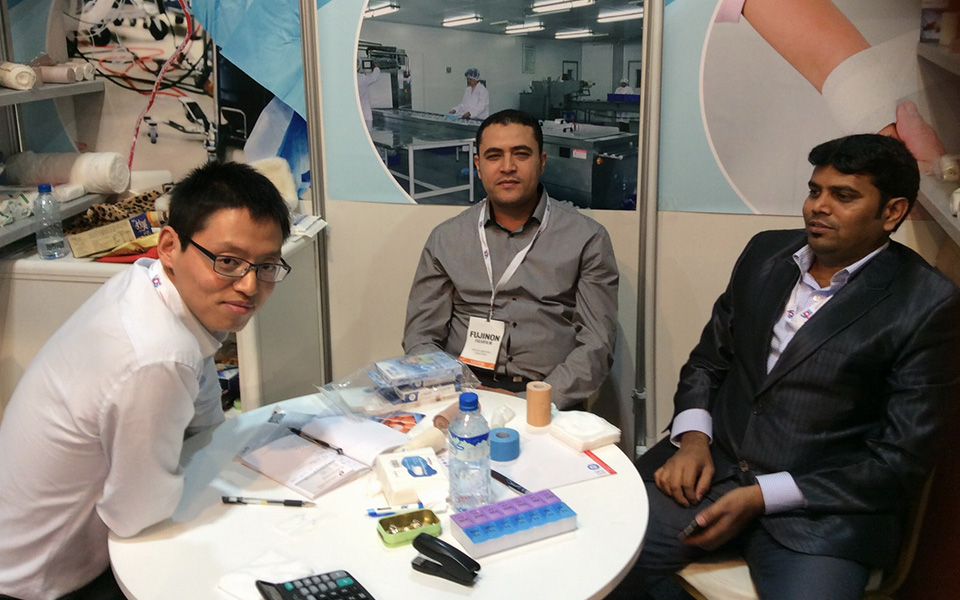
The manufacturer’s export experience may be advantageous for wholesalers, importers, hospital suppliers, first aid distributors, supermarket chains, and retail sports shops. The supplied company profile states that products have been exported to more than 60 countries, including markets in Europe, Southeast Asia, Africa, and Oceania.
International distribution requires more than manufacturing capacity. It may require coordinated communication, packaging adaptation, documentation support, production scheduling, inspection arrangements, and shipment planning. A supplier with experience across multiple regions may be better prepared to discuss these requirements with buyers.
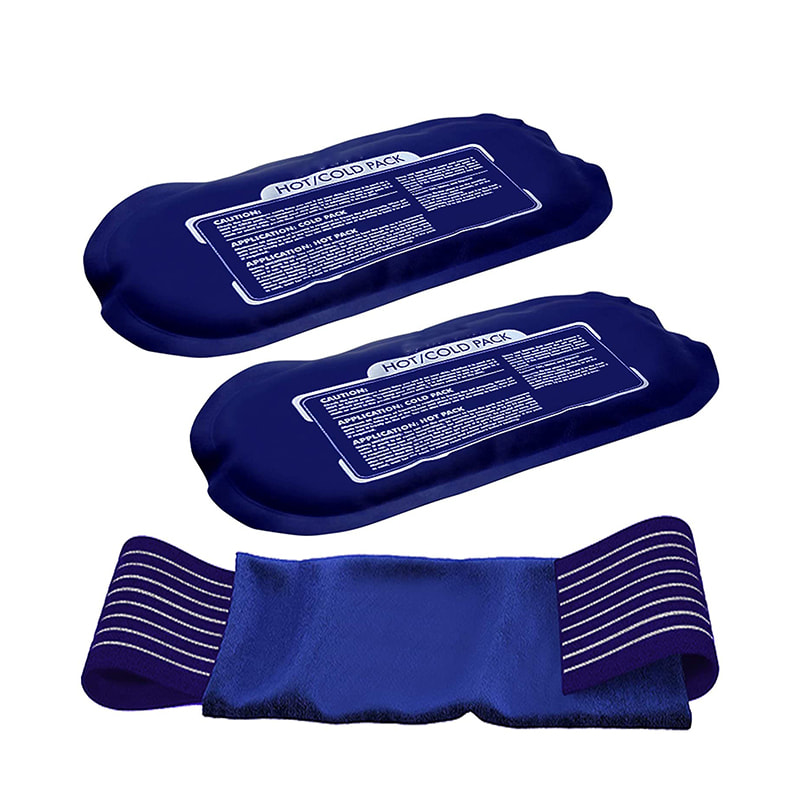
The company’s broad portfolio also creates opportunities for mixed product sourcing. A customer interested in tubular finger bandages may also need gauze swabs, elastic bandages, adhesive bandages, medical tape, cotton wool, sports support products, hot and cold packs, pill boxes, syringes, catheters, or other medical consumables. A multi-category manufacturer can simplify supplier management when quality and commercial terms are suitable.
Packaging, Labeling, and Private-Label Considerations
Packaging should protect the tubular material and applicator during storage, transport, and retail handling. Since the product may be sold through hospitals, first aid suppliers, supermarkets, pharmacies, sports stores, or online channels, packaging must communicate the product identity and intended use clearly.
Important information may include the product name, model code, width, roll length, material description, care information, application instructions, manufacturer details, lot or batch identification, manufacturing date where required, and applicable warnings. The packaging should avoid implying sterility, therapeutic treatment, or performance characteristics that have not been validated.
For private-label buyers, the three size codes provide a practical starting point for a product family. A consistent visual system can help distinguish the 1.6-inch, 2-inch, and 2.4-inch versions. Packaging may also be adapted for different markets, provided that changes remain consistent with the applicable regulatory and labeling requirements.
Retail packaging should explain the purpose of the applicator without overcomplicating the instructions. A clear sequence can show that the user should prepare the wound and any primary dressing first, load or position the tubular material with the applicator, guide it over the finger, and check comfort and circulation.
Storage and Handling Recommendations
Tubular bandages should generally be stored in a clean, dry environment away from excessive heat, direct sunlight, moisture, chemicals, and sharp objects. Cartons should not be compressed in a way that could deform the roll or damage the applicator. Stock rotation based on batch information can help maintain organized inventory.
Distributors should avoid storing the product next to strong-smelling substances or materials that could transfer contamination. Healthcare facilities should keep unopened products in their original packaging until needed. Once opened, the remaining roll should be protected from dust and handled with clean hands or appropriate protective measures.
Before use, inspect the material for visible dirt, damage, excessive fraying, discoloration, or packaging compromise. Do not use a product that appears contaminated or has been stored in unsuitable conditions. These basic steps help preserve the intended benefits of the cotton textile and applicator.
Safe and Effective Application Principles
Before applying the bandage, assess the finger. Severe bleeding, deep or gaping wounds, exposed bone or tendon, major swelling, loss of sensation, severe pain, deformity, a crushed nail, or a suspected fracture requires professional attention. The tubular bandage is intended for protective support and should not delay appropriate treatment.
Clean the surrounding area according to suitable first aid practice and apply a primary dressing if required. Select the width that provides a comfortable fit without excessive pressure. Prepare the applicator and place the tubular bandage according to the product instructions.
Guide the bandage smoothly over the finger. Avoid twisting the sleeve or creating a narrow rolled edge. Once in place, check that the finger remains warm and normally colored and that the user can move it as appropriate. The bandage should feel secure but not constricting.
Monitor the dressing after application. Replace or adjust it if it becomes wet, dirty, loose, excessively stretched, or uncomfortable. Seek medical advice if signs of infection develop, including increasing redness, warmth, swelling, pus, worsening pain, or fever.
Why This Product Is Suitable for Professional Buyers
Professional buyers evaluate more than the appearance of a medical textile. They consider product consistency, size availability, material suitability, application convenience, packaging options, quality systems, documentation, supply capability, and total cost of ownership. The tubular finger bandage addresses several of these requirements in one product family.
Its three size options support more precise selection than a single universal width. The 4-meter roll format can provide flexible allocation across different applications. The washable cotton construction may appeal to users seeking a reusable support product for suitable situations. The applicator adds functional value and may differentiate the product from standard tubular material sold without an application aid.
For healthcare distributors, the product fits naturally into wound care and gauze bandage categories. For sports distributors, it can be marketed as a light protective support for fingers and damaged nails. For household healthcare retailers, it provides an alternative to adhesive strips and traditional gauze wrapping. This cross-category relevance can help buyers serve several customer groups with one product line.
The manufacturer’s reported experience in first aid, wound care, sports bandages, family healthcare, medical instruments, and surgical consumables may also support broader sourcing discussions. Buyers can evaluate whether consolidating related products with one supplier improves purchasing efficiency, quality coordination, and delivery planning.
Comparison with Common Alternatives
| Product Type |
Primary Strength |
Potential Limitation |
Position of Tubular Finger Bandage |
| Adhesive strip |
Fast, familiar, and often individually packaged. |
May irritate sensitive skin or lose adhesion with moisture. |
Provides non-adhesive tubular retention and flexible coverage. |
| Flat gauze roll |
Versatile and widely available. |
Requires wrapping skill and may loosen or fold. |
Offers a sleeve format that can simplify finger application. |
| Rigid finger guard |
Can provide stronger physical protection. |
May be bulky and restrict movement. |
Offers lighter, flexible coverage rather than rigid immobilization. |
| Elastic adhesive bandage |
Can combine stretch and adhesive retention. |
Adhesive contact may be unsuitable for some users. |
Uses tubular structure and an applicator without relying primarily on adhesive. |
| Disposable pre-cut finger cover |
Convenient for one application. |
May provide less flexibility in length and sizing. |
Continuous roll format can be cut for different requirements. |
This comparison does not mean that one product is universally superior. Each dressing format has a suitable role. The advantage of the tubular finger bandage is its balance of flexibility, comfort, adjustability, and application convenience. It is particularly appropriate when users want light protection and dressing retention without a rigid cover or extensive adhesive use.
Customer Communication and Technical Support
Clear communication is essential when purchasing medical consumables. Buyers should confirm whether the requested product is sterile or non-sterile, whether it is intended for single use or washable reuse, the exact roll configuration, the packaging quantity, and the available documentation.
They should also confirm the target market’s requirements for labeling, product registration, language, symbols, and claims. A supplier may provide general technical information, but the importer or distributor remains responsible for verifying local obligations and ensuring that promotional statements match the approved product documentation.
For product development, buyers may ask about sample availability, color and packaging options, applicator configuration, carton dimensions, minimum order quantities, lead times, inspection procedures, and production capacity. These questions help establish whether the product is suitable for a retail program, institutional tender, or private-label launch.
Supplier communication should also address complaint handling and corrective action. A mature quality system should provide a defined process for recording customer feedback, investigating product issues, identifying affected batches, and implementing corrective measures where necessary.
Environmental and Practical Value
The washable nature of the cotton bandage may provide practical value by reducing the need for frequent replacement in appropriate, non-contaminated applications. Its continuous roll format can also allow users to cut only the amount required. These characteristics may help reduce unnecessary material consumption compared with repeatedly using pre-sized products.
Environmental performance depends on the full product life cycle, including cotton sourcing, bleaching, manufacturing energy, packaging, transport, washing, and disposal. Buyers who prioritize sustainability should request relevant information from the supplier rather than assuming that washability alone establishes a specific environmental benefit.
Packaging optimization may further support efficient logistics. A compact roll with a matched applicator can simplify storage and transportation, while clear product codes can reduce inventory confusion. These operational benefits are important for distributors handling many medical consumable categories.
Recommended Market Positioning
The product can be positioned as a comfortable tubular protective bandage for injured fingers and damaged nails. Its strongest messages are the soft cotton material, breathable construction, washable design, elastic tubular fit, applicator-assisted placement, and availability in three widths.
For first aid channels, the emphasis can be on quick, neat, and flexible protection. For sports channels, the emphasis can be on light support and protection during everyday activity, subject to the seriousness of the injury. For healthcare distributors, the emphasis can be on product-family flexibility, size selection, roll efficiency, and supplier quality management.
Marketing language should remain accurate. The product should not be presented as a cure, a sterile wound treatment, a splint, or a replacement for professional care unless specific evidence and regulatory authorization support those claims. Responsible positioning protects the end user and supports long-term trust with distributors and healthcare customers.
Frequently Asked Questions
What is a tubular finger bandage used for?
It is used to provide flexible protective coverage for injured fingers and damaged nails. It can help hold a primary dressing in place and protect the affected area from friction or accidental contact.
What material is the bandage made from?
The supplied product information states that it is made of bleached cotton yarn. It is described as comfortable, breathable, washable, and non-allergic.
Does the product include an applicator?
Yes. The product is described as a tubular finger bandage with an applicator. The applicator is intended to help guide the tubular material over the finger more easily and consistently.
What sizes are available?
Three codes are listed: SMD-241001 at 1.6 inches, SMD-241002 at 2 inches, and SMD-241003 at 2.4 inches. The listed product information gives each version a 4-meter / 40-centimeter description. Commercial buyers should confirm the exact configuration before ordering.
Can the bandage be washed?
The product is described as washable. Washing and reuse should be limited to appropriate situations and should follow the supplier’s instructions. A bandage exposed to blood, wound drainage, infection, or contamination should not be casually reused.
Is the bandage sterile?
Sterility is not stated in the supplied product information. Buyers should not assume that it is sterile. They should request product-specific documentation and use a sterile primary dressing when required.
Can it replace an adhesive bandage?
It can serve as an alternative for some protective applications, particularly when a non-adhesive tubular format is preferred. However, the most suitable dressing depends on the wound, location, user sensitivity, and clinical requirements.
Can it be used as a splint?
No. The product is a flexible tubular bandage and should not be treated as a rigid splint or immobilization device. Suspected fractures, serious joint injuries, or unstable fingers require professional assessment.
How should the correct width be selected?
The width should provide a secure but comfortable fit around the finger and any primary dressing. It must not be so tight that it affects circulation, and it should not be so loose that it slips or folds. Buyers can evaluate the three listed widths according to their user group and application requirements.
Who may purchase this product?
Potential customers include hospitals, clinics, first aid suppliers, medical distributors, pharmacies, supermarkets, sports retailers, occupational health providers, schools, and household healthcare retailers.
What manufacturing strengths does the supplier report?
The supplier reports approximately 30 years of experience in medical devices and medical consumables, multiple production bases in Jiangsu, Zhejiang, and Anhui Province, a professional quality control team, ISO 13485:2016-oriented inspection procedures, and export experience in more than 60 countries.
Can the product be supplied under a private label?
Private-label possibilities should be discussed directly with the supplier. Buyers should confirm minimum order quantities, packaging artwork, labeling requirements, documentation, lead times, and product-specific regulatory responsibilities.
Conclusion
The tubular finger bandage with applicator is a practical product for flexible protection of injured fingers and damaged nails. Its bleached cotton construction is designed to provide comfort and breathability, while its elastic tubular form supports a secure fit without relying primarily on skin adhesive. The washable design and continuous roll format offer useful flexibility for suitable applications, and the applicator helps make placement more controlled.
Compared with ordinary adhesive strips, flat gauze wrapping, rigid guards, and some elastic adhesive products, this bandage offers a balanced combination of comfort, adaptability, and application convenience. The three available widths—1.6 inches, 2 inches, and 2.4 inches—allow buyers to select a more appropriate option for different users and dressing conditions.
Its value is strengthened by the supplier’s reported experience in first aid, wound care, sports support, family healthcare, medical instruments, and other medical consumables. The company’s multiple production bases, specialized factory investments, quality control resources, ISO 13485:2016-oriented procedures, and international export experience may provide a strong foundation for wholesale, institutional, retail, and private-label cooperation.
As with every medical consumable, correct positioning and responsible use are essential. The product should be used for appropriate protective applications, with wounds assessed and treated according to their severity. When supported by accurate labeling, suitable packaging, sound quality control, and clear user instructions, the tubular finger bandage can be a useful addition to professional wound-care, first aid, sports support, and household healthcare product ranges.
References
1. Product specification information supplied for Tubular Bandage Finger Bandage with Applicator Net Elastic Bandage, codes SMD-241001, SMD-241002, and SMD-241003.
2. Manufacturer-provided company profile and manufacturing information for Suzhou Sunmed Co., Ltd.
3. ISO 13485:2016, Medical Devices—Quality Management Systems—Requirements for Regulatory Purposes.
4. General principles of first aid wound assessment, dressing selection, infection prevention, and circulation monitoring.
5. General textile product considerations concerning cotton yarn, tubular construction, dimensional consistency, washing, storage, and packaging.

 English
 Español
 русский
 Français
 Deutsch
 italiano
 By Admin