Athletic tape is a simple-looking product with an important role in sports protection, first aid, rehabilitation, and everyday support. For boxers and other athletes, the right tape can help stabilize fingers, protect the hands, support the wrist, and improve confidence during demanding training sessions. However, not every sports tape provides the same combination of adhesion, comfort, tearability, flexibility, and manufacturing consistency.
White Athletic First Aid Sport Tape for Boxing, model DC660084, is designed as a practical cotton athletic tape for hand, wrist, ankle, and general sports-support applications. It is available in several widths and lengths, including common formats suitable for individual athletes, sports clubs, medical distributors, first aid suppliers, retail stores, and professional buyers. Its easy-tear construction allows users to apply the tape without scissors, while its cotton substrate provides a soft and comfortable feel during extended use.
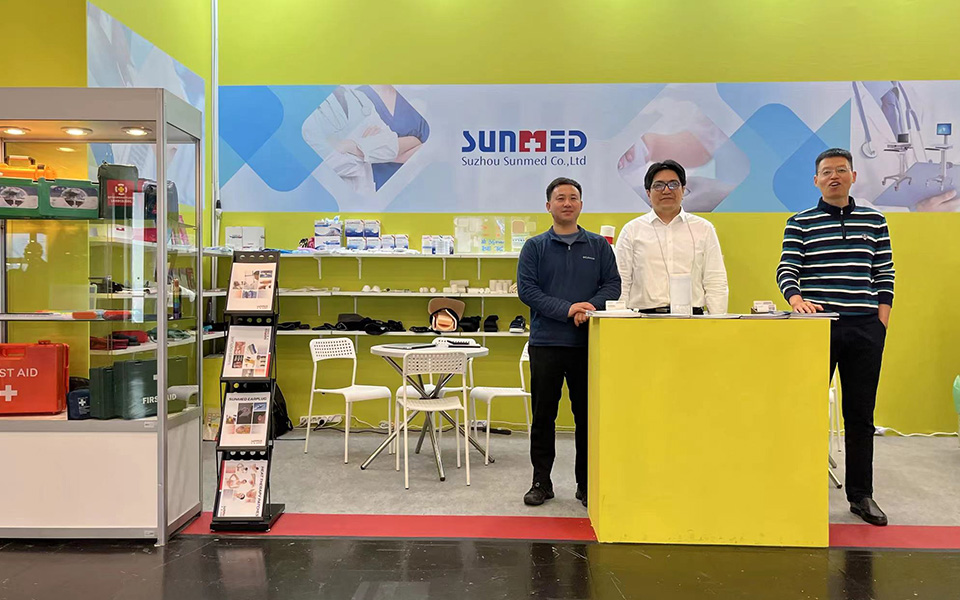
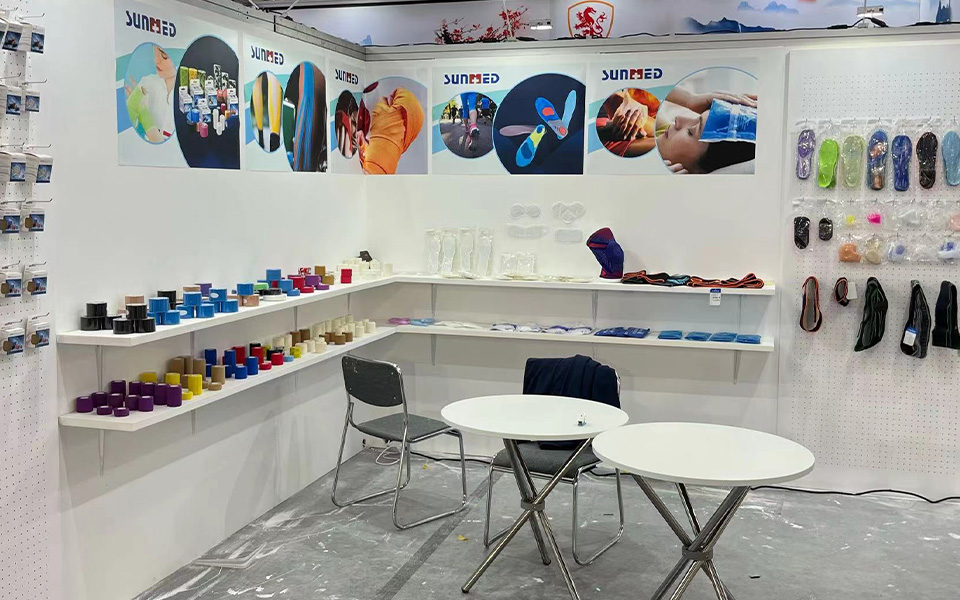
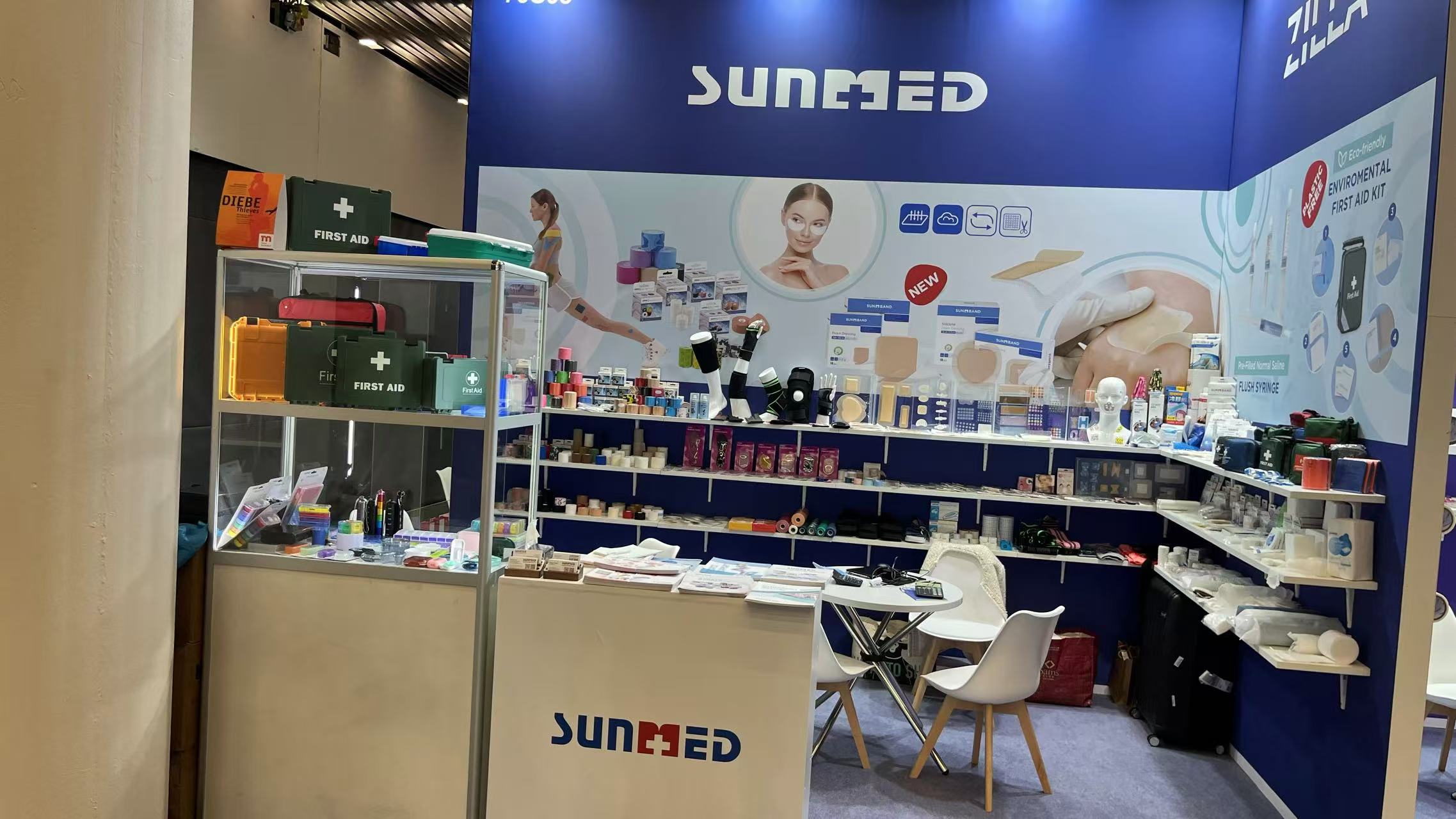
The product is manufactured and supplied by Suzhou Sunmed Co., Ltd., a Chinese manufacturer and exporter specializing in first aid, medical, healthcare, sports-support, and surgical consumable products. The company operates production bases in Jiangsu, Zhejiang, and Anhui Province and has approximately 30 years of experience in the medical device and medical consumables industry. Its product range includes gauze, bandages, medical tape, cotton products, non-woven products, kinesiology tape, cohesive bandages, elastic adhesive bandages, pill boxes, hot and cold therapy products, syringes, catheters, surgical consumables, and other healthcare products.
This article examines the product’s construction, practical advantages, customization options, quality-control approach, application methods, sourcing considerations, and suitability for boxing and other sports. It also explains how a professional manufacturing system can add value beyond the basic function of a roll of adhesive tape.
1. Product Overview
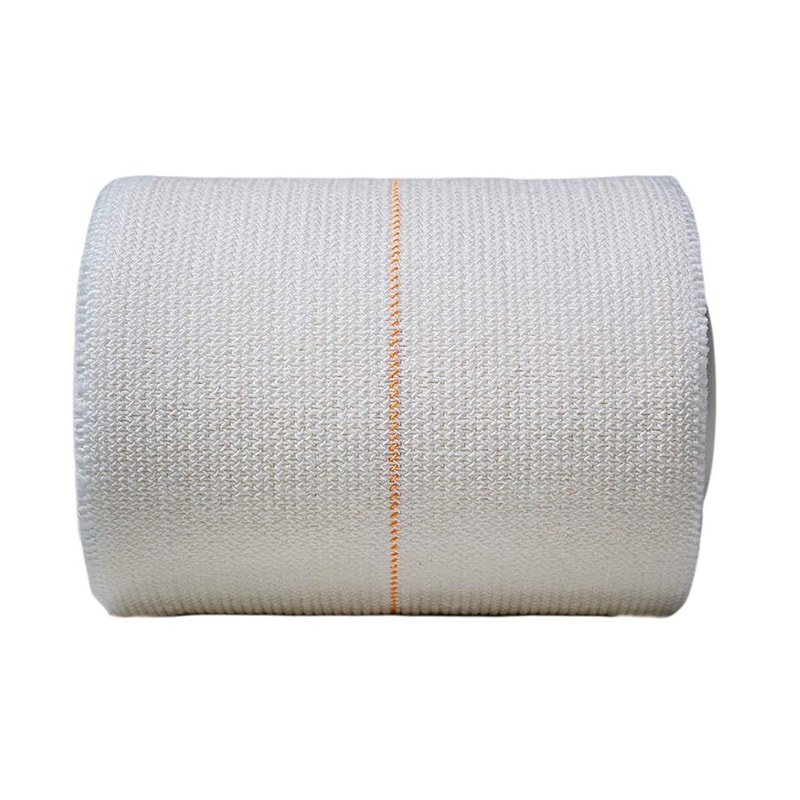
DC660084 is a white athletic first aid sport tape designed for sports support and hand protection. Its primary application is taping the hands and wrists of athletes, particularly in boxing and related combat sports. It can also be used on the ankle, fingers, and other areas requiring light-to-moderate support during physical activity.
The tape is made from cotton material selected for softness, comfort, and practical handling. It is designed to be easy to tear by hand, reducing dependence on scissors and making application faster in gyms, changing rooms, clinics, first aid stations, and home-care environments.
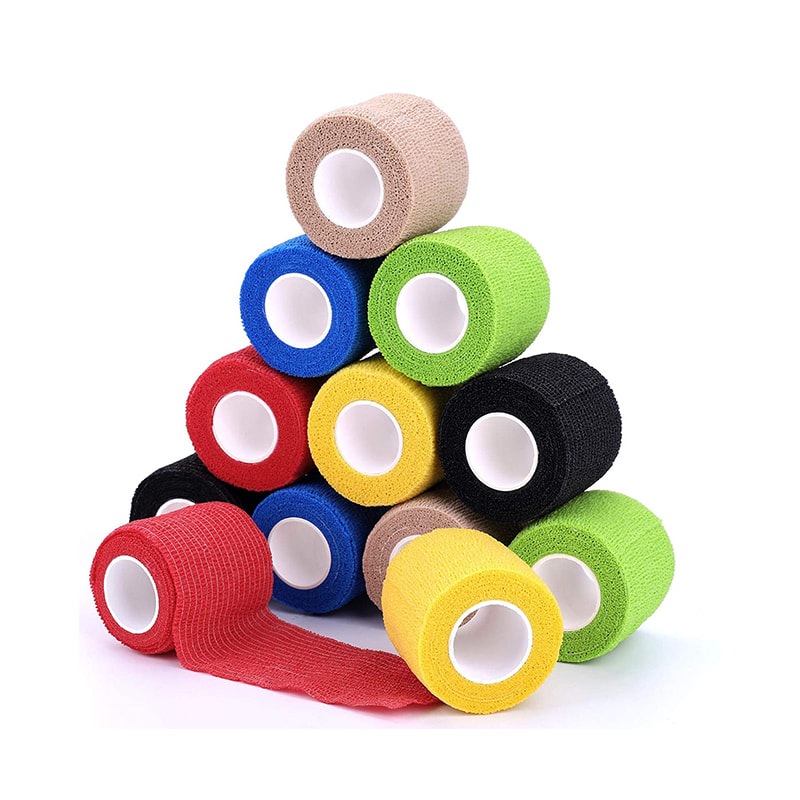
The standard color is white, while black, red, and assorted color options are also available. A range of widths and lengths supports different application preferences. Listed width options include 1.25 centimeters, 2.5 centimeters, 3.8 centimeters, 5 centimeters, and 7.5 centimeters, with other dimensions available according to customer requirements. Listed length options include 10 meters and 13.7 meters, equivalent to approximately 45 feet or 15 yards for the longer format.
| Product attribute |
Specification or available option |
| Product model |
DC660084 |
| Primary category |
Sport tape and athletic support tape |
| Primary material |
Cotton adhesive tape substrate |
| Standard color |
White |
| Additional colors |
Black, red, and assorted colors |
| Available widths |
1.25 cm, 2.5 cm, 3.8 cm, 5 cm, 7.5 cm, and other options |
| Available lengths |
10 m, 13.7 m, and other options |
| Product quantity |
One roll per listed unit |
| Minimum order quantity |
3,000 pieces |
| HS classification |
3005109000 |
The combination of cotton construction, hand-tear convenience, multiple sizes, and color flexibility makes this product suitable for both professional and consumer-oriented supply channels. Buyers can select a standard configuration for rapid procurement or discuss product adjustments for private-label, distribution, or project-specific requirements.

White Athletic First Aid Sport Tape for Boxing
2. Why Athletic Tape Matters in Boxing
Boxing places repeated stress on the hands, fingers, thumbs, wrists, and forearms. Every punch produces impact, and even technically correct punches can create strain when an athlete is training frequently. Gloves and hand wraps provide important layers of protection, but athletic tape can help secure the hand-wrap system and improve support around vulnerable areas.
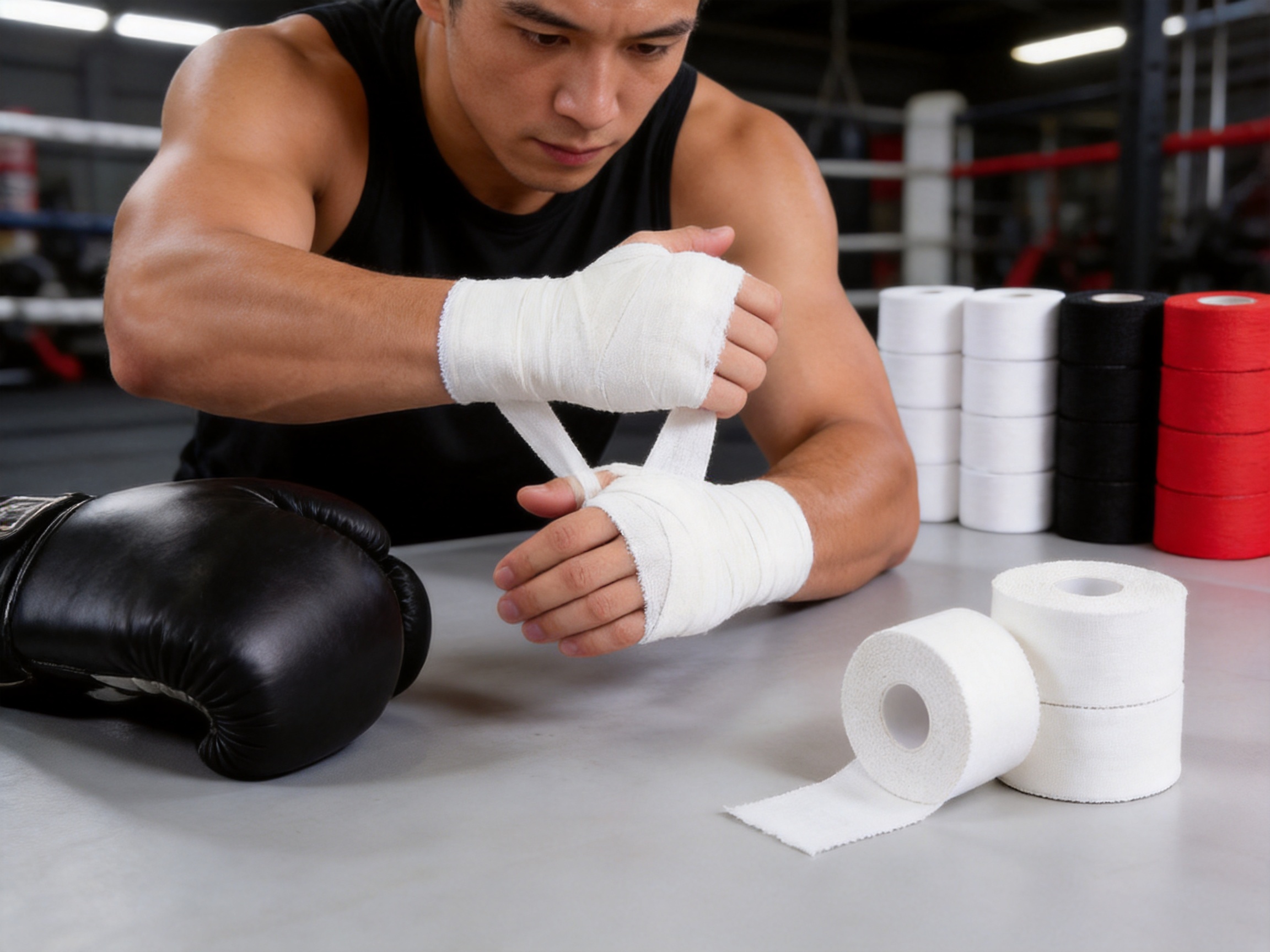
Boxers commonly use tape to help hold hand wraps in position, reinforce the wrist, protect the knuckles, and stabilize the thumb. Tape may also be used to secure padding or reduce movement between layers of a hand wrap. In amateur, professional, and recreational environments, the tape is often part of a consistent pre-training preparation routine.
For boxing applications, tape must balance several performance characteristics. It should be strong enough to maintain its position during repetitive movement, but not so rigid or uncomfortable that it limits normal hand function. It should adhere reliably to the intended surface while remaining practical to remove. It should also be easy to tear, because athletes and coaches often need to prepare several hands quickly.
DC660084 is designed around these practical needs. The cotton structure offers a familiar textile feel, and the hand-tear feature reduces preparation time. The range of widths allows users to choose a narrow format for fingers and thumbs or a wider format for wrists and broader support areas.
2.1 Hand and wrist support
The wrist is an important connection between the hand and the forearm. During punching, the wrist should remain aligned rather than bending excessively at impact. Athletic tape cannot replace correct punching technique, proper coaching, protective gloves, or medical treatment, but it can be incorporated into a broader hand-protection routine.
A suitable tape can help hold a wrap or support layer in place and create a more secure feeling around the wrist. This is particularly useful during training sessions involving repeated punching, bag work, mitt work, strength conditioning, or functional fitness exercises.
2.2 Knuckle and finger applications
Boxers may use narrower tape formats for targeted applications around the fingers, thumb, or knuckle area. Narrower widths can provide better control when working in small spaces, while wider formats may be more efficient for the wrist or larger areas.
Because the product is available in multiple dimensions, distributors can offer a more complete range instead of relying on a single universal size. This can improve product selection for boxing clubs, sports retailers, physiotherapy practices, and first aid suppliers.
2.3 Use beyond boxing
The product is not limited to boxing. It is also suitable for sports such as judo, rock climbing, bouldering, weightlifting, and cross-training. These activities place different demands on the hands and wrists, but all may benefit from a practical support tape that is comfortable, portable, and easy to apply.
In climbing and bouldering, athletes may use tape for finger support or to protect areas exposed to repeated friction. In weightlifting and strength training, tape can be used as part of a wrist-support routine or to help secure protective materials. In judo, tape may assist with support during training, although users should ensure that the application is appropriate for the rules and safety requirements of the specific activity.
3. Main Product Advantages
The most important advantage of DC660084 is its balance between straightforward use and adaptable supply options. Many athletic tapes are available in the market, but practical differences in material, handling, packaging, dimensions, and consistency can influence user satisfaction and purchasing decisions.
3.1 Easy hand tearing
The tape is designed to tear easily without scissors. This feature is particularly valuable in sports environments, where users may need to apply tape quickly and may not have cutting tools available. A coach can prepare tape for multiple athletes, and an individual user can tear off a required section while keeping the rest of the roll ready for later use.
Easy tearing also supports first aid and emergency preparation. In a gym or sports club, staff can respond more quickly when a minor support or protection requirement arises. In retail or home-care settings, users may find the product less complicated than tapes that require a separate pair of scissors.
Hand tearability should not be confused with weak construction. A well-designed athletic tape needs to tear in a controlled manner while maintaining adequate longitudinal strength during application. The manufacturing process must therefore balance fiber structure, adhesive coating, winding tension, and roll integrity.
3.2 Soft cotton feel
Cotton is widely used in athletic and medical tape because it offers a familiar, flexible, and breathable textile surface. The soft feel can make the tape more comfortable when worn during training, particularly when it is applied over a wrap or used in an area that experiences repeated movement.
Compared with some rougher or less flexible tape constructions, a cotton substrate may provide a more comfortable user experience. This is useful for athletes who train for long periods or who require frequent taping. Comfort is also important for retailers, because users are more likely to repurchase a product that feels manageable during application and wear.
3.3 Practical support for long training sessions
The product is intended to provide support and comfort for the wrist, hand, and ankle during physical activity. Its use may be helpful during extended training sessions in which the athlete wants the tape to remain in place as part of a broader support system.
Performance depends on correct application, skin condition, sweat, movement, and the specific activity. Nevertheless, the tape’s intended construction makes it suitable for routine athletic use. It can be applied in layers where appropriate, and the user can select a width based on the body area and desired coverage.
3.4 Multiple sizes for different applications
A single tape width cannot provide the same convenience for every body area. A narrow tape can be more precise around fingers, while a wider tape can cover the wrist more efficiently. Offering several width choices enables professional buyers to build a product range for different customer groups.
Different lengths also support different channels. A shorter roll may be convenient for individual consumers or retail packages, while a longer roll may be appropriate for sports clubs, clinics, trainers, and high-volume users. This flexibility helps reduce the need for distributors to source every size from a separate supplier.
3.5 Color options
White is a traditional and widely accepted color for athletic and medical tape. It presents a clean, professional appearance and is familiar in boxing, first aid, and sports-support environments. Black and red options add visual variety, while assorted colors may be useful for retail displays, team identification, or product differentiation.
Color options can also support private-label and marketing strategies. A distributor may choose white for a medical line, black for a combat-sports line, and assorted colors for general fitness or youth sports products. Final color availability, shade matching, and packaging should be confirmed during the product-development process.
3.6 Non-irritating and non-toxic positioning
The product description identifies the cotton material as non-toxic and suitable for use, with no irritating smell. These characteristics are important because athletic tape is used close to the skin and may remain in place during vigorous movement.
Individual skin sensitivity varies, and no tape should be applied over damaged skin unless recommended by a qualified healthcare professional. Buyers should also evaluate adhesive composition, testing documentation, labeling requirements, and market-specific regulations before placing a commercial order.
4. Product Advantages Compared with Common Alternatives
Product comparisons should be based on application requirements rather than on a single feature. Athletic tape competes with elastic adhesive bandages, cohesive wraps, kinesiology tape, pre-cut strips, synthetic sports tape, and ordinary household adhesive tape. Each category has a different purpose.
4.1 Compared with ordinary household tape
Household adhesive tape is generally not designed for athletic contact, repeated movement, hand wrapping, or skin-adjacent use. It may lack the appropriate textile structure, comfort, tearability, and intended application characteristics. Athletic tape is a more suitable choice when the user needs a product specifically developed for sports support and first aid contexts.
4.2 Compared with elastic adhesive bandages
Elastic adhesive bandages are designed to stretch and conform to the body. They can be useful when flexibility and compression are the primary objectives. Cotton athletic tape, by contrast, is often selected when the user wants a more stable, less elastic support layer. The two products can serve complementary purposes rather than being direct substitutes.
4.3 Compared with cohesive bandages
Cohesive bandages adhere to themselves rather than directly to the skin. They are popular for wrapping limbs, securing dressings, and providing light support. Athletic tape may be preferred when a stronger adhesive attachment to an appropriate surface is required or when the user wants to secure hand-wrap layers.
Because cohesive wraps and athletic tapes have different adhesive mechanisms, distributors may benefit from offering both products. Customers can then select the most suitable format for their activity, skin preference, and support requirement.
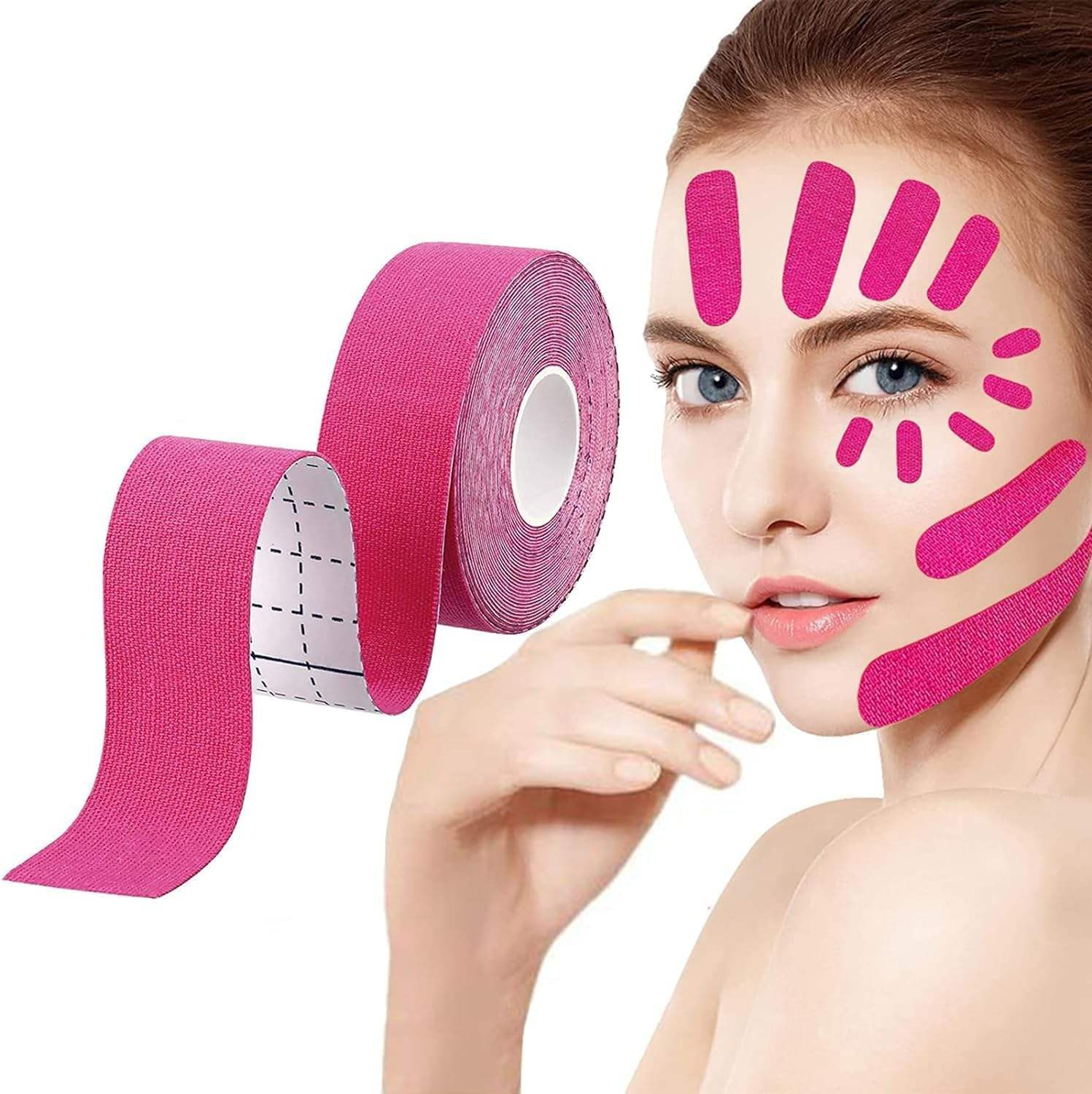
4.4 Compared with kinesiology tape
Kinesiology tape is usually elastic and is commonly marketed for movement support, muscle-awareness applications, and rehabilitation routines. Conventional cotton athletic tape is generally less elastic and is often selected for stabilization, securing, or reinforcement. Boxing hand protection may require the more stable feel associated with athletic tape rather than the stretch characteristics of kinesiology tape.
4.5 Compared with pre-cut strips
Pre-cut tape strips can be convenient, but they may not match every hand size or application pattern. A roll allows the user, coach, or healthcare professional to select the required length and reduce unnecessary waste. The easy-tear construction preserves much of the convenience of pre-cut products while maintaining the flexibility of a continuous roll.
5. Material and Construction Considerations
The performance of athletic tape depends on several interconnected components: the backing material, adhesive layer, winding quality, edge condition, roll density, packaging, and storage. Cotton provides the textile foundation, while adhesive performance determines how effectively the tape stays in place under practical conditions.
5.1 Cotton backing
A cotton backing can offer a comfortable hand feel and a natural textile appearance. The substrate must be sufficiently uniform to support consistent coating and tearing. Variations in thickness, weave, or fiber distribution can influence how the tape feels, stretches, tears, and adheres.
During production, the raw material should be checked before it enters the coating process. Important checks may include width, appearance, surface cleanliness, basis weight, moisture condition, and overall uniformity. Careful material handling helps reduce variation between production batches.
5.2 Adhesive coating
The adhesive layer must be applied evenly across the backing. An uneven coating can result in weak areas, excessive residue, difficult unwinding, or inconsistent adhesion. Coating control is therefore central to both product performance and customer satisfaction.
A professional manufacturing line typically controls coating speed, adhesive quantity, drying or curing conditions, and web tension. The exact adhesive formulation and process parameters depend on the product design and regulatory requirements. Buyers may request technical documentation, test reports, and samples before confirming a large order.
5.3 Winding and roll formation
Roll formation affects how smoothly the tape unwinds and how well it retains its shape during storage and transport. A roll that is too loose may telescope or deform, while a roll that is too tight may be difficult to unwind or tear. Consistent winding tension helps maintain a stable, user-friendly roll.
5.4 Edge quality
Clean edges support accurate application and help the user tear the tape in a controlled way. Damaged, frayed, or irregular edges can reduce the professional appearance of the product and may make handling more difficult. Edge inspection should therefore be part of routine quality control.
6. Easy-Tear Engineering and User Convenience
Easy tearing is one of the product’s most visible user benefits, but it also reflects several manufacturing decisions. The backing must have enough structural integrity for application while allowing the user to separate a section without scissors. The tear should not create excessive fiber shedding or cause the roll to unravel.
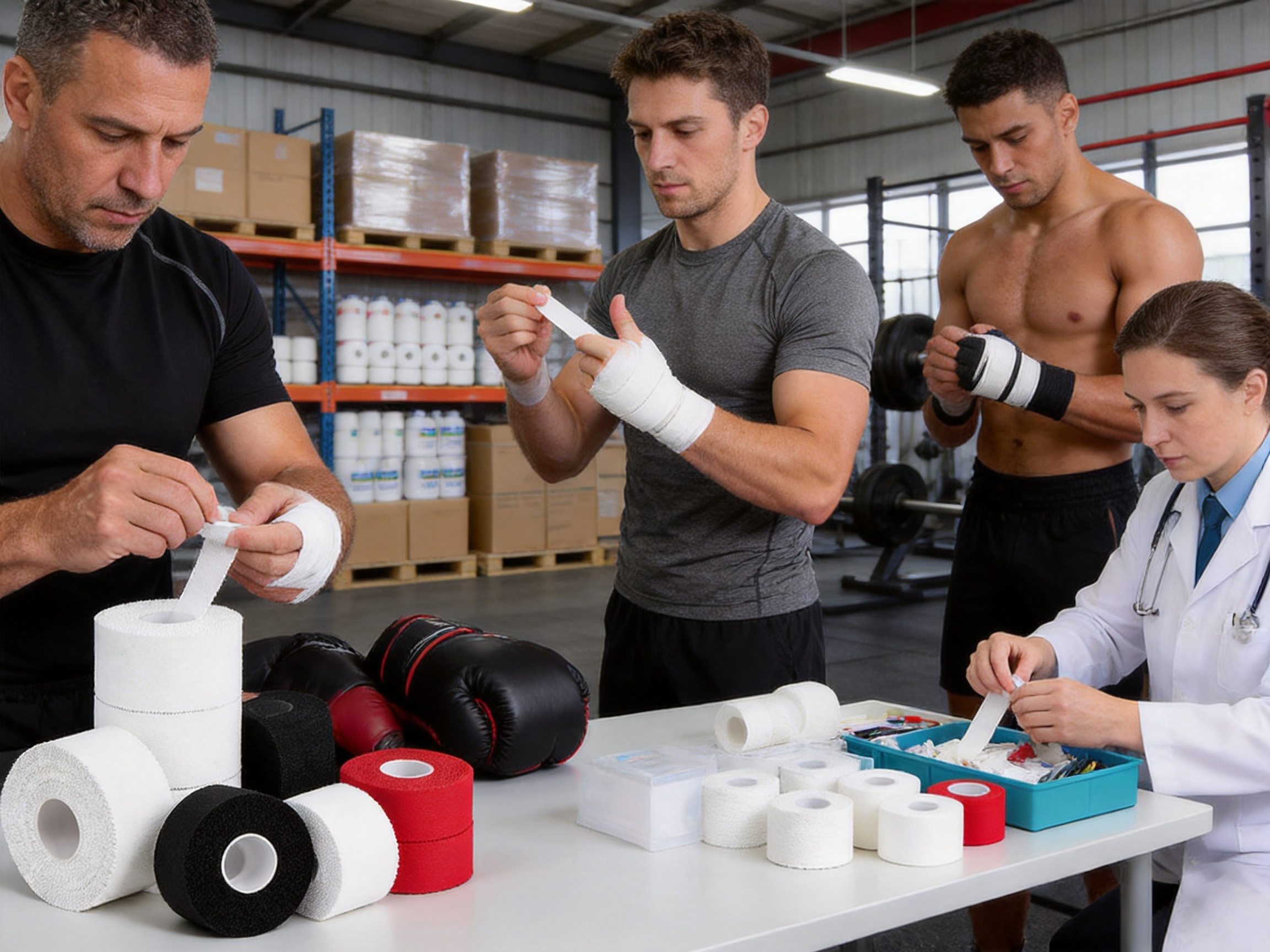
In a practical sports environment, easy tearability improves workflow. A boxer preparing before training can tear and apply the required length quickly. A trainer working with several athletes can keep the process moving. A first aid supplier can provide a product that is simpler for customers to understand. A retail buyer can market the feature as a convenience advantage rather than requiring a separate accessory.
Easy tearability is particularly relevant for users who have limited access to tools. It can also be helpful when the user is wearing gloves, working in a crowded changing area, or responding to a minor injury during a training session. Nevertheless, the roll should be opened and stored carefully to prevent contamination or damage to the adhesive surface.
7. Manufacturing Capabilities and Production Strengths
The supplier’s broader manufacturing background is important because athletic tape is often purchased as part of a wider medical and sports-support product program. Suzhou Sunmed Co., Ltd. has approximately 30 years of experience in first aid, medical, and healthcare product manufacturing and export. Its production network includes bases in Jiangsu, Zhejiang, and Anhui Province.
This multi-location manufacturing structure can support broader product development and sourcing requirements. Customers purchasing athletic tape may also need gauze, bandages, medical cotton, wound dressings, non-woven products, cohesive wraps, kinesiology tape, elastic adhesive bandages, hot and cold packs, pill boxes, syringes, catheters, and other medical consumables. A supplier with experience across these categories may offer more coordinated communication and product management.
7.1 Specialized production experience
The company established its first aid factory in 2008 to meet the needs of first aid customers. In 2021, it established a factory dedicated to kinesiology tape, cohesive bandages, and elastic adhesive bandages. This indicates an ongoing investment in sports-support and adhesive product categories rather than treating athletic tape as an unrelated item.
Specialization can improve understanding of coating, winding, adhesive compatibility, textile materials, packaging, and quality-control requirements. It may also help the supplier respond more efficiently to requests for different sizes, colors, packaging styles, and related products.
7.2 Quality-control organization
The company reports a professional quality-control team comprising hundreds of personnel. Its inspection procedures are designed to support compliance with ISO 13485:2016 standards. ISO 13485 is a quality-management standard associated with medical devices and related regulated products. A quality system based on this standard can provide structured procedures for documentation, traceability, inspection, corrective action, and process control.
Quality management is especially important for products used close to the skin and in healthcare-related environments. Buyers should still confirm the specific documentation applicable to the exact athletic tape configuration, because compliance status may vary according to product classification, intended use, market, packaging, and labeling.
7.3 Regulatory and certification awareness
Most of the company’s products are described as CE certified, and its Suzhou factories comply with FDA requirements. These statements demonstrate familiarity with major international market expectations. However, buyers should request current certificates, declarations, test reports, and product-specific documentation during qualification.
Regulatory requirements can differ between sports-support products, medical devices, consumer products, and wound-care products. The intended claims on packaging and promotional materials may also influence the compliance pathway. A responsible importer should confirm requirements with qualified regulatory professionals in the destination market.
7.4 Export experience
The company has exported products to more than 60 countries, including markets in Europe, Southeast Asia, Africa, and Oceania. Its customers and market channels include hospitals, first aid suppliers, supermarkets, and retail sports shops.
International export experience can be valuable for buyers because it may support communication about packaging, documentation, shipping, customs classification, carton configuration, labeling, and destination-market expectations. It can also help a supplier understand the differences between institutional purchasing and retail distribution.
8. Production Process for Cotton Athletic Tape
A dependable athletic tape manufacturing process begins with product specifications and continues through material preparation, coating, drying, slitting, winding, inspection, packaging, and final release. The following stages describe a typical controlled production approach for this type of product.
8.1 Specification confirmation
Before production begins, the buyer and manufacturer confirm the product model, width, length, color, adhesive characteristics, packaging, labeling, carton quantity, and order volume. For private-label projects, artwork and packaging files must also be reviewed and approved.
Clear specifications reduce the risk of misunderstanding. A buyer should identify whether the product is intended for sports support, general first aid, professional medical use, or retail sale. The intended use can affect labeling language, documentation, and testing requirements.
8.2 Raw-material inspection
Cotton backing material and adhesive components should be inspected before entering production. The inspection may cover appearance, width, thickness, weight, cleanliness, odor, and conformity with approved samples. Materials that do not meet requirements should be segregated and reviewed rather than mixed into normal production.
8.3 Adhesive preparation and coating
The adhesive is prepared according to the approved formulation and process instructions. It is then coated onto the cotton backing under controlled conditions. The coating line must maintain stable web tension and an even application rate.
Process operators monitor variables such as coating speed, adhesive viscosity, coating weight, drying temperature, and line alignment. These variables influence final adhesion, unwinding behavior, flexibility, odor, and surface appearance.
8.4 Drying or curing
After coating, the tape passes through a drying or curing stage. The objective is to achieve the required adhesive condition without damaging the cotton backing. Insufficient drying may cause excessive tack or residual odor, while excessive heat may affect the backing or adhesive performance.
8.5 Slitting and rewinding
The coated master roll is slit into the required widths. Precision slitting helps achieve consistent dimensions and clean edges. The material is then rewound into individual rolls with controlled tension and length.
At this stage, the manufacturer may verify roll diameter, width, length, core size, winding appearance, and ease of unwinding. Different customers may require different cores, labels, or roll formats, so these details should be finalized during order planning.
8.6 Inspection and release
Finished rolls are inspected for appearance, size, adhesion, tearability, packaging condition, and labeling. Sampling plans may be used for routine production, while first-article or pre-shipment inspections may be arranged for specific orders.
Products that meet the defined acceptance criteria are released for packaging. Nonconforming products should be identified, isolated, and evaluated through the supplier’s corrective-action procedures.
8.7 Packaging and shipment preparation
Packaging protects the tape from dust, moisture, compression, and damage during transport. The packaging format should also support retail presentation or bulk distribution, depending on the customer’s sales channel.
Cartons should be suitable for stacking and international transport. Product labels may include the model number, size, color, quantity, batch information, manufacturing details, and any required regulatory information. Buyers should approve packaging samples before mass production.

9. Quality-Control Points Buyers Should Evaluate
When comparing suppliers, buyers should evaluate more than the appearance of a sample roll. A professional qualification process should consider the following areas.
9.1 Dimensional consistency
Width and length should remain within agreed tolerances. Dimensional consistency is important when the tape is sold in standardized retail formats or used in clinical and sports programs with predictable consumption rates.
9.2 Adhesion performance
Adhesion should be tested under conditions relevant to the intended use. Testing may consider initial tack, holding power, unwinding behavior, residue, and performance after movement. Skin-contact products require careful evaluation because individual skin conditions and environmental factors can vary.
9.3 Tearability
The tape should tear by hand in a controlled manner without excessive effort. A buyer may test tearing along the cross direction and assess whether the tape can be separated cleanly during actual application.
9.4 Backing integrity
The cotton backing should remain intact during unwinding and application. It should not shed excessive fibers, split unexpectedly, or become distorted under normal handling.
9.5 Appearance and cleanliness
Finished rolls should have a clean and professional appearance. Buyers should check for stains, foreign particles, uneven coating, telescoping, loose winding, damaged edges, and inconsistent color.
9.6 Packaging and traceability
Packaging should protect the product and provide sufficient information for distribution. Batch or lot identification is useful for inventory management, complaint handling, and any necessary investigation after shipment.
10. Application Guidance for Boxing and Sports
Athletic tape should be applied by a trained user or under the guidance of a coach, athletic trainer, physiotherapist, or healthcare professional when the application is intended for injury management. The product is designed for support and protection, but it is not a substitute for diagnosis or treatment.
10.1 Preparing the skin and wrap
The skin should be clean and dry before application. Oils, sweat, lotions, and moisture may affect adhesion. Users should inspect the skin for cuts, rashes, swelling, or irritation before applying tape.
In boxing, athletic tape is often used with hand wraps and gloves. The wrap should be positioned according to the user’s established technique, and the tape should not be applied so tightly that it restricts circulation or normal movement.
10.2 Applying around the wrist
For wrist support, the tape should be applied smoothly and evenly without unnecessary wrinkles. The user should maintain a neutral wrist position and avoid excessive tension. The final layers should remain secure but comfortable.
Signs of excessive tightness may include numbness, tingling, color changes, increasing pain, or coldness in the fingers. If these symptoms occur, the tape should be removed promptly and professional advice should be sought if symptoms continue.
10.3 Applying around fingers or the thumb
Finger and thumb applications require particular care because the areas are small and sensitive. Narrower widths may be more convenient. The tape should not interfere with circulation, joint movement, or glove fit.
10.4 Removing the tape
The tape should be removed carefully and slowly. Pulling aggressively may irritate the skin, especially when the product has been worn for an extended period. Users with sensitive skin should consider a small-area test before regular use.
11. Customization and OEM Opportunities
For distributors and importers, the ability to customize the product can be as important as the standard specification. Athletic tape may be sold under a retailer’s own brand, included in a boxing hand-protection kit, or packaged for a hospital, sports organization, or first aid program.
Potential customization areas include width, length, color, roll diameter, core size, label design, individual packaging, box configuration, carton quantity, and language. Customers may also request coordinated packaging with other products such as hand wraps, gauze, cohesive bandages, or first aid kits.
Before approving customization, the buyer should define the required performance characteristics and confirm whether the new configuration requires additional testing or documentation. A change in adhesive, substrate, packaging, or intended-use wording may affect the product’s compliance requirements.
The stated minimum order quantity is 3,000 pieces. This level is suitable for distributors, sports retailers, first aid suppliers, and importers planning a commercial launch. Buyers should confirm production lead time, sample policy, payment terms, packaging requirements, and shipment arrangements during quotation.
12. Suitable Distribution Channels
DC660084 can be positioned through several distribution channels because it serves both sports and first aid needs.
12.1 Boxing clubs and gyms
Boxing clubs regularly consume tape for training, competition preparation, coaching demonstrations, and first aid stations. Bulk rolls or multipacks may be suitable for these customers.
12.2 Sports retailers
Sports retailers can offer the product alongside gloves, hand wraps, protective equipment, climbing accessories, weightlifting products, and rehabilitation supports. Different colors and sizes can help create a more visible shelf presentation.
12.3 Hospitals and clinics
Medical facilities and rehabilitation centers may use athletic tape for sports-support routines, patient education, or activity-related care. Institutional buyers usually require detailed documentation, consistent supply, and clear labeling.
12.4 First aid suppliers
First aid wholesalers can include the product in general sports-injury and home-care ranges. Its easy-tear design makes it suitable for kits and emergency-support environments where users value simple handling.
12.5 Supermarkets and online retail
Supermarkets and online stores can market the tape to consumers involved in boxing, fitness, climbing, martial arts, running, and strength training. Retail packaging should explain the product category, available size, primary applications, and basic usage precautions.
13. Storage, Transportation, and Shelf Management
Athletic tape should be stored in a clean, dry environment away from direct sunlight, excessive heat, moisture, and chemical contamination. The original packaging should remain intact until the product is ready for use or retail display.
High temperatures may affect adhesive behavior, while moisture can influence packaging and the cotton backing. Excessive compression during transportation may deform the rolls. Cartons should be stacked according to the supplier’s recommendations and protected from sharp objects.
Warehouse operators should use a first-in, first-out inventory method when appropriate. Batch information should be recorded so that products can be traced through receiving, storage, distribution, and customer service processes.
Before shipment, buyers should confirm the recommended storage conditions, shelf-life information, packaging configuration, and any destination-market labeling obligations. These details are particularly important when the product is distributed through multiple countries or stored for extended periods.
14. Responsible Product Positioning
Marketing language should accurately reflect the product’s intended function. It is appropriate to describe the tape as an athletic support tape for hands, wrists, ankles, fingers, and sports applications. It may also be described as easy to tear, cotton-based, available in multiple sizes, and suitable for boxing and other athletic activities.
Marketing materials should avoid implying that the tape can prevent every injury, correct an underlying medical condition, or replace professional treatment. A clear distinction between support, protection, and medical treatment helps reduce customer misunderstanding and supports responsible distribution.
Retailers should include basic precautions such as avoiding application over damaged or irritated skin, removing the tape if discomfort or circulation problems occur, and seeking professional advice for significant injuries. These instructions can improve customer safety and product confidence.
15. Why Choose an Experienced Medical Consumables Manufacturer?
Purchasing athletic tape from an experienced medical consumables manufacturer can provide advantages beyond the individual product. A manufacturer with long-term industry experience may have established systems for material procurement, process control, testing, documentation, packaging, export, and customer communication.
Experience across first aid, wound care, medical tape, sports bandages, family healthcare, and surgical consumables can also support product-line expansion. A buyer who begins with athletic tape may later require matching cohesive wraps, kinesiology tape, elastic adhesive bandages, gauze, cotton products, or first aid kits. Working with a supplier that understands these related categories can simplify development and sourcing.
Manufacturing scale may also support more stable supply. Multiple production bases and specialized facilities can provide access to different production capabilities, although buyers should always confirm which factory will produce the exact product and how production is controlled across facilities.
Finally, quality-system experience can help create a more reliable purchasing process. Documentation, batch control, inspection records, and corrective-action procedures are valuable when products are imported, redistributed, or supplied to professional customers.
16. Procurement Checklist for Buyers
Before placing an order for DC660084 or a customized version, buyers should review the following points:
Confirm the required width, length, color, and roll format.
Request product samples for practical application and tearability evaluation.
Confirm adhesive performance requirements and intended use.
Review material information and available test documentation.
Confirm packaging design, labeling language, and carton quantity.
Verify the minimum order quantity and production lead time.
Confirm whether private-label or OEM packaging is available.
Request current quality and regulatory documents relevant to the destination market.
Confirm storage conditions, shelf-life information, and batch traceability.
Review shipping terms, inspection arrangements, and export documentation.
For large or recurring orders, buyers may also establish an approved sample, quality agreement, pre-shipment inspection plan, and procedure for handling complaints or nonconforming goods. These measures help align expectations before production begins.
17. Frequently Asked Questions
Q1: What is White Athletic First Aid Sport Tape primarily used for?
It is primarily used for athletic support and first aid applications involving the hands, wrists, fingers, thumbs, and ankles. It is particularly suitable for boxing and can also be used in judo, climbing, bouldering, weightlifting, and cross-training.
Q2: Can the tape be torn without scissors?
Yes. The product is designed for easy hand tearing, allowing users to prepare the required length without scissors. This feature is useful in gyms, sports clubs, first aid stations, and home-care settings.
Q3: What material is used?
The product uses a cotton material designed to provide a soft and comfortable feel. The exact adhesive and material documentation should be confirmed with the supplier for the specific order configuration.
Q4: Is the product available in colors other than white?
Yes. In addition to white, available color options include black, red, and assorted colors. Buyers should confirm color availability, minimum quantities, and packaging options for each color.
Q5: What widths are available?
Listed width options include 1.25 centimeters, 2.5 centimeters, 3.8 centimeters, 5 centimeters, and 7.5 centimeters. Other dimensions may be discussed for specific projects or OEM requirements.
Q6: What lengths are available?
Listed lengths include 10 meters and 13.7 meters, with the longer length corresponding to approximately 45 feet or 15 yards. Other lengths may be available subject to production confirmation.
Q7: Is this tape a replacement for medical treatment?
No. It is an athletic support product and should not be considered a replacement for diagnosis, professional treatment, proper training, or protective equipment. Users with serious pain, swelling, numbness, or suspected injury should seek qualified medical advice.
Q8: What is the minimum order quantity?
The listed minimum order quantity is 3,000 pieces. Buyers should confirm whether the MOQ changes for customized colors, packaging, labeling, or special dimensions.
Q9: Can the product be customized?
Potential customization may include size, color, packaging, labeling, roll format, and private-label presentation. The exact options should be confirmed with the manufacturer before sampling and production.
Q10: What quality systems support production?
The manufacturer reports structured inspection procedures aligned with ISO 13485:2016 and a professional quality-control team. Buyers should request current product-specific documentation and certificates relevant to their destination market and intended use.
Q11: Where can the product be sold?
Potential channels include boxing clubs, sports retailers, fitness shops, first aid suppliers, hospitals, clinics, supermarkets, online stores, and distributors of medical consumables.
Q12: How should the tape be stored?
It should be kept in a clean, dry environment away from direct sunlight, excessive heat, moisture, and contamination. The product should remain in suitable packaging until use or sale.
18. Conclusion
White Athletic First Aid Sport Tape for Boxing, model DC660084, is a practical cotton athletic tape designed for hand, wrist, ankle, and sports-support applications. Its principal user advantages include easy hand tearing, a soft cotton feel, support during long training sessions, multiple width and length options, and availability in several colors.
The product is especially suitable for boxing because it can be incorporated into hand and wrist preparation routines. It is also relevant to judo, climbing, bouldering, weightlifting, cross-training, first aid, rehabilitation, and general sports support. Its roll format gives users flexibility to select the required length, while its easy-tear construction improves convenience compared with tapes that require scissors.
For commercial buyers, the product is strengthened by the manufacturer’s experience in first aid, medical consumables, sports-support products, and international export. Production bases in several Chinese provinces, specialized adhesive-product manufacturing experience, structured quality-control procedures, ISO 13485:2016-oriented quality management, and export experience across more than 60 countries provide a solid foundation for wholesale and OEM cooperation.
Successful sourcing still requires careful confirmation of specifications, samples, adhesive performance, packaging, documentation, storage conditions, and destination-market requirements. When these details are managed systematically, DC660084 can serve as a dependable addition to sports, first aid, healthcare, and medical consumables product lines.
References
1. Product specification information for White Athletic First Aid Sport Tape for Boxing, model DC660084.
2. ISO 13485:2016, Medical Devices—Quality Management Systems—Requirements for Regulatory Purposes.
3. General principles of athletic taping, sports injury prevention, and hand and wrist support.
4. International guidance on quality management for medical devices and healthcare consumables.
5. General textile and adhesive tape manufacturing practices, including coating, slitting, winding, inspection, and packaging control.
6. General recommendations for skin-contact product labeling, storage, traceability, and responsible sports-support claims.

 English
 Español
 русский
 Français
 Deutsch
 italiano
 By Admin