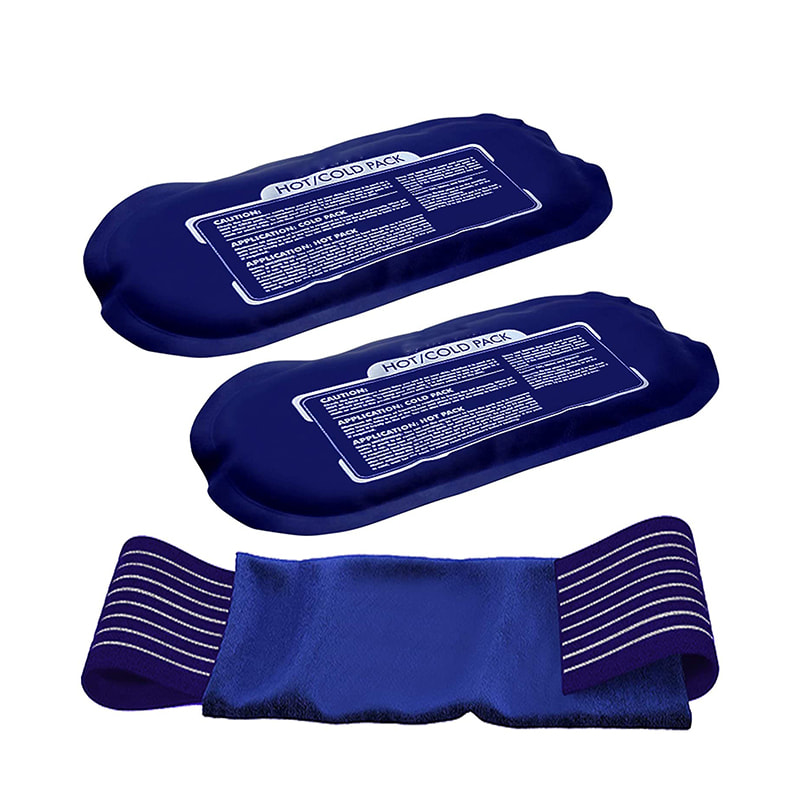
Cold and heat therapy remain among the most practical approaches for managing everyday aches, minor sports injuries, swelling, muscle fatigue, and temporary discomfort. An adjustable reusable ice pack provides a convenient alternative to disposable cold packs, loose ice wrapped in a towel, or rigid gel packs that may not conform well to the body. Designed for repeated use, this type of ice bag combines a flexible shape, a large filling opening, leak-resistant construction, and adjustable wraps that help maintain contact with the affected area.
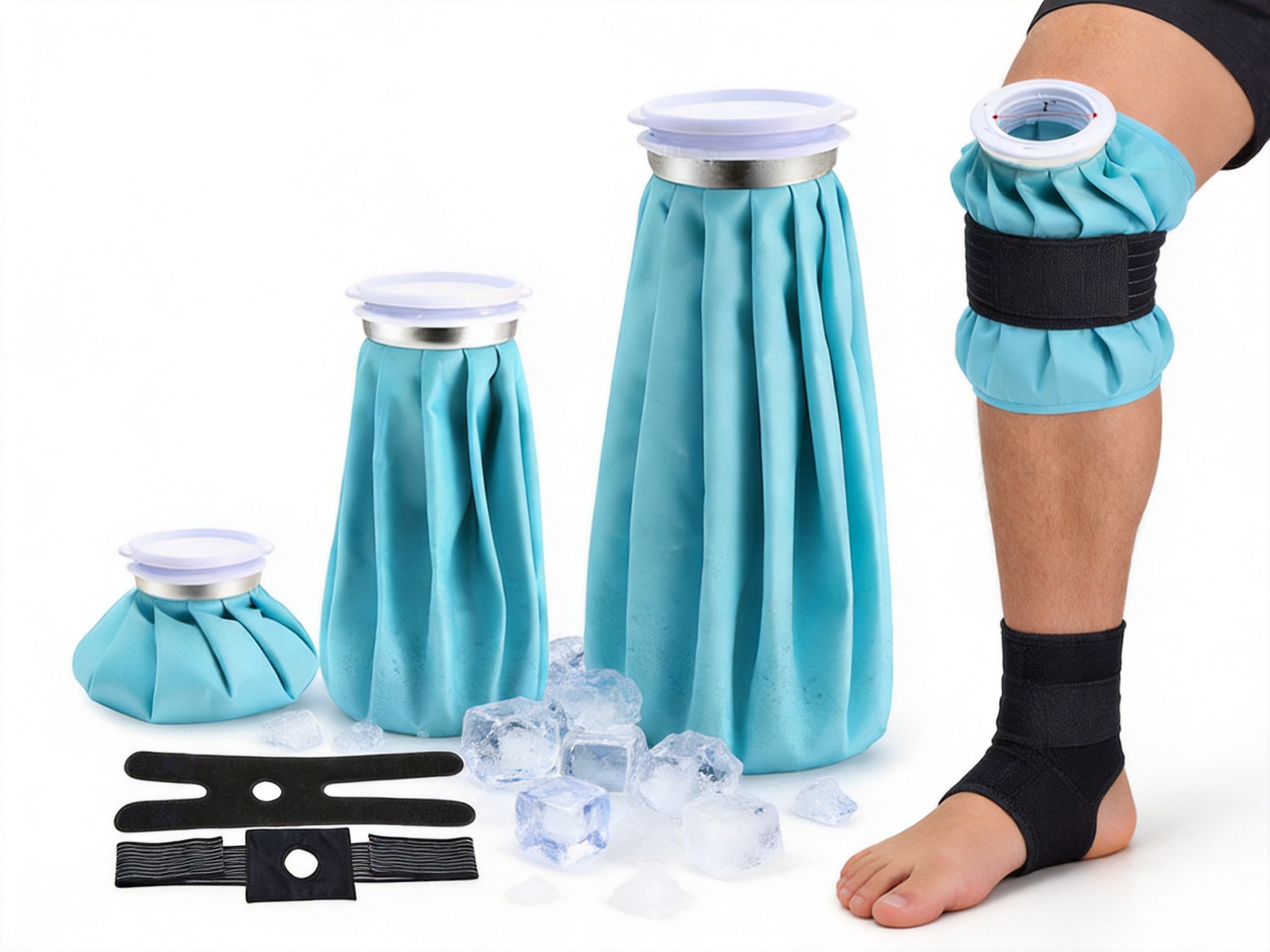
The adjustable reusable ice pack described in this article is supplied as a versatile three-size therapy set with large, medium, and small options. The sizes are approximately 11 inches, 9 inches, and 6 inches, making the set suitable for different body areas and users. The small pack can be used for children or localized discomfort, while the medium and large packs are suitable for teenagers and adults. The product is also designed with two wraps to help secure the pack around areas such as the wrist, elbow, knee, or ankle.
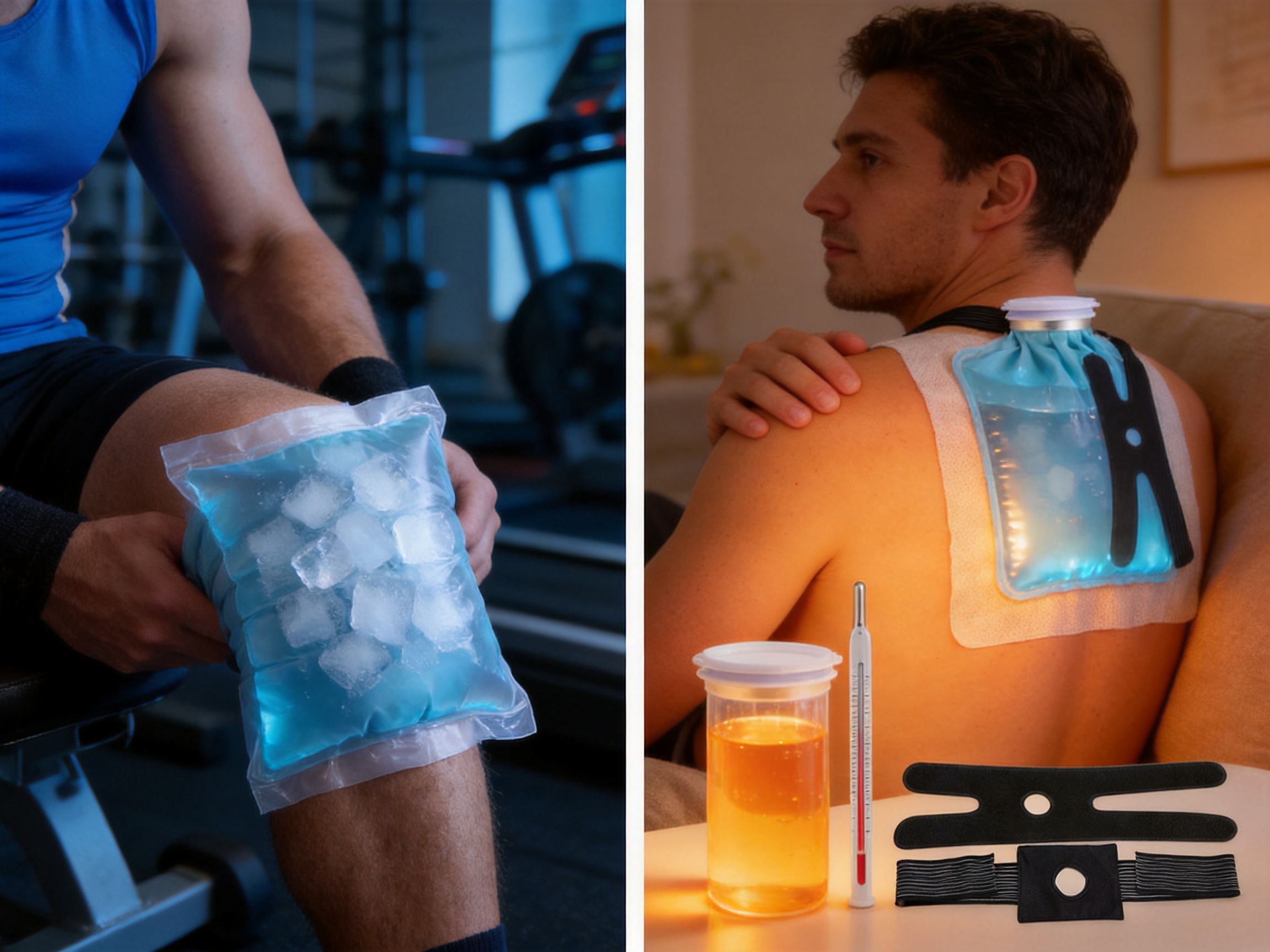
Unlike many single-purpose cold packs, this product supports both cold and warm applications. For cold therapy, the bag can be filled with ice cubes or crushed ice and water. For heat therapy, warm water may be added at a controlled temperature of approximately 50–60°C, or 122–140°F. This dual-purpose design makes it useful for home first-aid kits, sports bags, offices, vehicles, family healthcare, and professional care environments.
Why an Adjustable Reusable Ice Pack Is an Important Therapy Tool
Minor injuries and everyday discomfort can occur almost anywhere. A twisted ankle may happen during exercise, a bruised knee may result from a fall, or muscle soreness may develop after demanding physical activity. Headaches, migraines, joint discomfort, and post-exercise fatigue may also benefit from carefully applied cold or warm therapy. Having a reusable therapy pack available allows users to respond quickly without searching for frozen vegetables, purchasing disposable packs, or applying ice directly to the skin.
An ice bag offers several practical benefits. It can be filled immediately when needed, emptied after use, cleaned, stored, and reused. Because the cooling medium is ordinary ice and water, users are not dependent on a pre-frozen gel core. The product can be prepared in a freezer-supported environment, filled with ice at the point of use, or used with crushed ice when a closer fit is required.
The flexible construction is especially important. A rigid cold pack may only touch the highest points of a curved joint, leaving gaps between the pack and the body. A flexible ice bag can adapt more naturally to the contours of the wrist, elbow, knee, shoulder, neck, or ankle. Better contact can support more consistent transfer of cold or warmth across the intended area.
The adjustable wraps further improve usability. They help hold the pack in position while the user is seated, resting, or performing limited movement. The wraps also reduce the need to continually press the bag against the body. This hands-free advantage is valuable for athletes, office workers, caregivers, and people recovering at home.
Product Overview and Key Specifications
The product is identified by the reference number DC660324 and is categorized as an ice bag within the hot and cold therapy range. Its principal function is to deliver temporary cold or warm comfort through a reusable, flexible container. The product is intended for general first-aid and family healthcare applications involving minor aches, bruises, swelling, strains, and similar discomforts.
| Feature | Product Information | Practical Benefit |
|---|
| Therapy type | Cold and warm therapy | One product supports multiple comfort applications |
| Pack configuration | Three sizes: approximately 6, 9, and 11 inches | Suitable for children, localized areas, and larger body regions |
| Wrap system | Two adjustable wraps | Helps secure the pack around joints and limbs |
| Cold filling | Ice cubes, crushed ice, and water | Easy preparation with commonly available materials |
| Warm filling | Warm water at approximately 50–60°C or 122–140°F | Supports controlled heat therapy without boiling water |
| Closure | Leak-resistant cap with a large opening | Simplifies filling and helps reduce leakage |
| Reusable design | Designed for repeated filling and use | Reduces reliance on disposable therapy products |
| Typical applications | Minor scrapes, bruises, aches, sprains, strains, and swelling | Useful in homes, sports settings, vehicles, offices, and first-aid kits |
The three-size configuration is one of the product’s strongest commercial advantages. Many competing therapy packs are sold as a single fixed size, which may be too large for a child or too small for an adult knee. A set that includes three dimensions gives retailers, families, sports teams, and healthcare suppliers more flexibility. It also enables users to select an appropriate pack based on the body area rather than forcing one product to serve every situation.
Three Sizes for Different Users and Body Areas
Small Approximately 6-Inch Pack
The small pack is designed for compact treatment areas and smaller users. It may be appropriate for children when used under suitable adult supervision, as well as for localized discomfort involving fingers, wrists, small bruises, or limited areas of the face and head. Its smaller footprint is easier to position and may feel less cumbersome during use.
For distributors, the small pack helps broaden the product’s target market. Parents may appreciate a size that is easier to handle, while schools, childcare facilities, and family first-aid suppliers may value the ability to offer an option that is not oversized. The smaller format is also convenient for travel, gym bags, and compact emergency kits.
Medium Approximately 9-Inch Pack
The medium pack provides a balance between coverage and portability. It can be used for many adult and teenage applications, including the elbow, ankle, wrist, shoulder, or a moderate area of muscle soreness. Its size can also make it practical for general household storage because it provides useful coverage without occupying excessive space.
Sports retailers and workplace first-aid suppliers may find the medium option especially versatile. It can support everyday use after exercise, during minor recovery periods, or following accidental bumps and bruises. When combined with an adjustable wrap, it can remain in contact with a joint or limb more effectively than a loose bag held manually.
Large Approximately 11-Inch Pack
The large pack is intended for broader areas and adult users. It may be selected for the thigh, larger muscle groups, knee, back, shoulder, or more extensive areas of swelling and soreness. The larger surface area may reduce the need to reposition the pack repeatedly when a wider region requires attention.
A larger pack is particularly valuable for athletic teams, rehabilitation environments, physical activity centers, and households that want an adaptable recovery accessory. It can help provide coverage after demanding workouts or minor sports-related injuries, subject to appropriate first-aid guidance and professional assessment when symptoms are serious or persistent.
Adjustable Wraps for Better Positioning
A therapy pack is most useful when it stays where it is needed. Without a securing system, users may have to hold the pack in place, remain completely still, or repeatedly adjust it. The two adjustable wraps address this issue by helping attach the pack to the body. Their flexibility supports use around several common joints and limbs.
The wrap design is particularly useful for wrists, elbows, knees, and ankles, where movement and curved surfaces can make it difficult to position a conventional pack. An adjustable fastening system can accommodate different body sizes and allow the user to select a comfortable level of support. It also makes the product easier for caregivers to apply.
When using a wrap, the pack should be secure but not excessively tight. The user should be able to monitor skin comfort and circulation. If numbness, excessive cold, tingling, discoloration, or worsening pain occurs, the therapy should be stopped and appropriate medical advice should be sought. The wraps are designed to improve positioning, not to replace medical splints or compression devices.
The inclusion of two wraps also strengthens the product’s value compared with basic ice bags. A standard fillable bag may provide cooling, but it may not include a practical method for maintaining contact. By combining a flexible pack with adjustable support, this product offers a more complete user experience and greater convenience for active consumers.

Adjustable Reusable Ice Pack for Injuries with 2 Wraps
Cold Therapy Performance and Everyday Applications
Cold therapy is commonly used to help reduce the sensation of pain and support temporary relief from swelling associated with minor injuries. It may be considered after activities involving a bump, bruise, muscle strain, sprain, or overuse. The product’s flexible ice-bag format allows the user to place cold material close to the affected area while maintaining a relatively comfortable shape.
To prepare the pack for cold therapy, the user fills it with ice cubes or crushed ice and adds water as needed. The large cap opening makes it easier to add the filling without relying on a narrow funnel. Crushed ice may be useful when a more adaptable shape is desired, while larger cubes can provide a longer-lasting cold source depending on the surrounding conditions.
The product content states that the ice bag can remain cold longer than many gel packs or other cold packs. Actual performance will vary according to the quantity and type of ice, ambient temperature, insulation, body contact, and duration of use. Even so, a fillable ice bag has a practical advantage: the user can refresh the contents when necessary rather than waiting for a gel pack to refreeze.
Cold therapy may be useful in several everyday situations:
Minor bruises caused by accidental bumps or falls.
Temporary relief after sports activity or strenuous exercise.
Localized muscle aches and soreness.
Minor strains and sprains while appropriate medical evaluation is considered.
Temporary comfort for a headache or migraine when cold application is suitable for the individual.
Cooling support for areas that feel warm or swollen after minor activity.
The ice bag should not be placed directly on bare skin for prolonged periods. A thin cloth barrier may help protect the skin, particularly for children, older adults, or people with reduced sensitivity. Users should inspect the skin periodically and discontinue use if discomfort or unusual changes occur.
Warm Therapy with Controlled Water Temperature
The product can also be used for warm therapy. Warm applications may help soothe muscle tightness, joint discomfort, abdominal discomfort, sinus pressure, or other conditions for which gentle warmth is appropriate. The recommended water temperature is approximately 50–60°C, or 122–140°F. Water should not be boiling.
Controlled temperature is essential. Excessively hot water can cause burns, damage the product, increase internal pressure, or make the pack unsafe to handle. Users should test the temperature carefully and follow any instructions supplied with the product. The cap should be closed securely before the pack is applied, and the bag should be checked for leakage or damage.
Warm therapy can be particularly convenient when a user wants a flexible product that conforms to a joint or muscle. Unlike a rigid heating device, a warm water-filled ice bag does not require an electrical outlet. It can therefore be used in locations where electrical heating equipment is inconvenient, unavailable, or unsuitable.
Potential warm-therapy applications include temporary relief for muscle stiffness, joint discomfort, abdominal cramps, sinus pressure, and general soreness. Warm therapy is not appropriate for every injury. Fresh swelling, acute trauma, burns, reduced sensation, and certain circulation conditions may require professional guidance before heat is applied.
Leak-Resistant Cap and Large Filling Opening
The closure is a critical component of any reusable ice bag. A poor cap can make filling difficult, allow water to escape, or create inconvenience during transport. This product features a leak-resistant cap and a large opening designed to accommodate ice cubes or crushed ice more easily.
The wide opening offers several user advantages. It reduces the need to force ice through a narrow neck, makes the interior easier to inspect, and can simplify rinsing after use. It also helps users prepare the pack quickly during an urgent first-aid situation. For retail customers, ease of use is an important factor in product satisfaction and repeat purchasing.
Before applying the pack, the cap should be tightened according to the product instructions. The filled bag should be checked by turning it carefully or applying light pressure away from the body. If water escapes, the closure should be inspected and resealed before use. A reusable therapy product should be dried thoroughly after cleaning and stored in a clean, dry location.
The large opening also supports practical maintenance. Ice, water, and repeated handling can create moisture inside the bag. Allowing the interior to dry can help maintain cleanliness and preserve the product’s condition. Users should avoid storing the bag while it is wet or filled unless the instructions specifically allow it.
Advantages Compared with Common Competing Products
Compared with Disposable Instant Cold Packs
Disposable instant cold packs are convenient in emergencies because they activate through an internal chemical reaction. However, they are generally intended for one-time use. Once activated, they must be discarded, which can increase long-term cost and waste for households, sports teams, and institutions that need frequent therapy products.
The reusable ice bag offers a different value proposition. It uses ice and water that are widely available, can be emptied after use, and can be prepared repeatedly. Users do not need to maintain a large inventory of disposable chemical packs. For organizations managing multiple first-aid stations, this reusable format may provide a practical complement to disposable emergency products.
Compared with Fixed-Shape Gel Packs
Gel packs are often stored in a freezer and may offer convenient cooling, but they can be relatively rigid when frozen. Their shape may not conform naturally to a knee, ankle, elbow, or wrist. They may also require substantial freezer space and may not be ready when needed if they have not been chilled in advance.
A fillable ice bag is more adaptable. The user can choose the quantity and form of ice, and the bag can conform to the body. The three-size set further improves coverage options, while the wraps help maintain position. Because the pack is filled at the point of use, it can be useful even when freezer capacity is limited.
Compared with Loose Ice in a Plastic Bag
Loose ice in a standard plastic bag may provide temporary cooling, but it can leak, shift during use, and feel uncomfortable against the body. Thin household bags may also tear or develop condensation. A purpose-designed ice bag offers a more controlled and repeatable method, including a dedicated cap, a flexible body, and adjustable wraps.
Compared with Rigid Cold Therapy Devices
Rigid therapy devices may provide a defined shape or specialized support but can be more expensive, less portable, and less suitable for multiple body areas. The adjustable reusable ice bag is lightweight, easy to store, and capable of serving different users and applications. Its simplicity is an advantage for households, sports organizations, wholesalers, and first-aid distributors seeking a broad-use product.
Compared with Single-Size Therapy Packs
A single-size product may be adequate for one specific body area but less useful across a family or organization. A three-size configuration makes it possible to select a smaller pack for a child or hand and a larger pack for an adult knee or muscle group. This variety can improve customer satisfaction and reduce the need to purchase several unrelated products.
Simple Operation for Home, Sports, and First-Aid Use
The product is designed around a straightforward process. For cold therapy, add ice and water through the large opening, close the leak-resistant cap, check the seal, and position the pack on the affected area. Use the adjustable wraps to hold it in place without over-tightening. After use, empty the contents, rinse the pack if necessary, dry it thoroughly, and store it safely.
For warm therapy, add warm water within the recommended range of 50–60°C or 122–140°F. Boiling water should not be used. Close the cap carefully, verify that the surface temperature is comfortable, and apply the pack for a suitable period while monitoring the skin. The pack should be removed if the user experiences burning, excessive heat, dizziness, worsening symptoms, or other unusual reactions.
The product is suitable for storage in several locations. A household may keep one set in a first-aid cabinet, while another may be stored in a vehicle, office drawer, gym locker, sports team medical kit, or travel bag. Because the bag does not depend on a permanent electrical connection, it is adaptable to many environments.
Its straightforward operation also benefits retailers and distributors. Products that require minimal instruction are easier to explain at the point of sale and more likely to be used correctly. Packaging and user instructions should still clearly state the recommended temperature range, safe application practices, cleaning method, and warnings.
Manufacturing Strengths and Quality Management
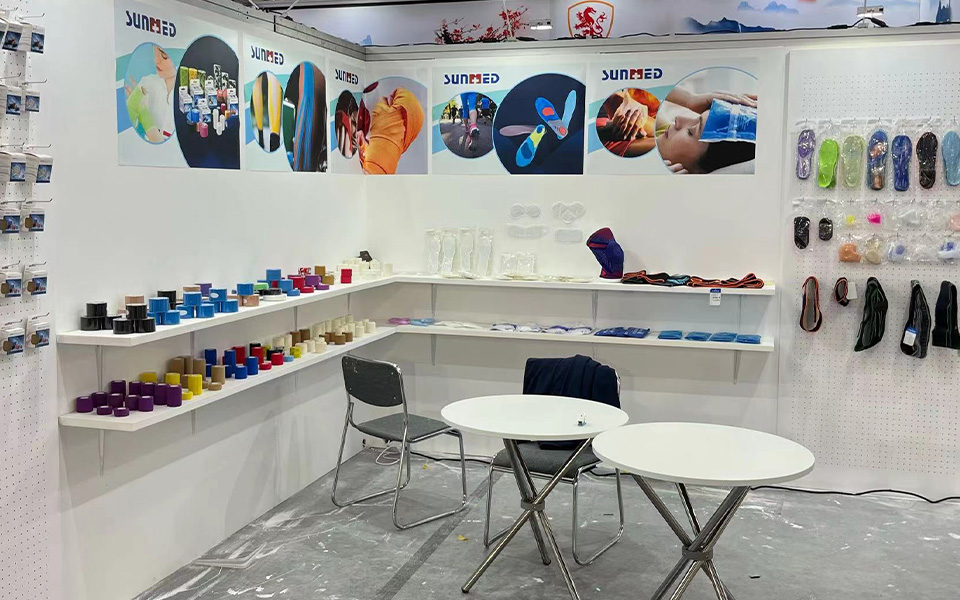
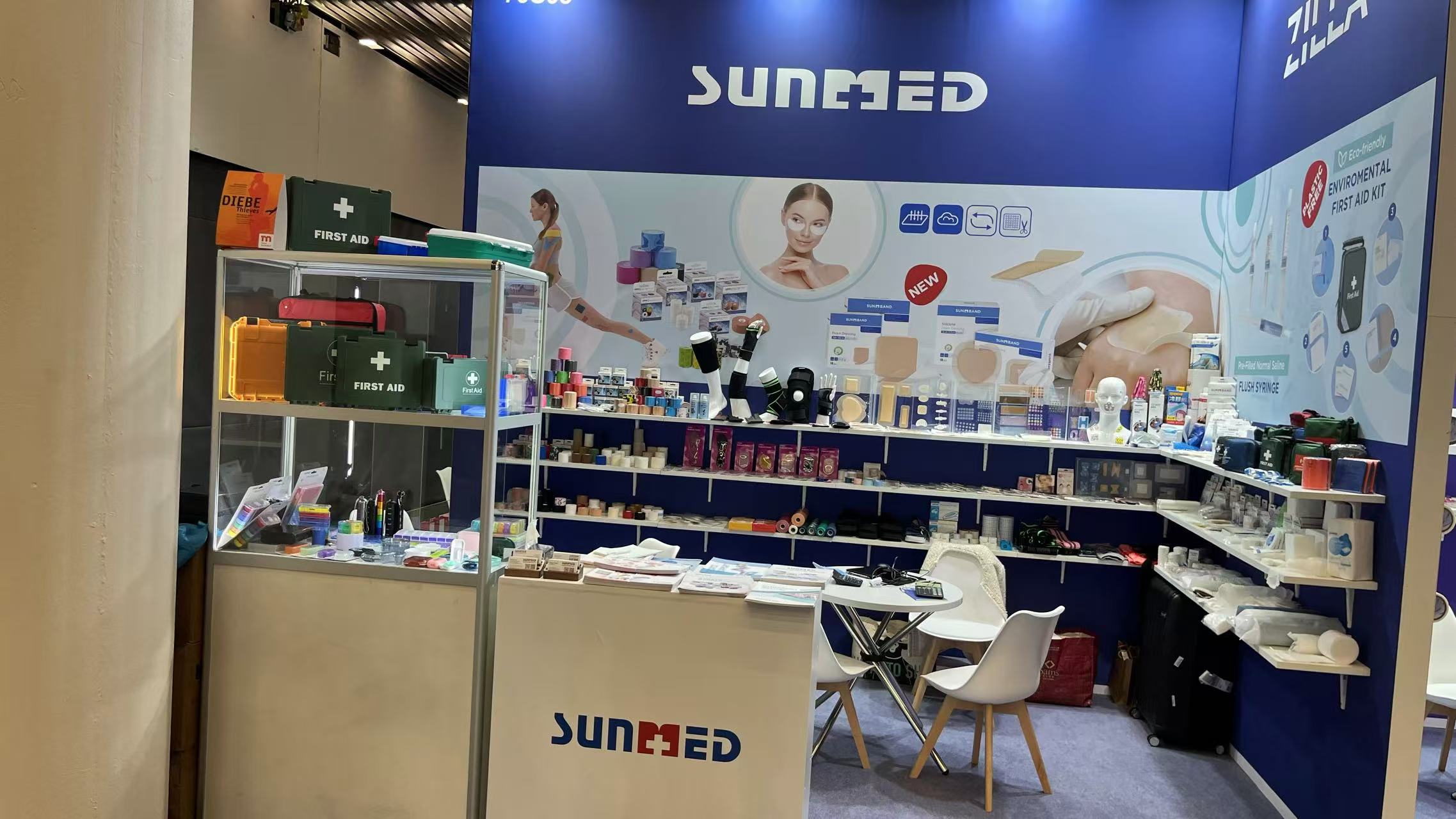
The product is supplied by Suzhou Sunmed Co., Ltd., a professional manufacturer and exporter of first-aid, medical, and healthcare products. The company has approximately 30 years of experience in the medical device and medical consumables industry. Its product scope includes wound dressings, gauze, bandages, medical tape, medical cotton, non-woven products, sports bandages, family healthcare products, hot and cold packs, pill boxes, medical instruments, syringes, catheters, surgical consumables, and related supplies.
This broad manufacturing background is relevant to the ice bag because reusable therapy products require more than basic sewing or assembly. Product developers must consider material selection, flexibility, sealing, closure performance, user comfort, dimensional consistency, cleaning, packaging, and repeated-use durability. Experience across multiple medical product categories can support a more systematic approach to these requirements.
The company operates multiple production bases in Jiangsu, Zhejiang, and Anhui Province. A multi-site manufacturing structure can support production capacity, sourcing flexibility, and specialization across product categories. It may also help the manufacturer serve different customer requirements, including private-label programs, wholesale orders, and international distribution.
The company reports a professional quality-control team comprising hundreds of personnel. Its inspection procedures are designed to support compliance with ISO 13485:2016 standards. ISO 13485 is widely associated with quality management systems for medical devices and related products. A structured quality system can help organize documentation, traceability, inspection processes, corrective actions, and production controls.
The manufacturer also states that most of its products are CE certified and that its Suzhou factories comply with FDA requirements. Certification and regulatory status can vary by product, market, intended use, and specific model, so purchasers should request the applicable documentation for the exact ice bag configuration. Nevertheless, the company’s experience with international requirements is an important strength for importers, distributors, and private-label customers.
Advanced Production Processes for a Reusable Therapy Product
Although the product is simple to operate, reliable production requires a series of controlled processes. Manufacturing begins with material selection and incoming inspection. Materials must be checked for consistency, appearance, dimensions, and suitability for the intended hot and cold applications. A manufacturer with established medical-product procedures can define acceptance criteria and maintain records for incoming materials.
Forming and assembly processes must produce a body that is flexible enough to conform to the user while maintaining structural integrity during filling, handling, and repeated use. Seams, joints, and closure interfaces require particular attention because they are potential leakage points. Process controls may include equipment calibration, operator training, visual inspection, dimensional checks, and sampling plans.
The cap is another important production element. Its threads, fit, sealing surface, and opening size must work together to create a practical filling and closure system. A large opening supports user convenience, but it must still be matched to a reliable closure. Quality inspection may include cap fit checks, leakage testing, and verification that the closure can be opened and closed consistently.
The adjustable wraps must also be produced with consistent dimensions and fastening performance. If a wrap is too short, it may not fit a larger joint. If it is too long or lacks reliable fastening, it may be difficult to use. The attachment points between the pack and wraps should be inspected to help ensure that normal handling does not cause premature separation.
Finished-product inspection can include visual examination, measurement, closure verification, and leak-resistance testing. Production teams may also review packaging integrity, labeling, product identification, and quantity. Batch records and traceability support the ability to investigate quality concerns and maintain consistent production over time.
For international customers, manufacturing strength also includes export coordination. The company reports sales to more than 60 countries, including markets in Europe, Southeast Asia, Africa, and Oceania. Experience with overseas customers can help support communication regarding specifications, packaging, documentation, shipping quantities, and market-specific requirements.
Why Manufacturer Experience Matters to Buyers
Wholesale buyers rarely evaluate only the physical appearance of a therapy pack. They also consider whether the supplier can maintain stable quality, support repeat orders, communicate efficiently, and provide appropriate technical and regulatory documentation. A manufacturer with a long history in medical consumables may be better positioned to address these commercial requirements than a supplier focused only on general consumer goods.
Sunmed’s product portfolio covers several connected fields, including first aid, wound care, sports support, family healthcare, and medical instruments. This range creates opportunities for product bundling and category expansion. A distributor purchasing the reusable ice bag may also be able to source cohesive bandages, elastic adhesive bandages, kinesiology tape, gauze, cotton products, pill boxes, and other first-aid items from the same supplier.
The company’s manufacturing bases and dedicated quality personnel may support larger-volume programs. Retailers can potentially use the product in sports-support displays, home healthcare sections, first-aid assortments, or hot-and-cold therapy ranges. Private-label buyers may also evaluate packaging, labeling, color, size combinations, and order quantities according to their market strategy.
Supplier communication is another factor. The manufacturer provides direct sales contact information and has experience exporting to hospitals, first-aid suppliers, supermarkets, and retail sports shops. This range of customers indicates familiarity with different purchasing expectations, from institutional supply to consumer retail.
Applications Across Multiple Market Segments
Household First Aid
Families can use the three-size set for common minor injuries and everyday aches. The small pack may be easier for children under supervision, while the medium and large packs can support adult needs. Keeping the product at home provides a reusable option that does not require specialized preparation beyond ice, water, or warm water.
Sports and Fitness
Athletes and fitness enthusiasts frequently seek convenient ways to manage temporary soreness and minor bumps. The wraps are useful in sports environments because they can help hold the pack in place while the user rests. Teams, gyms, coaches, and sports retailers may include the product in recovery kits or first-aid supplies.
Workplace and Vehicle Kits
Minor accidents can occur in offices, workshops, warehouses, construction areas, and vehicles. A reusable ice bag can complement other first-aid products by providing a method of temporary cold application. Its non-electrical format makes it suitable for cars, vans, travel kits, and remote work environments where freezer access may be limited.
Retail and Supermarket Channels
The product has a clear consumer benefit that can be communicated through packaging and point-of-sale displays: three sizes, reusable operation, hot and cold functionality, adjustable wraps, and a large filling opening. These features can help position it within sports support, family healthcare, first aid, or pain-relief categories.
Healthcare and Caregiver Settings
Caregivers may value a product that can be secured around a limb or joint while allowing the user to rest. Professional users should follow their own facility protocols and assess whether the product is suitable for each individual. The ice bag is intended for supportive therapy and is not a substitute for diagnosis, emergency treatment, or prescribed medical care.
Safe Use and Responsible Handling
The product should be used according to the supplied instructions and general hot-and-cold therapy precautions. Cold and heat can affect circulation and skin sensation. People with diabetes, poor circulation, reduced sensation, fragile skin, or certain medical conditions should consult a healthcare professional before using therapy products.
Cold therapy should not be applied directly to bare skin for long periods. A protective cloth barrier may reduce the risk of cold-related skin injury. Users should inspect the skin regularly and stop if the skin becomes excessively pale, painful, numb, or discolored.
Warm therapy requires special attention to temperature. The specified range is approximately 50–60°C or 122–140°F, and boiling water must not be used. The pack should be tested before contact with the body. Children should use warm therapy only with close adult supervision.
The product should not be used if it has visible cuts, punctures, damaged seams, a cracked cap, or other signs of deterioration. Users should avoid placing sharp objects near the bag, dragging it across rough surfaces, or applying excessive pressure. If leakage occurs, the pack should be removed, cleaned, and inspected before any further use.
Seek professional medical attention for severe pain, major swelling, deformity, suspected fracture, deep wounds, burns, loss of movement, persistent symptoms, or injuries that do not improve. An ice bag can provide temporary comfort, but it cannot determine the seriousness of an injury.
Cleaning, Storage, and Product Longevity
After each use, the pack should be emptied and rinsed when appropriate. The exterior can be wiped with a soft, clean cloth using a suitable mild cleaning method. The product should be allowed to dry completely before storage. The cap and opening should also be kept clean so that the next filling process is hygienic and convenient.
Storage should take place in a cool, dry area away from direct sunlight, sharp objects, chemicals, and excessive heat. The bag should not be folded or compressed in a way that creates permanent creases or stresses the seams. The wraps should be kept attached or stored together so that the complete set remains available when needed.
Regular inspection can extend practical service life. Users should check the body, seams, cap, closure surface, and wraps before filling. Repeated-use products naturally require monitoring, and any sign of leakage or structural damage should be treated seriously. Retailers and institutional buyers should retain product instructions and batch information where applicable.
Reusable design can reduce the frequency of replacement compared with disposable products, but service life depends on usage, handling, storage, cleaning, and environmental conditions. Buyers should avoid making unsupported claims about an exact number of uses unless validated product data is available.
Packaging, Private Label, and Wholesale Considerations
For wholesale customers, the product’s commercial success depends on more than technical performance. Packaging should clearly communicate the three-size configuration, reusable operation, hot-and-cold functionality, adjustable wraps, and safe warm-water temperature. Instructions should be easy to understand and should include warnings about direct skin contact, boiling water, leakage, and supervision of children.
Private-label customers may evaluate whether the supplier can support product identification, packaging artwork, carton configuration, labeling languages, and quality documentation. The manufacturer’s experience across first-aid and medical supply categories may be valuable for companies building a broader healthcare product line.
Distributors should confirm the exact contents of each order. The product information describes a three-pack with sizes of approximately 6, 9, and 11 inches, while the product title refers to two wraps. Buyers should verify whether the commercial package contains three ice bags and two wraps, and whether the wraps are shared accessories or assigned to particular sizes. Confirming these details before purchase helps prevent packaging and inventory discrepancies.
Order planning should also consider target users. A sports retailer may prioritize the medium and large sizes, while a family-care retailer may emphasize the complete three-size assortment. Institutional buyers may request multiple sets for different first-aid stations. Clear product coding, carton labeling, and batch identification can help simplify warehouse management.
Product Positioning for Modern Healthcare and Sports Retail
The reusable ice bag fits several consumer trends: practical self-care, reusable household products, active lifestyles, home first aid, and compact travel healthcare. It provides a simple alternative to products that require electricity, freezer storage, or single-use chemical activation. Its multiple sizes and adjustable wraps add functional value without making operation complicated.
For sports support, the product can be positioned as part of an injury-care and recovery assortment alongside elastic bandages, cohesive wraps, kinesiology tape, athletic tape, and first-aid dressings. For household healthcare, it can be displayed with thermometers, wound-care products, pill boxes, and other family-care items.
The product’s strongest message is versatility. It can be cold or warm, small or large, hand-held or secured with wraps, stored at home or carried in a vehicle, and used by different members of a family. This versatility may give it broader market appeal than a therapy pack designed for only one temperature mode or one body area.
Frequently Asked Questions
What is included in the product set?
The supplied product information describes a three-size set with approximately 6-inch, 9-inch, and 11-inch ice bags, together with two adjustable wraps. Buyers should confirm the final commercial package configuration with the supplier before placing an order, particularly if packaging artwork or retail labeling is being prepared.
Can the ice bag be used for both cold and warm therapy?
Yes. It is designed for cold therapy with ice and water and for warm therapy with warm water. For warm applications, the recommended water temperature is approximately 50–60°C or 122–140°F. Boiling water should not be used.
Which size is best for a child?
The small approximately 6-inch pack is described as suitable for children or smaller areas. Children should use the product under adult supervision, and the temperature and application time should be monitored carefully.
Which size is best for an adult knee?
The medium or large pack may be suitable depending on the size of the knee and the coverage desired. The large approximately 11-inch pack provides broader coverage, while the medium approximately 9-inch pack may be easier to position and carry.
Can the pack be filled with crushed ice?
Yes. The large cap opening is designed to allow ice cubes or crushed ice to be added more easily. Users should avoid overfilling the bag and should close the cap securely before applying it.
How do the adjustable wraps improve the product?
The wraps help secure the ice bag around areas such as the wrist, elbow, knee, and ankle. They reduce the need to hold the bag manually and can improve contact with curved body areas. The wraps should be tightened only to a comfortable level and should not restrict circulation.
Is the product reusable?
Yes. The ice bag is designed for repeated filling and use. After each application, it should be emptied, cleaned as appropriate, dried thoroughly, and stored in a safe location. The product should be replaced if damage or leakage develops.
How long does the bag stay cold?
Cooling duration depends on the amount and type of ice, water volume, ambient temperature, body contact, insulation, and application conditions. The product information states that it stays cold longer than many gel packs or other cold packs, but exact performance should be assessed under the intended conditions of use.
Can boiling water be added for heat therapy?
No. Boiling water should not be used. The recommended warm-water range is approximately 50–60°C or 122–140°F. Users should verify that the temperature is comfortable and safe before applying the pack.
Can the pack be placed directly on the skin?
Direct prolonged contact is not recommended for cold therapy. A thin cloth barrier may help protect the skin. Users should monitor the application area and stop if numbness, excessive cold, discoloration, burning, or unusual pain occurs.
Is this product a medical treatment for serious injuries?
No. It is a supportive hot-and-cold therapy product intended for temporary comfort associated with minor aches, bruises, swelling, strains, and similar situations. Serious injuries, severe pain, deformity, major swelling, deep wounds, burns, or persistent symptoms require professional medical evaluation.
Why is the large cap opening important?
A large opening makes it easier to add ice cubes or crushed ice, reduces preparation time, and simplifies cleaning and inspection. It also makes the product more convenient for users who do not have a funnel available.
Why should buyers consider an experienced medical-products manufacturer?
An experienced manufacturer may offer stronger process controls, broader quality-management expertise, established inspection procedures, export experience, and the ability to support related product categories. The supplier described here has approximately 30 years of experience and reports production bases and quality procedures serving international medical and healthcare markets.
Conclusion
The adjustable reusable ice pack with two wraps is a practical, flexible, and versatile product for hot and cold therapy. Its three-size configuration provides options for children, teenagers, adults, localized discomfort, and larger body areas. The adjustable wraps improve positioning around wrists, elbows, knees, and ankles, while the leak-resistant cap and large filling opening make preparation more convenient.
Compared with disposable instant packs, fixed-shape gel packs, loose ice in household bags, and single-size therapy products, this ice bag offers a strong combination of reusability, portability, adaptability, and broad application. It can be used in homes, sports facilities, first-aid kits, offices, vehicles, retail stores, and professional care settings when appropriate.
The product is also supported by a manufacturer with extensive experience in first aid, wound care, sports support, family healthcare, medical instruments, and related consumables. Multiple production bases, an established quality-control organization, reported ISO 13485:2016-based procedures, and international export experience provide important advantages for wholesalers, distributors, retailers, and private-label buyers.
For the best user experience, the product should be used according to its instructions, filled without overloading, kept at the specified warm-water temperature, protected from direct prolonged skin contact, inspected regularly, and stored properly. With responsible use and clear packaging, this reusable hot-and-cold therapy set can serve as a dependable addition to modern first-aid and family healthcare product ranges.
References
1. Product specification and usage information for adjustable reusable ice pack DC660324, including three-size configuration, adjustable wraps, filling method, and hot-water temperature guidance.
2. ISO 13485:2016, Medical Devices — Quality Management Systems — Requirements for Regulatory Purposes.
3. General first-aid principles for the temporary management of minor bruises, strains, sprains, swelling, and sports-related discomfort.
4. General consumer safety guidance for the application of cold and warm therapy products.
5. Manufacturer information concerning medical consumables, first-aid products, sports-support products, family healthcare products, production bases, quality-control procedures, and international export experience.

 English
 Español
 русский
 Français
 Deutsch
 italiano
 By Admin