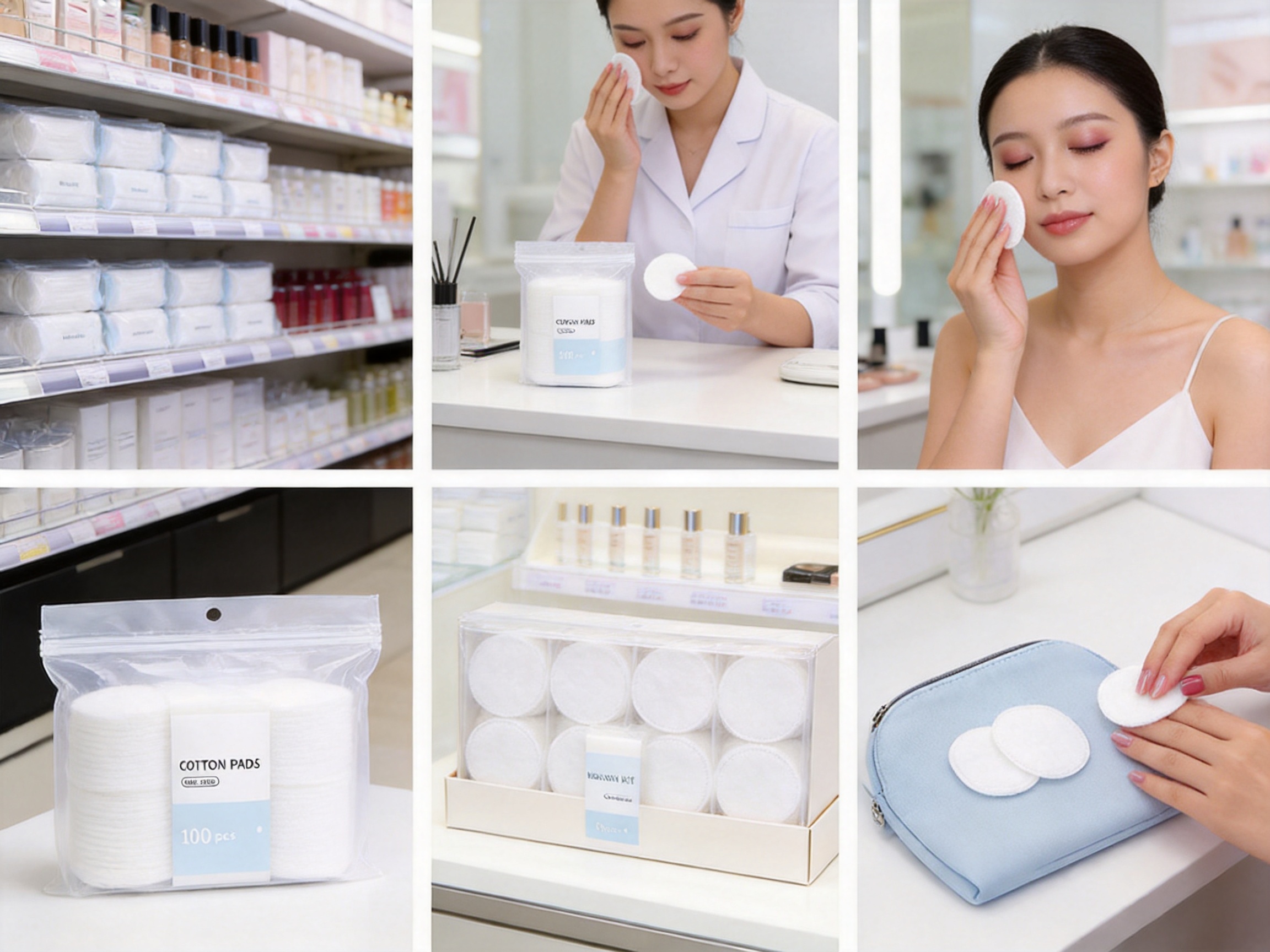
Pure cotton pads are a simple but essential personal-care product. They support everyday cleansing, makeup removal, skincare application, nail care, and many other routines in homes, salons, hotels, beauty stores, and professional retail channels. Although cotton pads may appear similar at first glance, differences in fiber quality, absorbency, liquid release, surface stability, packaging, shape, size, and manufacturing consistency can have a major effect on user satisfaction.
The Hypoallergenic Lint Free Facial Makeup Pure Cotton Pads, model DC662005, are designed to provide a soft, clean, and practical solution for facial care and cosmetic use. Manufactured from cotton, these pads are intended for sensitive skin and daily application. Their lint-free construction helps reduce loose fibers, while their absorbent structure supports controlled use of toner, makeup remover, cleansing water, and other beauty liquids.
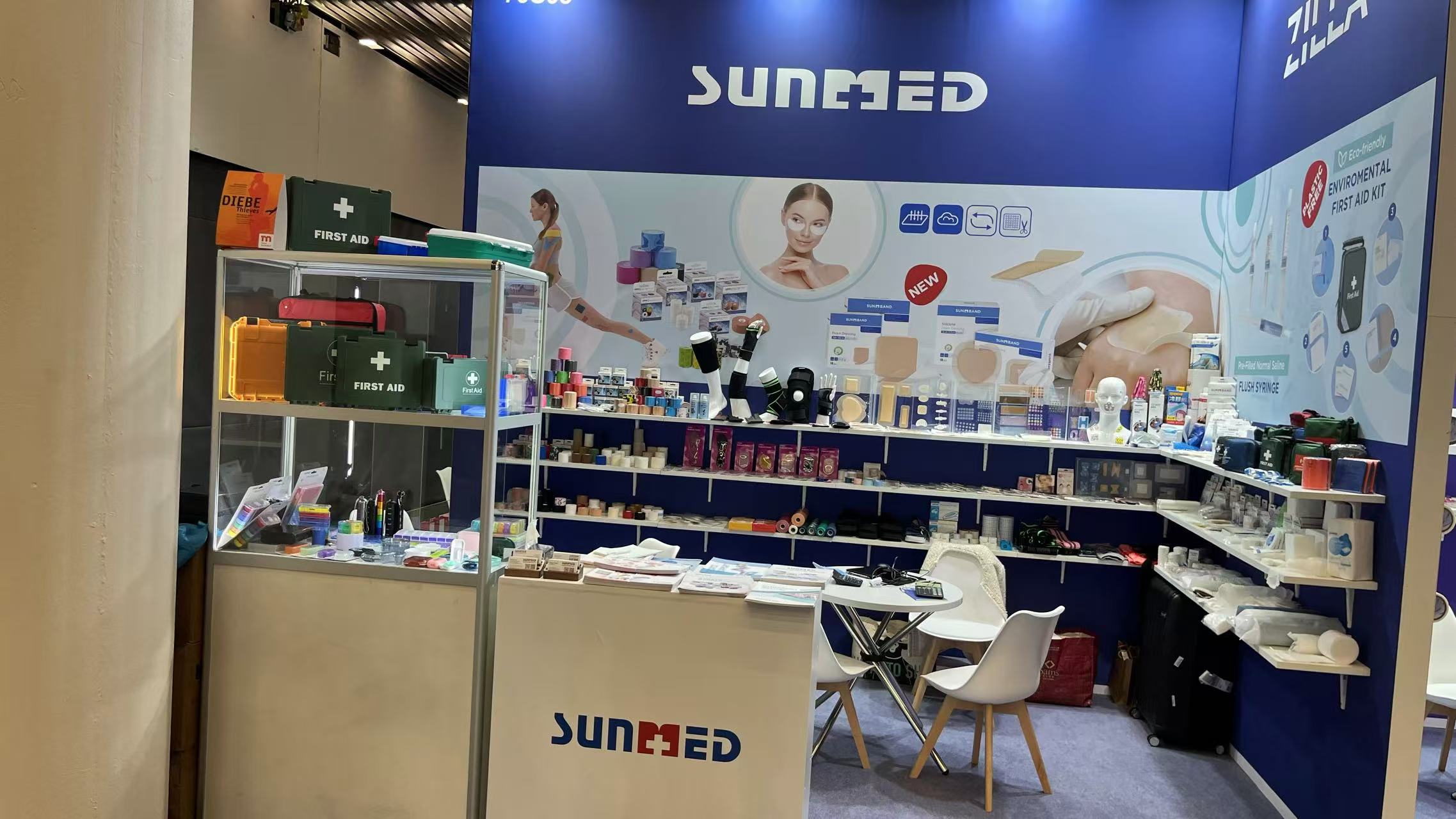
Available in round or square formats and in several sizes, the product can serve both consumer and business requirements. Standard packing is 100 pieces per pack, with customized specifications available for buyers seeking private-label, wholesale, or application-specific solutions. The product is supplied by Suzhou Sunmed Co., Ltd., a Chinese manufacturer and exporter with extensive experience in medical consumables, first-aid products, wound-care materials, healthcare products, and related personal-care items.
Product Overview
The DC662005 cotton pad is made from soft and absorbent cotton and is available in white. It is designed for direct contact with the skin during cleansing, makeup removal, cosmetic application, and general personal care. The product is described as hypoallergenic and suitable for sensitive skin, making it appropriate for consumers who prefer simple cotton-based products without unnecessary chemical additions.
The pads are available in round and square shapes. Standard size options include approximately 5.6 centimeters, 5.8 centimeters, 6 centimeters, and 8 centimeters, while customized dimensions may be discussed according to project requirements. This range allows importers, retailers, beauty businesses, and institutional buyers to select a format suited to facial cleansing, nail polish removal, toner application, or other specific uses.
Each pack contains 100 pieces. The packaging is designed to be convenient for storage and transport, and the resealable bag format helps protect unused pads between applications. A resealable pack is particularly useful for travel, retail display, household storage, and professional beauty environments where the contents may be used over an extended period.
| Item | Specification |
|---|
| Product name | Hypoallergenic Lint Free Facial Makeup Pure Cotton Pads |
| Model | DC662005 |
| Material | Cotton |
| Color | White |
| Standard packing | 100 pieces per pack |
| Shape | Round or square |
| Available sizes | 5.6 cm, 5.8 cm, 6 cm, 8 cm, and customized sizes |
| Primary application | Skin cleaning, makeup removal, toner application, and daily personal care |
| Model description | DC662005 |
| HS code | 3005901000 |

Hypoallergenic Lint Free Facial Makeup Pure Cotton Pads
Why Cotton Quality Matters
The quality of a cotton pad depends on more than the raw material alone. Cotton fibers must be selected, prepared, formed, compressed, cut, inspected, and packed in a controlled manner. If any of these stages is inconsistent, the finished pad may shed fibers, tear during use, absorb too much liquid, release liquid unevenly, or leave cosmetic residue on the skin.
High-quality cotton pads should provide a balanced combination of softness, structural integrity, absorbency, and controlled release. A pad that absorbs liquid effectively but releases it poorly may waste toner or cleansing water. A pad that releases liquid too quickly may become difficult to handle and may increase product consumption. A pad that is too thin may tear, while a pad that is excessively thick may be inefficient for routine use.
The DC662005 product is developed around this balance. Its cotton material provides a soft contact surface, while the pad structure is intended to retain and distribute liquids during use. This makes it suitable for applying beauty products evenly and for wiping away cosmetics without requiring excessive pressure.
For sensitive skin, surface comfort is especially important. Rough fibers, loose particles, or hard edges can cause discomfort during repeated wiping. A soft cotton pad can support a gentler routine, particularly around delicate areas such as the eyes and lips. Users should still follow the directions of their skincare and cosmetic products and discontinue use if irritation occurs.
Hypoallergenic and Skin-Friendly Design
The product is positioned as a hypoallergenic cotton pad suitable for sensitive skin. It is made from cotton and is described as containing no chemical composition or chemical addition. This simple material profile is attractive to consumers who prefer minimal personal-care products and to retailers seeking cotton pads for daily facial cleansing.
Hypoallergenic positioning is valuable in several market segments. Sensitive-skin consumers often examine the materials used in products that touch the face. Parents may also look for soft cotton products for general family care, although the suitability of any product for children should always be assessed according to the intended use. Beauty professionals and skincare retailers may prefer products with a straightforward material story that is easy to explain to customers.
The white color also supports a clean and familiar appearance. It allows users to observe makeup, dirt, or cleansing residue removed from the skin. For retailers, white cotton pads are easy to merchandise and can be presented as a basic personal-care essential rather than a heavily fragranced or highly processed cosmetic accessory.
It is important to distinguish between a hypoallergenic product description and a guarantee that no individual user will experience irritation. Skin sensitivity differs from person to person. A responsible product presentation should identify the material and intended use clearly and encourage users to stop using the product if discomfort develops.
Lint-Free Performance
One of the main advantages of the DC662005 cotton pad is its lint-free design. Loose fibers can be inconvenient during makeup removal and skincare application. They may remain on the cheeks, forehead, lips, eyelashes, or fingernails, and they can make a cleaning routine feel untidy.
A lint-free surface is also useful when applying toner, essence, cleansing water, or other liquids. Fibers left behind on the skin may interfere with a smooth cosmetic routine. For nail care, loose lint can become especially noticeable when applying or removing nail polish. A stable cotton pad helps create a cleaner working surface.
Lint reduction also matters in professional environments. Beauty salons, makeup counters, nail studios, spas, and hotel amenity programs may use large quantities of cotton pads. In these settings, inconsistent pads can increase cleanup time and affect the perceived quality of service. A pad that remains intact during use can support a more efficient workflow.
The term lint-free should be used responsibly. No textile or cotton product should be represented beyond its tested performance, and results may depend on the application, pressure, liquid type, and storage conditions. Nevertheless, the design objective of reducing messy fibers gives this product a practical advantage over ordinary low-quality pads that shed easily.
Absorption and Controlled Liquid Release
Makeup remover, toner, cleansing water, and other skincare products can be expensive. A cotton pad therefore needs to absorb enough liquid for effective application while minimizing unnecessary waste. The DC662005 product is designed for strong absorption and balanced release.
The product information indicates excellent water retention and water absorption. It also states that the pad can support the comprehensive introduction of beauty liquid and release up to 96 percent of the liquid. This feature is intended to help users obtain more value from each application by distributing the liquid across the pad rather than leaving a large amount trapped inside.
Controlled release can improve the user experience in several ways. First, it may help spread toner or cleansing water more evenly across the skin. Second, it can reduce the need to repeatedly add liquid to the pad. Third, it may help users apply a consistent amount to different areas of the face. For makeup removal, adequate release supports the loosening and wiping away of foundation, blush, concealer, eye makeup, and lip products.
The pad is also described as having a double-effect design that combines cleaning performance with an ultra-thin, water-saving structure. A thin pad can be convenient because it occupies less storage space and may require less liquid than a thicker alternative. At the same time, it must retain sufficient strength to avoid tearing during normal use.
Actual liquid consumption will vary according to the product being applied, the user’s technique, the amount of makeup, and the desired level of cleansing. The stated release performance should therefore be understood as a product-design specification rather than a universal result for every skincare formula and every user.
Multiple Beauty and Personal-Care Applications
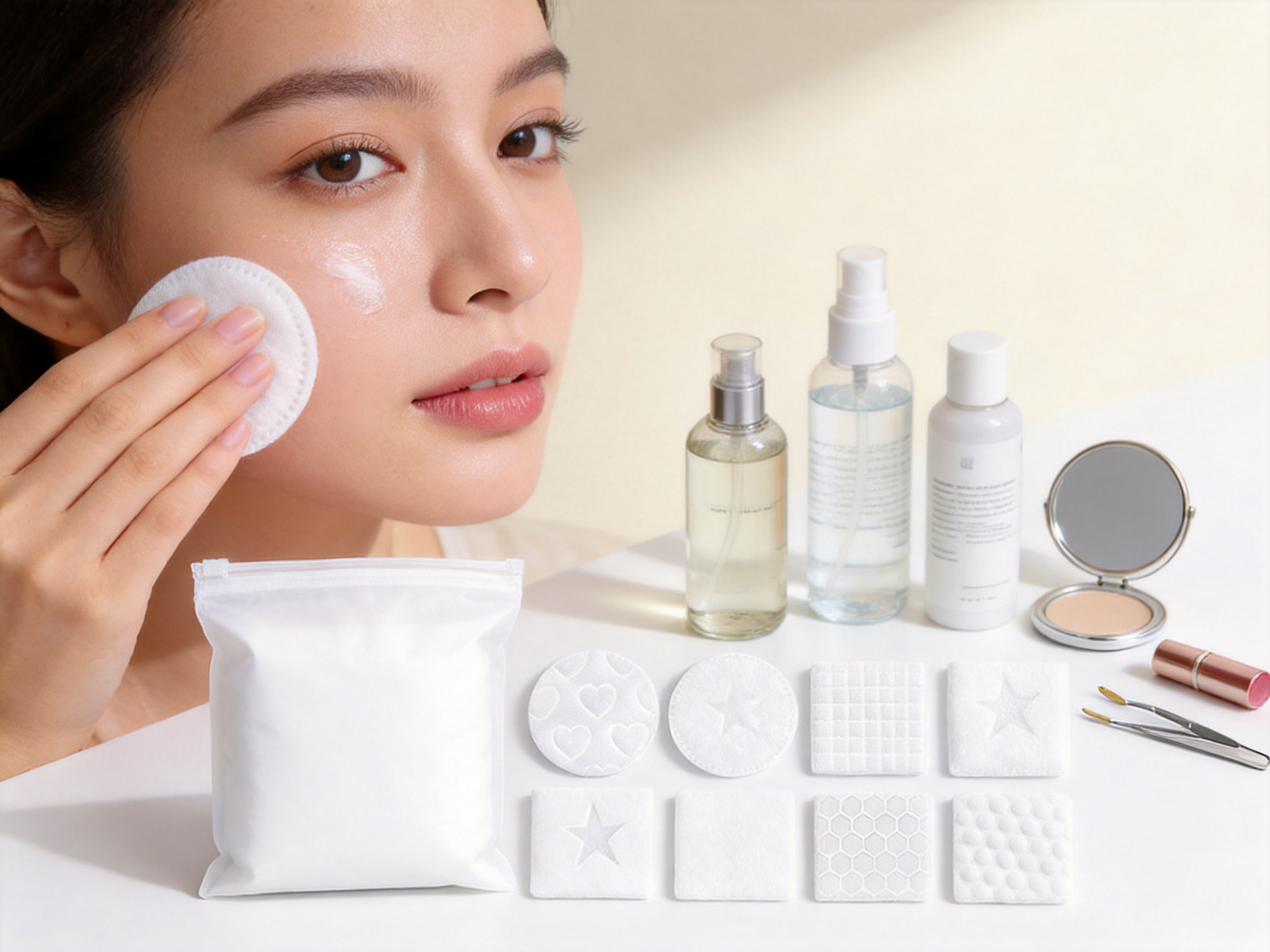
The principal applications of the cotton pads include skin cleansing, makeup removal, toner application, and daily skincare. Their soft cotton surface makes them suitable for applying liquid products and wiping away cosmetic residue. They can be used on the face, lips, and around the eyes with appropriate care.
For facial cleansing, users can apply cleansing water or makeup remover to the pad and gently wipe the skin. Several pads may be required depending on the quantity of makeup and the desired cleansing process. The lint-free structure is helpful when a clean surface is preferred after wiping.
For toner application, the pad can help distribute liquid evenly over the face. Users may choose a round or square format according to personal preference. A larger 8-centimeter pad can provide a broader contact area, while smaller sizes may be convenient for targeted applications or travel kits.
For eye makeup, gentle handling is essential. The pad can be moistened with a suitable remover and placed over the closed eyelid briefly before wiping softly. Users should avoid aggressive rubbing and should keep cosmetic liquids away from direct contact with the eye unless the product is specifically intended for that purpose.
For lip makeup, the cotton pad can help remove lipstick, gloss, and lip liner. Its soft surface supports a comfortable wiping action, while its absorbency helps hold the remover. For nail care, the pad can be used with nail polish remover, although the appropriate liquid and ventilation conditions should always be considered.
Beyond cosmetics, the product may be used to wipe small valuables or delicate surfaces when the selected cleaning liquid is compatible with those surfaces. Buyers should verify that a particular application is appropriate before using cotton pads on electronics, coated materials, jewelry, or other valuable items.
Application Examples
For makeup removal, apply a suitable remover to the pad and gently wipe from the center of the face outward. Use a clean area of the pad or a new pad when moving between heavily made-up areas.
For toner, lightly saturate the pad and sweep it over the face according to the skincare routine. Avoid excessive liquid if the product is intended to be used sparingly.
For nail polish removal, apply an appropriate remover and press the pad against the nail before wiping. The lint-free structure helps reduce fibers that might otherwise remain on the nail surface.
For travel, keep the pack sealed when not in use. Store it in a dry, clean place and avoid exposure to excessive moisture, heat, dust, or direct contamination.
Shape and Size Options
Different users prefer different cotton pad shapes. Round pads are familiar in facial-care routines and are often easy to hold between the fingers. They can be suitable for cheeks, forehead, chin, and general makeup removal. Square pads provide a larger straight edge and may be preferred for broad wiping motions or specific packaging concepts.
The available sizes provide flexibility for different markets. A 5.6-centimeter pad can be positioned as a compact daily-use format. The 5.8-centimeter and 6-centimeter options offer a balanced size for general facial care. An 8-centimeter format may be suitable when users want more coverage or when a retailer prefers a larger, more visibly substantial product.
Customized sizes may be considered for private-label projects, promotional packs, hotel amenities, beauty subscription boxes, or specialized professional-use programs. Customization can potentially include dimensions, shape, packaging, pack quantity, and presentation, subject to production review and order requirements.
Offering multiple sizes is an advantage over suppliers that provide only one standard format. Importers can select the size that matches local consumer preferences, shelf positioning, intended application, and target price. A distributor serving professional salons may choose a different format from a supermarket retailer or an online skincare brand.
Resealable Packaging and Everyday Convenience
Packaging influences both product hygiene and consumer satisfaction. The DC662005 cotton pads are supplied in a handy resealable bag. This format allows users to open the pack, remove the required quantity, and close the bag again for storage.
Resealable packaging is convenient for travel because it helps keep the pads together and reduces the need for a separate container. It is also useful for home storage, where a 100-piece pack may be used over multiple days or weeks. In retail environments, a compact bag can be displayed efficiently and handled easily during transport.
For wholesale buyers, packaging design can support inventory control. Standardized packs are easier to count, cartonize, label, and distribute. The 100-piece format provides a clear unit of sale and can be adapted to different distribution channels. Buyers may discuss customized packaging if they require a specific language, barcode, private label, or market presentation.
Packaging should be stored in clean, dry conditions. Although the resealable bag helps protect unused pads, it should not be treated as a substitute for appropriate warehouse hygiene. Cartons should be kept away from water, strong odors, excessive heat, and dust.
Manufacturing Expertise and Production Strength
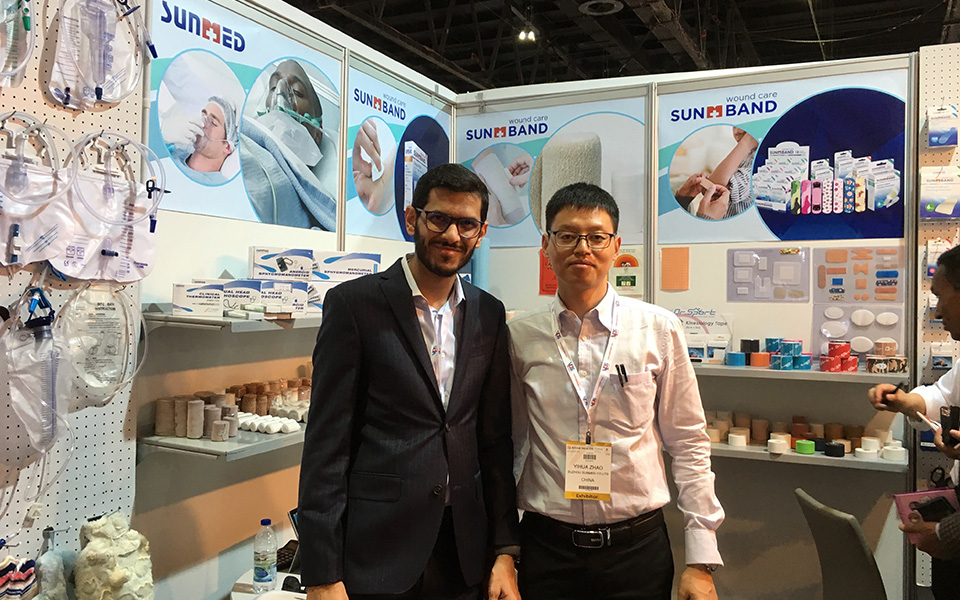
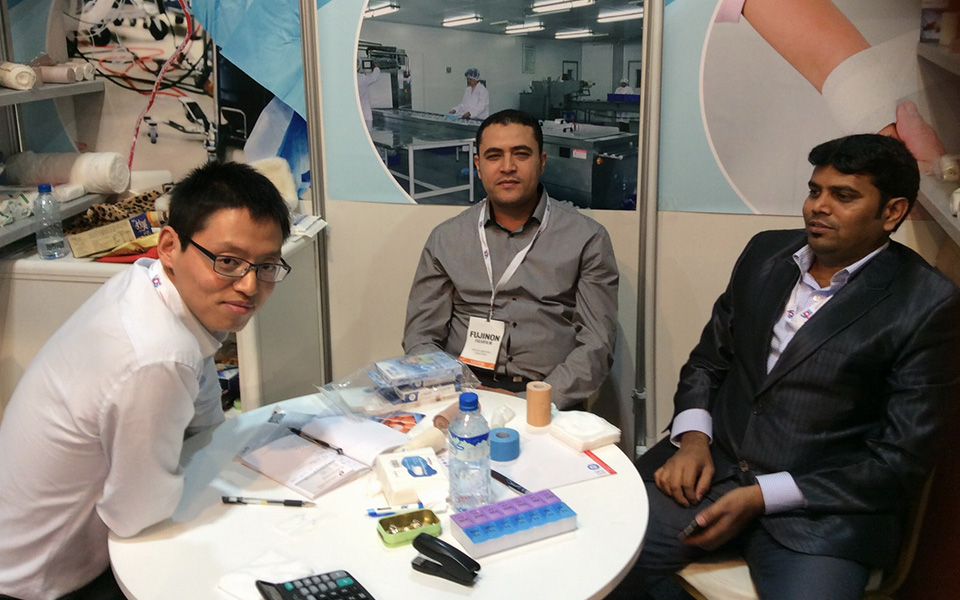
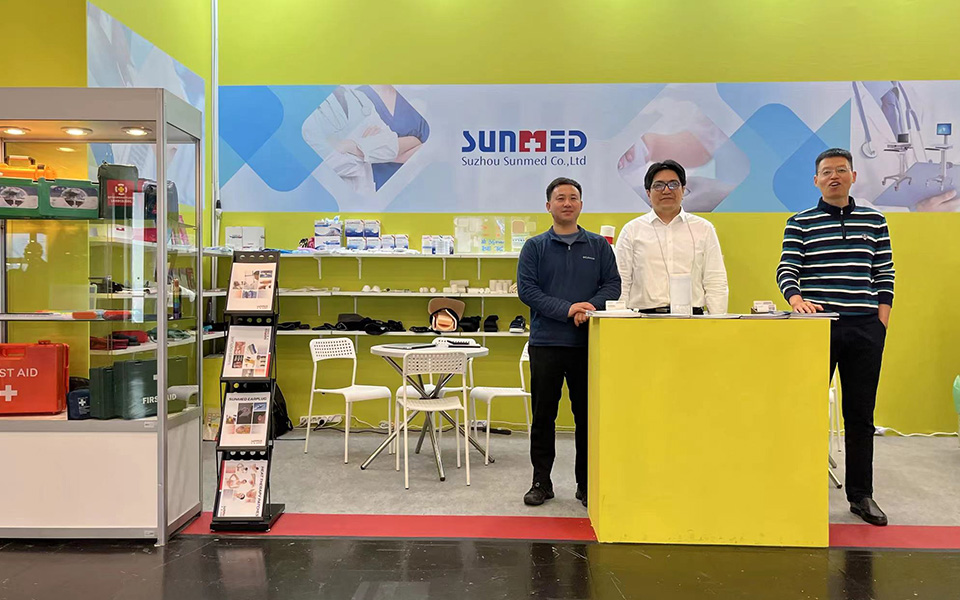
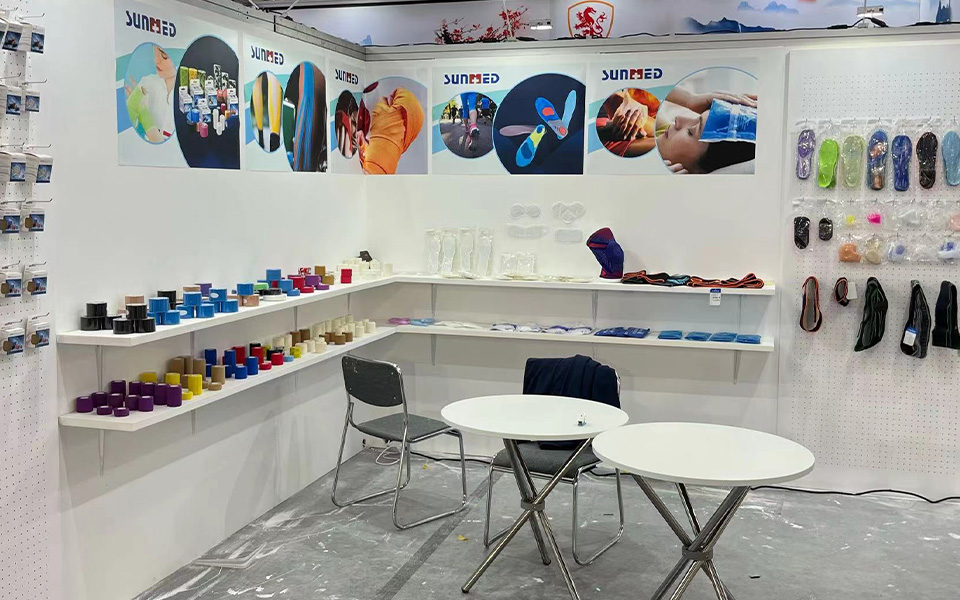
Suzhou Sunmed Co., Ltd. is a professional manufacturer and exporter of first-aid, medical, and healthcare products in China. The company operates multiple production bases in Jiangsu, Zhejiang, and Anhui Province. This manufacturing network supports a broad portfolio that includes medical gauze, bandages, medical tape, medical cotton, non-woven products, sports bandages, kinesiology tape, cohesive bandages, family healthcare products, medical instruments, syringes, catheters, surgical consumables, and other medical supplies.
The company has approximately 30 years of experience in the medical device and medical consumables industry. This background is relevant to cotton pad production because it provides experience in material handling, product consistency, hygiene awareness, process documentation, inspection, and international customer requirements.
Manufacturing cotton pads at a dependable commercial scale requires more than cutting cotton into circular or square pieces. The raw material must be received and assessed, prepared for forming, processed into a stable pad structure, cut accurately, inspected, and packed. Each stage can affect the finished product’s softness, absorbency, lint behavior, dimensions, and appearance.
A manufacturer with experience across medical cotton, gauze, bandages, and non-woven products can apply lessons from related product categories. Fiber management, roll handling, cutting control, packaging discipline, and batch inspection are important in each of these areas. Cross-category production knowledge can help support a more systematic approach to cotton pad manufacturing.
Raw Material Management
Material management begins with selecting cotton that can support the intended softness, absorbency, and appearance. The material should be handled in a way that limits unnecessary contamination and maintains consistency between production batches. White cotton pads also require attention to visual cleanliness and color uniformity.
At the preparation stage, cotton is arranged and processed into a form suitable for pad production. The objective is to create a consistent material structure that can be cut into the required shape without excessive variation. A stable structure helps ensure that users receive pads with a similar feel and performance throughout the pack.
Forming and Cutting Control
The forming process determines the pad’s thickness, surface condition, and internal structure. The cutting stage then creates the round or square outline. Accurate cutting is important because irregular edges can affect handling, presentation, and user comfort.
For customized projects, the production team must review the requested dimensions and shape before manufacturing. The selected specifications may influence machine settings, material yield, packaging space, and carton configuration. Technical review helps ensure that a custom request is practical and repeatable.
Inspection and Quality Control
Suzhou Sunmed reports a professional quality-control team comprising hundreds of personnel. The company states that inspection procedures are followed rigorously and that its products are manufactured to meet ISO 13485:2016 standards. Most products are described as CE certified, and the Suzhou factories are stated to comply with FDA requirements.
These statements reflect the company’s broader medical-product quality systems. Buyers should confirm the exact certification, declaration, testing documentation, and regulatory status applicable to the specific cotton pad model and destination market. Cosmetic and personal-care products may be governed by different requirements from medical devices, so product classification and documentation should be reviewed for each sales region.
Quality control for cotton pads may include checking material appearance, color, dimensions, shape, surface condition, fiber shedding, packing quantity, sealing or resealing function, labeling, and carton condition. Depending on the buyer’s program, additional testing or inspection requirements may be discussed before production.
Batch consistency is especially important for wholesale customers. A retailer does not want one shipment to feel noticeably different from the previous shipment. Consistent specifications support repeat purchasing, fewer complaints, more predictable customer reviews, and stronger long-term distribution relationships.

Advantages Compared with Ordinary Cotton Pads
The main competitive advantage of the DC662005 cotton pad is its combination of skin-friendly material positioning, lint reduction, absorbency, liquid release, shape and size flexibility, and convenient packaging. Many basic cotton pads may provide only a simple absorbent surface. This product is developed with additional attention to the way consumers use beauty liquids and remove cosmetics.
First, the lint-free objective improves cleanliness during use. Consumers are less likely to encounter loose fibers on the skin or nails when the pad remains stable during normal wiping.
Second, the cotton material and soft construction support a more comfortable experience than rough or poorly processed alternatives. This is important for repeated daily use and for users who prefer gentle facial-care accessories.
Third, the absorbency and release balance can help reduce wasted toner, remover, or cleansing water. A product that retains and distributes liquid effectively may offer better value than a pad that absorbs unevenly or leaves a large portion of the liquid trapped.
Fourth, the thin design supports portability and efficient storage. It can be used in travel kits, handbag-sized personal-care packs, salon supplies, and home-care cabinets without occupying excessive space.
Fifth, the product is available in several sizes and shapes. This gives buyers greater flexibility than a one-size-only product and supports different consumer preferences, price points, and application scenarios.
Sixth, the 100-piece resealable pack creates a practical unit for household, retail, and professional use. The format is easy to understand, store, count, and distribute.
Finally, the product is backed by a manufacturer with established experience in medical consumables and international export. The company has supplied products to more than 60 countries, including markets in Europe, Southeast Asia, Africa, and Oceania. Its experience with hospitals, first-aid suppliers, supermarkets, and retail sports shops demonstrates familiarity with different customer types and international purchasing processes.
OEM, Wholesale, and Private-Label Potential
The cotton pad is suitable for distributors, importers, beauty retailers, supermarket suppliers, online personal-care brands, salon supply companies, hotel amenity providers, and healthcare product wholesalers. Buyers may be interested in standard product supply or in a customized project based on their market requirements.
Potential customization areas may include pad size, round or square shape, pack quantity, outer packaging, labeling, carton configuration, and private-label presentation. Each request should be reviewed with the supplier because customization can affect minimum order quantities, tooling or setup requirements, production schedules, and packaging confirmation.
For wholesale programs, buyers should define the desired annual volume, shipment frequency, destination market, packaging language, product classification, and inspection requirements. Clear specifications help prevent misunderstandings and allow the factory to prepare an accurate quotation and production plan.
Private-label customers may also request packaging artwork support, samples, pre-production approval, and batch documentation. A structured approval process is useful because the cotton pad’s physical specifications and the printed packaging must correspond accurately.
Sunmed’s experience exporting to more than 60 countries can support international buyers who require communication across different time zones, shipping arrangements, documentation, and product categories. The company’s stated commitment is to establish long-term cooperation and provide practical communication throughout the purchasing process.
Applications Across Different Sales Channels
In supermarkets and pharmacies, the product can be positioned as a daily facial-care essential. Its 100-piece pack provides a clear value proposition for regular household use.
In beauty stores, the cotton pads can be displayed alongside toner, cleansing water, makeup remover, nail-care products, and facial masks. The lint-free and absorbent features can help distinguish the product from basic cotton accessories.
In professional salons and spas, the pads may be used for cleansing, product application, makeup services, or nail services. Buyers in this segment may prioritize consistent supply, bulk pricing, surface stability, and packaging that is easy to store.
In online retail, product descriptions can emphasize cotton material, lint-free design, available shapes and sizes, 100-piece packing, and resealable storage. Online sellers should present specifications accurately and avoid making medical claims that are not supported by the product documentation.
For hotels and travel programs, the compact resealable bag can support amenity kits. Customized sizes or packaging may be considered where the product is intended to match a hotel brand or a personal-care subscription box.
For first-aid and healthcare distributors, the product may complement other cotton products, gauze, bandages, medical tape, and personal-care supplies. However, buyers should verify the intended regulatory classification before marketing it for any clinical or medical purpose.
Storage, Handling, and Responsible Use
Cotton pads should be stored in a clean, dry environment. The packaging should remain closed whenever possible to reduce exposure to dust and moisture. Direct contact with contaminated surfaces should be avoided.
Users should select a suitable liquid for the intended application. Cosmetic removers, toners, and cleansing waters should be used according to their own instructions. A cotton pad should not be used with a chemical, solvent, or treatment unless the compatibility and intended application are understood.
The pads are designed for external personal-care use. They should not be inserted into the ear, used inside wounds, placed in the eye, or used for any other purpose not specified by the product documentation. Used pads should be discarded appropriately and should not be reused when cleanliness is important.
Retailers and distributors should keep cartons protected from moisture, heat, direct sunlight, and strong odors. Warehouse rotation based on receipt date can help maintain orderly inventory. Before shipment, buyers may inspect the packaging for damage, moisture exposure, or incorrect labeling.
How Buyers Can Evaluate a Cotton Pad Supplier
Professional buyers should evaluate more than the unit price. Material description, product consistency, packaging quality, manufacturing experience, inspection procedures, export capability, and communication are all important.
Samples can help buyers assess softness, lint behavior, absorbency, release, shape, edge quality, and packaging convenience. Samples should be evaluated under realistic conditions using the types of toner, remover, or other liquids that the target customer is likely to use.
Buyers should also ask whether the supplier can maintain the approved specification across repeat orders. For customized products, the approved sample, technical drawing, packaging artwork, and inspection criteria should be documented before mass production.
Regulatory documentation should be reviewed according to the destination market. The relevant requirements may differ depending on whether the product is sold as a cosmetic accessory, personal-care product, general consumer good, or medical-related item. Importers are responsible for verifying local rules and labeling requirements.
Finally, communication and supply continuity matter. A supplier with multiple production bases, an experienced export team, and a broad product portfolio may be better positioned to support long-term programs than a supplier that offers only a single product with limited production resources.
Why Choose an Experienced Medical Consumables Manufacturer?
Although cotton pads are used mainly for beauty and personal care, manufacturing discipline from the medical consumables sector can provide meaningful advantages. Medical-related production requires attention to documentation, inspection, traceability, material control, packaging, and customer specifications. These habits can contribute to a more dependable personal-care product.
Sunmed’s product portfolio includes medical gauze, bandages, medical cotton, medical tape, non-woven materials, sports supports, family healthcare products, syringes, catheters, surgical consumables, and other healthcare supplies. This broad experience indicates familiarity with materials that must be processed consistently and supplied to professional buyers.
The company established its first-aid factory in 2008 to meet the needs of first-aid customers. In 2021, it established a factory for kinesiology tape, cohesive bandages, and elastic adhesive bandages to accommodate increasing customer demand. These investments demonstrate an approach based on developing dedicated production capability for important product categories.
For cotton pad buyers, the practical benefit is the ability to work with a supplier that understands both product manufacturing and international distribution. The company can potentially support related product sourcing, consolidated purchasing, and broader healthcare supply programs, subject to specific order discussions.
Q&A
What are these cotton pads made from?
The pads are made from cotton. The product information describes the material as soft and absorbent and positions the pads as suitable for sensitive skin.
Are the cotton pads lint-free?
The product is designed as lint-free to reduce messy fibers left on the skin or nails during normal use. Actual performance may depend on handling, pressure, the liquid used, and storage conditions.
Can the pads be used for sensitive skin?
They are described as hypoallergenic and suitable for sensitive skin. However, individual reactions vary. Users with known allergies or highly reactive skin should review the product information and consider a small-area test before regular use.
What can the pads be used for?
Applications include toner, makeup remover, cleansing water, facial skincare, makeup removal, nail polish removal, and general surface wiping where appropriate. They can be used for foundation, blush, concealer, eye makeup, lip makeup, and skincare products.
How many pieces are in one pack?
The standard pack contains 100 pieces.
What shapes are available?
The product is available in round and square shapes.
What sizes are available?
Standard size options include 5.6 centimeters, 5.8 centimeters, 6 centimeters, and 8 centimeters. Customized sizes may also be discussed.
Do the pads release liquid efficiently?
The product is designed for strong absorption and balanced release. The supplied product information states that it can release up to 96 percent of the liquid under the specified product design conditions. Actual results may vary according to the liquid, application method, and quantity used.
Are the pads suitable for travel?
Yes. The resealable bag is intended to make the product easy to carry and store while traveling or when using it away from home.
Can the product be customized?
Customized sizes are listed as available, and business buyers may discuss shape, packing, labeling, and private-label requirements with the manufacturer. Customization depends on technical feasibility, order quantity, packaging approval, and production planning.
Who manufactures the product?
The product is manufactured and supplied by Suzhou Sunmed Co., Ltd., a Chinese manufacturer and exporter of medical consumables, first-aid products, healthcare supplies, and related personal-care products.
Does the manufacturer support international orders?
The company exports products to more than 60 countries across Europe, Southeast Asia, Africa, and Oceania. International buyers should contact the company to confirm current availability, quotation, shipping terms, documentation, and destination-market requirements.
What is the HS code listed for the product?
The listed HS code is 3005901000. Importers should confirm the correct classification with their customs broker or relevant authority because tariff classification can depend on product composition, intended use, and local customs interpretation.
Conclusion
The Hypoallergenic Lint Free Facial Makeup Pure Cotton Pads provide a practical combination of softness, absorbency, controlled liquid release, lint reduction, convenient packing, and flexible size options. The product is suitable for facial cleansing, makeup removal, toner application, nail care, and daily personal-care routines.
Its advantages over basic cotton pads come from the attention given to fiber stability, liquid performance, thin construction, and user convenience. The availability of round and square formats, several standard sizes, and customized dimensions makes the product adaptable to different retail and professional applications.
For wholesale and OEM buyers, the product is supported by Suzhou Sunmed Co., Ltd.’s broad medical consumables experience, multiple production bases, international export background, and stated quality-control systems. Buyers can evaluate the product through samples, technical specifications, packaging review, and destination-market compliance checks.
As consumers continue to seek gentle, convenient, and efficient personal-care products, reliable cotton pads remain an important part of the beauty and healthcare supply chain. A well-manufactured lint-free cotton pad can improve daily routines while giving distributors and retailers a dependable product for household, professional, and international markets.
References
1. Product specification sheet for Hypoallergenic Lint Free Facial Makeup Pure Cotton Pads, Model DC662005.
2. Suzhou Sunmed Co., Ltd. company profile and manufacturing overview.
3. ISO 13485:2016, Quality Management Systems for Medical Devices.
4. General principles of cotton fiber processing, absorbent textile construction, and personal-care product manufacturing.
5. General guidance for cosmetic accessory labeling, storage, handling, and consumer-use instructions.

 English
 Español
 русский
 Français
 Deutsch
 italiano
 By Admin