Introduction
Outdoor activities, workplace incidents, travel disruptions, and everyday accidents can happen without warning. A first aid kit is useful only when its contents are organized, protected, and readily available at the moment they are needed. For users who spend time around water or in demanding outdoor environments, a conventional fabric pouch may not provide sufficient protection against rain, splashes, humidity, dust, or accidental immersion. A waterproof dry bag first aid kit bag provides a practical solution by combining portable first aid organization with a durable waterproof exterior.
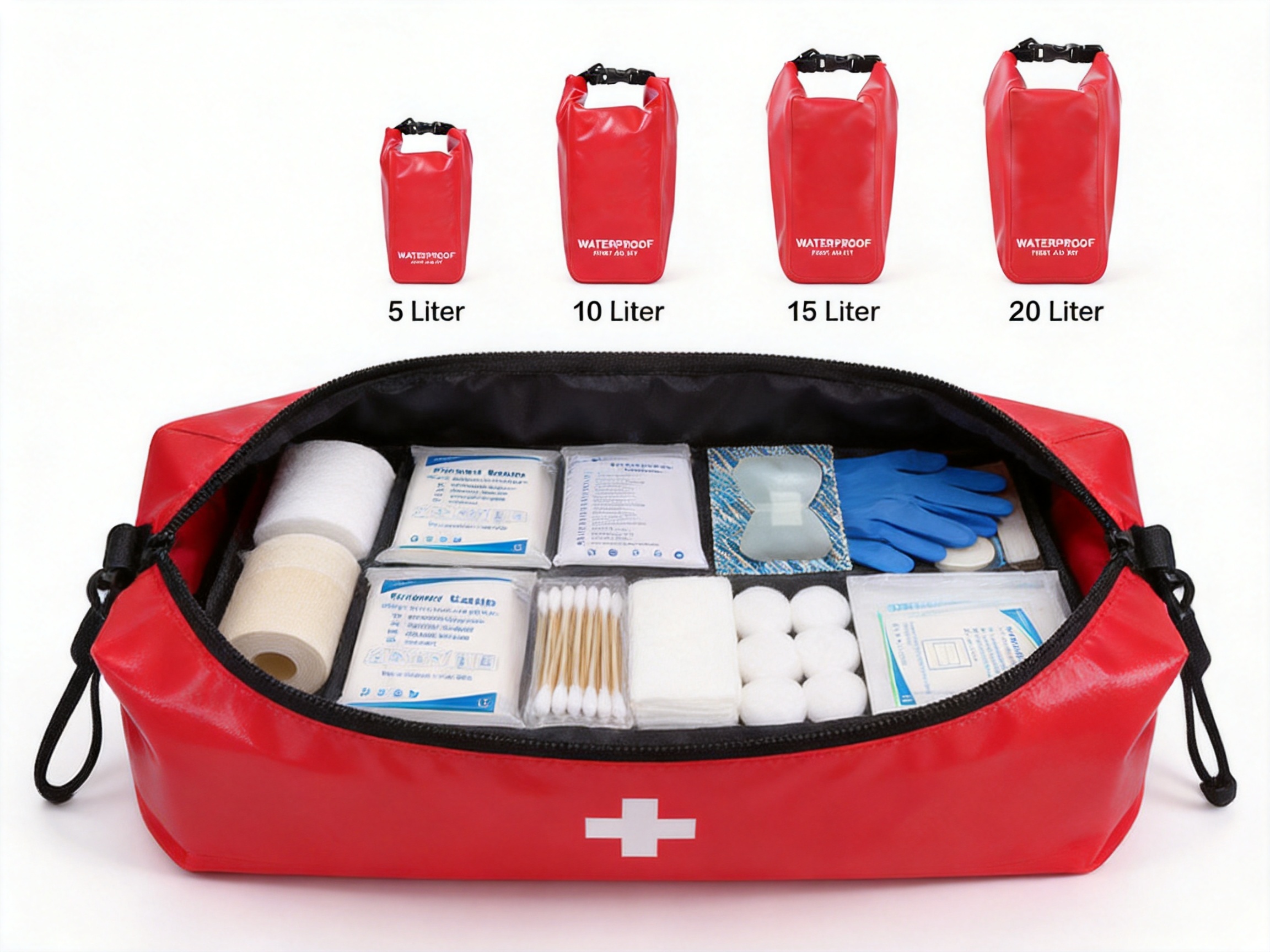
The Waterproof Dry Bag First Aid Kit Bag for Kayaking, model DC660924, is designed for customers who need a compact, dependable, and customizable container for first aid supplies. It uses 500D PVC tarpaulin with a thickness of 0.5 millimeters, creating a tough outer structure that is suitable for boating, kayaking, camping, road travel, workplace storage, sports activities, and household emergency preparedness. The bag is available in several capacities, including 5 liters, 10 liters, 15 liters, and 20 liters, allowing buyers to select a format appropriate for their intended application.
Unlike a basic first aid pouch that is designed primarily for indoor storage, this product combines an external waterproof dry bag with an internal nylon pouch. The outer bag helps shield contents from moisture and environmental exposure, while the inner pouch keeps first aid supplies grouped and stored between uses. This two-layer arrangement supports better organization, easier handling, and improved protection during transport.
The product is suitable for wholesale buyers, first aid suppliers, supermarkets, retail sports shops, corporate procurement departments, schools, workplaces, hospitality businesses, and organizations that prepare emergency supplies for teams or customers. It can also be branded, enabling distributors and purchasing organizations to align the bag with their own product programs, safety campaigns, or corporate identity.

Waterproof Dry Bag First Aid Kit Bag for Kayaking
Why a Waterproof First Aid Bag Matters
First aid supplies are often stored in locations where exposure to water and moisture is possible. A kit carried on a kayak may be splashed repeatedly. A kit placed in a vehicle may encounter condensation, rain, or spilled liquids. A camping kit can be exposed to wet ground, damp clothing, or changing weather. Even an office or school kit may be moved outdoors during an evacuation or emergency response.
When a storage bag absorbs water, the result can be more than simple inconvenience. Paper instructions may become unreadable, adhesive products may lose packaging integrity, sterile materials may be compromised, and individual components may become difficult to identify. A waterproof exterior helps reduce these risks by creating a protective barrier between the emergency supplies and the surrounding environment.
The DC660924 is especially suitable for applications involving water because it is made from PVC tarpaulin rather than ordinary woven fabric. PVC tarpaulin is widely used for products that require flexibility, durability, and resistance to environmental exposure. Its coated construction gives the bag a more protective surface than many lightweight textile pouches, while keeping the product practical for transport.
Water protection is also valuable in situations that are not directly associated with boating. Outdoor event organizers can place emergency supplies near sports fields or activity areas. Construction and industrial teams can keep first aid materials in work vehicles. Travelers can store the bag in luggage or a recreational vehicle. Restaurants, schools, offices, and homes can use the product as a portable emergency storage solution.
It is important to understand that a dry bag protects the container and its contents from many common forms of moisture exposure, but the product should be used according to the buyer’s handling procedures. The bag should be closed correctly, inspected regularly, and stored with suitable first aid materials. It is a storage and transport solution, not a substitute for professional medical treatment or an emergency response plan.
Product Overview
The Waterproof Dry Bag First Aid Kit Bag for Kayaking is a reusable storage bag intended to hold first aid supplies and related emergency items. The product is supplied as a bag system rather than as a specified medical contents package. Buyers can determine which first aid products, personal protective items, instructions, or emergency accessories are placed inside according to their market, workplace, activity, or regulatory requirements.
| Product Attribute | Specification | Commercial Benefit |
|---|
| Model | DC660924 | Supports product identification and purchasing communication |
| Product type | Waterproof dry bag first aid kit bag | Provides portable storage for emergency supplies |
| Material | 500D PVC tarpaulin, 0.5 mm | Offers a durable and moisture-resistant outer construction |
| Available capacities | 5 L, 10 L, 15 L, 20 L, and other options | Supports different supply volumes and applications |
| Color options | Red, blue, green, yellow, and other colors | Allows application-based selection and visual identification |
| Internal organization | Internal nylon pouch | Helps keep first aid contents stored between uses |
| Branding | Custom branding available | Supports private-label and promotional programs |
| Minimum order quantity | 1,000 pieces | Suitable for wholesale and institutional procurement |
The combination of a durable outer dry bag and an internal nylon pouch is one of the product’s most useful design features. The outer layer is intended to provide environmental protection, while the inner layer creates a separate storage area for the contents. This helps reduce loose-item movement and makes it easier for users to return supplies to the same location after inspection or use.
The available capacity range gives buyers flexibility. A 5-liter bag may be suitable for personal outdoor use, a small vehicle, or a compact workplace station. A 10-liter or 15-liter version can accommodate a broader selection of bandages, gauze, medical tape, protective gloves, cleansing materials, and other basic supplies. A 20-liter option may be preferred for group activities, boats, larger vehicles, schools, or commercial operations that require a more extensive storage volume.
Material and Construction Advantages
500D PVC Tarpaulin
The product is manufactured from 500D PVC tarpaulin with a thickness of 0.5 millimeters. The “500D” designation refers to the denier classification of the base textile, while the PVC coating contributes to surface protection and water resistance. Together, these characteristics create a material that is more suitable for demanding transport conditions than many thin, uncoated fabrics.
PVC tarpaulin is valued for its balance of strength, flexibility, and cleanability. The material can withstand routine handling, folding, packing, and movement. It is also well suited to products that may be placed on wet or dirty surfaces, because the exterior can generally be wiped as part of a normal maintenance routine. Buyers should establish their own cleaning and disinfection procedures based on the intended environment and the instructions provided for the complete product.
The 0.5-millimeter material thickness contributes to a more substantial feel than lightweight nylon-only bags. This is important for a first aid container because users often expect the bag to retain its shape, resist abrasion, and remain usable after repeated transport. A stronger exterior also helps protect packaged contents from friction and contact with surrounding equipment.
Moisture Protection
The waterproof construction is a key advantage over ordinary first aid bags made from untreated cloth or thin woven polyester. In kayaking, boating, fishing, rafting, and other water-related activities, the bag may be subjected to splashes and wet handling. A waterproof dry bag design helps keep the emergency storage area more isolated from these conditions.
Moisture protection also supports better product longevity. First aid supplies generally have their own packaging and expiration dates, but keeping them in a dry, protected container may help preserve the condition of outer cartons, labels, paper instructions, and absorbent products during storage. Buyers should still check all supplies regularly and replace any item that is expired, damaged, contaminated, or affected by moisture.
Flexible Yet Portable Design
Although the bag is made from a durable material, the dry bag format remains lightweight and compact. This combination is important for outdoor users who must carry equipment without adding unnecessary bulk. A bag that is too rigid or oversized can be difficult to place in a kayak, vehicle compartment, backpack, storage locker, or emergency cabinet.
The portable design also makes the product practical for temporary deployment. A workplace manager may move it from a storage room to an activity area. A school may transport it during sports events. A tour operator may take it from a vehicle to a campsite. A household may keep it in one location and carry it quickly during a power outage, storm, or evacuation.
Competitive Advantages
More Protection Than Standard Fabric Pouches
Many entry-level first aid bags are made from ordinary fabric and focus on low purchase cost. While these products may be adequate for dry indoor storage, they may not provide the same level of environmental protection as a PVC tarpaulin dry bag. The DC660924 is designed for customers who want a first aid storage solution that can accompany them into wet, dusty, or unpredictable environments.
The waterproof outer material is a practical differentiator for distributors. It allows them to offer a product targeted at boating, travel, camping, sports, and outdoor emergency preparedness rather than competing only in the crowded market for basic household pouches. Retailers can position the product as a specialized first aid storage bag for active lifestyles.
Two-Layer Storage Organization
A single-compartment bag can allow supplies to shift, mix, or become difficult to locate. The external dry bag and internal nylon pouch create a more organized arrangement. The internal pouch helps keep first aid supplies together, while the outer bag provides an additional layer of protection during transport and storage.
This configuration can improve the user experience during an emergency. A clearly prepared pouch is easier to retrieve and inspect than a collection of loose items. Organizations can also establish a replenishment routine by checking the inner pouch at scheduled intervals and returning the complete set to the outer dry bag afterward.
Multiple Capacity Options
Competitors that offer only one fixed size may not meet the requirements of every customer. The DC660924 is available in several capacities, including 5 liters, 10 liters, 15 liters, and 20 liters, with additional size possibilities subject to project requirements. This allows buyers to select an appropriate format for personal, family, commercial, or institutional use.
Offering multiple capacities is especially valuable for wholesale programs. A distributor can develop a product range with a compact personal model, a medium household or vehicle model, and a larger group-use model. Retailers can merchandise the products by activity, travel duration, number of users, or expected supply volume.
Customizable Colors and Branding
Color selection can support visual recognition and product differentiation. Red is commonly associated with first aid and emergency supplies, while blue, green, and yellow may be selected for specific brand programs, customer preferences, or organizational color systems. Customizable color options make it easier for buyers to create a coordinated product line.
Branding is another important commercial advantage. The bag can be branded for wholesalers, emergency preparedness companies, outdoor retailers, event organizers, corporate safety programs, and private-label distributors. A branded bag can carry an organization’s identity while serving a useful, repeatable purpose in daily operations or promotional campaigns.
Broad Application Range
The product is not restricted to kayaking. Its waterproof and portable characteristics make it suitable for homes, offices, camping, cars, restaurants, sports activities, boats, road trips, workplaces, and schools. This broad application range helps buyers reach several market segments with one adaptable product platform.
For outdoor retailers, the bag can be presented as a kayaking, boating, camping, or adventure safety accessory. For medical supply distributors, it can be offered as a reusable first aid storage container. For corporate buyers, it can become part of a workplace emergency program. For schools and sports clubs, it can support field activities and training sessions.
Applications in Outdoor and Water Activities
Kayaking and Canoeing
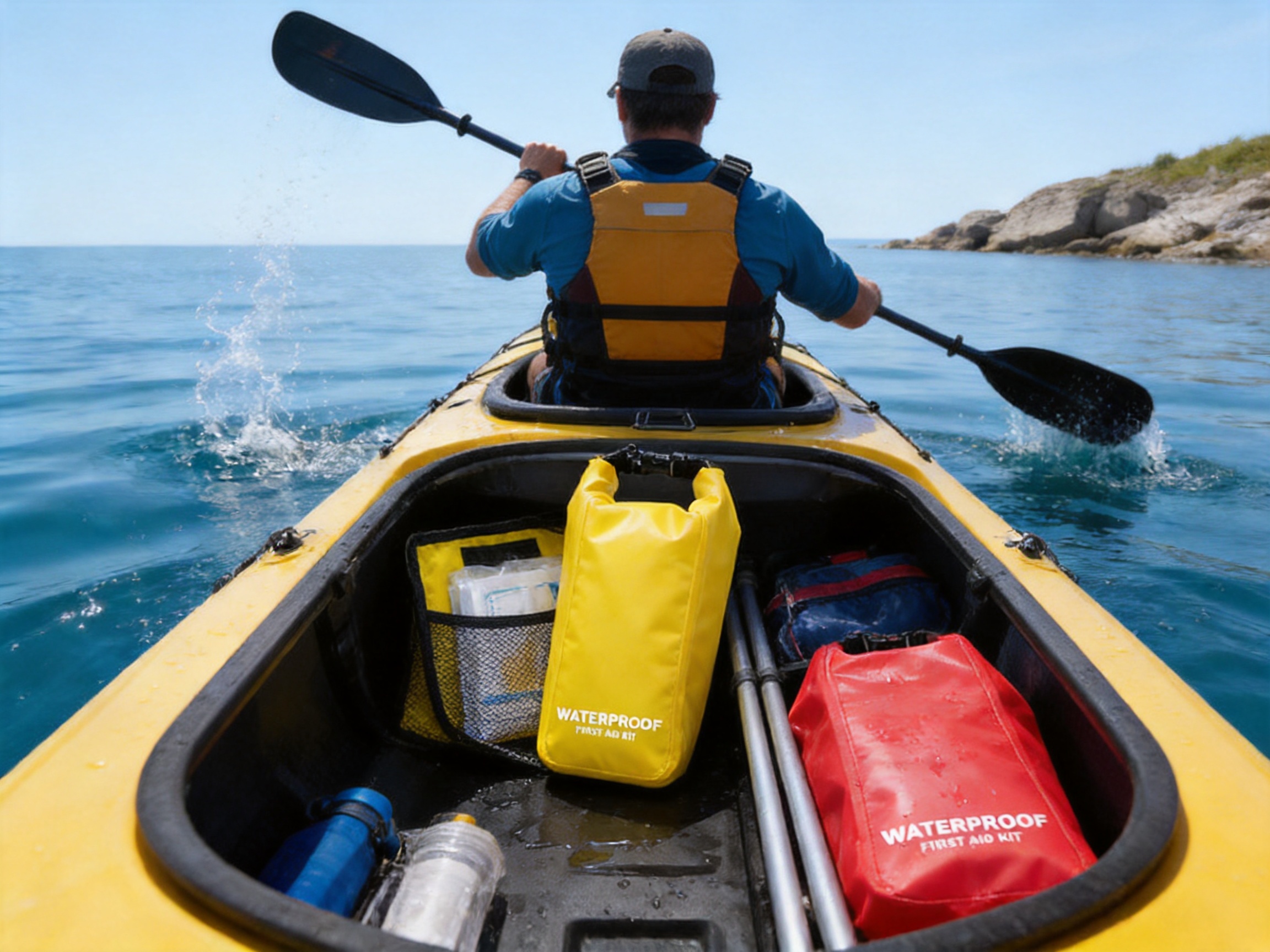
Kayaking equipment is frequently exposed to splashes, spray, wet hands, and changing weather. A first aid bag carried on a kayak must be compact enough to fit into available storage areas while remaining easy to recognize and retrieve. The waterproof dry bag format is well suited to this environment because it provides a dedicated protective container for emergency supplies.
Before each trip, users can prepare the bag with appropriate items for the group, route, duration, and expected conditions. Contents may include basic wound care materials, protective gloves, cleansing products, medical tape, gauze, bandages, emergency instructions, and other items selected by the responsible organizer. The exact contents should be determined by the activity’s risk assessment and applicable local requirements.
Boating and Fishing
Boats and fishing vessels often have limited dry storage. A portable waterproof first aid bag can help operators keep emergency supplies in a known location rather than distributing them across multiple compartments. The bag may be used on recreational boats, fishing trips, marina excursions, and water sports programs.
Its color options can support visual identification, especially when several equipment bags are stored together. Buyers may choose a bright color or apply branding and labels to help users identify the first aid container quickly. Regular inspection remains important because saltwater, sunlight, mechanical friction, and temperature changes can affect outdoor equipment over time.
Camping and Road Trips
Camping involves exposure to rain, mud, dust, and uneven storage conditions. A first aid kit stored inside a waterproof dry bag is easier to protect when it is placed in a tent vestibule, vehicle trunk, campsite storage box, or backpack. The bag can also be transferred between vehicles and campsites without repacking the contents each time.
For road trips, the bag can be stored in a car, recreational vehicle, or service vehicle. A 5-liter or 10-liter capacity may suit personal and family travel, while larger versions can support group excursions. The reusable construction also makes the bag suitable for repeated trips rather than single-use emergency packaging.
Applications in Workplaces and Institutions
Offices and Schools
Offices and schools often need first aid supplies that are accessible but protected from accidental spills, dust, and daily handling. A branded dry bag can be placed in an emergency cabinet, activity room, school vehicle, sports area, or field-trip kit. Because the bag is portable, responsible staff can transport it during events or evacuations.
Schools can use different colors or labels to distinguish bags assigned to classrooms, laboratories, sports facilities, buses, or outdoor programs. The internal pouch supports a consistent storage routine, while the external bag provides a recognizable protective layer. Staff should receive appropriate first aid training and follow the institution’s emergency procedures.
Workplaces and Industrial Sites
Factories, warehouses, construction teams, agricultural operations, and maintenance crews may need first aid supplies near work areas rather than only in a central medical room. A durable, portable bag can be assigned to a vehicle, team, shift, or temporary work location.
The PVC tarpaulin material is appropriate for environments where ordinary fabric may become dirty or wet. The bag can be included in a broader workplace safety program alongside emergency contact information, personal protective equipment, spill response materials, and inspection records. Employers should choose contents and placement based on workplace hazards and applicable occupational safety requirements.
Restaurants and Hospitality Operations
Restaurants, hotels, campsites, and event venues may require emergency supplies in multiple locations. A compact waterproof bag can be used in kitchens, outdoor service areas, vehicles, recreation facilities, or maintenance rooms. Color and branding can help staff identify the bag quickly while maintaining a consistent appearance throughout the organization.
The bag should not be stored in a location where excessive heat, sharp objects, chemicals, or direct sunlight could damage the material or its contents. A scheduled inspection program can help verify that the bag remains closed, clean, correctly stocked, and ready for use.
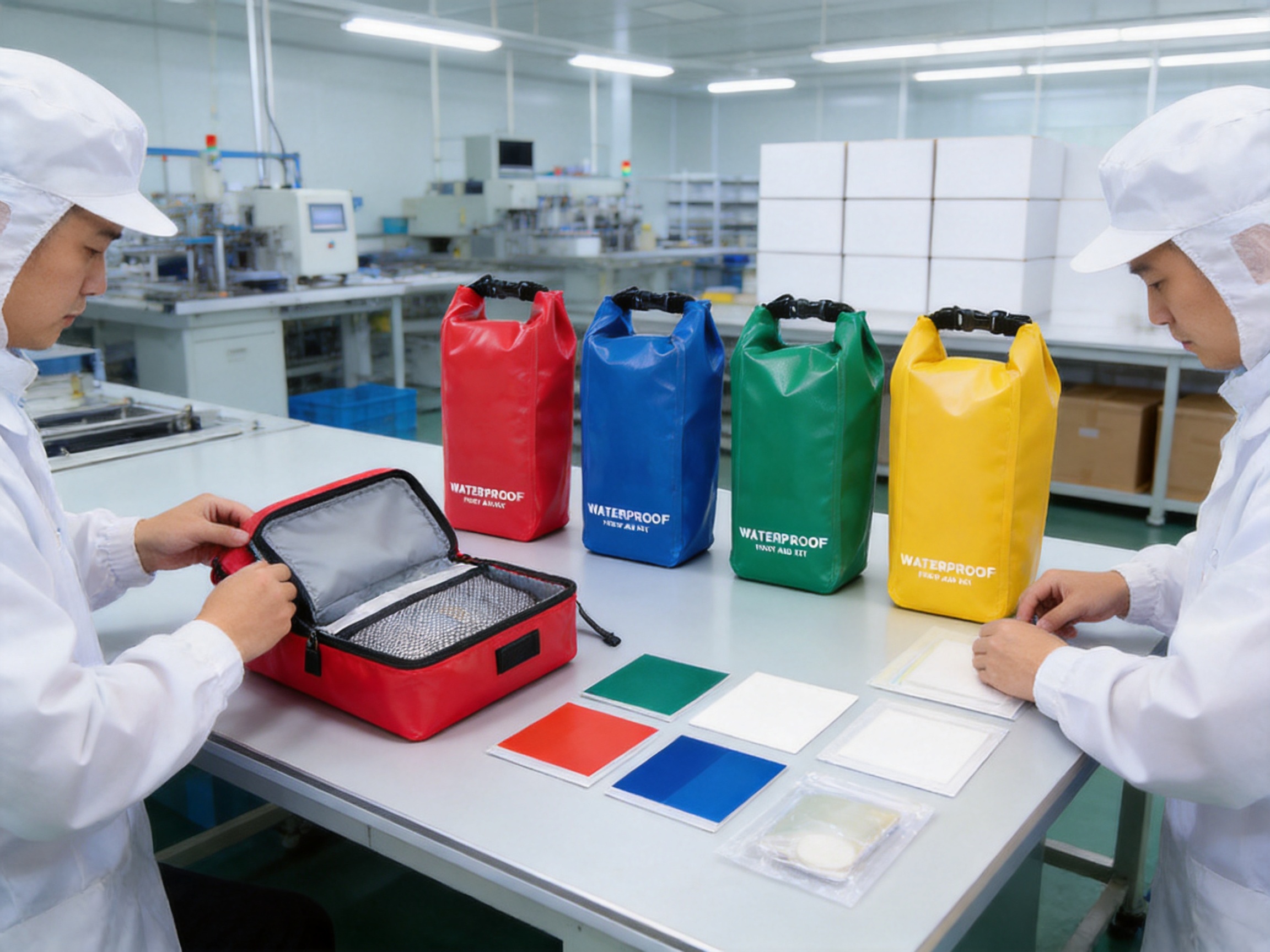
Manufacturing Strengths and Quality Focus
Experienced Medical Product Manufacturer
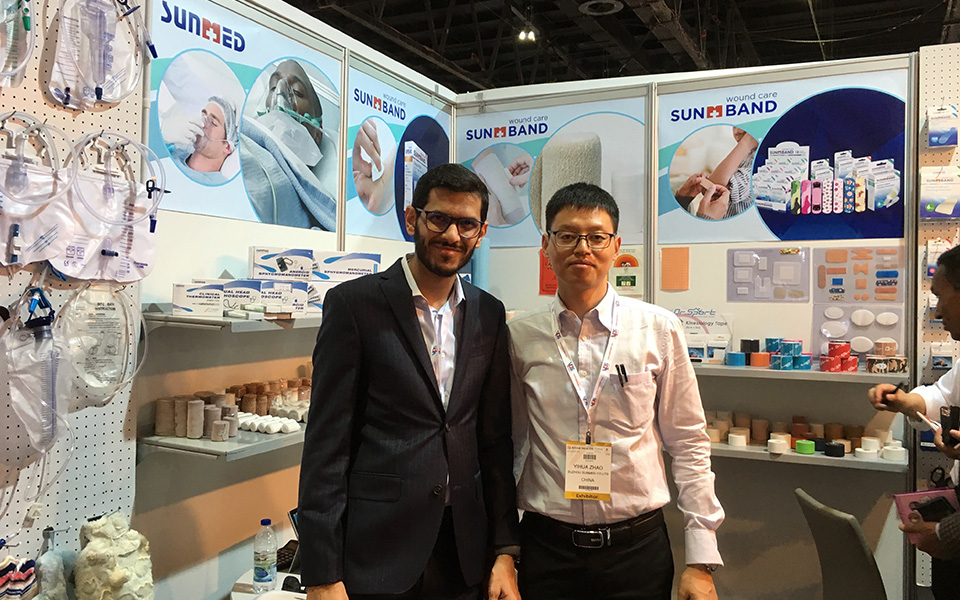
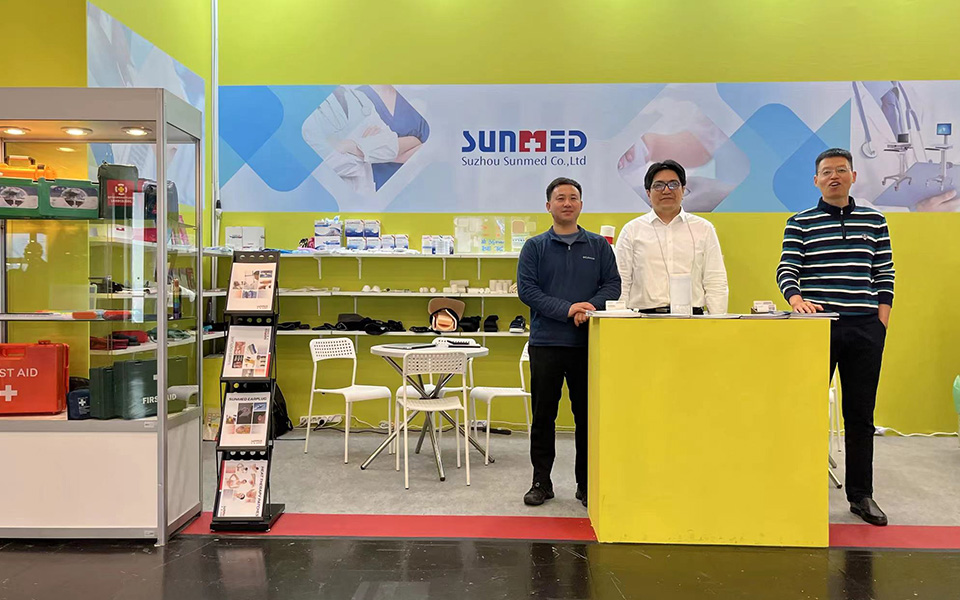
Suzhou Sunmed Co., Ltd. is a professional manufacturer and exporter of first aid, medical, and healthcare products in China. The company has approximately 30 years of experience in the medical device and medical consumables industry. Its product knowledge includes first aid, wound dressing, medical gauze, bandages, medical tape, medical cotton, non-woven products, sports bandages, family healthcare products, and medical instruments.
This broad product background is valuable for a first aid storage bag because the company understands how bags are used alongside medical consumables. A manufacturer that works with gauze, bandages, tapes, cotton products, protective supplies, and other first aid categories can better appreciate the practical requirements of storage, product grouping, packaging, replenishment, and distribution.
Multiple Production Bases
The company operates multiple production bases in Jiangsu, Zhejiang, and Anhui Province. A multi-base manufacturing structure can support product specialization, supply coordination, and broader production capacity. It also reflects experience in managing different product categories and serving customers in multiple international markets.
For buyers, manufacturing depth is important when evaluating a supplier for wholesale or private-label programs. A product may require more than a simple purchase order. Customers may need technical communication, color coordination, packaging discussions, sample confirmation, logo application, production scheduling, inspection, and export documentation. An experienced manufacturer is better positioned to coordinate these stages.
Specialized First Aid Manufacturing Experience
Sunmed established its first aid factory in 2008 to meet the needs of first aid customers. This dedicated experience supports the company’s understanding of emergency supply markets and the purchasing patterns of first aid distributors. It also complements the DC660924 product, which is designed specifically for first aid storage and transport.
In 2021, the company established its own factory for kinesiology tape, cohesive bandages, and elastic adhesive bandages. These investments demonstrate continued development in sports support and wound care categories. The product range provides opportunities for buyers who want to source both the dry bag and compatible first aid or sports care products from a broader medical supply partner.
Quality Control Infrastructure
The company maintains a professional quality control team comprising hundreds of personnel. Its inspection procedures are intended to support consistent manufacturing and product conformity. The company states that it rigorously follows inspection procedures to ensure that its products meet ISO 13485:2016 standards.
For a waterproof dry bag, quality control may involve checking raw materials, dimensions, workmanship, seams, closures, logo application, surface condition, color consistency, packaging, and order quantities. The precise inspection plan should be agreed upon with the buyer according to the product specification and intended market.
Quality assurance is particularly important for private-label orders. A buyer’s brand reputation depends not only on the appearance of a finished bag but also on consistency across production batches. Clear specifications, approved samples, inspection procedures, and documented communication can help reduce variation and support reliable purchasing decisions.
International Market Experience
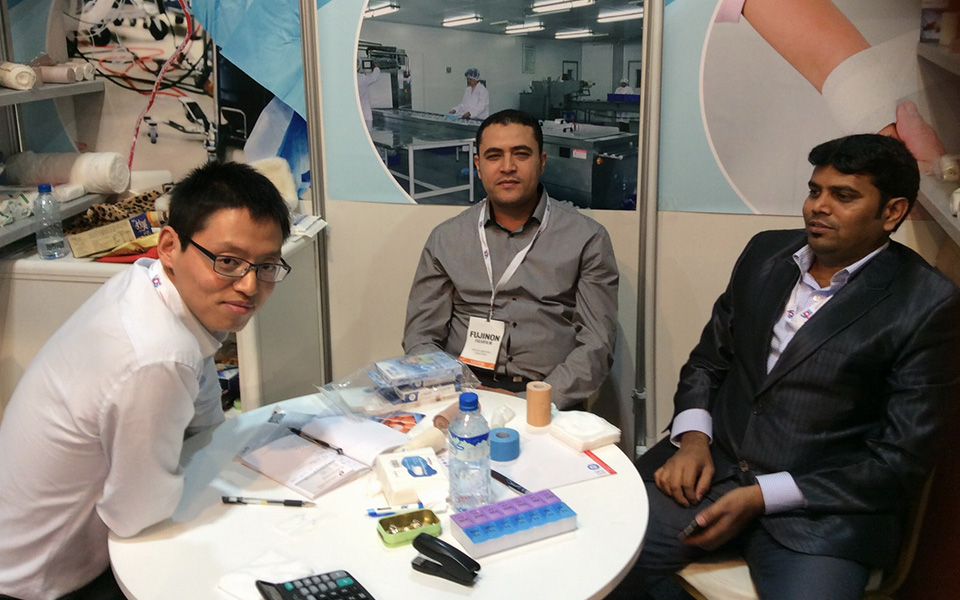
Sunmed has exported products to more than 60 countries, including markets in Europe, Southeast Asia, Africa, and Oceania. Its products serve hospitals, first aid suppliers, supermarkets, retail sports shops, and other customers. This international experience can help the company communicate with buyers who have different packaging expectations, documentation requirements, product standards, and distribution models.
The company states that most of its products are CE certified and that its Suzhou factories comply with FDA requirements. Certification and regulatory suitability can vary by product category and destination, so buyers should confirm the exact documentation applicable to the dry bag, any included contents, and the intended market before placing an order.
Customization and Private-Label Opportunities
The DC660924 can be branded, making it appropriate for private-label and promotional programs. Customization may be relevant to first aid distributors, outdoor brands, corporate safety suppliers, schools, sports clubs, insurance companies, travel operators, and public organizations.
Logo Application
A logo can make the bag easier to associate with a supplier or organization. It can also help customers distinguish a first aid bag from dry bags used for clothing, food, electronics, or personal equipment. Buyers should provide clear artwork and confirm the placement, size, color, and printing method during the sampling stage.
Color Development
Standard color options include red, blue, green, yellow, and other choices. A buyer may select a color based on visual identity, product positioning, activity type, or internal safety coding. Bright colors may help improve visibility, while coordinated colors can support a complete branded product range.
Capacity Selection
Capacity selection should be based on the quantity and type of supplies to be stored. Buyers should consider whether the bag will serve one person, a family, a small team, a vehicle, a classroom, a boat, or a larger group. A bag that is too small may be difficult to close and organize, while an unnecessarily large bag may reduce portability.
Packaging and Product Positioning
Wholesale customers may request packaging that supports retail display, bulk distribution, institutional delivery, or online sales. Product positioning can emphasize waterproof protection, outdoor readiness, reusable construction, private labeling, or emergency organization. Packaging claims should accurately reflect the confirmed product specification and should not suggest medical performance that the bag itself does not provide.
Recommended Use and Maintenance
Before using the bag, buyers should determine which supplies are appropriate for their environment and establish a clear inventory. Contents should be selected by a qualified person or responsible organization. The bag should be labeled according to its purpose and kept in a location known to intended users.
Supplies should be arranged so that frequently needed products can be found quickly. Heavy or rigid objects should not be packed in a way that could damage softer materials. Sharp items should be properly protected. Sterile products should remain in their original packaging unless there is an approved reason to repackage them.
The outer bag should be inspected periodically for cuts, punctures, damaged seams, worn closures, excessive abrasion, or signs of material deterioration. The inner nylon pouch should also be checked for tears, contamination, or loss of shape. If the bag’s protective performance is in doubt, it should be removed from service or replaced.
After use, the contents should be reviewed immediately. Used or contaminated supplies should be replaced, and any wet items should be removed. The bag should be cleaned according to an appropriate procedure and allowed to dry fully before being restocked. Keeping a simple inspection record can help workplaces, schools, sports organizations, and commercial operators maintain readiness.
The bag should be stored away from extreme heat, open flames, solvents, sharp edges, and prolonged direct sunlight. Although the material is designed for durable use, no flexible storage bag is indestructible. Appropriate handling will help extend its service life and preserve the condition of the contents.
Procurement Considerations for Wholesale Buyers
Buyers should begin by defining the intended use, required capacity, preferred color, branding needs, target market, delivery schedule, and expected order volume. The minimum order quantity for this product is 1,000 pieces, which is suitable for distributors, retail programs, institutional purchases, and private-label projects.
A sample should be reviewed before mass production. The review may include material feel, dimensions, color, stitching or welding quality, closure performance, pouch construction, logo appearance, packing method, and overall usability. If the bag will be sold with first aid contents, the buyer should separately verify the contents, labeling, expiration management, and regulatory requirements.
Purchasers should also clarify whether the selected capacity is measured by nominal volume or usable internal space. The practical amount of equipment that can be stored will depend on the shape and packaging of the contents. A capacity comparison using actual sample supplies is often more useful than relying only on a numerical volume specification.
For international orders, the buyer and supplier should confirm trade terms, shipping cartons, palletization, documentation, production lead time, inspection arrangements, and destination requirements. Any required test reports, declarations, or certificates should be discussed before production rather than requested after shipment.
How This Product Supports Product-Line Development
The dry bag can be sold as a standalone storage product or combined with other first aid and healthcare items. A distributor may create a compact personal safety kit, a family travel kit, a boating kit, a workplace kit, or a sports event kit. The outer bag provides a common platform while the contents and labeling are adapted to each customer group.
For an outdoor retailer, the product can complement dry sacks, waterproof phone cases, water shoes, life jackets, camping equipment, and sports accessories. For a medical supplier, it can complement gauze, adhesive bandages, medical tape, gloves, cleansing products, elastic bandages, and other basic first aid materials. For a corporate buyer, the bag can support employee safety programs and branded emergency preparedness campaigns.
This flexibility gives the product a longer commercial life than a narrowly designed single-use package. The same basic bag specification can be marketed through different channels, with variations in color, branding, capacity, packaging, and contents. It also allows buyers to test different market segments without developing an entirely new storage product for each application.
Q&A
What is the Waterproof Dry Bag First Aid Kit Bag designed for?
It is designed to store and transport first aid supplies in a portable, moisture-resistant bag. It is suitable for kayaking, boating, camping, road trips, workplaces, schools, offices, cars, restaurants, sports activities, homes, and other locations where emergency supplies need protection and organization.
Does the product include first aid supplies?
The supplied information describes the product as a first aid kit bag and does not specify a standard set of medical contents. Buyers should confirm whether they are purchasing the empty storage bag or a customized package containing selected first aid products.
What material is used?
The outer bag is made from 500D PVC tarpaulin with a thickness of 0.5 millimeters. This material provides a durable and waterproof-oriented exterior suitable for repeated handling and outdoor use.
What capacities are available?
Available capacities include 5 liters, 10 liters, 15 liters, and 20 liters. Other capacity requirements may be discussed for customized projects, subject to production feasibility and order specifications.
Is the bag suitable for kayaking?
Yes. Its waterproof dry bag format and compact construction make it suitable for kayaking and other water-related activities. Users should close and handle the bag correctly, inspect it regularly, and avoid relying on it as the only element of a complete water-safety plan.
Does the bag have internal organization?
Yes. The design includes an external dry bag and an internal nylon pouch. The inner pouch helps keep first aid supplies together and stored between uses, while the outer bag provides an additional protective layer.
Can the bag be customized with a logo?
Yes. The product can be branded. Buyers should confirm logo artwork, placement, colors, printing method, packaging, and approval samples before production.
What colors are available?
Listed colors include red, blue, green, and yellow, with other colors customizable. The final color range should be confirmed for each order.
What is the minimum order quantity?
The stated minimum order quantity is 1,000 pieces. This quantity is appropriate for wholesale buyers, private-label programs, institutional purchasing, and retail product launches.
How should the bag be maintained?
Users should inspect the outer material, seams, closure areas, and internal pouch regularly. The bag should be cleaned using a suitable procedure, dried thoroughly, restocked after use, and stored away from excessive heat, sharp objects, aggressive chemicals, and prolonged direct sunlight.
Can the bag replace professional medical care?
No. It is a storage and transport product for first aid supplies. It does not replace professional medical treatment, emergency services, first aid training, risk assessment, or an organization’s formal emergency response procedures.
Why work with an experienced manufacturer?
An experienced manufacturer can support material selection, capacity development, branding, color coordination, sample approval, production communication, quality control, packaging, and export coordination. Suzhou Sunmed Co., Ltd. has approximately 30 years of experience in medical devices and medical consumables and serves international customers in multiple market regions.
Conclusion
The Waterproof Dry Bag First Aid Kit Bag for Kayaking is a practical solution for customers who need more protection than a conventional fabric first aid pouch can provide. Its 500D PVC tarpaulin construction, 0.5-millimeter material thickness, compact format, multiple capacity options, and internal nylon pouch make it suitable for both everyday emergency storage and outdoor use.
The bag’s competitive value comes from the combination of waterproof-oriented protection, portable organization, customizable colors, private-label branding, and broad application potential. It can support kayaking, boating, camping, travel, vehicles, workplaces, schools, sports programs, offices, restaurants, homes, and commercial emergency supply systems.
For wholesale buyers, the product also benefits from the manufacturing capabilities of Suzhou Sunmed Co., Ltd. The company offers experience in first aid, wound care, sports support, family healthcare, medical consumables, and medical instruments. Its production bases, dedicated first aid manufacturing experience, international export background, quality control organization, and customization capability provide a foundation for long-term supply cooperation.
By selecting the appropriate capacity, color, branding, packaging, and contents, buyers can develop a product that meets the needs of different user groups while maintaining a consistent storage platform. When combined with regular inspection, correct stocking, responsible handling, and appropriate emergency procedures, this waterproof dry bag can help keep essential first aid supplies organized, portable, and better protected from everyday environmental exposure.
References
1. Product specification sheet for Waterproof Dry Bag First Aid Kit Bag for Kayaking, model DC660924.
2. Manufacturer-provided material information for 500D PVC tarpaulin, 0.5 millimeters.
3. Manufacturer-provided company profile and production capability information for Suzhou Sunmed Co., Ltd.
4. ISO 13485:2016, Medical Devices—Quality Management Systems—Requirements for Regulatory Purposes.
5. General principles of first aid kit organization, inspection, replenishment, and emergency preparedness.
6. General guidance for selecting portable storage products for outdoor recreation, workplace safety, and emergency response applications.

 English
 Español
 русский
 Français
 Deutsch
 italiano
 By Admin