Medication management is an important part of daily health routines for older adults, people living with long-term conditions, busy professionals, caregivers, and anyone who takes more than one medicine or supplement. Remembering which tablets to take, when to take them, and whether a dose has already been taken can become difficult when medicines are stored in multiple bottles or loose containers. A well-designed pill organizer provides a simple and practical solution by arranging doses according to a clear schedule.
The Hot Selling Plastic Push Button Weekly Daily Medicine Organizer, model DC660210, is designed to support organized medication routines throughout a full seven-day period. Its AM/PM layout separates morning and evening doses, while individual push-button compartments make the organizer easy to open and use. The product combines a compact form, durable polypropylene construction, rounded compartment bottoms, and a capacity of up to 30 aspirin-sized pills per compartment.
Unlike a basic storage box with a single large compartment, this organizer is structured around routine and accessibility. It helps users prepare doses in advance, check whether a compartment has been opened, and carry out medication planning with less confusion. The design is suitable for household healthcare, pharmacies, first-aid suppliers, supermarkets, retail healthcare stores, caregivers, and distributors seeking a practical pill-management product.
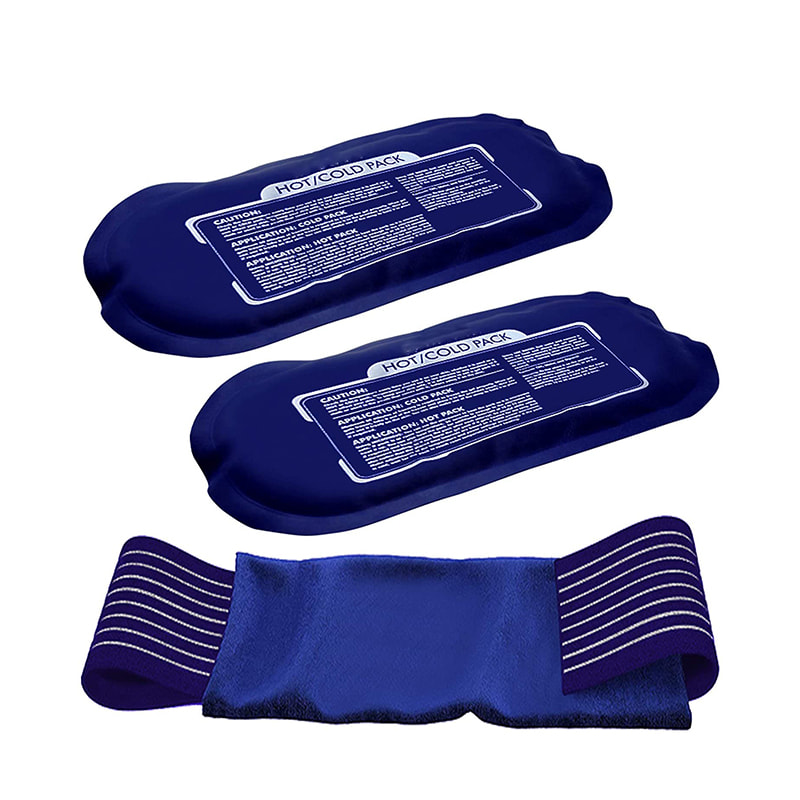
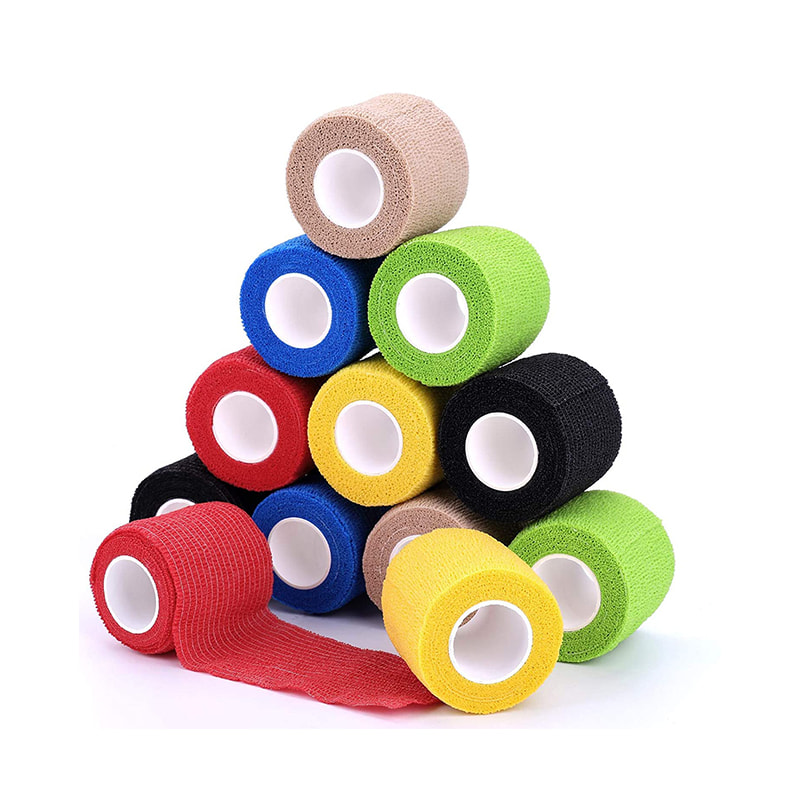
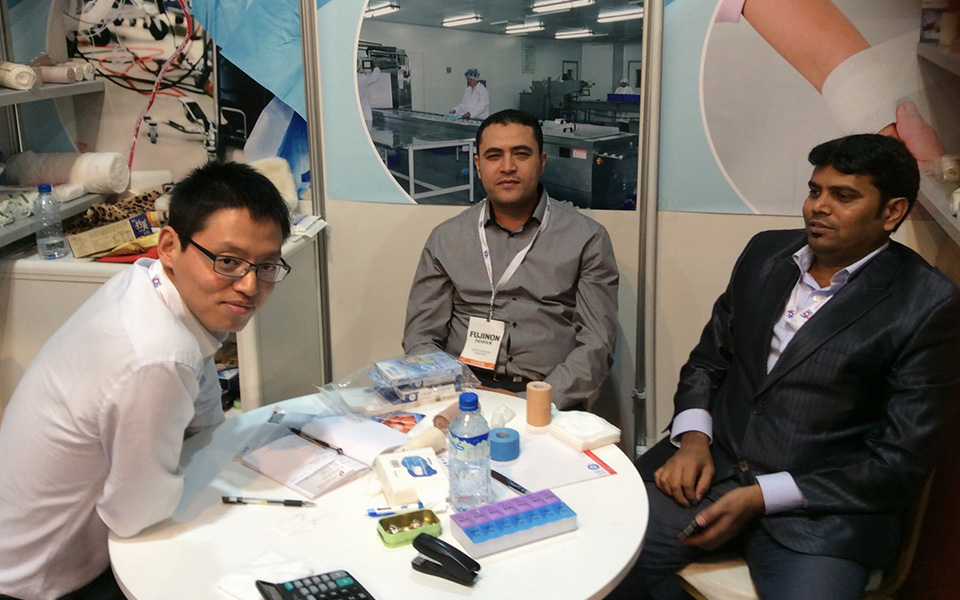
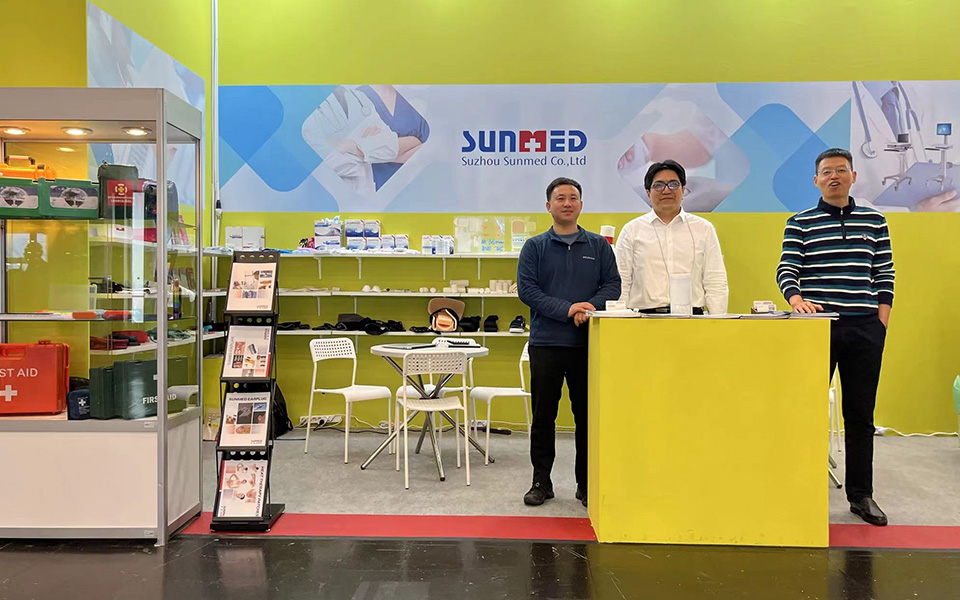
Manufactured and supplied by Suzhou Sunmed Co., Ltd., the product is part of a broader healthcare portfolio that includes first-aid products, wound-care supplies, medical gauze, bandages, medical tape, cotton products, sports supports, hot and cold therapy products, medical instruments, and other medical consumables. The company’s long experience, multiple production bases, structured quality-control system, and international export background support dependable OEM and wholesale cooperation.
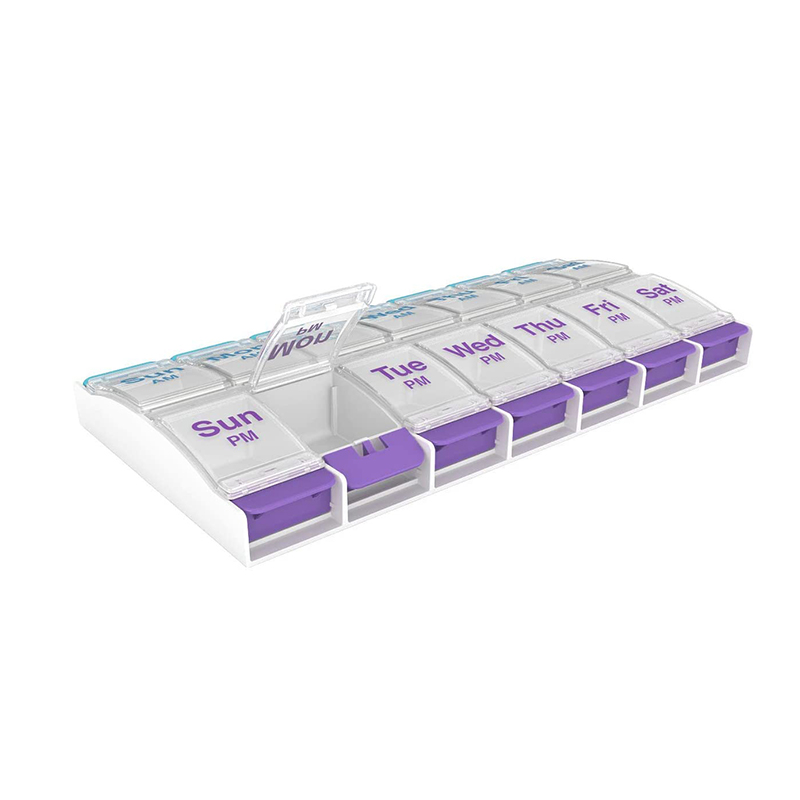
Hot Selling Plastic Push Button Weekly Daily Medicine Organizer
1. The Purpose of a Weekly Daily Medicine Organizer
A medicine organizer is more than a container. It is a visual planning tool that helps transform a complicated medication routine into a sequence of manageable steps. When tablets remain in their original packaging, users may need to inspect several labels each day. This can be inconvenient, especially when medicines have similar shapes, when the user has limited vision or hand strength, or when a caregiver prepares doses for another person.
A weekly organizer allows doses to be sorted before they are needed. The user, family member, or caregiver can allocate the required medicines into the correct day and time compartments. Once the organizer has been prepared, the daily routine becomes easier to follow. The AM/PM structure of model DC660210 provides a straightforward division between two common medication periods.
Organized storage may also reduce uncertainty. A user can look at the organizer and identify whether the relevant compartment is still closed or has already been opened. This does not replace medical advice, prescription instructions, or professional medication management. However, it can help support adherence to a schedule that has already been established by a physician or pharmacist.
Weekly organizers are especially useful for individuals who take medicines at the same general times each day. They are also useful for vitamins, nutritional supplements, and non-prescription products when these are used according to appropriate instructions. Because the organizer is reusable, it can form part of a regular household healthcare routine rather than serving as a single-use packaging item.
1.1 Supporting regular medication habits
Regularity is one of the main advantages of a day-by-day storage format. Every day has a designated location, and each day is divided into AM and PM sections. This arrangement provides an immediate visual structure. Instead of relying only on memory, the user can use the organizer as a physical reminder.
For caregivers, the organizer can make preparation and checking more convenient. A family member may prepare the compartments at the beginning of the week and then review the remaining compartments during the week. In a retail environment, the product can be presented as a household healthcare aid for customers who want a simple way to organize tablets.
1.2 Reducing unnecessary handling
Repeatedly opening several medication bottles can create unnecessary handling. It may also be uncomfortable for users with reduced finger strength or limited dexterity. A push-button organizer offers an alternative opening method. The rounded bottoms of the compartments are intended to make medication retrieval easier after the compartment has been opened.
The organizer should always be used in accordance with the medicine manufacturer’s storage directions. Some medicines may require special protection from light, humidity, heat, or air, and some medicines should remain in their original packaging. The organizer is therefore best understood as a practical aid for medicines that are suitable for this type of storage, subject to advice from a healthcare professional.
2. Product Overview of Model DC660210
Model DC660210 is a weekly daily medicine organizer made from PP plastic. Its dimensions are 22 x 11.1 x 2.6 cm, giving it a compact profile that is suitable for a bedside table, bathroom cabinet, drawer, handbag, travel case, or healthcare supply shelf. The product contains seven daily sections, with AM/PM compartments intended to support a twice-daily routine.
Each compartment can hold up to 30 aspirin-sized pills. Actual capacity depends on tablet dimensions, tablet shape, capsule size, and the amount of space needed to close the compartment properly. The stated capacity gives distributors and end users a useful reference point, while practical loading should always allow the lid or cover to close securely.
| Product Attribute | Specification |
|---|
| Product name | Hot Selling Plastic Push Button Weekly Daily Medicine Organizer |
| Model | DC660210 |
| Category | Pill Organizers |
| Schedule format | 7-day AM/PM organization |
| Material | PP plastic |
| Approximate size | 22 x 11.1 x 2.6 cm |
| Capacity reference | Up to 30 aspirin-sized pills per compartment |
| Opening mechanism | Push-button compartments |
| Model description | DC660210 |
| Minimum order quantity | 3,000 pieces |
| HS code | 3923100090 |
The combination of a recognizable weekly format and a compact body allows the product to serve both personal and commercial needs. Individual users gain a practical way to prepare doses, while distributors receive a clearly defined item that can be positioned within family healthcare, daily-care, pharmacy, first-aid, and wellness product categories.
2.1 Seven-day planning structure
The seven-day structure is suitable for weekly preparation. It helps users think in terms of a complete routine rather than a single dose. This can be particularly helpful for people whose medication schedule is stable throughout the week. The format also makes the product easy to explain in retail packaging, product catalogs, online listings, and healthcare supply programs.
For wholesale buyers, the weekly format has broad market relevance. It can be offered to senior-care providers, home-care suppliers, pharmacies, supermarkets, general healthcare retailers, and distributors of personal-care products. The product does not depend on a highly specialized clinical application, so it can be introduced through several sales channels.
2.2 AM/PM compartment arrangement
Dividing each day into AM and PM compartments adds more organization than a single-compartment-per-day design. Many users take different medicines at different points in the day, and the AM/PM arrangement provides a simple visual distinction. It is also easy for a caregiver to explain: the relevant day is selected first, followed by the morning or evening compartment.
The AM/PM system is intentionally simple. It does not attempt to replace detailed medication charts for schedules involving several dosing times. Instead, it provides a useful structure for routines that can be grouped into morning and evening periods. Users should follow the exact instructions supplied by their doctor or pharmacist when deciding how to arrange medicines.
3. Push-Button Access and User Convenience
One of the defining features of DC660210 is the push-button opening system. A conventional small pill box may require the user to pinch a narrow tab, lift a tight lid, or manipulate a small hinge. These actions can be inconvenient for people with arthritis, reduced grip strength, limited dexterity, or general difficulty handling small objects.
The push-button design provides a more direct opening action. The button gives the user a visible and recognizable point of contact, while the compartment opens without requiring the user to search for a small edge. This design can make the organizer easier to operate repeatedly during a normal week.
The rounded bottoms are another practical detail. Tablets can settle into corners in flat or sharply angled compartments, making them harder to remove. A rounded-bottom form helps guide pills toward an accessible area when the compartment is opened. This can reduce the need to turn the organizer upside down or use a fingertip to reach into a narrow corner.
3.1 Advantages for users with limited dexterity
Ease of operation is particularly important for older users and people who experience hand discomfort. A product may have sufficient storage capacity, but if its compartments are difficult to open, it will not support a reliable routine. Push-button access addresses this practical issue by making each compartment more identifiable and easier to activate.
The design may also be helpful for caregivers who prepare or check several organizers. When a product can be opened and closed with a consistent motion, routine handling becomes less tiring. This is valuable in home-care situations where a family member may prepare medicines for several days at a time.
3.2 Easier pill retrieval
Access does not end when the compartment opens. The user must also retrieve the contents. Rounded compartment bottoms support this stage by limiting the likelihood that tablets will remain trapped in a hard-to-reach corner. The result is a more convenient interaction from opening through removal.
As with all pill organizers, the user should check the compartment after use and make sure it closes correctly. The organizer should also be kept clean and dry, and it should not be overloaded. These simple practices help preserve the usability of the product over repeated cycles.
4. PP Plastic Construction and Durability
DC660210 is made from PP plastic, commonly known as polypropylene. PP is widely used for household containers and healthcare-related accessories because it can provide a useful combination of light weight, rigidity, and resistance to ordinary handling. For a reusable organizer, these properties are important because the product may be opened, closed, transported, cleaned, and stored many times.
The material choice supports a compact product that is easy to carry without adding unnecessary bulk. It also allows the organizer to maintain a structured body with separate compartments. A rigid enough structure helps the daily sections remain distinct and supports the push-button mechanism during normal use.
The product is described as being built to withstand repeated use. This is an important advantage over low-quality organizers that may be difficult to operate after frequent opening or that use fragile components. Durability is not only a user benefit; it also affects the reputation of retailers and distributors. A dependable product can reduce dissatisfaction and support repeat purchasing.
4.1 Practical balance between strength and portability
A pill organizer must balance several requirements. It should be strong enough for routine handling, but it should also remain light and compact enough for daily use. A large, heavy box may provide storage but become inconvenient to carry. A very thin organizer may be easy to transport but less comfortable to open and close. The 22 x 11.1 x 2.6 cm dimensions provide a practical format for a weekly product intended for personal healthcare use.
The PP construction also supports efficient manufacturing. Plastic components can be formed with consistent dimensions, enabling repeatable production across large quantities. This is relevant for wholesalers requiring uniform products in every shipment. Consistency in compartment shape, button position, and overall dimensions helps simplify packaging, storage, and retail presentation.
4.2 Maintenance and responsible use
Users should follow the cleaning and storage recommendations supplied with the product. In general, the organizer should be kept away from excessive heat, moisture, and contamination. It should not be used to store medicines that require a special storage environment unless a qualified healthcare professional confirms that the organizer is suitable.
The organizer should be inspected periodically for cracks, loose components, damaged buttons, or any condition that could affect closure. A damaged compartment should not be used for medication storage. Clear handling instructions help protect the user and also demonstrate responsible product positioning for retailers.
5. Advantages Compared with Basic Pill Boxes
Many basic pill boxes provide only one or two large compartments. These products may be inexpensive and suitable for short-term use, but they do not always support a complete weekly routine. A user may still need to remember which pills belong to which day, or may need to open a large compartment containing several different medicines at once.
DC660210 offers a more structured alternative. The seven-day layout separates doses by day, and the AM/PM arrangement adds a second level of organization. This provides greater clarity than an undivided container. Each day has its own location, reducing the need to rely on memory or handwritten labels.
The push-button mechanism is another distinction. Basic snap-lid boxes may be difficult to operate or may require fingernail pressure. A push button provides a more accessible opening point. Together with rounded compartment bottoms, this creates a user-focused design that considers both planning and retrieval.
5.1 Compared with unstructured storage
Keeping tablets in several bottles can create clutter and make the daily routine more time-consuming. It may also be difficult for a caregiver to determine whether a dose has been taken. A weekly organizer does not eliminate the need to read labels and follow medical instructions, but it gives the user a clear physical layout for prepared doses.
Compared with an unstructured container, the organizer offers a more visible schedule. The distinction between days and AM/PM periods allows the user to locate the intended dose quickly. The product therefore adds organizational value without requiring electronic technology, batteries, or a complex setup process.
5.2 Compared with electronic medication reminders
Electronic reminders can provide alerts, notifications, and tracking functions, but they may be expensive, require charging, or be difficult for some users to configure. A plastic weekly organizer is a low-complexity alternative that does not depend on a smartphone, internet connection, or battery.
This does not mean that a physical organizer replaces an electronic system in every situation. Rather, the two approaches can complement each other. A caregiver may use an electronic reminder to signal a medication time and use the organizer to identify the prepared dose. For users who prefer a simple, visible, and portable solution, the physical format remains highly practical.
5.3 Compared with disposable dose packaging
Pre-packed dose packaging can be useful in some clinical and pharmacy settings, but it may not be available for every medicine or every user. It may also create additional packaging waste and may not suit people who regularly adjust their routine under professional guidance. A reusable organizer gives the user or caregiver a flexible tool for preparing a suitable weekly schedule.
Again, medicine suitability must be considered. Some products should remain in their original blister or container. The organizer is most appropriate when the medicine can safely be transferred according to professional advice. Clear product education is therefore an important part of responsible selling.
6. Manufacturing Strengths Behind the Product
The performance of a healthcare accessory depends not only on its visible design but also on the manufacturing system used to produce it. Suzhou Sunmed Co., Ltd. has operated in the medical device and medical consumables industry for approximately 30 years. This experience provides a foundation for understanding material selection, product consistency, production planning, quality inspection, export documentation, and customer communication.
The company operates multiple production bases in Jiangsu, Zhejiang, and Anhui Province. Multiple bases can support a broad product portfolio and provide access to production capabilities for different categories. The company’s product range includes first-aid products, wound dressings, medical gauze, bandages, medical tape, medical cotton, non-woven products, sports bandages, kinesiology tape, cohesive bandages, hot and cold packs, pill boxes, medical instruments, syringes, catheters, surgical consumables, and other healthcare products.
This wider manufacturing background is relevant to the pill organizer because it reflects experience across consumer healthcare and professional medical supply categories. A supplier familiar with both retail healthcare products and medical consumables is better positioned to understand the importance of consistent specifications, clean production practices, traceability, packaging control, and export requirements.
6.1 Production development and specialized factories
The company established its first-aid factory in 2008 to respond to the demands of first-aid customers. In 2021, it established a factory dedicated to kinesiology tape, cohesive bandages, and elastic adhesive bandages. These investments demonstrate a continuing approach to developing production capacity around customer requirements.
Although the DC660210 organizer belongs to the family healthcare and pill-organizer category, the broader factory network supports a coordinated supply relationship. Buyers seeking several healthcare product lines may be able to work with one experienced supplier instead of managing unrelated vendors for every category. This can simplify communication, product selection, quality coordination, and shipment planning.
6.2 Quality-control organization
Suzhou Sunmed reports a professional quality-control team comprising hundreds of personnel. The team follows inspection procedures intended to ensure that products meet ISO 13485:2016 standards. ISO 13485 is widely associated with quality-management systems for medical devices. Applying a structured quality approach is important for suppliers serving hospitals, first-aid distributors, pharmacies, and international healthcare markets.
For a pill organizer, quality control may include checks of material appearance, dimensions, compartment formation, button function, closure performance, surface condition, packaging, and labeling. Consistent inspection helps reduce variation between production batches. It also provides buyers with greater confidence that the products received will correspond to the agreed model and specifications.
Quality control should not be understood as a single final inspection. Strong manufacturing systems apply controls throughout production. Incoming materials may be checked before use, production parameters may be monitored, semi-finished components may be reviewed, and completed products may undergo final inspection before packing. This layered approach is valuable for products with moving or interacting parts, such as push-button compartments.
6.3 Compliance-oriented production
The company states that most of its products are CE certified and that its Suzhou factories comply with FDA requirements. Specific certification or regulatory status should always be confirmed for the exact product, destination market, intended use, and applicable documentation. Nevertheless, a compliance-oriented manufacturing culture is an important consideration for international buyers.
Healthcare distributors often require more than a product photograph and basic specification sheet. They may need material information, inspection records, packaging details, declarations, certificates, test documents, and market-specific files. An experienced exporter can help customers identify the documents required for their own purchasing and regulatory processes.
7. Manufacturing Process Considerations for a PP Organizer
The production of a plastic pill organizer involves more than forming a container. The finished product must combine accurate dimensions, clear compartment separation, functional buttons, appropriate surface quality, and reliable assembly. Each element contributes to the user experience.
7.1 Material preparation
PP plastic is selected and prepared according to the product specification. Material handling should be controlled so that the production batch remains consistent. The material must be suitable for forming the organizer’s body and associated components. Color, surface finish, rigidity, and dimensional stability may all be considered during production planning.
7.2 Molding and component formation
The main organizer body and its compartment structure are formed using appropriate plastic-processing equipment and tooling. Proper tooling design is important because the product includes multiple daily sections and a compact overall shape. The molds must support consistent wall thickness, clean edges, accurate compartment dimensions, and a surface that is comfortable to handle.
For the push-button mechanism, the button and related connection points must be formed with sufficient precision. If tolerances are inconsistent, a compartment may be too difficult to open, too loose, or unable to close correctly. Manufacturing control therefore has a direct relationship with usability.
7.3 Assembly and functional inspection
After molding, components may be assembled and checked. Inspectors can verify that buttons operate as intended, compartments open and close properly, and the organizer remains aligned. Visual inspection can identify flash, sharp edges, discoloration, cracks, deformation, or other defects that could affect appearance or function.
Functional inspection is especially important for products sold to users who may have limited hand strength. A button that technically moves but requires excessive force would not fully meet the practical purpose of the design. Repeated-use testing or sampling can help evaluate whether the opening system remains reliable over normal handling cycles.
7.4 Packing and export preparation
Packaging protects the organizer during storage and transportation. It also provides space for product identification, model information, usage instructions, warnings, and distributor details. For international shipments, packaging and carton markings should be coordinated with the buyer’s requirements and destination-market rules.
The stated MOQ for model DC660210 is 3,000 pieces. This quantity is suitable for importers, wholesalers, chain retailers, pharmacy suppliers, and healthcare distributors planning a commercial launch or regular inventory program. Buyers should confirm lead time, packing configuration, available colors, labeling options, and shipping terms before placing an order.

8. Commercial Value for Wholesalers and Distributors
A product is commercially attractive when it solves a clear problem, serves a broad customer group, and can be explained easily. The DC660210 organizer meets these criteria through its simple purpose: helping users arrange medicines for seven days with AM/PM separation.
The product can be included in several retail and distribution categories. Pharmacies may offer it as an accessory for customers purchasing recurring medicines. Supermarkets can place it within household healthcare or daily-care sections. First-aid suppliers can include it in family health product ranges. Medical distributors can offer it alongside home-care products, wound-care supplies, hot and cold therapy items, and other non-clinical healthcare accessories.
The product also has potential for institutional and caregiver markets. Home-care agencies, senior-living organizations, family-care suppliers, and community health programs may require simple medication-management accessories. Buyers in these sectors may value durability, ease of operation, compact dimensions, and a supplier capable of providing additional medical consumables.
8.1 Simple product communication
Retail staff can explain the organizer through a small number of clear points: seven-day storage, AM/PM compartments, push-button opening, rounded bottoms, PP plastic construction, and repeated-use design. These features are easy for customers to understand without specialized technical knowledge.
Online product pages can use the same structure. A clear title, specification table, photographs, usage guidance, and responsible storage notes can help customers decide whether the organizer fits their needs. The model number DC660210 should be included in purchasing documents to reduce confusion between similar products.
8.2 Inventory planning
With an MOQ of 3,000 pieces, buyers should consider expected sales volume, packaging dimensions, warehouse space, and replenishment timing. A weekly organizer is a non-seasonal healthcare product, but demand may increase during pharmacy campaigns, senior-care promotions, wellness programs, or new-year health initiatives.
Distributors may also combine the product with related items from the same supplier. A healthcare assortment could include pill organizers, hot and cold packs, first-aid products, adhesive bandages, gauze, medical tape, sports supports, and other family-care products. Such assortment planning can make the organizer part of a broader solution rather than an isolated item.
9. Application Scenarios
9.1 Home medication routines
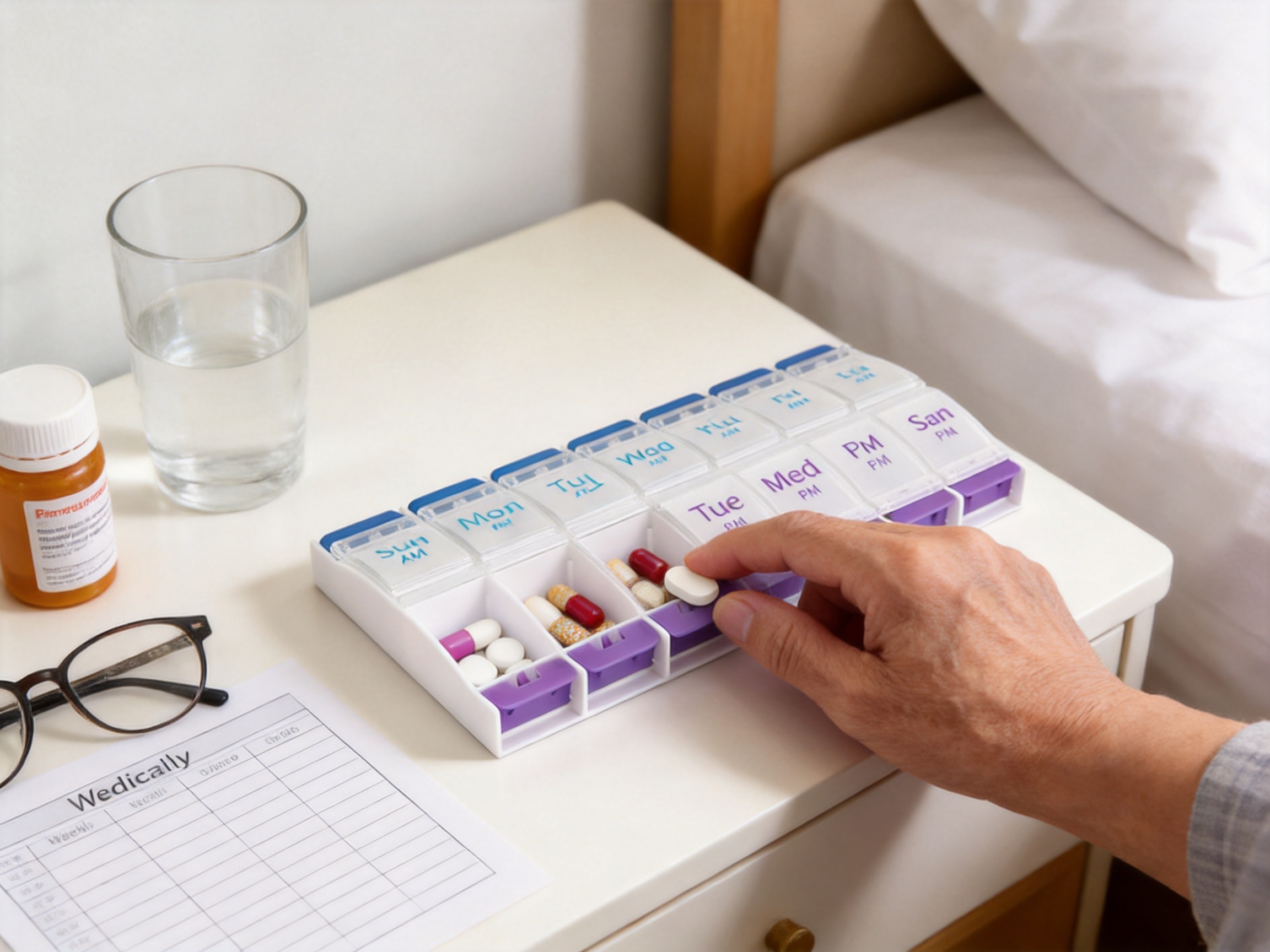
In a household, the organizer can help one user prepare a week of medicines or supplements. The compact size allows it to remain in a familiar location, where the user can check the appropriate day and time. The clear format may be especially helpful when several bottles are used during the week.
9.2 Caregiver support
Caregivers can prepare compartments in advance and use the organizer as a visual reference. It may help simplify communication between family members, provided that everyone follows the medication instructions supplied by the healthcare professional. The organizer is not a substitute for clinical supervision, but it can support a well-defined routine.
9.3 Travel and short-term portability
The compact body can be useful when a user needs to carry a weekly supply during travel. Before traveling, users should check transportation rules, prescription requirements, temperature conditions, and any destination-specific regulations. Some medicines should remain in labeled original packaging, so professional advice is recommended before transferring doses for travel.
9.4 Retail healthcare programs
Pharmacies and healthcare retailers can use the organizer in educational displays about medication organization. It may also be included in wellness campaigns for older adults or people managing recurring prescriptions. The product’s non-electronic design makes it accessible to users who do not want a technology-based solution.
10. Responsible Use and Safety Guidance
A medicine organizer supports organization, but it does not determine what medicine a person should take. Users must follow the instructions of their physician, pharmacist, or other qualified healthcare professional. The correct medicine, dosage, frequency, and storage method should be confirmed before filling the compartments.
Users should verify the medicine name and dose carefully while preparing the organizer. If tablets look similar, a written medication chart can provide additional support. Medicines should not be mixed together when doing so could cause confusion or affect stability. Products that require original packaging or special storage should not be transferred without professional confirmation.
The organizer should be kept out of the reach of children and individuals who may accidentally consume its contents. It should also be stored in a dry and suitable environment. If a compartment becomes damaged, fails to close, or shows any sign of contamination, it should not be used until the issue has been resolved.
When a medication schedule changes, the organizer should be emptied and carefully reset. Old medicines should not be left in the compartments after they are discontinued. Unused or expired medicines should be disposed of according to local pharmacy or healthcare guidance.
11. Why Supplier Experience Matters
For buyers of healthcare products, supplier experience can influence more than delivery. It can affect product development, quality communication, documentation, packaging coordination, and after-sales support. A supplier with approximately three decades of experience in medical devices and consumables has had time to develop processes for serving different customer types and international markets.
Suzhou Sunmed Co., Ltd. exports products to more than 60 countries, including markets in Europe, Southeast Asia, Africa, and Oceania. This international experience indicates familiarity with cross-border logistics and the differing expectations of hospitals, first-aid suppliers, supermarkets, pharmacies, and retail sports shops.
The company’s product categories cover both professional and family healthcare. This range allows buyers to discuss related sourcing requirements with one supplier. A customer purchasing the DC660210 organizer may also need adhesive bandages, gauze, medical tape, cotton products, sports bandages, hot and cold packs, or medical instruments. A broad product platform can make such procurement more efficient.
11.1 OEM and wholesale cooperation
The company describes itself as an OEM medical consumables manufacturer and medical devices factory. For buyers, OEM cooperation may involve customized packaging, private labeling, color selection, product combinations, or market-specific presentation, subject to feasibility and order requirements.
Customization should be discussed early. Buyers should provide target-market information, preferred packaging formats, language requirements, labeling rules, artwork, expected annual quantity, and delivery schedule. The supplier can then assess tooling, sampling, production, inspection, and documentation requirements.
11.2 Communication and long-term supply
Long-term cooperation benefits from clear communication at every stage. Product specifications should be confirmed in writing, including model, dimensions, material, compartment format, capacity reference, packaging, and acceptable tolerances. Pre-production samples can help ensure that the buyer and manufacturer share the same expectations.
For recurring orders, the buyer may also establish inspection procedures, carton requirements, shipment schedules, and quality feedback methods. A consistent communication process can help maintain product uniformity as order quantities grow.
12. Quality and Customer Confidence
Customers often judge a pill organizer by how easily it opens, how clearly it displays the weekly schedule, and whether it remains functional after repeated use. These visible qualities depend on less visible manufacturing controls. Accurate molding, dependable assembly, material consistency, and final inspection all contribute to customer confidence.
The DC660210 design addresses several common concerns at the product level. Push buttons provide a recognizable opening method. Rounded bottoms support pill retrieval. Seven-day AM/PM compartments create a clear routine. PP plastic supports a lightweight and reusable format. The quality-control infrastructure described by the manufacturer adds a further layer of assurance for commercial buyers.
Retailers should present the product accurately and avoid making medical claims that are not supported by the product documentation. It is appropriate to describe the organizer as a storage and scheduling aid. It is not appropriate to claim that it treats a disease, guarantees adherence, prevents medical errors, or replaces professional advice.
13. Selection Guide for Buyers
Wholesale buyers should consider the following points when evaluating the organizer for their market.
13.1 Target user group
Determine whether the main customers are older adults, caregivers, families, travelers, pharmacy customers, or general wellness consumers. The push-button design may be particularly relevant for users who prefer an easier opening action.
13.2 Medication schedule
Confirm whether the intended users commonly follow a morning-and-evening schedule. The product is designed around AM/PM organization. Users with more frequent dosing times may require a different format or an additional medication chart.
13.3 Storage suitability
Review the types of medicines that customers are likely to store. The organizer is suitable only for products that can be safely transferred from original packaging. Buyers should include appropriate instructions and warnings in their sales materials.
13.4 Packaging and branding
Decide whether standard packaging or customized OEM packaging is required. Packaging should communicate the model, core functions, material, usage guidance, and any applicable warnings in the language of the target market.
13.5 Order quantity and logistics
The stated MOQ is 3,000 pieces. Buyers should calculate forecast demand, storage capacity, import costs, customs requirements, and replenishment schedules. The HS code provided for the product is 3923100090, but importers should confirm classification with their customs broker and destination authorities.
14. Product Positioning in a Broader Healthcare Portfolio
The pill organizer fits naturally within a family healthcare range. It can be displayed beside hot and cold therapy products, first-aid kits, adhesive bandages, wound-care products, medical tape, cotton products, sports supports, and other daily-care items. This positioning reflects the reality that consumers often purchase several healthcare accessories from the same retailer.
For professional distributors, the organizer can complement medical consumables supplied to home-care providers and community health programs. It is not a sterile product and should not be represented as a surgical or diagnostic device. Its value lies in practical medication organization and reusable personal care.
A broad portfolio also creates opportunities for coordinated procurement. Buyers can consolidate orders, align packaging styles, and build a consistent healthcare product line. Suzhou Sunmed’s experience across first aid, wound dressing, sports support, family healthcare, and medical instruments may support this type of sourcing strategy.
15. Frequently Asked Questions
Q1: How many days does the organizer cover?
The organizer covers seven days. Each day is arranged with AM/PM compartments to support a morning-and-evening medication routine.
Q2: How many pills can each compartment hold?
Each compartment can hold up to 30 aspirin-sized pills. Actual capacity varies according to the size and shape of the tablets or capsules. Users should not overfill a compartment or force it closed.
Q3: What material is used?
The organizer is made from PP plastic, or polypropylene. This material supports a lightweight, structured, and reusable product format.
Q4: How does the push-button opening work?
The push-button provides a designated point for opening each compartment. This can be easier to operate than a narrow snap tab, particularly for users who have difficulty with small lids or tight closures.
Q5: What is the product size?
The listed size is 22 x 11.1 x 2.6 cm. Buyers should confirm dimensional tolerances and packaging measurements with the supplier before finalizing logistics.
Q6: Is the organizer suitable for every medicine?
No. Some medicines must remain in their original packaging or require protection from light, humidity, heat, or air. Users should consult a pharmacist or healthcare professional before transferring any medicine into the organizer.
Q7: Can the product be used for vitamins and supplements?
It may be suitable for vitamins and supplements when their storage requirements allow transfer to a pill organizer. The product should be used according to the instructions for each item.
Q8: Is the organizer reusable?
Yes. It is designed to withstand repeated use. Users should keep it clean and dry, operate the buttons carefully, and replace it if any compartment or closure becomes damaged.
Q9: What is the minimum order quantity?
The stated minimum order quantity is 3,000 pieces. Buyers should confirm current production conditions, packaging options, and lead time when requesting a quotation.
Q10: What is the model number?
The model number is DC660210. Including this number in inquiries, purchase orders, samples, and inspection documents helps identify the correct product.
Q11: Can OEM packaging be discussed?
Yes. Suzhou Sunmed Co., Ltd. describes its business as including OEM medical consumables and medical devices. Buyers should provide packaging artwork, language requirements, target-market details, and expected order volumes for evaluation.
Q12: What types of buyers may need this product?
Potential buyers include pharmacies, supermarkets, healthcare distributors, first-aid suppliers, home-care companies, senior-care organizations, retail healthcare stores, and importers serving family wellness markets.
Q13: Does the product replace a doctor’s instructions?
No. The organizer is only a storage and scheduling aid. Users must follow the medication instructions provided by a qualified healthcare professional.
Q14: What quality systems support production?
The manufacturer reports a quality-control team of hundreds of personnel and inspection procedures aligned with ISO 13485:2016 standards. It also reports that most products are CE certified and that its Suzhou factories comply with FDA requirements. Buyers should request documentation for the exact product and destination market.
Q15: Where is the supplier located?
Suzhou Sunmed Co., Ltd. is located in Suzhou, Jiangsu Province, China. Its listed office address is 20F-2001, Gold River Center Building, No. 88 Shishan Road, Suzhou, Jiangsu Province, China, 215011.
16. Conclusion
The Hot Selling Plastic Push Button Weekly Daily Medicine Organizer, model DC660210, provides a practical approach to organizing medicines across a seven-day period. Its AM/PM compartments, push-button access, rounded compartment bottoms, PP plastic construction, compact dimensions, and capacity of up to 30 aspirin-sized pills per compartment give it a useful combination of convenience and functionality.
Its advantages over a basic pill box come from the complete user experience. The product does not merely hold pills; it separates them by day and time, provides a recognizable opening action, and supports easier retrieval. Compared with electronic systems, it offers a simple non-battery solution. Compared with unstructured storage, it gives the user a clear visual routine.
For wholesalers and distributors, the organizer offers broad market potential across pharmacies, supermarkets, family healthcare retailers, home-care suppliers, and first-aid channels. The 3,000-piece MOQ supports commercial purchasing, while the model number and defined specifications make the product straightforward to include in catalogs and procurement systems.
The manufacturer’s approximately 30 years of industry experience, multiple production bases, quality-control organization, international export background, and wider medical consumables portfolio provide additional value for buyers seeking a reliable supply partner. With appropriate documentation, responsible product claims, and clear usage guidance, DC660210 can become a useful component of a modern household healthcare range.
References
1. Product specification for Hot Selling Plastic Push Button Weekly Daily Medicine Organizer, model DC660210.
2. Manufacturer-provided product information, including dimensions, PP plastic material, capacity, MOQ, and HS code.
3. Manufacturer company profile describing production bases, export markets, product categories, and industry experience.
4. ISO 13485:2016, Medical devices—Quality management systems—Requirements for regulatory purposes.
5. General principles of safe medication storage and medication organization provided by healthcare professionals and pharmacy practice guidance.

 English
 Español
 русский
 Français
 Deutsch
 italiano
 By Admin